News
Rich project cases across industries, showing real implementation and proven technical strength.In the rapidly evolving landscape of organic fertilizer production, the efficient and reliable movement of pelletized materials from processing lines to storage or packaging stations remains a critical operational challenge. Organic fertilizer pellets, by their very nature, possess distinct physical characteristics—irregular shapes, moderate moisture content, friability, and a tendency to generate dust—that demand a conveying solution capable of preserving product integrity while maintaining throughput. Among the available technologies, pneumatic conveying has emerged as a preferred method for many modern fertilizer plants, offering enclosed transport, reduced mechanical wear, and flexible routing. Unlike mechanical conveyors such as belt or screw systems, pneumatic systems use a controlled stream of air to suspend and propel pellets through pipelines, eliminating the risk of product degradation from moving parts and significantly lowering maintenance costs over the long term. The global market for organic fertilizer, projected to exceed USD 25 billion by 2026 according to industry reports, is driving increased adoption of automated, dust-free conveying solutions that align with stricter environmental regulations and the growing demand for high-quality, uniform pellets. For manufacturers aiming to scale production while meeting export-grade standards, understanding the principles, design parameters, and operational nuances of pneumatic conveying for organic fertilizer pellets is no longer optional—it is a strategic necessity. This article provides a comprehensive examination of pneumatic conveying systems tailored specifically for organic fertilizer pellets, covering fundamental mechanisms, system configurations, material behavior, energy efficiency considerations, and real-world application insights. By the end, readers will have a clear framework for evaluating whether pneumatic conveying fits their production goals and how to work with experienced partners to implement a system that delivers consistent, damage-free transport.
Pneumatic conveying transports bulk solid materials through a sealed pipeline using a gaseous medium—typically air—as the driving force. Two primary modes dominate the industry: dilute-phase conveying and dense-phase conveying. In dilute-phase systems, the pellets are suspended in a high-velocity air stream, typically ranging from 15 to 30 m/s, ensuring continuous flow even over long distances and complex routing. This method is well-suited for organic fertilizer pellets with moderate bulk density (around 600–800 kg/m³) and particle sizes between 2 mm and 8 mm, provided the pellets possess sufficient mechanical strength to withstand impacts against pipe walls and elbows. However, the high speed can lead to breakage if pellets are excessively fragile or have high moisture content. Dense-phase conveying, on the other hand, operates at lower air velocities (3 to 8 m/s) and uses higher pressures to push slugs or plugs of pellets through the pipeline. This regime minimizes particle attrition and dust generation, making it ideal for premium organic fertilizer products where pellet integrity directly influences market value. The transition between these modes depends on material properties, pipeline geometry, and the pressure differential available. For organic fertilizer pellets, which often contain natural binders and residual moisture that can cause stickiness or bridging, the choice of conveying mode must be validated through pilot testing or computational fluid dynamics simulations. Industry data from 2025–2026 indicates that over 60% of new organic fertilizer plants in North America and Europe are opting for dense-phase or hybrid systems to preserve pellet quality, even though initial capital investment is 15–20% higher than dilute-phase equivalents.
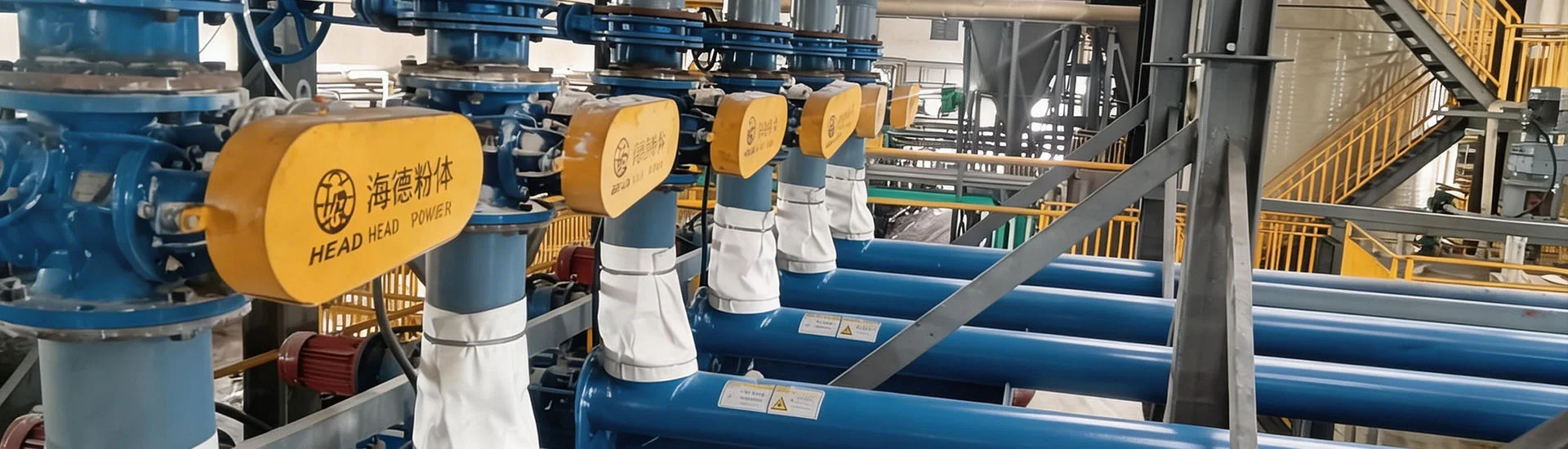
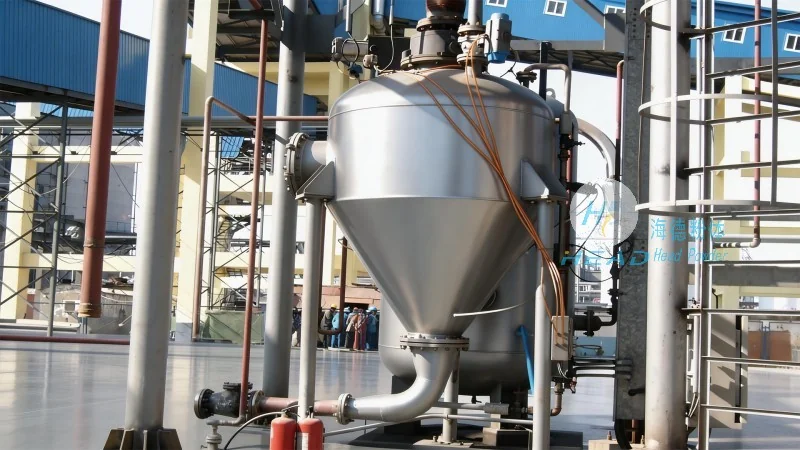
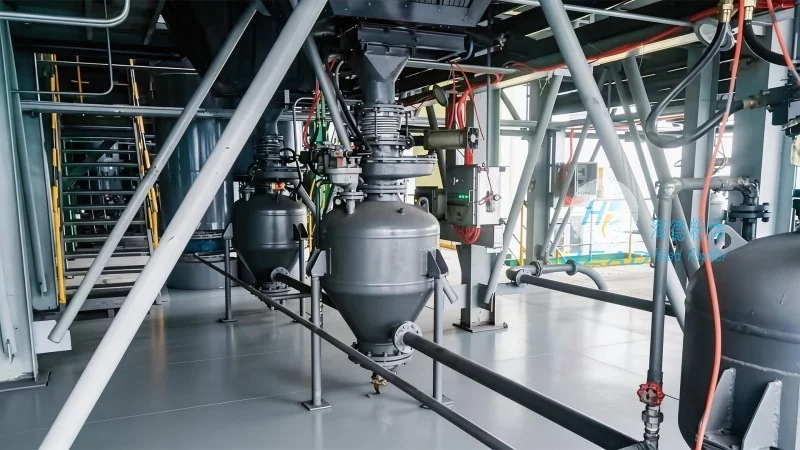
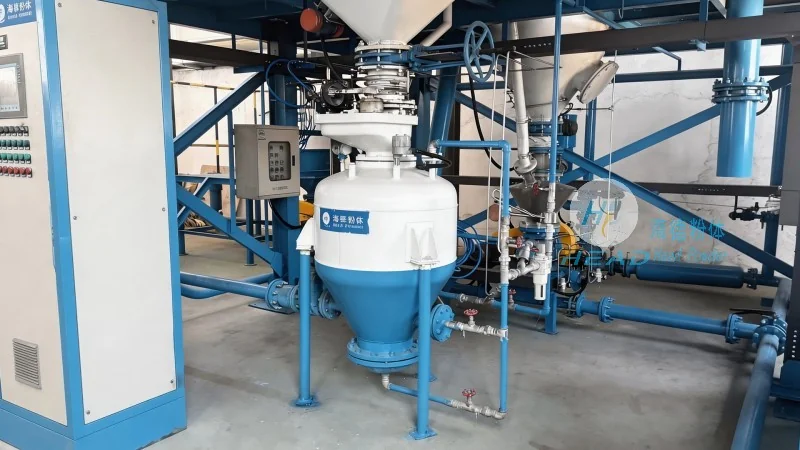
A complete pneumatic conveying system for organic fertilizer pellets integrates several key components, each engineered to handle the specific challenges posed by the material. The feed point—often a rotary airlock or a screw feeder—must maintain a consistent, controlled introduction of pellets into the airstream while preventing air leakage. For sticky or slightly cohesive pellets, vibratory feeders or specialized non-clogging rotary valves are recommended. The conveying pipeline itself is typically constructed from stainless steel or abrasion-resistant carbon steel with smooth internal surfaces to reduce friction and accumulation. Elbow radius is critical: long-radius elbows (R ≥ 10D) significantly reduce pellet impact forces and wear, extending service life by up to three times compared to standard short-radius elbows. The air mover, either a positive displacement blower for dilute-phase or a screw compressor for dense-phase, must deliver the required pressure and flow rate while being energy-efficient. Modern systems incorporate variable frequency drives (VFDs) that adjust air velocity in real time based on sensor feedback, optimizing energy consumption by 20–30% compared to fixed-speed units. At the receiving end, a cyclone separator or a bag filter separates the pellets from the conveying air, with the dust-laden exhaust passing through a secondary filtration stage to meet ambient air quality standards. For organic fertilizer, where dust can contain active microbial components, HEPA filtration or wet scrubbers may be necessary. The control system—typically a PLC with human-machine interface (HMI)—monitors material levels, pressure differentials, air velocity, and product temperature, enabling automated start/stop sequences and alarm management. Headpowder’s engineering team has developed proprietary control algorithms that adapt to varying material moisture levels, reducing blockages by over 40% in field installations.
Organic fertilizer pellets exhibit unique flow properties that directly influence pneumatic conveying performance and system longevity. The angle of repose typically ranges from 30° to 45° depending on moisture content and the type of organic matter (e.g., poultry manure-based, compost-based, or vermicompost). When moisture exceeds 12% by weight, pellets become prone to surface adhesion and can form deposits inside the pipeline, especially at bends and diverter valves. To mitigate this, some operators introduce low-pressure hot air (40–60°C) into the conveying line to reduce surface humidity, a technique that can lower moisture by 1–2 percentage points without compromising pellet structure. Particle size distribution also matters: a high proportion of fines (particles below 1 mm) increases dust loading and may require higher filtration capacity. Industry standards for organic fertilizer pellets, such as those referenced in the European Biofertilizer Regulation (EU 2019/1009), recommend a fines content below 5% for pneumatic conveying to minimize segregation. The bulk density of the pellets, typically 650–750 kg/m³, determines the required air-to-material ratio. For dilute-phase conveying, a ratio of 2–4 kg of air per kg of pellets is common, while dense-phase systems operate at ratios as low as 0.5–1.0 kg air per kg pellets, dramatically reducing energy costs. When designing a system for a new plant, engineers must account for the conveying distance (commonly 50–200 meters) and elevation changes. Each 10-meter vertical rise can increase pressure drop by 15–25%, necessitating careful compressor sizing. In a 2025 case study involving a 30-ton-per-hour organic fertilizer facility in Southeast Asia, Headpowder’s system design incorporated a 120-meter horizontal run and a 25-meter vertical lift using a dense-phase approach, achieving a pellet breakage rate below 0.8%—well under the 2% threshold specified by the client’s quality assurance program.
While mechanical conveyors—such as belt conveyors, bucket elevators, and screw conveyors—have been used for decades, pneumatic systems offer distinct advantages that align with the demands of modern organic fertilizer production. First, the enclosed nature of pneumatic conveying eliminates dust escape, improving workplace safety and compliance with occupational exposure limits for organic dust (typically 5 mg/m³ for respirable fractions per OSHA and EU directives). Second, the absence of moving parts inside the material flow means no lubrication contamination, which is critical for organic certification standards like OMRI (Organic Materials Review Institute) or equivalents in other regions. Third, pneumatic systems provide exceptional layout flexibility: pipelines can snake around existing equipment, pass through walls, and serve multiple discharge points without the structural supports required for mechanical conveyors. This reduces building modification costs by an estimated 30–50% during retrofits. Fourth, maintenance requirements are lower—a well-maintained pneumatic system may require only quarterly inspections of blower filters, rotary valve seals, and pipeline wear pads, compared to monthly belt tensioning, tracking adjustments, and screw shaft replacements for mechanical systems. Operational data from 2024–2026 shows that pneumatic conveying systems for organic fertilizer pellets achieve availability rates exceeding 97%, with mean time between failures (MTBF) of over 3,000 operating hours. Headpowder has documented an installation in a Midwest US facility where switching from a belt-and-bucket elevator system to a pneumatic dense-phase configuration reduced product degradation from 3.5% to under 1.0%, saving the client approximately USD 180,000 annually in lost product and reprocessing costs.
Pneumatic conveying has proven effective across a wide range of organic fertilizer production scales and formats. In large-scale granulation plants producing 50–100 tons per day, pneumatic systems transport pellets from the rotary drum dryer or cooler to silos for bagging or bulk loading. Here, multiple conveying lines can be interleaved with automated diverter valves to feed different packaging stations or storage bins without cross-contamination. Medium-sized facilities (10–30 tpd) often use portable or modular pneumatic units that can be relocated as production lines evolve. For example, a family-owned operation in the Netherlands producing pelletized chicken manure requires a system that handles both standard pellets and a coated variant with a waxy surface to reduce dust. Headpowder configured a hybrid dilute-dense system that automatically adjusts air velocity based on real-time optical sensors detecting the pellet surface condition, maintaining throughput of 15 tph with zero blockages over a 12-month period. In smaller batch operations, such as those producing specialty biofertilizers with added microbes or mycorrhizae, pneumatic conveying’s gentle handling is especially valuable because it preserves the viability of live organisms. Tests at a German R&D facility demonstrated that after a 50-meter pneumatic transport leg, bacterial counts in inoculated pellets decreased by only 8%, compared to a 35% reduction when using a conventional screw conveyor. These real-world examples underscore that selecting the appropriate pneumatic conveying technology—and working with a supplier who understands organic material nuances—directly impacts product quality, operational costs, and market competitiveness.
Energy consumption is a significant component of operating costs in any conveying system, and pneumatic systems have historically been perceived as energy-intensive. However, advances in system design, including variable-speed drives, optimized pipe routing, and dense-phase operation, have dramatically narrowed the gap. A 2026 comparative study published in the Journal of Sustainable Agriculture Engineering found that a modern dense-phase pneumatic system for organic fertilizer pellets consumed 0.18–0.25 kWh per ton-meter, versus 0.12–0.18 kWh per ton-meter for a well-designed belt conveyor. When factoring in the avoided costs of dust collection, cleaning, and product loss, the total cost of ownership for pneumatic systems can be 10–15% lower over a 10-year horizon. Additionally, the improved hygiene and reduced spillage mean that environmental compliance costs (e.g., stormwater runoff treatment, air permits) are lower. Many regulatory jurisdictions now require covered handling for organic materials to prevent odor and nutrient runoff, making pneumatic systems a de facto standard for new facilities. Headpowder has developed a proprietary energy modeling tool that simulates the exact air requirements for a given pellet type and layout, enabling clients to select compressors and blowers that operate at peak efficiency for 90% of the operating envelope. One Chinese organic fertilizer exporter reported a 22% reduction in annual electricity costs after retrofitting their plant with Headpowder’s energy-optimized pneumatic system while simultaneously increasing line speed by 15%.
Choosing the right pneumatic conveying system begins with a thorough characterization of the organic fertilizer pellets to be conveyed. Key parameters include particle size distribution, bulk density, moisture content, angle of repose, abrasiveness, and friability index. A simple test—such as the ASTM D7093-05a friability test for granular fertilizers—can predict breakage under typical conveying velocities. If pellets show more than 2% weight loss in the test, dilute-phase conveying is likely unsuitable, and dense-phase or a gentle vacuum system should be considered. Next, the conveying distance, number of bends, and elevation changes must be mapped accurately. Each additional 90° bend adds an equivalent of 10–15 meters of straight pipe in terms of pressure drop. Overlooking this during sizing can lead to undersized compressors, resulting in sluggish flow or frequent blockages. Similarly, the air-to-material ratio must be carefully balanced: too low and material may settle, causing slugging; too high and energy waste and erosion increase. Many system failures trace back to inadequate attention to these details during the design phase. Headpowder’s engineers follow a standardized seven-step design protocol that includes computational fluid dynamics (CFD) modeling, scaled pilot testing with the client’s actual pellets, and a post-installation performance guarantee. In a project for a large Indian organic fertilizer cooperative, initial vendor proposals suggested a dilute-phase system at 25 m/s, which would have resulted in an estimated 4–5% breakage. Headpowder’s analysis recommended a dense-phase approach operating at 6 m/s, which after installation reduced breakage to 0.5% and lowered noise levels by 12 dB, improving worker comfort.
Proper maintenance is essential to sustain the performance and lifespan of a pneumatic conveying system handling organic fertilizer pellets. The most common maintenance tasks include inspecting and replacing rotary valve seals every 2,000–3,000 hours, cleaning or replacing filter bags in the dust collector every 500 hours of operation, and checking pipeline walls for wear at elbows and drop-out boxes using ultrasonic thickness gauges. For organic fertilizers, microbial growth in stagnant areas—especially in dead legs or unheated sections of pipe—can lead to odors and biofilm formation. Periodic flushing with dry air or steam (if the system material allows) is recommended. Operators should also monitor pressure differentials across the filter and blower; a steady increase indicates filter loading or incipient plugging. Safety protocols include installing pressure relief devices on the air mover, ensuring that the rotary airlock incorporates a shear pin to prevent damage from hard foreign objects, and grounding all metallic components to prevent static discharge, as organic fertilizer dust can be combustible under certain conditions (though the risk is lower than for synthetic fertilizers). Training is critical: Headpowder provides on-site operator training and digital manuals with troubleshooting guides. In a recent follow-up survey of 40 plants using Headpowder’s systems, average unplanned downtime decreased by 60% after the first year of operation, attributed largely to predictive maintenance alerts generated by the integrated sensors.
The organic fertilizer sector is poised for substantial growth, driven by regenerative agriculture policies, carbon-neutral farming goals, and consumer demand for organically grown food. By 2026, the global organic fertilizer market is expected to account for over 8% of total fertilizer consumption, up from 5% in 2021. This expansion will accelerate the adoption of advanced pneumatic conveying systems that offer scalability, digitalization, and sustainability. Emerging trends include the integration of IoT sensors that monitor pellet moisture, velocity, and pressure drop in real time, feeding data into cloud-based platforms for remote optimization. Artificial intelligence algorithms can now predict blockages up to 30 minutes before they occur, allowing preemptive adjustments. Another development is the use of compressed natural gas or biogas-driven compressors for the air supply, enabling facilities to reduce their carbon footprint further. For pellet producers targeting export markets, traceability and washdown capability are becoming more important; pneumatic systems constructed with hygienic welding and easy-to-clean interiors are increasingly specified. Headpowder is already piloting a fully modular, plug-and-play pneumatic conveying station that fits inside a standard shipping container, ideal for decentralized, mobile organic fertilizer processing units. With a technical team that holds more than 15 patents in granular material handling, Headpowder continues to invest in R&D to address the evolving needs of the organic fertilizer industry.
Implementing a pneumatic conveying system for organic fertilizer pellets is not a one-size-fits-all proposition. Each production line presents unique variables—pellet formulation, ambient humidity, available footprint, budget constraints, and regulatory requirements—that demand tailored engineering. A partner like Headpowder brings not only deep technical expertise in fluidization and material handling but also years of field data from diverse installations across six continents. The company’s in-house materials testing laboratory can characterize client pellets within 48 hours, providing detailed recommendations on conveying mode, pipe material, air velocity, and filter specifications. Headpowder also offers performance guarantees tied to key metrics such as throughput rate, breakage percentage, and energy consumption, giving clients confidence in their investment. For organic fertilizer producers looking to upgrade an existing line or build a greenfield plant, a consultation with Headpowder’s project engineers can identify opportunities to reduce capital expenditure by 10–20% through optimized layout and component selection. The company’s commitment to after-sales support includes a 24/7 technical hotline, remote diagnostics, and spare parts inventory management. (咨询热线:156-6277-7102) This direct line of communication ensures that clients can resolve any operational issue rapidly, minimizing downtime and protecting product quality.
To summarize, pneumatic conveying for organic fertilizer pellets offers a robust, efficient, and gentle transport solution that meets the stringent quality and environmental demands of today’s market. The key to success lies in a rigorous design process that accounts for material properties, system geometry, and operational goals. Whether adopting dilute-phase for high-throughput applications or dense-phase for premium-quality products, every system must be tested and validated before commissioning. Maintenance routines should be preventive rather than reactive, and operators should be trained to recognize early signs of wear or particle degradation. As the industry moves toward greater automation and sustainability, pneumatic conveying will remain a cornerstone technology—one that, when correctly implemented, can reduce operational costs, improve product consistency, and enhance the overall competitiveness of an organic fertilizer business. For those seeking to navigate the complexities of system selection and deployment, aligning with a vendor that demonstrates both technical depth and practical field experience—such as Headpowder—provides a clear path to achieving these outcomes. The investment in a well-designed pneumatic conveying system pays dividends in yield, reliability, and long-term profitability, making it a strategic asset for any forward-looking organic fertilizer manufacturer.

 Shandong headpowder Engineering Co., Ltd.
 156-6277-7102(Manager Zhang)
  0531-83386006
  Jinan City, Shandong Province, China
服务热线
微信咨询
回到顶部