News
Rich project cases across industries, showing real implementation and proven technical strength.In the rapidly evolving landscape of food manufacturing, the precise and sanitary handling of food additives has become a critical factor in maintaining product quality, operational efficiency, and regulatory compliance. Food additives—ranging from fine powders like vitamins, minerals, and preservatives to granular ingredients such as flavors and colorants—demand conveying solutions that minimize degradation, prevent cross-contamination, and ensure consistent flow. Pneumatic conveying systems have emerged as the technology of choice for these applications, offering enclosed transport, gentle handling, and precise control. This article provides a comprehensive, expert-level examination of pneumatic conveying systems specifically engineered for food additive applications. We will explore the underlying principles, system configurations, material considerations, industry standards, and practical implementation strategies that enable manufacturers to achieve reliable, scalable, and safe additive transfer. Whether you are evaluating a new production line or optimizing an existing facility, understanding the nuances of pneumatic conveying for food additives is essential for long-term success.
The global food additive market continues to expand, driven by consumer demand for extended shelf life, enhanced taste, and nutritional fortification. According to recent industry analysis, the food additives sector is projected to sustain a compound annual growth rate of over 5% through 2026, with powdered and granular additives accounting for a significant share. As production volumes increase, manufacturers face mounting pressure to improve throughput while adhering to stringent hygiene and safety standards. Pneumatic conveying systems address these challenges by providing a closed-loop, dust-free material transfer method that eliminates manual handling and reduces the risk of contamination. Unlike mechanical conveyors, which can introduce wear particles and require frequent cleaning, pneumatic systems use air or inert gas to transport additives through sealed pipelines, ensuring product purity and operator safety. This technology also offers exceptional flexibility in routing, allowing additives to be conveyed from storage silos to multiple processing points, blending stations, or packaging lines with minimal footprint and maintenance.
Pneumatic conveying operates on the principle of moving bulk materials through a pipeline using a controlled air stream. The system can be classified into two primary modes: dilute phase and dense phase. In dilute phase conveying, materials are suspended in the airflow at relatively high velocities, typically between 15 and 35 meters per second. This method is suitable for free-flowing, non-friable powders but may cause degradation in more fragile additives. Dense phase conveying, on the other hand, moves material at lower velocities (2–10 m/s) in a plug flow regime, reducing particle breakage and wear. For food additives such as ascorbic acid, citric acid, or fine spice blends, dense phase systems are often preferred due to their gentle handling characteristics. The choice between these modes depends on the additive's particle size distribution, bulk density, moisture sensitivity, and abrasiveness. A well-engineered system also factors in the pressure drop across the pipeline, the distance of transport, and the required flow rate to ensure consistent and energy-efficient operation.
A robust pneumatic conveying system for food additives consists of several key components, each designed to meet the specific demands of the application.
Each component must be selected with food-grade materials and design features that comply with FDA, EU, or other regional standards. The entire system should be designed to allow easy access for inspection, cleaning, and maintenance, minimizing downtime and ensuring consistent product quality.
When designing a pneumatic conveying system for food additives, engineers must prioritize hygienic design principles. All surfaces in contact with the additive should be smooth, crevice-free, and made of non-reactive materials. Welds must be polished to a sanitary finish, and pipeline runs should be self-draining to prevent liquid accumulation during washdown cycles. Another critical factor is the control of moisture and temperature. Many food additives are hygroscopic or sensitive to heat, meaning that the conveying air must be conditioned—through dehumidification or cooling—to maintain product stability. Additionally, the system must incorporate provisions for dust explosion prevention, as many powdered food additives are combustible. This includes the use of explosion-relief panels, inert gas purging, and bonding/grounding of all conductive components. Industry standards such as ATEX, NFPA 61, and IEC 60079 provide guidelines for safe design and operation in potentially explosive atmospheres. By integrating these considerations from the outset, manufacturers can achieve a conveying solution that is both efficient and compliant with the most rigorous safety and quality requirements.
The conveying of food additives is subject to a complex web of regulations that vary by region. In the United States, the FDA mandates that all equipment in contact with food must be constructed from materials that are safe and suitable, with no risk of contamination. The USDA also imposes requirements for facilities producing meat, poultry, or egg products. In Europe, compliance with EC Regulation 1935/2004 and the associated food contact materials regulations is mandatory. Beyond material safety, operational standards such as ISO 22000 and FSSC 22000 drive the implementation of food safety management systems. Pneumatic conveying systems must be designed to facilitate effective cleaning and sanitation, often validated through swab testing and ATP bioluminescence monitoring. headpowder (咨询热线:156-6277-7102) has extensive experience in designing systems that meet these regulatory frameworks, ensuring that every installation is audit-ready and supports the customer’s certification goals.
Different food additives present unique conveying challenges that require tailored engineering solutions. For example, fine powders like sodium citrate have a tendency to aerate and become difficult to handle at low pressures; here, dense phase conveying with controlled air pulses can prevent fluidization and maintain plug stability. Sticky additives such as maltodextrin or lecithin powder may adhere to pipe walls, requiring smooth bore pipes and occasional air knife blowbacks. Abrasive materials like salt or calcium carbonate can cause rapid wear in bends and fittings, necessitating the use of wear-resistant linings or replaceable wear inserts. Moisture-sensitive additives, including many vitamins and enzymes, demand a completely dry conveying air supply, often achieved through desiccant dryers or refrigerated air dryers. By performing comprehensive material testing—such as shear cell analysis, aeration tests, and abrasion indices—engineers can accurately predict behavior and optimize system design. This data-driven approach reduces risk and ensures that the conveying process remains stable over the long term.
To illustrate the practical benefits of a well-designed pneumatic conveying system, consider a mid-size nutritional supplement manufacturer that needed to transport multiple vitamin premixes from a centralized blending area to several packaging lines. The existing manual and mechanical transfer methods led to frequent cross-contamination, high dust exposure for workers, and inconsistent batch weights. After a detailed site audit and material characterization, headpowder designed a vacuum-based dense phase system with multiple inlets and a single discharge line. The system incorporated divert valves to route each premix to the correct packaging hopper, automated flush sequences between product changeovers, and a centralized clean-in-place (CIP) station. The result was a 40% reduction in changeover time, elimination of dust exposure, and a measurable improvement in blend uniformity. The system was also designed to be scalable, allowing the addition of new additive types without major rework. This approach not only enhanced operational efficiency but also strengthened the manufacturer's compliance with GMP and HACCP requirements.
Energy consumption is a significant operating cost for any pneumatic conveying system. Food additive conveying, which often runs continuously or in frequent batches, requires careful attention to energy efficiency. Modern systems leverage variable frequency drives (VFDs) on blowers to adjust air flow based on actual demand, rather than running at full capacity all the time. Additionally, the use of dense phase conveying reduces air volume requirements by 50–70% compared to dilute phase, directly lowering energy use. Advanced control algorithms can also optimize the timing of conveying cycles, reducing idle time and minimizing compressed air waste. For facilities with multiple conveying points, a ring main or loop arrangement can balance pressure and reduce the number of blowers needed. By conducting a lifecycle cost analysis, plant managers can identify the most cost-effective configuration for their specific additive portfolio. headpowder provides energy audits and simulation services to help customers achieve the lowest total cost of ownership while maintaining process reliability.
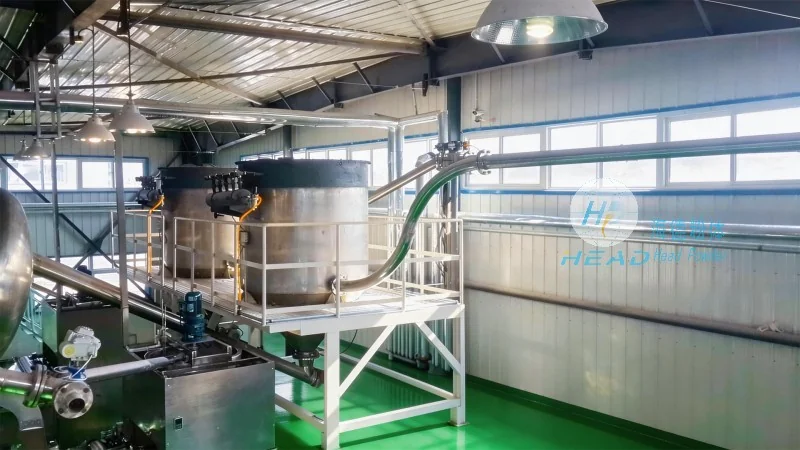
Even the most robust conveying system requires a disciplined maintenance regimen to preserve hygiene and performance. Daily inspections should include checking filter differential pressure, verifying rotary valve seal integrity, and listening for unusual sounds in the blower or pipeline. Weekly tasks involve cleaning of the air intake filter, lubrication of moving parts, and inspection of wear indicators in bends. Monthly or quarterly deep cleans should include disassembly of key components such as the rotary valve and separation cyclone for manual washing and visual inspection. For systems handling highly hygroscopic additives, it is also important to monitor the performance of air dryers and replace desiccant media as needed. A comprehensive preventive maintenance schedule, combined with a spare parts inventory for critical items like gaskets and filter bags, minimizes unplanned downtime and ensures that the system remains compliant with food safety audits. Training operators on proper startup, shutdown, and emergency procedures further reduces the risk of product loss or equipment damage.
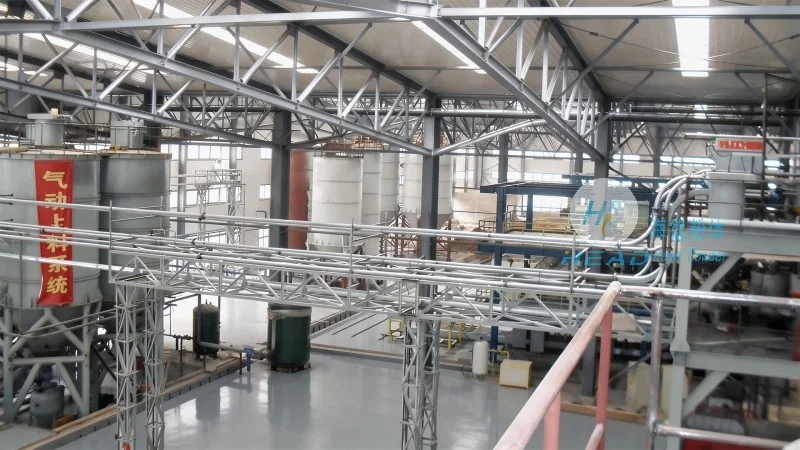
As the food industry moves toward greater automation and digitalization, pneumatic conveying systems are evolving to incorporate Industry 4.0 features. Real-time sensors for moisture content, particle size, and flow consistency allow for adaptive control that self-corrects for material variability. Machine learning algorithms can predict maintenance needs based on vibration and pressure trends, reducing the likelihood of unexpected failures. Additionally, the use of stainless steel 3D printing for bespoke pipe fittings and wear parts is gaining traction, enabling rapid prototyping and on-demand replacement. Sustainability is also a driving force—manufacturers are exploring the use of recycled conveying air, energy recovery from blowers, and biodegradable filter media. For companies handling organic or natural food additives, the ability to operate with nitrogen or other inert gases as the conveying medium is becoming more common to prevent oxidation. Staying abreast of these developments allows food processors to future-proof their operations and maintain a competitive edge.
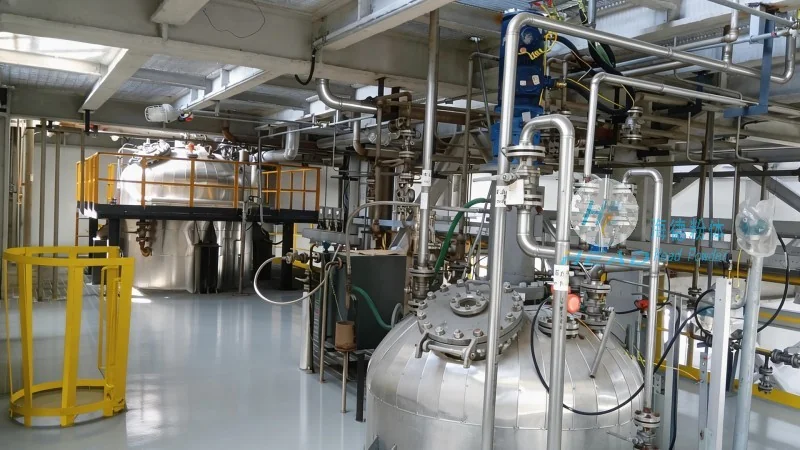
Choosing an experienced engineering partner is as important as selecting the right technology. A provider with deep domain knowledge in food additive conveying will offer not just equipment but a comprehensive service that includes material testing, system simulation, installation supervision, commissioning, and after-sales support. Look for a partner who can demonstrate a track record in your specific additive types—whether it is highly flowable, cohesive, or abrasive. Certification to ISO 9001 and familiarity with global food safety standards are non-negotiable. Additionally, the partner should provide detailed documentation including P&IDs, electrical schematics, and operation manuals in clear English, along with on-site training for your team. The most effective collaborations are those where the supplier takes time to understand your production goals, constraints, and future expansion plans, delivering a solution that is not just functional but transformative.
The conveyance of food additives via pneumatic systems is a specialized field that blends mechanical engineering, material science, and food safety expertise. When designed and implemented correctly, these systems deliver exceptional cleanliness, efficiency, and product integrity. For manufacturers seeking to scale production while adhering to the highest quality standards, a customized pneumatic conveying solution is a strategic investment. By leveraging the principles and best practices outlined in this article, you can make informed decisions that drive tangible operational improvements. For a detailed consultation on your specific food additive conveying requirements, reach out to headpowder, where decades of engineering experience meet cutting-edge innovation. With a commitment to safety, hygiene, and performance, we help you turn complex material handling challenges into seamless, automated processes that support your growth in the competitive food additives market.

 Shandong headpowder Engineering Co., Ltd.
 156-6277-7102(Manager Zhang)
  0531-83386006
  Jinan City, Shandong Province, China
服务热线
微信咨询
回到顶部