News
Rich project cases across industries, showing real implementation and proven technical strength.Methyl cellulose is a versatile, water-soluble polymer widely utilized in industries such as construction, pharmaceuticals, food processing, and personal care. Its ability to act as a thickener, binder, emulsifier, and stabilizer makes it indispensable across many manufacturing processes. However, the handling and transportation of methyl cellulose powder present unique challenges due to its fine particle size, low bulk density, hygroscopic nature, and tendency to agglomerate. Traditional mechanical conveying methods often lead to degradation, contamination, or inconsistent flow. For these reasons, pneumatic conveying systems have emerged as the preferred solution for moving methyl cellulose safely and efficiently. This article provides a comprehensive technical analysis of methyl cellulose pneumatic conveying systems, covering system types, design considerations, material properties, operational optimization, and real-world integration strategies. It is intended for process engineers, plant managers, and procurement specialists seeking reliable, high-performing conveying solutions for methyl cellulose powder.
Before selecting or designing a pneumatic conveying system, it is essential to understand the physical and chemical properties of methyl cellulose. This powder typically exhibits a bulk density ranging from 200 to 500 kg/m³ depending on the grade and particle size distribution. The particle shape is irregular, often fibrous or flaky, which can lead to bridging and rat-holing in storage vessels. Methyl cellulose is also highly hygroscopic; it readily absorbs moisture from the air, forming lumps and causing flowability issues. Its angle of repose is generally between 45 and 55 degrees, indicating poor flow characteristics under gravity alone. These properties mean that any conveying system must be designed to minimize moisture exposure, prevent particle attrition, and maintain consistent flow without blockages. A dilute-phase pneumatic system operating at relatively low pressures and moderate velocities can be effective, but careful attention must be paid to pickup points, pipeline routing, and filtration equipment.
Pneumatic conveying systems fall into two primary categories: dilute-phase and dense-phase. In dilute-phase conveying, material is suspended in a high-velocity air stream (typically 15–30 m/s) and transported through the pipeline. This method is suitable for free-flowing powders with low moisture content, but for methyl cellulose, the high velocity can cause particle degradation, dust generation, and increased risk of wall buildup due to electrostatic charging. Dense-phase conveying, on the other hand, uses lower air velocities (1–8 m/s) and moves material in a plug or slug flow regime. This approach reduces particle attrition, minimizes dust, and provides better control over the product's integrity. For methyl cellulose, dense-phase conveying is generally recommended when the material has higher moisture sensitivity or when the downstream process requires minimal particle breakage. However, dense-phase systems require higher pressure differentials (up to 4–6 bar) and more robust air supply and control systems. The choice between dilute and dense phase depends on the specific grade of methyl cellulose, the required throughput, and the distance of conveyance. Many modern installations adopt a hybrid approach, using dense-phase for fragile or hygroscopic materials while employing dilute-phase for shorter, low-risk transfers.
An effective pneumatic conveying system for methyl cellulose comprises several critical components, each of which must be selected with the material's properties in mind. The air source, whether a positive displacement blower or a compressor, must supply clean, dry compressed air to avoid introducing moisture. Air drying units, such as desiccant or refrigerated dryers, are often necessary to maintain a dew point below ambient conditions. The feeding device, typically a rotary airlock or a screw feeder, must be designed to handle the cohesive nature of methyl cellulose without smearing or compressing the powder. Venturi eductors or vacuum nozzles can also be used at the pickup point. The conveying pipeline should be constructed of stainless steel with a smooth interior finish to reduce friction and prevent product buildup. Pipe diameters must be calculated based on the material's saltation velocity, which is the minimum air velocity required to keep particles in suspension. For methyl cellulose, this velocity is typically between 12 and 18 m/s for dilute-phase, but lower for dense-phase systems. At the receiving end, a cyclone separator, bag filter, or cartridge filter is used to separate the powder from the conveying air. For methyl cellulose, bag filters with pulse-jet cleaning and PTFE membrane coatings are effective in preventing blinding caused by fine particles. Additionally, a surge bin or day tank with level sensors and fluidizing pads can ensure smooth discharge into downstream equipment.
Designing a pneumatic conveying system for methyl cellulose requires precise calculation of several parameters: air velocity, pressure drop, solids loading ratio, and power consumption. The solids loading ratio (mass of powder per mass of air) typically ranges from 5 to 15 for dilute-phase and 15 to 40 for dense-phase systems. A higher loading ratio reduces air consumption and energy costs but increases the risk of plugging. For methyl cellulose, a loading ratio of 10 to 20 is often optimal, balancing efficiency with reliability. The pressure drop across the system must be calculated considering both the straight pipe sections and the bends. Bends with a large radius of curvature (at least 10 times the pipe diameter) are recommended to minimize particle impingement and pressure loss. The total system pressure drop for a typical 50-meter conveying distance might range from 0.5 to 1.5 bar, depending on the pipe diameter, material properties, and air velocity. Pipe diameter selection is critical; a diameter too small leads to high velocities and attrition, while a diameter too large results in low velocities and potential settling. For methyl cellulose, common pipe diameters range from 50 mm to 150 mm for throughputs of 1 to 10 tons per hour. Computational fluid dynamics (CFD) modeling can provide more accurate predictions, especially for complex layouts with multiple bends or elevation changes. It is advisable to conduct pilot tests with representative methyl cellulose samples before finalizing the design, as variations in moisture content and particle size distribution can significantly alter flow behavior.
Operating a pneumatic conveying system for methyl cellulose presents several practical challenges that must be managed to ensure consistent performance. The most common issues include pipeline blockages due to moisture-induced agglomeration, electrostatic charging causing material cling to pipe walls, and filter cake buildup on filter bags. To mitigate moisture problems, the entire system should be purged with dry air before and after operation, and the conveying air should be conditioned to a relative humidity of less than 30%. Insulating pipelines in humid environments can also prevent condensation. Electrostatic charging can be reduced by using conductive pipes (e.g., stainless steel) and grounding all system components. Anti-static filter media and ionizing air nozzles are also effective. For filter performance, selecting a filter with a low air-to-cloth ratio (typically 0.5 to 1.0 m/min) helps maintain efficient cleaning. Regular maintenance of rotary airlocks, including monitoring wear on rotor tips and housing, prevents air leakage that can disrupt material flow. Additionally, incorporating automated control systems with pressure sensors, flow meters, and level indicators allows real-time adjustment of air velocity and feed rate, preventing system excursions. Many plants also implement a nitrogen purge or inert gas blanketing to further protect hygroscopic methyl cellulose during conveying.
An efficient methyl cellulose pneumatic conveying system does not operate in isolation; it must seamlessly integrate with upstream processes (e.g., grinding, sieving, blending) and downstream applications (e.g., mixing, dosing, packaging). For example, if methyl cellulose is to be blended with other dry ingredients, the pneumatic system should deliver the powder directly into a high-shear mixer or a ribbon blender, often through a splitter valve that diverts flow to multiple destinations. The conveying system's discharge point should include a deaeration device (such as a cyclone discharger or a vented hopper) to avoid air entrainment in downstream equipment. For storage silos, it is recommended to use conical or wedge-shaped hoppers with a steep slope (70 degrees or more) and a large outlet size to prevent bridging. Fluidizing pads or vibratory bin dischargers can aid in consistent discharge. In terms of automation, the control system should provide remote monitoring of conveying parameters, batch tracking, and alarm functions for deviations. Many modern systems incorporate IIoT sensors that transmit data to a central dashboard, allowing predictive maintenance and performance optimization. As the industry moves toward Industry 4.0 standards, pneumatic conveying systems for methyl cellulose are increasingly designed with modular components and digital twin capabilities, enabling rapid reconfiguration for different product grades and throughput requirements.
Looking ahead to 2026, the global methyl cellulose market is projected to grow at a compound annual growth rate (CAGR) of approximately 5–7%, driven by increasing demand from the construction sector, particularly in tile adhesives, thin-set mortars, and self-leveling compounds. This growth translates into higher requirements for efficient, hygienic, and reliable powder handling systems. In parallel, the pneumatic conveying equipment market is experiencing a shift toward energy-efficient designs, with variable frequency drives (VFDs) and low-pressure drop components becoming standard. A 2025 industry survey indicated that over 60% of new powder handling installations now incorporate dense-phase or semi-dense-phase technology for fragile and hygroscopic materials like methyl cellulose. Moreover, regulatory pressures regarding workplace dust exposure and emissions are driving the adoption of closed-loop pneumatic systems with high-efficiency particulate air (HEPA) filtration. Companies operating in the methyl cellulose supply chain are also emphasizing traceability and documentation, making integrated batch management a key feature of modern conveying system controls. For those evaluating new systems, the total cost of ownership, including energy consumption, maintenance intervals, and product loss due to degradation, should be carefully compared across vendor proposals.
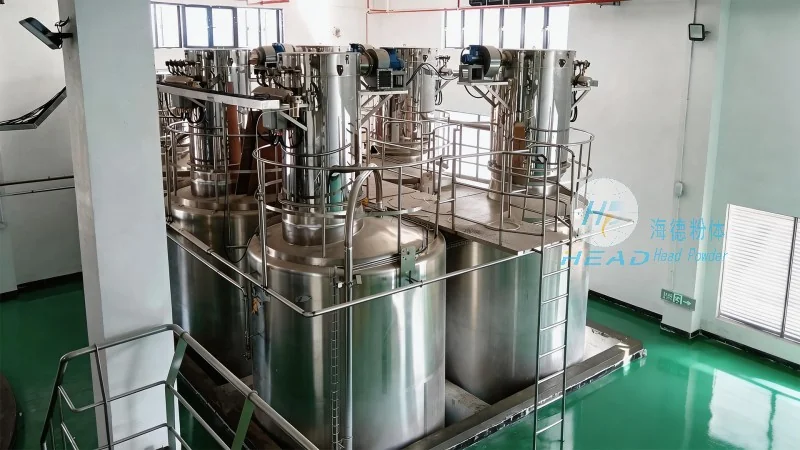
With over a decade of specialization in powder handling and pneumatic conveying, headpowder has developed deep expertise in managing challenging materials like methyl cellulose. Our team of application engineers understands the interplay between particle characteristics and system design, ensuring that each installation is tailored to the specific grade and throughput requirement. For example, in a recent project for a methyl cellulose powder blending facility in the Middle East, we implemented a dense-phase conveying system that reduced product degradation by 35% compared to the client's previous dilute-phase setup. The system incorporated stainless steel pipelines with electro-polished interiors, advanced moisture control, and a remote monitoring interface that allowed operators to adjust parameters from a control room. This resulted in a 20% reduction in maintenance downtime and a 15% improvement in overall equipment effectiveness (OEE). headpowder also provides comprehensive support from initial feasibility studies and CFD simulations through installation, commissioning, and ongoing service. We use only certified components and adhere to ISO 9001 quality standards. Our systems are designed to comply with ATEX or other relevant safety directives when handling explosive environments, though methyl cellulose itself is not typically explosive. We offer a range of options, from compact single-line systems to multi-line, multi-product networks with automated routing. Contact our technical sales team directly for a detailed discussion of your methyl cellulose conveying requirements. (咨询热线:156-6277-7102)
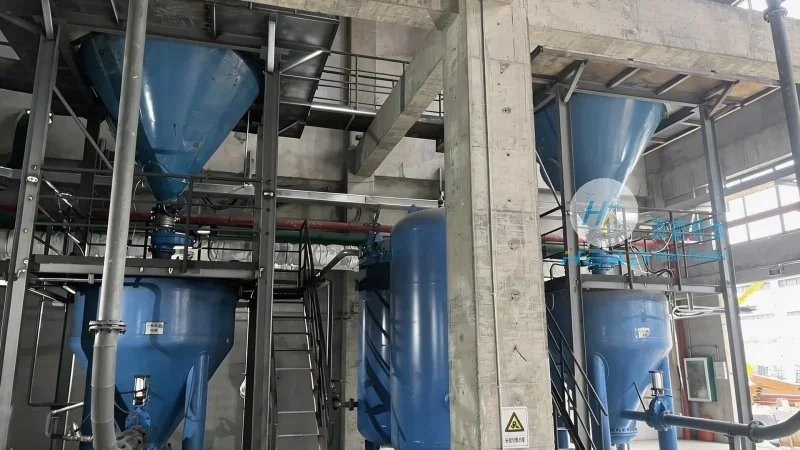
To maximize the lifespan and performance of a methyl cellulose pneumatic conveying system, a structured maintenance program is essential. Daily inspections should focus on air filter pressure differentials, rotary airlock operation, and pipeline integrity at bends and flanges. Weekly checks should include verifying the moisture content of compressed air supply, cleaning of filter bags, and calibration of pressure sensors and flow meters. Quarterly maintenance may involve replacing worn rotary airlock vanes, inspecting internal pipe surfaces for buildup or erosion, and testing safety devices such as burst discs and emergency stop circuits. Spare parts inventory should include seals, bearings, bushings, and filter cartridges. Safety considerations are equally important because methyl cellulose dust can be combustible under certain conditions when dispersed in air at high concentrations. Although its minimum explosive concentration typically exceeds 500 g/m³, good housekeeping to prevent dust accumulation and proper bonding and grounding of all equipment are mandatory. Systems operating in regions with high humidity should include automatic drain traps and moisture alarms. headpowder provides detailed operation and maintenance manuals, as well as on-site training for plant personnel. We also offer remote diagnostic support and annual service contracts to ensure your system remains in peak condition. By combining rigorous design with proactive maintenance, methyl cellulose pneumatic conveying systems can deliver reliable, cost-effective service for 15–20 years or more.
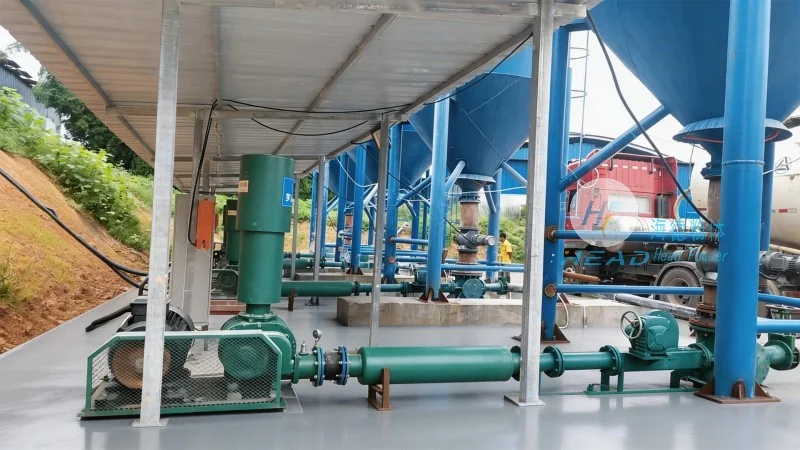
As the methyl cellulose industry continues to evolve, several emerging trends will shape the next generation of pneumatic conveying systems. One significant development is the integration of artificial intelligence (AI) and machine learning for predictive control. By analyzing real-time data from sensors, AI algorithms can adjust air velocity, feed rate, and purge cycles to compensate for changes in material moisture or particle size, optimizing energy use and minimizing downtime. Another trend is the increasing use of modular, skid-mounted systems that can be rapidly deployed and reconfigured. headpowder is actively developing standardized modules for methyl cellulose conveying that can be combined with other powder handling processes, such as grinding or blending, into a single integrated unit. This approach reduces engineering lead times and simplifies installation. Additionally, sustainable manufacturing practices are driving demand for systems that recover and reuse conveying air, reducing energy consumption by 20–30%. Our engineering team is also exploring the use of corrosion-resistant alloys and biobased lubricants to further align with environmental goals. Whether your application involves small-scale laboratory transfer or multi-ton per minute bulk loading, headpowder can design a system that meets your current needs while accommodating future expansion or product changes.
For more information on how pneumatic conveying technology can transform your methyl cellulose handling operations, connect with our specialists who can provide a no-obligation consultation and conceptual design. We welcome the opportunity to share our case studies, technical white papers, and test lab results. (咨询热线:156-6277-7102)

 Shandong headpowder Engineering Co., Ltd.
 156-6277-7102(Manager Zhang)
  0531-83386006
  Jinan City, Shandong Province, China
服务热线
微信咨询
回到顶部