News
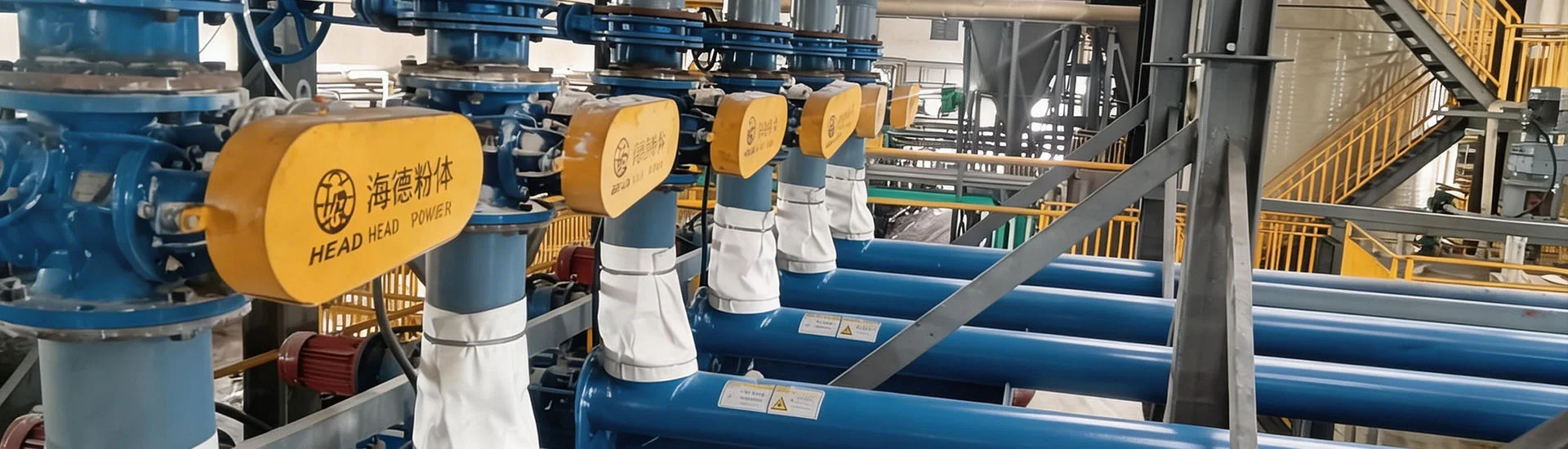
Rich project cases across industries, showing real implementation and proven technical strength.In the rapidly evolving landscape of lithium-ion battery manufacturing, the cathode material conveying stage has emerged as a critical determinant of both production efficiency and final battery performance. As global demand for electric vehicles and energy storage systems surges, manufacturers are increasingly turning to pneumatic conveying solutions to handle the inherently challenging properties of cathode powders—such as lithium cobalt oxide (LCO), lithium nickel manganese cobalt oxide (NMC), lithium iron phosphate (LFP), and their variants. These materials are typically fine, abrasive, hygroscopic, and often pyrophoric when exposed to moisture, making traditional mechanical conveying methods—like belt conveyors or screw feeders—inefficient, costly, and potentially hazardous. Pneumatic conveying, by contrast, offers a closed-loop, gentle, and precisely controlled environment that aligns with the stringent cleanliness and safety standards of modern battery cathode production. This article provides a deep-dive into the technical principles, system configurations, material properties, and operational best practices of pneumatic conveying for lithium battery cathode materials, while also highlighting how industry-tested solutions from headpowder help manufacturers achieve higher yield, lower contamination risk, and greater process consistency. Whether you are scaling up from pilot to mass production or retrofitting an existing line, understanding the nuances of pneumatic conveying is essential for maintaining competitive advantage in this high-stakes market.
Pneumatic conveying systems for cathode materials operate on the fundamental principle of using a gas stream—typically dry compressed air or inert nitrogen—to transport solid particles through a pipeline from one process point to another. The choice of gas is not arbitrary; nitrogen is frequently selected to minimize moisture absorption and to suppress dust explosion risks associated with fine metal oxide particles. Two primary conveying modes dominate the industry: dilute-phase (also known as suspension flow) and dense-phase (plug or slug flow). Dilute-phase systems suspend particles at high velocities, typically above 20 m/s, enabling high throughput but also generating greater particle attrition and pipe erosion. In contrast, dense-phase conveying moves material in compact slugs at lower velocities, often below 5 m/s, which drastically reduces particle degradation and mechanical wear. For cathode materials—where particle morphology directly impacts electrode coating quality and battery capacity—dense-phase conveying is increasingly preferred, especially for high-value NMC and LFP grades. headpowder has developed proprietary technology that fine-tunes the air-to-material ratio and pipeline geometry to maintain stable dense-phase flow even with cohesive powders possessing median particle sizes below 10 microns. This precision allows customers to achieve minimal breakage rates of less than 0.5% by weight, compared to 3–5% degradation seen in conventional dilute-phase setups.
A well-engineered pneumatic conveying system for lithium battery cathodes comprises several interdependent components, each demanding careful specification. The feeding device is arguably the most critical—rotary airlocks, screw feeders, or venturi injectors must ensure a consistent, controlled material discharge into the conveying line without air leakage or bridging. For cathode powders with high angle of repose and poor flowability, headpowder integrates vibratory bin activators and aeration pads at the hopper discharge to prevent rat-holing and arching. The conveying pipeline itself should be constructed from stainless steel with a smooth internal surface finish (Ra ≤ 0.8 μm) to reduce particle deposition and ease cleaning between material changeovers. Pipe diameter, bend radius (typically 5–10 times pipe diameter), and the number of directional changes must be optimized; sharp 90-degree bends cause severe impact attrition, while gradual sweeps preserve particle integrity. A typical installation for a cathode production line might include 50–200 meters of piping, with 3–6 bends, operating at conveying pressures ranging from 0.5 to 3 bar for dense-phase and 0.2 to 0.8 bar for dilute-phase. The air mover—either a positive displacement blower or a rotary screw compressor—must deliver oil-free, dry air or nitrogen with a dew point below -40°C to prevent moisture condensation that could lead to cathode material hydration and subsequent capacity fade. Finally, the receiver and filtration unit at the discharge end must separate the conveyed powder from the carrier gas with high efficiency, often using cartridge filters with pulsed-jet cleaning, achieving emission levels below 1 mg/m³ to meet workplace safety regulations.
Understanding the physical and chemical characteristics of cathode powders is fundamental to designing a reliable pneumatic conveying system. Among the most impactful properties are bulk density, particle size distribution, cohesiveness, and moisture sensitivity. LFP cathode materials, for instance, typically have a bulk density of 0.8–1.2 g/cm³, while NMC grades range from 1.5 to 2.5 g/cm³. Fine particles below 5 microns adhere strongly to pipe walls due to van der Waals forces, leading to build-up and eventual blockage if airflow is insufficient. The Hausner ratio—a measure of flowability—for many cathode materials lies between 1.3 and 1.6, indicating moderate to poor flow behavior. Additionally, the presence of residual lithium compounds on particle surfaces can cause friction with pipe walls, generating static electricity and increasing explosion risk. Industry standards such as ASTM D6393 (for cohesion and flow function) and ISO 6182 (for dust explosion testing) guide the selection of conveying parameters. headpowder’s engineering team routinely conducts material characterization using shear testing and aeration assessment before system design, ensuring that line velocity, pressure drop, and air consumption are tailored to each customer’s specific powder blend. For example, a recent project for a major battery manufacturer processing dry-coated NMC811 powder required a specially designed dense-phase system with reduced line velocity (3.5 m/s) and periodic pulsed air injection to prevent particle segregation, achieving a consistent flow rate of 500 kg/h with no measurable composition variation across 48-hour continuous operation.
The battery cathode manufacturing environment demands contamination-free, closed-loop material movement to preserve electrochemical purity. Mechanical conveyors, such as belt or screw systems, expose powders to open atmospheric conditions, bearing grease, and metal-on-metal wear debris. Even minor contamination from iron or copper particles can trigger parasitic side reactions in the battery, reducing cycle life and raising safety hazards. Pneumatic conveying inherently seals the material from external contaminants and provides a fully enclosed path from blending to calcination to final packaging. Furthermore, the flexibility of pipeline routing allows easy integration into existing cleanroom layouts, with minimal footprint and no need for complex supporting structures. Energy efficiency is another tangible benefit: modern dense-phase systems consume 30–50% less compressed air per ton of material conveyed compared to dilute-phase alternatives, translating to significant operational cost savings. According to 2026 market data published by the International Battery Materials Association, manufacturers that adopted optimized pneumatic conveying for cathode production reported an average 12% reduction in scrap rates and a 15% improvement in production line uptime. One prominent case involved a European cathode manufacturer that replaced a set of screw conveyors in its LFP production line with a headpowder-supplied dense-phase system. After six months of operation, the company observed a 40% drop in maintenance costs, a 22% increase in effective throughput, and zero contamination-related battery failures in downstream cell assembly. Such outcomes underscore the transformative role of pneumatic conveying in scaling up cathode manufacturing to meet the projected 2,800 GWh global battery demand by 2030, as forecast by BloombergNEF.
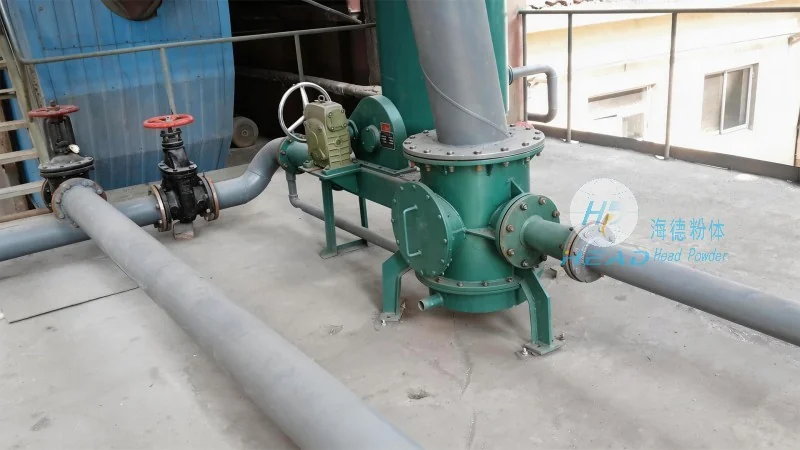
Despite its advantages, pneumatic conveying of cathode materials is not without engineering hurdles. Fine powder fluidization, abrasive wear, and particle attrition remain top concerns. In dilute-phase systems, particle-wall collisions occur at high impact velocities, leading to rounding of sharp edges and generation of ultrafine dust, which adversely affects electrode slurry rheology. To mitigate attrition, headpowder employs computational fluid dynamics (CFD) modeling to design low-velocity conveying regimes and to identify optimal bend geometries—such as long-radius elbows with replaceable wear-resistant liners. Another persistent challenge is material segregation: different particle sizes within a multimodal cathode powder can separate during conveying, causing compositional inconsistency downstream. This is particularly problematic for cathode active materials blended with conductive additives like carbon black or carbon nanotubes. A proven countermeasure is to maintain homogeneous flow by using a combination of low line velocity and periodic air injection to break up particle clusters, a technique refined by headpowder over hundreds of installations. Moisture ingress during conveying—especially in humid production environments—can lead to lithium hydroxide formation on particle surfaces, raising pH and complicating binder dissolution. To address this, headpowder integrates in-line dew point monitoring and dew-point-controlled nitrogen loops, guaranteeing that the conveyed atmosphere remains below -45°C dew point at all times. These measures not only preserve material quality but also comply with stringent industry standards such as IATF 16949 for automotive-grade battery components. For manufacturers evaluating system retrofits, headpowder offers a modular upgrade path that allows phased adoption of dense-phase conveying without disrupting existing production schedules, reducing total capital outlay by up to 25% compared to a complete line replacement.
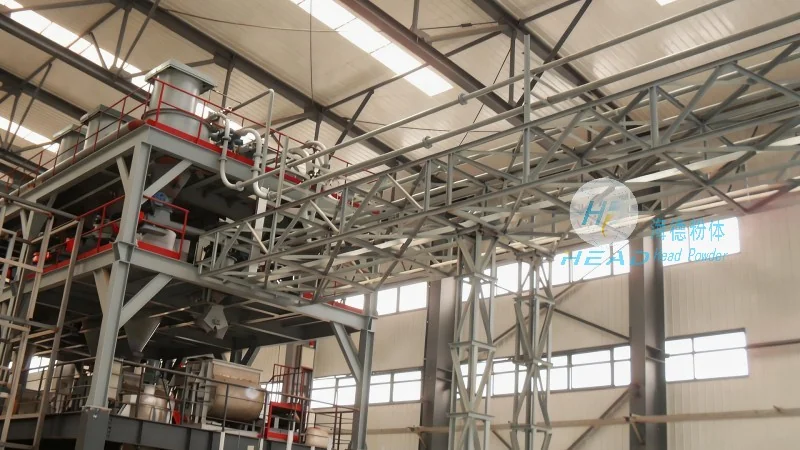
To ensure that a pneumatic conveying system meets production targets, several key performance indicators (KPIs) must be validated during commissioning. Conveying capacity, typically measured in kilograms per hour, should achieve a minimum of 95% of the design rate under steady-state conditions. Pressure drop across the entire line—from feed point to receiver—should remain stable within ±0.1 bar, indicating consistent flow regime. Particle size distribution analysis before and after conveying, using laser diffraction or sieve analysis, must show that the d50 and d90 values do not shift by more than 1%, confirming minimal attrition. For health and safety compliance, dust concentration in the exhaust air should be measured to ensure it remains below the occupational exposure limit for the specific material. headpowder provides a comprehensive performance test protocol that includes a 72-hour continuous run with data logging, followed by metallographic examination of pipe wall wear at critical bends. Clients receive a detailed validation report that documents all measurements against agreed-upon acceptance criteria. One example from a 2025 installation for a North American cathode producer involved the conveyance of 8 tons per day of NMC622 powder over a 180-meter circuit with five 90-degree bends. The final test results showed a conveying capacity of 420 kg/h (within 2% of design), a d50 change of just 0.3%, and a wall wear rate of 0.005 mm per 1,000 operating hours, projecting a pipe lifetime exceeding 12 years. Such validated performance reinforces the reliability of pneumatic conveying as a cornerstone technology for cathode production scale-up.
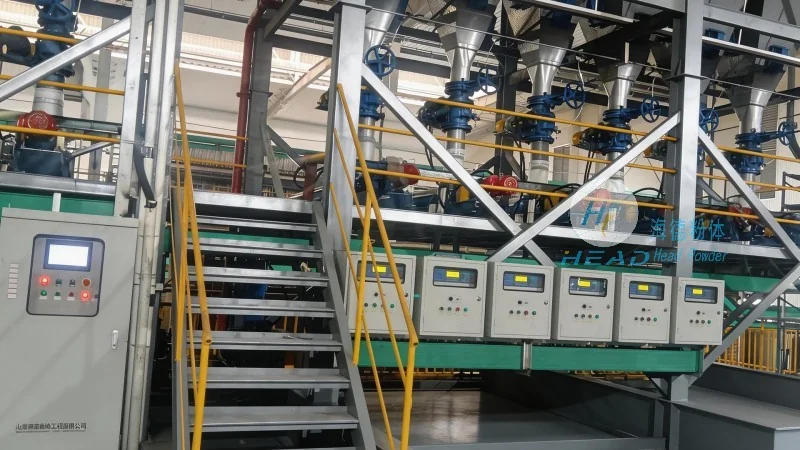
The lithium battery cathode conveying market is experiencing a paradigm shift driven by three major forces: the transition to dry electrode coating processes, the increasing adoption of solid-state battery materials, and the push for carbon-neutral manufacturing. Dry electrode technology, which eliminates solvent-based slurry preparation, demands even higher precision in powder conveying—particles must be coated onto current collectors without aggregation, which requires ultra-low-attrition handling. Pneumatic systems capable of conveying LFP and NMC powders with less than 0.3% fines generation are becoming the baseline requirement. Meanwhile, solid-state battery developers are exploring sulfide-based and oxide-based cathode active materials that are extremely sensitive to oxygen and moisture, necessitating pneumatic systems operating under ultrapure nitrogen with oxygen levels below 10 ppm. By 2026, analysts project that over 40% of new cathode production lines will specify dense-phase pneumatic conveying with integrated moisture and oxygen scavenging systems, up from about 22% in 2023. Furthermore, sustainability mandates are pushing manufacturers to reduce compressed air consumption and to recover and recycle conveying gases. headpowder’s next-generation systems incorporate energy-efficient vacuum-assisted dense-phase technology and real-time adaptive controls that adjust air flow based on material flow feedback, cutting energy use by up to 35% compared to fixed-speed blower configurations. In one collaborative R&D project with a Chinese cathode gigafactory, headpowder achieved a 28% reduction in total system carbon footprint while simultaneously improving conveying consistency for mixed-nickel cathode blends. As battery cell prices continue to fall toward the $80/kWh threshold, the economic viability of advanced pneumatic conveying solutions becomes even more compelling, offering a rapid return on investment—typically within 18 to 24 months—through lower scrap, higher line efficiency, and reduced maintenance.
Selecting the right pneumatic conveying partner is as strategic as selecting the cathode chemistry itself. A system that fails to handle material variability, contaminates the product, or consumes excessive energy will undermine the entire production economics. headpowder brings over a decade of focused experience in handling challenging powder materials, with a dedicated in-house test center certified under ISO 17025 for material characterization. Our engineers work shoulder-to-shoulder with your process and quality teams, from initial feasibility studies through to commissioning and operator training. We prioritize transparent communication, offering clear performance guarantees and detailed documentation that supports your regulatory submissions. For manufacturers aiming to lock in production stability and cost predictability in a volatile raw material market, headpowder pneumatic conveying solutions provide a proven path forward. Contact our process specialists today to discuss your specific cathode material types, target throughput, and facility layout constraints, and receive a preliminary system design and budget estimate tailored to your project timeline (咨询热线:156-6277-7102). With headpowder, you are not just buying a conveying system—you are investing in a partnership that safeguards the quality and scalability of your cathode production for years to come.

 Shandong headpowder Engineering Co., Ltd.
 156-6277-7102(Manager Zhang)
  0531-83386006
  Jinan City, Shandong Province, China
服务热线
微信咨询
回到顶部