News
Rich project cases across industries, showing real implementation and proven technical strength.In the rapidly evolving landscape of energy storage manufacturing, the efficient and safe handling of raw materials has become a critical factor determining both production scalability and final product quality. Lithium battery production relies on a diverse range of powdery and granular substances—including lithium carbonate, lithium hydroxide, nickel cobalt manganese (NCM) precursors, graphite, silicon oxide, and various conductive additives—each with distinct physical properties such as particle size distribution, moisture sensitivity, and electrostatic charge tendency. Traditional mechanical conveying methods, such as screw conveyors or bucket elevators, often face limitations in terms of dust containment, cross-contamination risk, maintenance complexity, and space utilization. This is where pneumatic conveying systems emerge as a transformative solution. By utilizing air pressure or vacuum to transport materials through enclosed pipelines, pneumatic systems offer a sealed, flexible, and highly automated approach that aligns perfectly with the stringent cleanliness and precision requirements of modern lithium battery factories. This article provides an in-depth exploration of pneumatic conveying technology specifically tailored for lithium battery raw materials, covering system architecture, material characteristics, design considerations, industry trends, and practical implementation insights. Whether you are a plant engineer evaluating new equipment or a procurement specialist seeking reliable partners, understanding the nuances of pneumatic conveying will empower you to make informed decisions that enhance operational efficiency and product consistency.
Pneumatic conveying operates on the principle of moving bulk solids through a pipeline using a gas stream—typically air or inert gas like nitrogen. Two primary modes exist: dilute phase (suspension flow) and dense phase (plug or slug flow). For lithium battery raw materials, dense phase conveying is often preferred because it minimizes particle attrition, reduces wear on pipelines, and lowers energy consumption. In a typical dense phase system, material is introduced into a pressure vessel, pressurized, then discharged in controlled pulses. The low-velocity, high-pressure environment preserves particle integrity—critical for materials like NCM precursors where shape and surface area directly affect electrochemical performance. Conversely, dilute phase systems, where particles are fully suspended at high velocity, may be acceptable for robust materials like alumina or certain carbons, but they risk generating fines and increasing dust explosion hazards. The choice between these modes depends on material bulk density, angle of repose, cohesive strength, and moisture content. Engineers must conduct thorough material characterization—including particle size analysis, shear testing, and moisture content measurement—before system design. Additionally, inert gas blanketing is frequently employed to prevent oxidation of moisture-sensitive lithium compounds, especially when handling lithium metal oxides or lithium hexafluorophosphate (LiPF6) contaminants in recycling streams. Properly designed pneumatic systems can achieve transfer rates from a few kilograms per hour in pilot lines to over 20 metric tons per hour in large-scale production, with conveying distances ranging from 20 meters to 200 meters or more. The closed-loop design inherently prevents dust emissions, protecting operator health and complying with stringent workplace safety standards such as ATEX or NFPA 654.
Lithium battery raw materials exhibit a wide range of physical and chemical properties that directly influence conveying performance. Particle size distribution (PSD) is perhaps the most critical parameter. Materials like graphite flake or carbon black often contain fine particles below 10 microns, which can cause filter blinding, static buildup, and agglomeration. Cohesive powders, such as lithium cobalt oxide (LCO) or lithium iron phosphate (LFP), have high interparticle forces that require careful aeration control to prevent bridging in hoppers. Moisture content is another decisive factor: many lithium salts are hygroscopic and can cake if exposed to humidity, leading to blockages and inconsistent feed rates. For these sensitive materials, heat tracing, desiccant dryers, or nitrogen purge systems are often integrated into the conveying line. Electrostatic charge accumulation presents a unique hazard, as fine powders can generate significant static electricity during transport, risking spark ignition in combustible dust atmospheres. Grounding, bonding, and the use of conductive piping materials (e.g., 304 or 316 stainless steel with proper earthing) are mandatory for safe operation. Additionally, the angle of repose and compressibility affect how materials flow from storage silos into conveying vessels. A free-flowing material like spherical graphite may require less assistance, whereas a fibrous or flaky material like polyvinylidene fluoride (PVDF) demands specialized feeder designs. Headpowder engineers routinely perform flow property tests using standard methodologies (ASTM D6393, Jenike shear cell) to generate accurate design parameters. By incorporating these data into computational fluid dynamics (CFD) simulations, we can predict pressure drops, velocity profiles, and wear patterns before construction, reducing commissioning time and operational risks.
A complete pneumatic conveying system for lithium battery raw materials comprises several interconnected modules: feed points (hoppers, big-bag unloaders, or drum dump stations), conveying vessels (blow tanks or rotary valves), pipeline networks, separation devices (cyclones, filter receivers, or baghouses), and a prime mover (positive displacement blowers, compressors, or vacuum pumps). For battery material applications, the choice of feed device is especially important. Rotary airlock valves are commonly used for free-flowing granules, but for cohesive powders, screw feeders or pin-actuated discharge systems prevent bridging. Blow tanks offer superior control for dense phase conveying, allowing precise batch transfer and minimizing material degradation. Pipeline routing must consider vertical lifts, horizontal runs, and bends. Long-radius bends or sweep elbows reduce impact damage and wear; ceramic-lined bends or replaceable wear-back plates extend service life in abrasive applications like conveying lithium phosphate or manganese dioxide. The separation station at the destination silo or process vessel typically uses a pulsed-jet filter receiver to clean the conveying air while returning material to the process. To achieve the purity demanded in battery production, all contact surfaces should be constructed from 316L stainless steel with electropolished finishes to minimize particle shedding and facilitate cleaning. Interlocks, level sensors, pressure transmitters, and flow meters provide real-time monitoring, enabling closed-loop control from a central PLC. Headpowder has integrated Industry 4.0 capabilities into many installations, allowing remote diagnostics, predictive maintenance alerts, and historical data logging for audit trails. These features are particularly valuable for just-in-time supply chains and multi-plant standardization efforts.
Given that many lithium battery raw materials are combustible dusts—such as graphite, carbon black, aluminum powder, and lithium metal fines—safety design is non-negotiable. The European ATEX directives and North American NFPA standards classify areas where dust clouds may form, requiring explosion-proof equipment, static grounding, and pressure-shock-resistant construction. A typical hazard assessment begins with determining the material's Kst (deflagration index) and Pmax (maximum explosion pressure). For materials with high Kst values, explosion venting, suppression systems, or containment vessels must be designed accordingly. In pneumatic conveying lines, the risk is highest at the filter receiver and conveying vessel where dust clouds are concentrated. Headpowder systems incorporate multiple safety layers: spark detection, abort gates, pressure relief panels, and inert gas injection for oxygen level reduction below the limiting oxygen concentration (LOC). The conveying velocity is carefully controlled to avoid excessive turbulence that could ignite fines. Furthermore, all electrical components in contact zones must be rated for Class II, Division 1 or Zone 21 environments. Routine maintenance protocols include bond continuity checks, filter bag inspections, and housekeeping for fugitive dust accumulation. By adhering to these standards, manufacturers not only protect personnel and assets but also meet regulatory requirements for insurance and export markets. Compliance documentation, including Material Safety Data Sheet (MSDS) references and explosion protection documents, should be readily available for audits.
Beyond safety, the economic justification for pneumatic conveying in battery raw material handling centers on reduced labor costs, minimized material loss, and improved process consistency. A well-designed system can achieve yield rates exceeding 99.8%, compared to 95-98% for mechanical conveyors where spillage and dust loss are common. Energy efficiency is another lever: dense phase systems consume 30-50% less power per ton conveyed than dilute phase equivalents, translating to significant savings in high-throughput plants. Variable frequency drives (VFDs) on blowers allow turndown to match actual demand, further reducing energy waste. Maintenance costs are also lower, as enclosed pipes eliminate belt replacements, gearbox repairs, and bearing failures typical of mechanical systems. Headpowder has delivered projects that reduce annual maintenance downtime by over 60% compared to bucket elevator based lines. To maximize total cost of ownership, consider the total lifecycle: initial equipment investment, installation complexity, utility connections, spare parts availability, and training requirements. Many battery manufacturers opt for a modular, skid-mounted design that simplifies installation and allows future expansion without major structural modifications. Additionally, lean material handling principles—such as just-in-time feeding to mixers or coating lines—can eliminate intermediate storage and reduce inventory holding costs. When integrated with upstream material drying and downstream feeding to electrode slurry preparation, pneumatic conveying becomes a seamless link in the value chain.
As the lithium battery industry scales toward gigafactory production, several technology trends are shaping conveying system design. First, the shift toward dry electrode coating processes eliminates solvent-based slurry systems, increasing demand for precise dry powder feeding with minimal segregation. Pneumatic systems are adapting with advanced multiphase flow models and twin-screw feeders that maintain blend consistency during transport. Second, the push for battery recycling—driven by regulation and resource security—requires systems that handle contaminated, irregularly shaped black mass materials. Dedicated designs for crushed battery waste include abrasion-resistant liners, magnetic separation integration, and vapor treatment for electrolyte off-gassing. Third, digital twin technology enables virtual commissioning and real-time optimization. Operators can simulate conveying behavior under various batch compositions and adjust parameters without disrupting production. Headpowder has developed proprietary algorithms that predict pipeline wear and recommend maintenance windows. Fourth, sustainability goals are driving the adoption of low-carbon compressed air systems, heat recovery from blowers, and closed-loop nitrogen recycling. Finally, modular, containerized pneumatic units are gaining popularity for flexible, mobile battery manufacturing lines used in pilot plants or remote locations. These innovations collectively reduce capital expenditure while improving reliability and environmental performance.
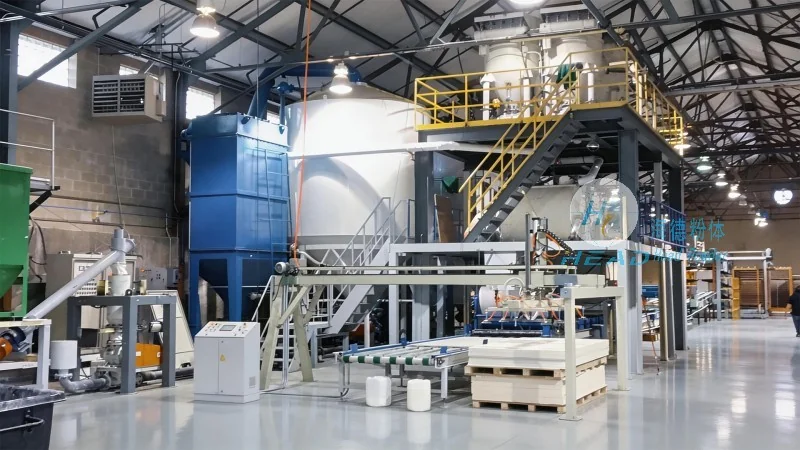
Selecting the right pneumatic conveying partner requires evaluating technical expertise, field experience, and after-sales support. The first step is to define the material portfolio, throughput rates, transfer distances, and process interface requirements. Next, request a feasibility study that includes material flow testing, system sizing calculations, and layout proposals. Verify that the supplier can provide design calculations complying with applicable building codes and explosion safety standards. On-site commissioning support is crucial—look for providers who offer installation supervision, startup assistance, and operator training. After delivery, a service agreement covering spare parts, remote monitoring, and periodic inspections ensures long-term reliability. For companies establishing their first battery material line, working with an experienced integrator like Headpowder minimizes debugging time and accelerates time-to-market. Reference visits to existing installations provide confidence in system performance and operator feedback. (咨询热线:156-6277-7102) Headpowder combines decades of powder handling knowledge with specific battery industry insights, having successfully delivered over 50 pneumatic systems for cathode, anode, and electrolyte materials globally. Our team can advise on everything from hopper design to filter selection, ensuring a solution that matches your process exactly.
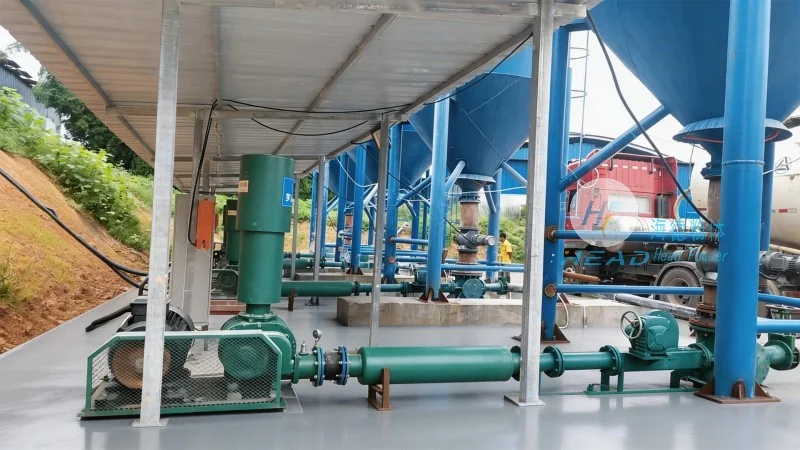
To illustrate real-world application, consider a project completed for a major cathode precursor manufacturer requiring the transfer of NCM hydroxide (NCM-OH) from a spray drying tower to a blending silo located 80 meters away with an elevation gain of 12 meters. The material exhibited high moisture sensitivity (less than 0.3% allowed) and moderate abrasiveness. After material characterization, Headpowder engineers selected a dense phase pneumatic system using nitrogen as the conveying gas to prevent oxidation and moisture ingress. A 2.5 m³ blow tank with a venturi feeder was installed, along with a long-radius pipe layout using 316L stainless steel with internal electropolishing. The separator was a pulse-jet filter receiver with PTFE membrane cartridges rated for fine particle capture. Explosion protection included a pressure relief panel and nitrogen inerting monitored by oxygen sensors. The system achieved a steady conveying rate of 10 tons per hour with less than 0.1% particle breakage (measured by laser diffraction PSD comparison). The customer reported a 40% reduction in operational labor compared to their previous mechanical system and a 95% reduction in dust emissions. The return on investment was realized within 18 months due to reduced material losses and maintenance costs. This case demonstrates how tailored pneumatic solutions solve specific challenges while delivering quantifiable business value.
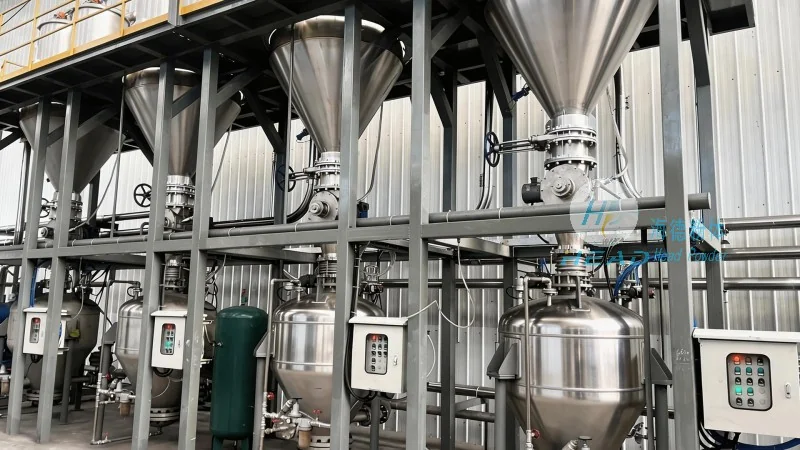
Pneumatic conveying is no longer a niche technology but a mainstream enabler for lithium battery raw material processing. Its ability to handle fragile, hygroscopic, and combustible materials in a fully sealed, automated environment makes it indispensable for quality-focused manufacturers. From material characterization through system design, installation, and ongoing support, every stage demands specialized knowledge and rigorous engineering. As battery chemistry evolves and production volumes climb, the flexibility of pneumatic systems to adapt to new materials and higher capacities will become even more valuable. By investing in a robust, well-designed conveying infrastructure today, battery manufacturers position themselves to meet tomorrow's market demands with confidence. For those seeking to optimize their material handling line, a detailed consultation with experienced professionals is the recommended next step. (咨询热线:156-6277-7102) Headpowder remains committed to advancing pneumatic technology for the energy storage industry, providing solutions that are both technically superior and commercially practical. Our team is prepared to discuss your specific application requirements and how our systems can support your growth.

 Shandong headpowder Engineering Co., Ltd.
 156-6277-7102(Manager Zhang)
  0531-83386006
  Jinan City, Shandong Province, China
服务热线
微信咨询
回到顶部