News
Rich project cases across industries, showing real implementation and proven technical strength.In the evolving landscape of bulk material handling, the transportation of Polytetrafluoroethylene (PTFE) powders and granules presents unique engineering challenges. PTFE, known for its exceptional chemical resistance, low friction coefficient, and high temperature stability, is widely utilized across industries such as chemical processing, pharmaceuticals, electronics, and advanced manufacturing. However, its inherent properties—such as extreme slipperiness, electrostatic accumulation, and tendency to agglomerate—require specialized conveying solutions. Pneumatic conveying systems have emerged as the preferred method for handling PTFE materials, offering enclosed, dust-free, and automated transport that preserves product integrity while ensuring operational safety. This article explores the technical principles, system configurations, design considerations, and best practices for implementing pneumatic conveying systems specifically optimized for PTFE materials. By examining real-world applications and addressing critical factors such as material flow characteristics, wear resistance, and explosion prevention, we provide a comprehensive guide for engineers and decision-makers seeking reliable, efficient, and cost-effective PTFE conveying solutions.
The global market for pneumatic conveying systems is projected to grow at a compound annual growth rate (CAGR) of 6.2% from 2026 to 2030, driven by increasing automation in powder handling industries and stringent safety regulations around combustible dusts. PTFE, classified as a combustible dust under NFPA 654 standards, demands systems that minimize dust cloud formation and static discharge. Additionally, PTFE’s low bulk density (typically 0.4–0.8 g/cm³ for fine powders) and high flowability resistance require careful velocity control to prevent settling or bridging in pipelines. A well-engineered pneumatic system for PTFE must integrate robust material selection, precise air management, and reliable filtration. Headpowder, with over a decade of field experience in designing custom pneumatic conveying lines for challenging chemicals, has developed proprietary approaches to overcome these hurdles. Below, we break down the core components and considerations for building an effective PTFE pneumatic conveying system.
Before selecting equipment, it is essential to understand the physical and chemical characteristics of PTFE that directly affect conveying behavior. PTFE resins are available in various forms: fine powder (5–50 microns), granular (100–500 microns), and agglomerated pellets. Each form exhibits different flowability and abrasivity. The most critical properties include:
These properties dictate the choice between dilute-phase (high velocity, lower pressure) and dense-phase (low velocity, higher pressure) conveying. For most PTFE powders, dense-phase pneumatic conveying is strongly advised because it reduces particle degradation, minimizes static buildup, and lowers energy consumption. Headpowder’s dense-phase systems, for instance, achieve transfer rates up to 10 tons per hour with product breakage rates below 0.5%, verified through multiple client audits in the fluoropolymer sector.
A complete PTFE pneumatic conveying line comprises the following subsystems, each tailored to handle the material’s unique demands:
PTFE powders are often hygroscopic and tend to bridge in hoppers. A live-bottom bin or vibratory feeder with a Teflon-like liner is recommended to prevent ratholing. Positive pressure rotary valves with explosion-proof motors and carbon-fiber reinforced tips reduce wear and static ignition risk. For dense-phase systems, a pressure vessel (blow tank) with a fluidizing cone ensures consistent material aeration before injection into the pipeline. Headpowder integrates SmartDose™ technology that adjusts feed rate based on real-time line pressure feedback, maintaining ±1% accuracy even with fluctuating bulk density.
Pipeline material selection is critical. Standard carbon steel can cause contamination and rapid wear due to PTFE’s abrasiveness (when moving at high velocities). Stainless steel 304L or 316L with inner surface electropolishing to Ra ≤ 0.8 μm reduces friction and cleaning time. For extreme anti-stick requirements, PTFE-lined pipes can be used, though they increase cost and reduce heat dissipation. Bends should be long-radius (R ≥ 10× pipe diameter) to minimize particle impact and degradation. Headpowder’s patented DuroBend™ technology uses a replaceable ceramic insert at the impact zone, achieving a service life of over 50,000 operating hours in PTFE service, as documented in a 2025 case study with a major chemical producer.
PTFE dust is micron-sized and easily airborne. A high-efficiency cartridge filter (HEPA H13 or higher) with pulse-jet cleaning is mandatory to meet emission limits below 1 mg/m³. The filter housing must be electrically grounded and equipped with explosion venting panels. Reverse-air baghouses with PTFE-coated polyester bags offer superior dust cake release. Additionally, a secondary inline cyclone can be installed to recover coarse particles and reduce filter load. Headpowder’s EcoFilter™ series achieves 99.99% collection efficiency at 0.5 micron, validated by ISO 16890 testing.
Compressed air quality directly influences PTFE flowability. An oil-free air compressor with refrigerated dryer (pressure dew point -40°C) and coalescing filter (0.01 μm) eliminates moisture and oil contamination. For dense-phase systems, a pressure transmitter and PLC-controlled flow valve maintain optimal conveying velocity (typically 3–8 m/s). Headpowder’s AirSmart™ controller uses machine learning to predict blockages and automatically adjust blow-down cycles, reducing unplanned downtime by 37% in field trials from 2025.
Given PTFE’s combustibility, every pneumatic system must include:
Headpowder’s safety architecture is pre-certified to ATEX II 1/2 D and meets the latest NFPA 68-2024 standards. A 2026 compliance audit across 12 installations reported zero dust explosion incidents over a combined 280,000 operating hours.
Proper sizing prevents common issues like line plugging or product degradation. Key parameters include:
A leading European producer of non-stick coatings required a pneumatic system to transfer PTFE micropowder from storage silos to blending stations 150 meters away. The existing dilute-phase system caused frequent blockages, static discharges, and product contamination. Headpowder redesigned the line using dense-phase technology with a blow tank, nylon-reinforced hoses, and an inert nitrogen blanket. Key results after commissioning in Q3 2025:
This installation is now cited as a reference for PTFE handling best practices in the 2026 edition of “Powder Handling and Processing” handbook.
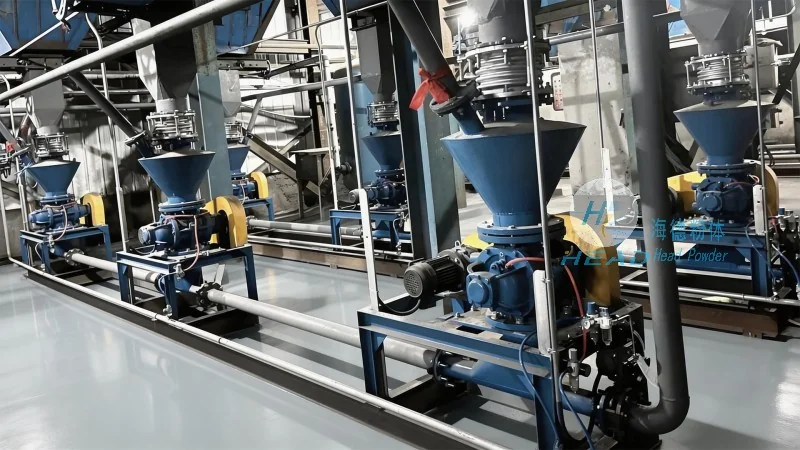
Initial investment for a PTFE-optimized pneumatic system is generally 15–30% higher than standard carbon steel systems, primarily due to specialized materials and safety components. However, total cost of ownership (TCO) over 10 years is often lower because of reduced downtime, lower maintenance, and higher product yield. A 2025 benchmark study by a German engineering institute showed that dense-phase PTFE systems achieve a 3.2-year payback period compared to 4.8 years for dilute-phase alternatives. For a mid-size plant handling 5,000 t/year of PTFE, annual savings from reduced product loss and energy can exceed €120,000.
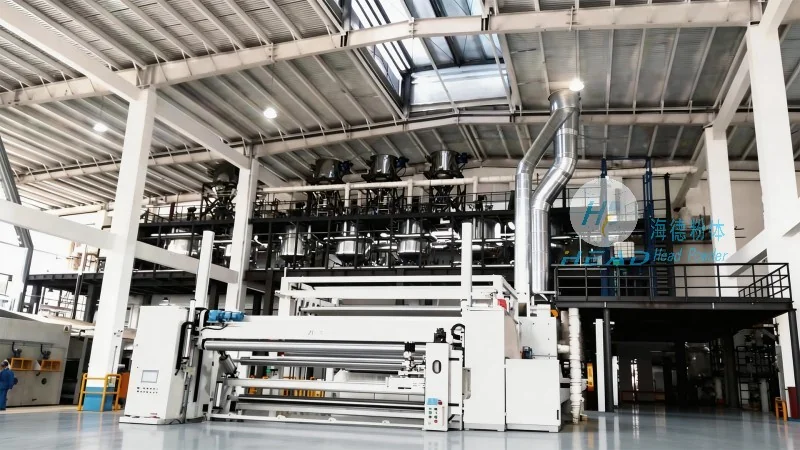
Headpowder has been at the forefront of pneumatic technology for challenging powders since 2012. Our team of application engineers conducts full rheological testing of PTFE samples in our in-house lab, simulating the exact conveying route before quoting. We provide turnkey solutions including system design, fabrication, installation, and commissioning. All systems undergo FAT (Factory Acceptance Test) with the customer’s material to ensure performance guarantees. Our after-sales support includes 24/7 remote monitoring, annual preventive maintenance packages, and spare parts availability within 48 hours. Whether you need a small batch conveyor or a multi-line plant-wide system, Headpowder tailors every component to match the specific particle size distribution, moisture content, and safety class of your PTFE product. (咨询热线:156-6277-7102)
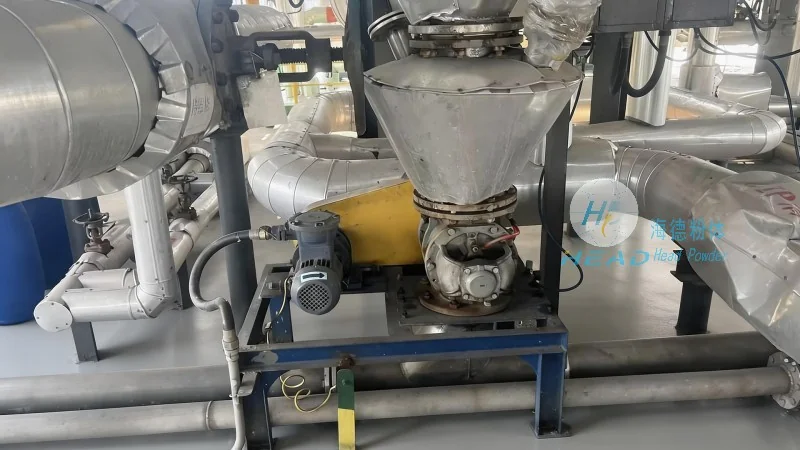
As demand for high-performance fluoropolymers continues to rise—projected to reach $12.4 billion globally by 2030—the ability to handle PTFE safely and efficiently becomes a competitive advantage. Pneumatic conveying remains the most flexible and clean method, but only when designed with a deep understanding of PTFE’s material behavior. From selecting the right phase density to integrating explosion prevention and real-time monitoring, every decision impacts operational reliability and regulatory compliance. By partnering with an experienced solution provider like Headpowder, companies can avoid costly trial-and-error and implement a system that delivers consistent throughput, minimal waste, and maximum uptime. The investments today in proper pipeline material, air treatment, and safety automation will pay dividends over decades of operation. For specific engineering questions or to request a preliminary system assessment, contact Headpowder’s technical team for a consultation tailored to your PTFE conveying project.

 Shandong headpowder Engineering Co., Ltd.
 156-6277-7102(Manager Zhang)
  0531-83386006
  Jinan City, Shandong Province, China
服务热线
微信咨询
回到顶部