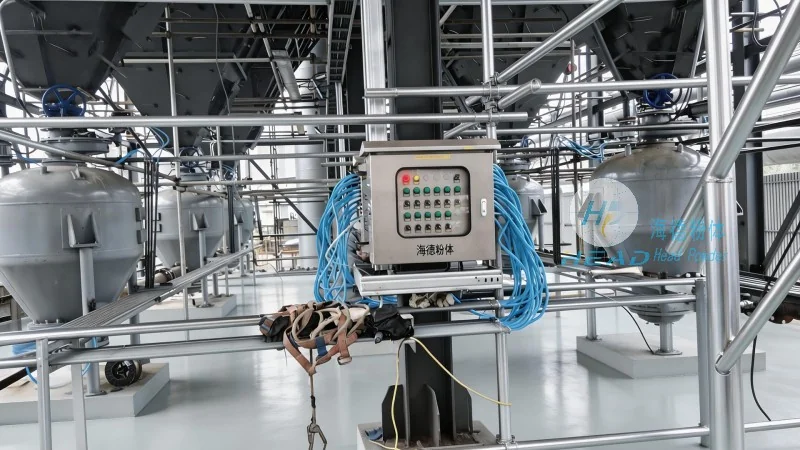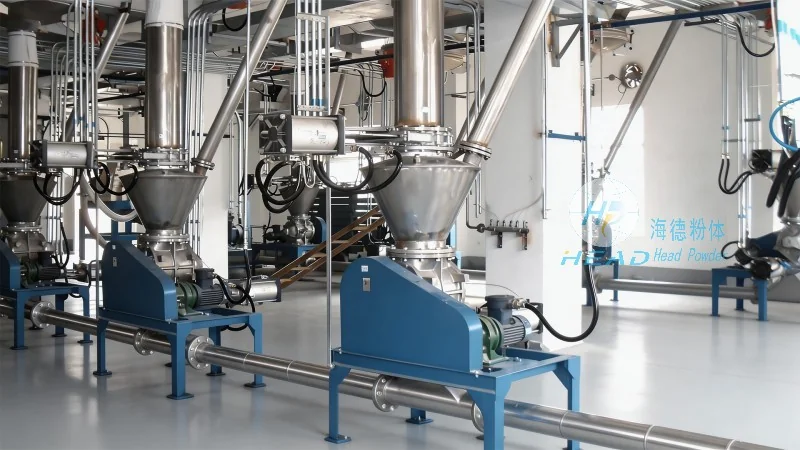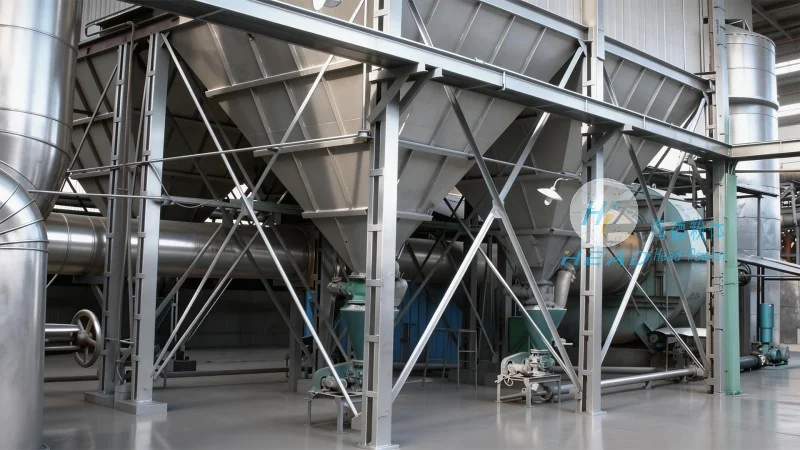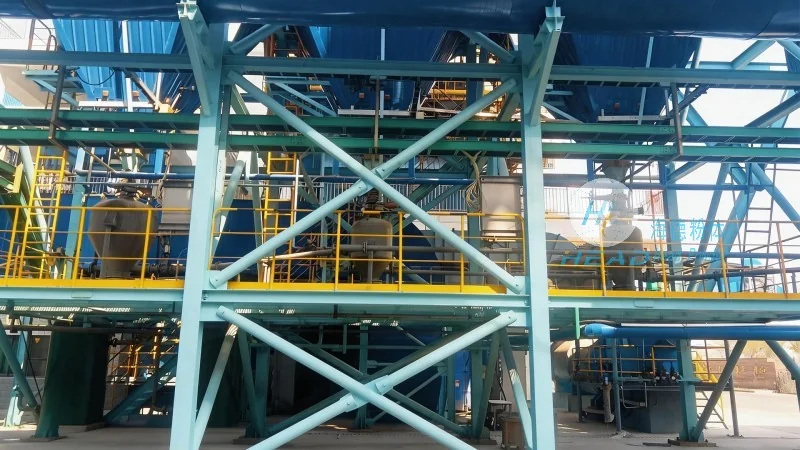

With over a decade of experience in the pneumatic conveying industry, our company specializes in a full range of pneumatic conveying system equipment.
您的当前位置:首页 >> News >> Technical FAQ

News

Rich project cases across industries, showing real implementation and proven technical strength.

Ash Slag Conveying: Pneumatic Conveying Introduction

2026-07-08

Understanding Pneumatic Conveying for Ash and Slag Handling in Modern Industrial Systems

In the evolving landscape of industrial material handling, the efficient transport of ash and slag remains a critical challenge for power plants, steel mills, cement facilities, and waste-to-energy operations. As global energy demand continues to rise and environmental regulations tighten, the need for reliable, enclosed, and low-emission conveying solutions has never been more pressing. Pneumatic conveying, a method that uses air or gas to move bulk materials through pipelines, has emerged as a dominant technology for ash and slag handling due to its ability to minimize dust emissions, reduce manual labor, and adapt to complex plant layouts. Unlike mechanical systems such as belt conveyors or screw conveyors, pneumatic systems offer superior containment, flexibility in routing, and lower maintenance requirements for abrasive materials like fly ash, bottom ash, and slag. This article provides a comprehensive introduction to pneumatic conveying for ash and slag applications, covering fundamental principles, system configurations, design considerations, operational parameters, and industry best practices. Whether you are evaluating a new installation or optimizing an existing system, understanding these core concepts will help you make informed decisions that enhance safety, reduce downtime, and improve overall plant efficiency. By the end of this deep dive, you will have a solid foundation to assess pneumatic conveying solutions and appreciate the technical expertise that leading suppliers like headpowder bring to complex material handling projects.

Fundamental Principles of Pneumatic Conveying for Ash and Slag

Pneumatic conveying operates on the principle of moving particulate solids through a sealed pipeline using a carrier gas—typically air, but occasionally nitrogen or other inert gases when handling reactive materials. The gas stream applies drag forces on individual particles, suspending them and transporting them to a destination point such as a silo, storage bin, or process equipment. For ash and slag, which are characterized by high abrasiveness, fine particle sizes (fly ash typically ranges from 1 to 100 microns), and variable moisture content, the selection of conveying mode is crucial. Two primary modes exist: dilute phase and dense phase. In dilute phase conveying, material is suspended in the gas stream at high velocities (typically 20–40 m/s for ash), resulting in a low solids-to-air ratio. This mode is simpler and often used for shorter distances but generates higher erosion rates on pipeline bends and components. Dense phase conveying, on the other hand, operates at lower velocities (2–10 m/s) and higher solids loading, pushing material as a plug or slug through the pipeline. This approach significantly reduces wear and energy consumption, making it ideal for abrasive slag and bottom ash. However, dense phase systems require more precise air control and are generally better suited for longer distances or materials with poor flowability. Understanding these fundamentals allows engineers to match the conveying mode to the specific ash or slag characteristics, ensuring reliable operation and extended equipment life.

System Configurations: Pressure vs. Vacuum Conveying

Pneumatic conveying systems for ash and slag are broadly classified into pressure (positive) systems and vacuum (negative) systems. In a pressure system, a blower or compressor forces air into the pipeline at the material feed point, pushing the mixture toward the destination. This configuration is well-suited for moving material over long distances (up to several hundred meters) and to multiple discharge points. Pressure systems are commonly used for fly ash collection from electrostatic precipitators or baghouses, where material must be transferred to a central storage silo. Conversely, vacuum systems draw air and material into the pipeline from a pickup point using a fan or vacuum pump located at the discharge end. Vacuum conveying is ideal for multiple pick-up points feeding a single destination, such as collecting ash from various hoppers into a common bin. It also provides inherent dust containment, as any leaks draw air inward rather than releasing dust. For slag handling, which involves coarser and heavier particles, positive pressure systems are more frequently employed due to the higher pressure differentials required. Some modern facilities employ hybrid systems that combine vacuum for collection and pressure for long-distance transfer, offering flexibility in complex plant layouts. When designing a pneumatic system for ash or slag, factors such as pipeline length, elevation changes, number of bends, material temperature (ash can reach 150–300°C), and required throughput must be carefully evaluated to choose the optimal configuration.

Key Components and Material Selection for Durability

The reliability of a pneumatic conveying system depends heavily on the quality and construction of its components. For ash and slag, which are highly abrasive (Mohs hardness often exceeding 5), wear resistance is paramount. Pipelines are typically made from carbon steel with wall thicknesses of 6–12 mm, but for high-wear areas such as bends and elbows, hardened steel, ceramic-lined pipe, or basalt-lined pipe are commonly used. Blowers and compressors must be selected to deliver consistent air volume and pressure, with rotary lobe blowers being popular for medium-pressure applications and screw compressors for high-pressure dense phase conveying. Feed devices like rotary airlocks, screw feeders, or venturi eductors introduce material into the gas stream while minimizing air leakage. For fly ash, rotary airlocks with hard-faced vanes are standard, while for wet or sticky slag, specialized feeder designs with anti-bridging features are required. Filtration equipment—bag filters or cartridge filters—captures dust at the discharge end, ensuring compliance with emission standards. Additionally, control systems using PLCs and pressure sensors monitor pipeline pressure, air velocity, and material flow, allowing automatic adjustment of air supply to maintain optimal conveying conditions. Companies like headpowder have developed proprietary wear-resistant components and smart control algorithms that extend service intervals and reduce unplanned downtime, which is critical in continuous 24/7 industrial operations.

Design Parameters and Performance Optimization

Successful design of an ash slag pneumatic conveying system requires accurate determination of key parameters: solids loading ratio (mass of material per mass of air), conveying velocity, pipeline diameter, and pressure drop. For dilute phase conveying of fly ash, typical solids loading ratios range from 5 to 15 kg/kg, while dense phase can achieve 20 to 60 kg/kg or higher. Conveying velocity must be maintained above the saltation velocity (the minimum speed to keep particles suspended) but below the velocity that causes excessive wear or particle degradation. For fine fly ash, saltation velocity is around 10–15 m/s, while for coarser slag, values can be 15–25 m/s. Pipeline diameter is determined by balancing throughput requirements against air consumption and pressure losses. Pressure drop calculations must account for straight pipe sections, bends, vertical lifts, and components. Empirical models such as the Darcy-Weisbach equation combined with solids friction factors are widely used. Modern computational fluid dynamics (CFD) simulations offer more precise predictions, especially for complex geometries. Another critical factor is material temperature: hot ash from boiler outlets can exceed 200°C, requiring thermal expansion compensation and heat-resistant seals. Moisture content also affects flowability; ash with more than 2% moisture tends to agglomerate, necessitating air drying or pre-heating. By fine-tuning these parameters during the design phase, operators achieve throughput rates of 10–100 tons per hour with energy consumption as low as 0.5–2 kWh per ton, depending on distance and material properties. headpowder’s engineering team routinely applies these design principles to customize systems that meet specific plant constraints, ensuring reliable performance even under harsh operating conditions.

Maintenance, Safety, and Environmental Compliance

Ash Slag Conveying: Pneumatic Conveying Introduction

Ash and slag pneumatic conveying systems operate in demanding environments where maintenance planning directly impacts plant availability. Regular inspection of pipeline wear at bends, diverter valves, and feeder components is essential. Ultrasonic thickness testing can predict remaining pipe life, allowing scheduled replacements before failures occur. Rotary airlocks require periodic seal replacement to maintain pressure differentials, and filters need consistent cleaning to prevent backpressure buildup. Safety considerations include explosion protection, as fine combustible dusts (e.g., carbon-rich fly ash) can create explosive atmospheres. Systems must incorporate explosion venting, suppression, or inert gas blanketing according to standards such as NFPA 68 and ATEX. Additionally, personnel protection against high temperatures and dust inhalation is critical. From an environmental standpoint, pneumatic conveying offers significant advantages over open mechanical systems by eliminating fugitive dust emissions. Properly designed systems achieve emission levels below 10 mg/Nm³, meeting the most stringent air quality regulations. Modern systems also incorporate energy recovery and variable frequency drives to reduce power consumption. For example, headpowder’s installations in waste-to-energy plants have demonstrated a 30% reduction in energy use compared to legacy systems while maintaining zero dust leakage. By prioritizing maintenance protocols, safety features, and environmental safeguards, companies not only protect their workforce and the surrounding community but also achieve long-term operational cost savings.

Industry Trends and Future Outlook for Ash Slag Conveying

Ash Slag Conveying: Pneumatic Conveying Introduction

As we move into 2026 and beyond, several trends are shaping the ash and slag conveying market. The global push toward decarbonization and circular economy models is driving increased utilization of biomass and waste-derived fuels, which produce ash with different chemical compositions and handling characteristics. Simultaneously, stricter emission regulations in regions like the European Union, China, and North America require conveying systems with near-zero fugitive dust. Digitization and Industry 4.0 are transforming monitoring and control: predictive maintenance using IoT sensors, real-time pressure and flow visualization, and AI-driven optimization algorithms are becoming standard in advanced installations. The market is also seeing a shift toward modular and skid-mounted pneumatic systems that reduce onsite installation time and cost. For slag specifically, the growing steel production and the need for efficient slag granulation and transport are fueling demand for dense phase systems that can handle hot, coarse material with minimal water addition. Energy efficiency remains a top priority, with research focusing on low-velocity conveying, optimized air supply control, and hybrid mechanical-pneumatic solutions. Companies that invest in robust engineering, component durability, and customer support will lead the market. headpowder, with over a decade of specialized experience in pneumatic conveying for abrasive and difficult materials, continues to develop innovative solutions that address these emerging challenges. Their recent projects include a high-temperature fly ash system for a 600 MW coal plant that reduced annual maintenance costs by 40% and a dense phase slag line for a European steel mill that achieved 50 tons per hour over 300 meters with minimal wear.

Conclusion: Choosing the Right Pneumatic Conveying Partner

Ash Slag Conveying: Pneumatic Conveying Introduction

Selecting a pneumatic conveying system for ash and slag is not a one-size-fits-all decision. It requires deep technical understanding of material properties, system dynamics, and operational constraints. A well-designed system delivers reliable, low-emission, and cost-effective material transport for decades, while a poorly configured one leads to frequent blockages, excessive wear, and high energy bills. This article has outlined the fundamental principles, configurations, components, design parameters, and maintenance considerations that form the foundation of successful ash slag conveying. For plant managers and engineers evaluating new projects or upgrades, it is essential to work with a partner that provides not only hardware but also engineering expertise, custom design capabilities, and after-sales support. headpowder(咨询热线:156-6277-7102)has built a reputation for delivering turnkey pneumatic conveying solutions tailored to the unique demands of ash, slag, and other challenging bulk solids. Their team combines advanced simulation tools, in-house component manufacturing, and field-tested know-how to ensure each system meets specific throughput, distance, and environmental targets. Whether you are dealing with fine fly ash from a coal-fired boiler or coarse slag from a steel furnace, a thorough evaluation of your material and site conditions—paired with expert guidance—will result in a conveying system that maximizes reliability, safety, and return on investment. As the industry evolves, staying informed about technological advancements and best practices will help you maintain a competitive edge in material handling efficiency and environmental stewardship.

相关推荐

Shandong headpowder Engineering Co., Ltd. All rights reserved.

回到顶部