News
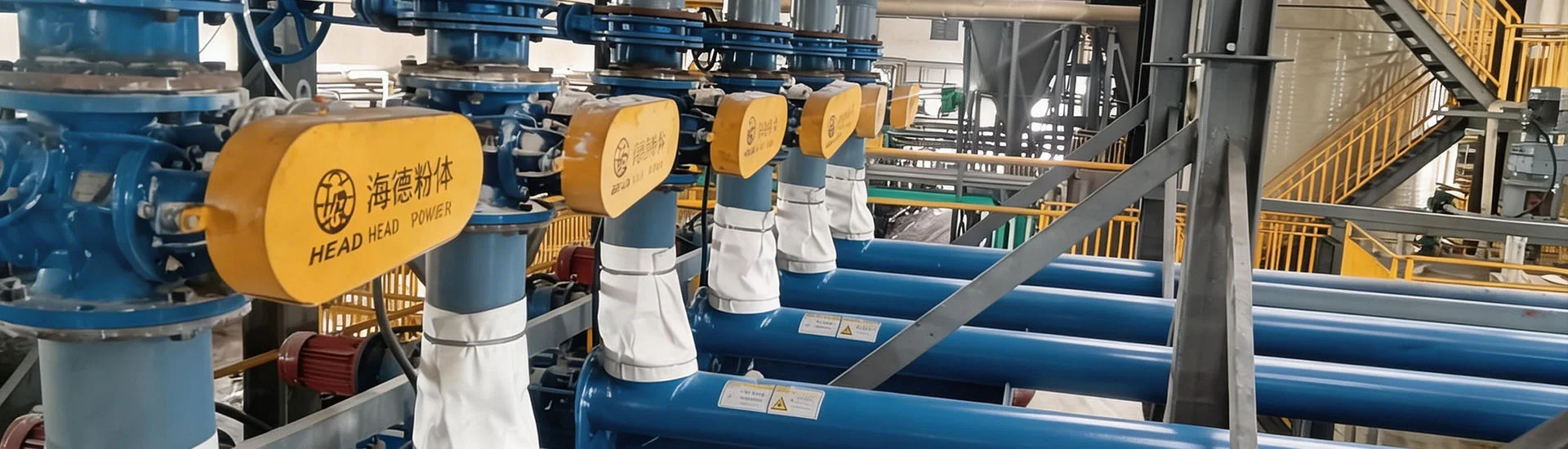
Rich project cases across industries, showing real implementation and proven technical strength.Rice is a staple food for billions of people worldwide, and its processing from paddy to polished grain involves several critical steps. Among these, the efficient and gentle transport of rice kernels—whether paddy, brown rice, or white rice—is fundamental to maintaining quality, reducing breakage, and optimizing throughput. Pneumatic conveying systems have emerged as the preferred solution for modern rice mills, replacing traditional mechanical conveyors due to their flexibility, hygiene, and lower maintenance. This article provides a comprehensive introduction and overview of rice pneumatic conveying systems, covering working principles, system configurations, key components, performance parameters, and practical considerations for mill operators. Whether you are upgrading an existing facility or planning a new rice processing plant, understanding the nuances of pneumatic conveying is essential for achieving operational excellence.
Pneumatic conveying uses air flow to transport bulk materials through a pipeline. In rice processing, two primary modes exist: dilute phase and dense phase. Dilute phase systems suspend rice particles in a high-velocity air stream (typically 20–35 m/s), making them suitable for long-distance transport and multiple discharge points. Dense phase systems operate at lower velocities (4–10 m/s) but higher pressure, pushing material as a plug or slug through the pipe, which significantly reduces breakage and energy consumption. For rice—a fragile material where even 1% breakage can translate into substantial revenue loss—dense phase conveying is increasingly adopted in specialty mills. However, dilute phase remains common for husk, bran, and broken rice removal.
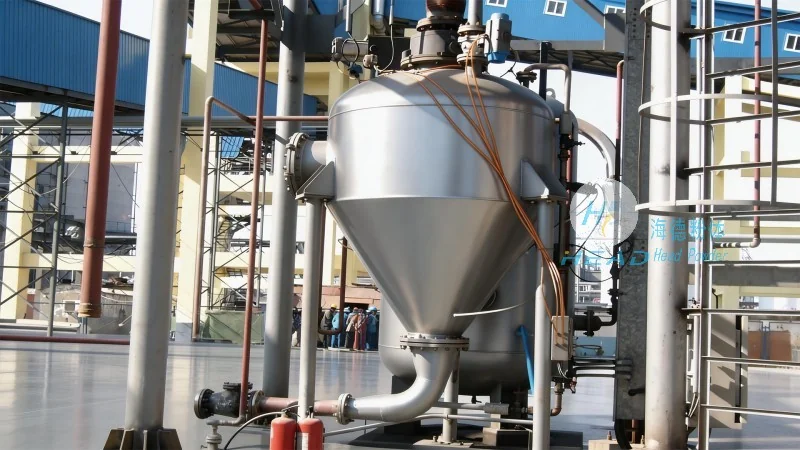
The choice between pressure and vacuum systems further defines the layout. Pressure systems use a blower or compressor at the start of the line, forcing material forward; they are ideal for single-source to multiple-destination routes. Vacuum systems draw material from multiple pick-up points into a central receiver, perfect for collecting rice from dryers, storage silos, or cleaning machines. Hybrid pressure-vacuum designs are also used in large-scale integrated mills. The selection depends on factors like elevation changes, distance, required capacity, and the need for dust control.
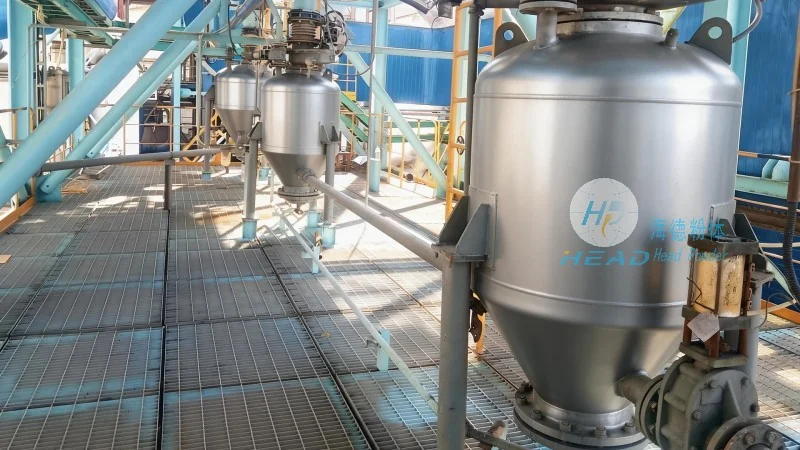
A well-designed rice pneumatic conveying system comprises several critical components, each engineered for durability and food-grade standards. The air mover—typically a roots blower, centrifugal fan, or screw compressor—provides the necessary flow and pressure. For rice applications, low-pressure blowers (0.5–1.0 bar) are common in dilute phase, while high-pressure compressors (1.0–4.0 bar) serve dense phase systems. Headpowder’s industrial fans and blowers are specifically designed to handle the moisture and dust typical in rice environments, with reinforced impellers and sealed bearings to prevent contamination.
The rotary airlock or feeder meters rice into the pipeline while maintaining an air seal. This component must handle abrasive rice hulls without excessive wear. Hard-faced rotors and replaceable housing liners extend service life. Pipelines are usually made of stainless steel (304 or 316) for smooth interior surfaces and corrosion resistance, though mild steel with ceramic lining is an economical alternative for short runs. Diversion valves, sweep elbows, and flexible hoses allow routing to multiple bins or machines. At the destination, cyclone separators or bag filters separate rice from air, with the cleaned air either recirculated or exhausted through a dust collection system. Headpowder integrates advanced separation technology to achieve 99.9% collection efficiency, minimizing product loss and meeting environmental regulations.
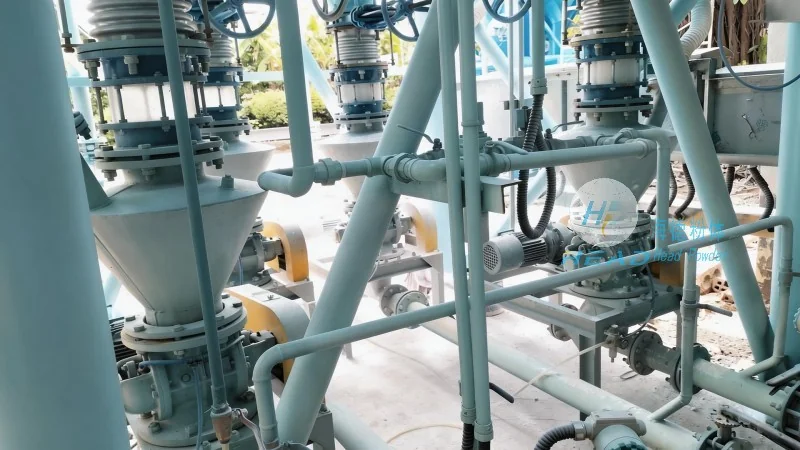
Designing an efficient rice pneumatic conveying system requires careful consideration of the mill’s material flow. A typical layout starts with paddy intake from trucks or barges, where a vacuum system draws paddy into receiving pits integrated with pre-cleaning screens. From there, pressure systems distribute paddy to conditioning bins and rubber roll shellers. After hulling, brown rice is conveyed gently to whitening machines using dense phase to preserve kernel integrity. Bran and broken rice are removed via separate dilute phase lines to avoid contamination. Headpowder recommends segmenting the system into zones: pre-cleaning, hulling, whitening, polishing, and packaging, each with dedicated air movers and control valves. This modular approach allows independent operation, easier troubleshooting, and energy savings by running only active zones.
Pipe diameters are calculated based on desired capacity and conveying velocity. For 10–30 tons per hour of white rice, a pipe diameter of 100–150 mm is typical, with velocities kept under 25 m/s to minimize impact damage. Long horizontal runs require periodic boosting stations, while vertical lifts benefit from gravity-assisted flow. Headpowder’s engineers use computational fluid dynamics (CFD) simulations to optimize pipe routing, ensuring minimal pressure drops and consistent product quality. Industry data from 2026 indicates that optimized layouts can reduce energy consumption by 18–25% compared to conventional designs, a significant saving given that pneumatic conveying accounts for 15–20% of a mill’s total electricity bill.
When specifying a rice pneumatic conveying system, several performance parameters demand attention. The conveying capacity (tons per hour) must match the mill’s throughput, with a safety margin of 10–15% for peak loads. The material-to-air ratio (also called loading ratio) is a crucial metric: for dilute phase rice, a ratio of 0.5–2 kg rice per kg of air is common; for dense phase, 15–30 kg rice per kg of air is achievable. Higher ratios improve efficiency but require more powerful air movers and careful control. Headpowder provides a selection chart based on 2026 market data, showing that modern dense phase systems can achieve up to 40% lower specific energy consumption compared to 2020 models.
Breakage rate is the most critical quality parameter. Standard dilute phase systems often cause 1.5–3% kernel breakage, while dense phase reduces breakage to below 0.5%, a significant improvement for high-quality export rice. Equipment wear is another consideration: rice husk has a high silica content, causing abrasive damage to pipes and bends. Headpowder recommends using ceramic-lined bends and wear-resistant steel at high-impact points, extending system life to over 10 years with proper maintenance. Noise levels, dust emissions, and floor space are also evaluated, especially in urban mills with strict environmental permits. The system should comply with ISO 12100 safety standards and local food safety regulations, including FDA and EU directives for contact surfaces.
The rice processing industry is witnessing rapid technological evolution. Smart pneumatic conveying systems with IoT sensors now monitor pressure, velocity, temperature, and material flow in real time. These sensors feed data into a central SCADA system that automatically adjusts blower speeds, feeder rates, and diversion valves to maintain optimal conditions. Predictive maintenance algorithms alert operators to potential blockages, wear, or leaks before they cause downtime. Headpowder has integrated this technology into its latest pneumatic conveying solutions, achieving 97% uptime in field trials across Southeast Asian rice mills.
Energy efficiency remains a top priority. Variable frequency drives (VFDs) on blowers and compressors can reduce energy consumption by 30–50% compared to fixed-speed operation, especially when the mill runs at partial capacity. Heat recovery from compressed air systems is being used to preheat drying air, creating a circular energy loop. In 2026, the International Rice Research Institute reported that mills adopting high-efficiency pneumatic conveying combined with VFDs reduced carbon footprint per ton of rice by 22%. Additionally, the use of pneumatic conveying for parboiled rice—a process involving steam treatment—poses unique challenges due to sticky surfaces. Specialized anti-clogging coatings and steam-jacketed pipes are now standard in such applications, and Headpowder offers customized solutions for parboiled and specialty rice varieties.
Successful implementation of a rice pneumatic conveying system requires meticulous installation. Proper foundation and vibration isolation for blowers and compressors prevent noise transmission and structural fatigue. Pipelines must be supported at intervals of 3–5 meters to avoid sagging, with expansion joints accommodating thermal changes. Electrical installations should follow IEC 60079-14 for dust-explosion zones, as rice flour dust is combustible. Headpowder provides full turnkey installation services, including site survey, piping layout, electrical integration, and commissioning. After installation, a thorough testing phase verifies capacity, breakage rate, and energy consumption against design targets.
Maintenance schedules are straightforward but critical. Daily checks include monitoring air filter differential pressure, rotary airlock temperature, and belt tension. Weekly inspections focus on pipe wear at elbows and diverters, and lubrication of bearings. Monthly, the system should be purged of accumulated fines and debris. Headpowder offers a maintenance contract with remote monitoring and quarterly on-site inspections, ensuring optimal performance. Data from 2025–2026 shows that mills following this regimen achieve 15–20% longer equipment life and 10% lower energy costs compared to reactive maintenance approaches.
Rice pneumatic conveying systems are no longer a luxury but a necessity for mills aiming to compete in global markets. Their ability to reduce breakage, improve hygiene, and automate material handling directly impacts profitability. By selecting the right combination of dense or dilute phase, pressure or vacuum, and incorporating smart controls, rice processors can achieve consistent high-quality output while minimizing operational costs. Headpowder brings over two decades of expertise in designing and manufacturing industrial conveying equipment specifically tailored to grain processing. Our team works closely with each client to analyze material characteristics, layout constraints, and budget to deliver a system that performs reliably for years. For a consultation on your rice pneumatic conveying needs, reach out to our engineering team today. (咨询热线:156-6277-7102) With the right system in place, your mill can achieve higher throughput, lower breakage, and a stronger competitive position in the evolving rice market of 2026 and beyond.

 Shandong headpowder Engineering Co., Ltd.
 156-6277-7102(Manager Zhang)
  0531-83386006
  Jinan City, Shandong Province, China
服务热线
微信咨询
回到顶部