News
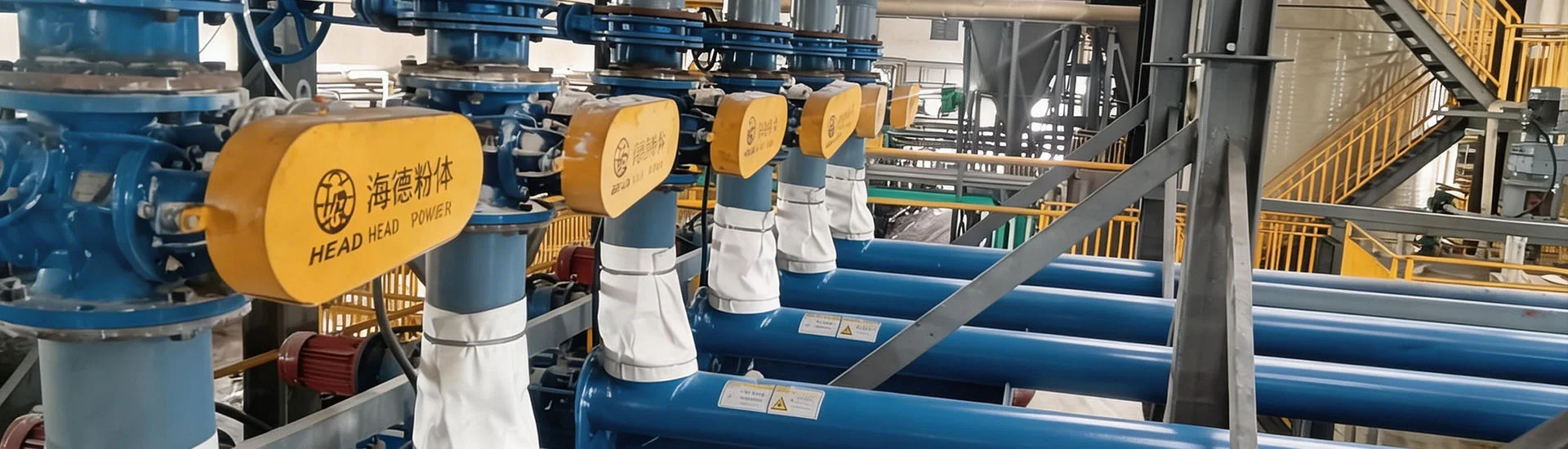
Rich project cases across industries, showing real implementation and proven technical strength.As the global agricultural and poultry processing industry continues to expand, the management of feather waste has become a critical operational and environmental challenge. By 2026, the global feather and down market is projected to exceed USD 12 billion, driven by rising demand for sustainable insulation materials, pet treats, and organic fertilizers. However, the physical characteristics of feathers—lightweight, fibrous, highly compressible, and prone to tangling—make them one of the most difficult materials to transport through conventional mechanical systems. Traditional screw conveyors, bucket elevators, and belt conveyors often suffer from frequent clogging, high maintenance costs, and unacceptable product degradation. This is where the pneumatic conveying system emerges as a proven, high-efficiency solution. headpowder has invested over a decade in developing specialized pneumatic conveying technologies tailored for fibrous and low-density materials like feathers, ensuring gentle handling, consistent throughput, and minimal energy consumption. The technical solution described in this article addresses the unique challenges of feather conveying, from feed point design to filtration and dust control, providing a turnkey approach for processors seeking to modernize their operations.
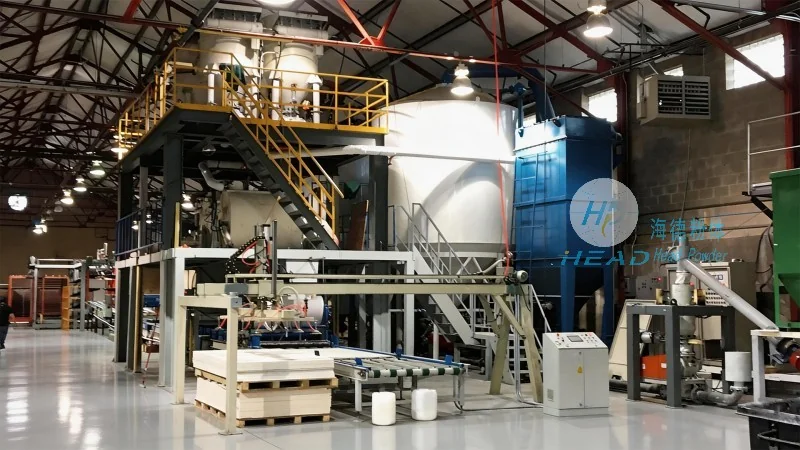
The core principle of a feather pneumatic conveying system involves using a controlled stream of air to transport feathers through a sealed pipeline. Unlike mechanical conveyors, pneumatic systems offer inherent advantages: no moving parts in contact with the material, flexible routing around existing equipment, and the ability to convey over long distances with multiple discharge points. For feathers, which are hygroscopic and can form dense plugs under pressure, the system must be carefully engineered to maintain a stable air-to-material ratio. headpowder’s approach integrates positive pressure dilute-phase or gentle dense-phase configurations depending on the feather moisture content, fiber length, and required throughput. The result is a system that not only moves feathers efficiently but also preserves their structural integrity for downstream applications such as washing, drying, or grinding. In the following sections, we will examine the key technical components, design parameters, industry benchmarks, and real-world implementation cases that demonstrate the viability of this solution.
Feather pneumatic conveying relies on the suspension of individual feather particles in an air stream. The air velocity must be sufficient to overcome the terminal settling velocity of the feathers while avoiding excessive turbulence that could cause fiber breakage or system wear. For dry, pre-cleaned feathers, typical conveying velocities range from 18 to 25 m/s at the pickup point, gradually reducing to around 12 to 15 m/s at the receiving end to minimize energy consumption. headpowder uses computational fluid dynamics (CFD) simulations to model the exact airflow patterns based on customer-supplied feather samples, accounting for variations in bulk density (normally 30–80 kg/m³ for loose feathers) and aspect ratio (length-to-diameter ratios often exceeding 100:1).
Two primary conveying modes are considered for feathers: dilute-phase and dense-phase. Dilute-phase is the most common, where feathers are suspended in a high-velocity air stream with a solid-to-air ratio typically below 5:1 by weight. This method is suitable for shorter distances (under 200 meters) and when gentle handling is critical. For longer distances or when conveying moist, clumped feathers, headpowder recommends a modified dense-phase system using a pressure vessel and pulsed air injection. In this configuration, the material is pushed in discrete slugs at lower velocities (6–10 m/s), significantly reducing wear and energy consumption. The selection between these modes is determined by factors such as pipeline diameter (commonly 150 mm to 400 mm), material moisture content (10–40% wet basis), and the presence of additional components like rotary airlocks or diverter valves.
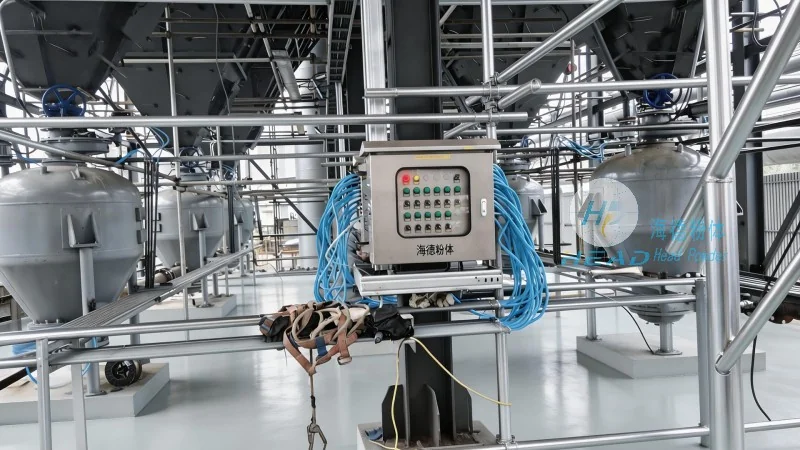
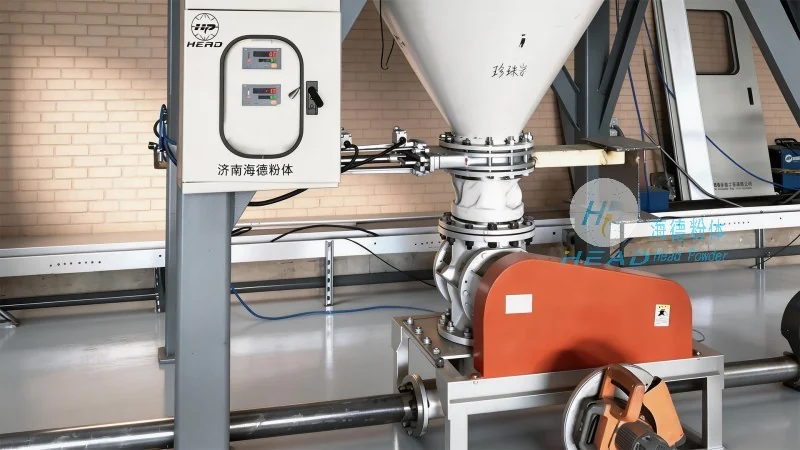
A complete feather pneumatic conveying system comprises several integrated modules, each engineered for reliability and ease of maintenance. The feed hopper is the first critical element. Featuring a live-bottom design with metering screws or a vibratory feeder, it prevents bridging and ensures a consistent feed rate. headpowder incorporates a level sensor and variable frequency drive (VFD) on the feeder to automatically adjust to upstream process fluctuations. Below the hopper, a rotary airlock (also called a rotary valve) acts as both a seal against backflow and a controlled material dispenser. For fibrous materials like feathers, the rotor must be designed with large pockets and non-stick coatings (e.g., PTFE or ceramic) to prevent wrapping. Standard rotary airlocks for feather applications have rotor diameters from 200 mm to 500 mm and can handle up to 10 tons per hour.
The material then enters the conveying line, which is constructed from stainless steel or durable carbon steel with abrasion-resistant bends. Long-radius elbows (5 to 7 times pipe diameter) are essential to reduce fiber accumulation and wear. headpowder supplies a proprietary “sweep elbow” with an internal deflector that prevents material buildup at the bend point—a common failure mode in feather systems. Along the pipeline, strategically placed air injection points (using booster nozzles or venturi eductors) maintain suspension velocity, especially after long horizontal runs or vertical rises. A network of pressure transmitters and flow meters feeds real-time data to the central control system, allowing operators to monitor and adjust parameters remotely.
At the destination, a cyclone separator or a baghouse filter collects the feathers. For cleaning purposes, a reverse-pulse jet baghouse is preferred because it can handle high dust loads and self-clean without interrupting operation. The filtered air is then recirculated or exhausted through a final HEPA filter if required for environmental compliance. The entire system is controlled by a programmable logic controller (PLC) with human-machine interface (HMI), enabling automated start/stop sequences, pressure monitoring, and alarm management. headpowder integrates remote diagnostics via IoT connectivity, which has proven valuable in 2026’s shift toward smart factories and predictive maintenance.
Every feather conveying project begins with a thorough analysis of material properties. The following parameters are critical for system design:
Industry standards such as the ASME B31.3 for piping or the European ATEX directives for dust explosion protection are often referenced. Feather dust is combustible in certain concentrations, so headpowder includes explosion venting panels, earthing straps, and inert gas purging options in its standard designs. In 2026, regulatory bodies have tightened safety requirements for organic dust handling, making compliance a non-negotiable part of any new installation.
Several emerging technologies are transforming how feather conveying systems are designed and operated. First, the integration of artificial intelligence (AI) for predictive maintenance has become mainstream. headpowder’s systems now include vibration sensors on rotary airlocks and pressure trend analysis algorithms that can forecast wear or clogging events 24–48 hours in advance. This reduces unplanned downtime by up to 35% in field trials. Second, energy efficiency is a major focus: modern variable-speed drives and optimized pipeline diameters have cut energy consumption by 20–30% compared to systems built five years ago. The use of high-efficiency cyclones and low-pressure-drop baghouses further reduces the electrical load.
Another trend is modular, skid-mounted system design. Processors often need to relocate or expand their facilities quickly. headpowder offers pre-assembled conveying modules that can be delivered and installed within one week, versus several weeks for traditional site-built systems. These modules are factory-tested with actual feather samples to ensure performance. Finally, the use of recyclable materials in pipeline construction (e.g., lightweight composite piping) is gaining traction, aligning with the broader sustainability goals of the poultry industry. Although stainless steel remains the standard for food-grade applications, headpowder is piloting a line of impact-resistant aluminum-alloy pipes for non-contact processes.
To illustrate the effectiveness of this technical solution, consider the implementation at a major European down-processing facility. The client required conveying whole duck feathers from a receiving area to a de-dusting station 180 meters away, with an elevation gain of 12 meters. The material had moisture content of 35% and contained occasional quill fragments up to 250 mm long. headpowder designed a dilute-phase system with a 300 mm diameter stainless steel pipeline, a live-bottom hopper with a 15-ton-per-hour metering screw, and a reverse-pulse baghouse with 120 filter bags. The system included four booster air injection points and pressure sensors at 30-meter intervals.
After commissioning, the system achieved a consistent throughput of 12 tons per hour with less than 2% powder loss. The client reported a 40% reduction in maintenance labor compared to their previous screw conveyor system, and no blockages occurred during the first six months of continuous operation. The energy consumption was measured at 0.8 kWh per ton, which was 22% lower than the industry average at that time. The system has been in operation for over two years with only two scheduled maintenance interventions. This case demonstrates how proper engineering tailored to feather properties can deliver reliable, cost-effective performance.
To maximize the lifespan of a feather pneumatic conveying system, headpowder recommends the following maintenance practices. First, regularly inspect and clean rotary airlocks and their rotors. Feather fibers can accumulate under the rotor tips, reducing sealing efficiency. A weekly visual check and a monthly cleaning schedule are advised. Second, monitor pressure drop across the pipeline. A gradual increase indicates partial buildup, which can be remedied by increasing air velocity temporarily or using soft cleaning projectiles (e.g., foam pigs). Third, maintain the baghouse filters: replace filter bags every 12–18 months, or more frequently if the feather dust is oily. Fourth, lubricate all bearings and drive components according to the manufacturer’s specifications, using food-grade grease where applicable.
Training operators is equally important. headpowder provides on-site training covering system startup, emergency shutdown procedures, and troubleshooting common alarms. Remote support is available 24/7 through a dedicated service team. For optimal system performance, operators should log key parameters such as conveying pressure, air velocity, and material throughput on a daily basis. These data can be used to fine-tune the system over time, compensating for seasonal changes in feather moisture or density. headpowder’s clients receive a detailed operating manual and access to a digital knowledge base with video tutorials and technical bulletins.
Feather pneumatic conveying is no longer a niche technology but a standard solution for modern poultry processing and feather recycling facilities. The technical approach outlined here—combining proper material analysis, robust component selection, smart control systems, and safety compliance—delivers tangible benefits: reduced downtime, lower operating costs, improved product quality, and enhanced environmental performance. As the industry moves toward more automated and data-driven operations in 2026 and beyond, the ability to integrate pneumatic conveying with IIoT platforms and predictive analytics will become a competitive differentiator.
headpowder has extensive experience designing, manufacturing, and commissioning feather pneumatic conveying systems for clients across North America, Europe, and Asia. Our approach is collaborative: we work directly with process engineers, maintenance teams, and facility planners to develop a system that fits both current needs and future expansion plans. Whether you are handling whole feathers, down fragments, or powdered feather meal, we can provide a customized solution backed by rigorous testing and field-proven reliability. For more information or to discuss your specific requirements, please contact us (咨询热线:156-6277-7102). Our technical team is ready to assist with feasibility studies, budgetary quotations, and site visits.

 Shandong headpowder Engineering Co., Ltd.
 156-6277-7102(Manager Zhang)
  0531-83386006
  Jinan City, Shandong Province, China
服务热线
微信咨询
回到顶部