News
Rich project cases across industries, showing real implementation and proven technical strength.Selecting the right pneumatic conveying system for limestone is a critical decision that directly impacts production efficiency, material quality, and operational cost in industries such as cement, power generation, steel, and mineral processing. Limestone, with its abrasive nature, variable particle size distribution, and tendency to absorb moisture, demands a tailored approach to equipment selection. As we move into 2026, global demand for limestone-based products continues to grow, driven by infrastructure development and green construction initiatives. This article provides a comprehensive, data-driven solution for limestone pneumatic conveying equipment selection, covering system types, key parameters, industry trends, and practical implementation considerations.
Limestone exhibits a bulk density ranging from 1.2 to 1.7 t/m³, with particle sizes typically between 0 and 40 mm depending on the application. Its high abrasion index (often above 0.5 g/ton) means that equipment wear is a primary concern. Additionally, limestone can contain up to 10% surface moisture, which leads to cohesion and bridging in hoppers. According to the 2026 Global Mineral Processing Report, over 30% of pneumatic conveying system failures in limestone plants are attributed to improper selection of air velocity and pipe material. Therefore, a thorough analysis of the material's flowability, moisture content, and particle shape is essential before specifying any conveying solution. For example, fine limestone powder (below 100 mesh) behaves differently from crushed limestone lumps, requiring distinct airflow regimes and filter designs. The selection process begins with conducting a standard shear cell test to determine the cohesive strength and wall friction angle, which directly influence the hopper design and blow tank sizing.
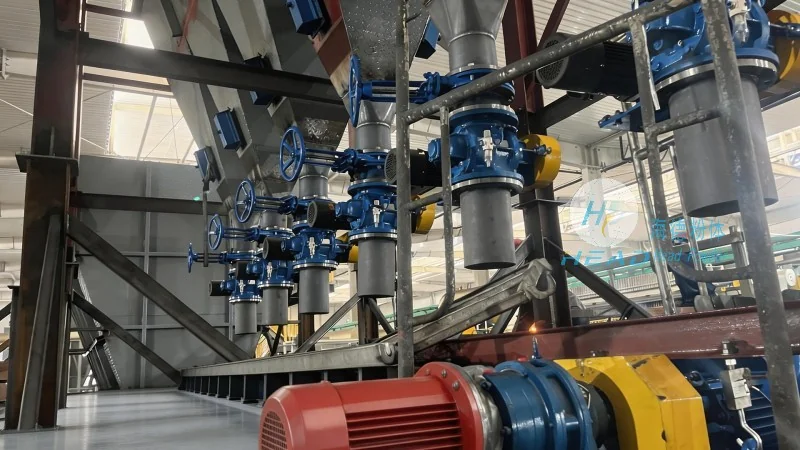
The two primary operating regimes for limestone pneumatic conveying are dilute phase and dense phase. Dilute phase systems operate at high air velocities (typically 20–35 m/s) with a low material-to-air ratio, making them suitable for short distances and fine materials. However, for abrasive limestone, dilute phase can cause rapid wear on pipe bends and rotary valves, leading to frequent maintenance. In contrast, dense phase conveying operates at lower velocities (3–8 m/s) with a higher material loading, reducing erosion and energy consumption. Industry data from 2025 shows that dense phase systems for limestone can achieve a 40% reduction in pipe wear compared to dilute phase, with a 20% lower specific energy consumption per ton conveyed. For long-distance conveying (over 500 meters) or vertical lifts above 30 meters, dense phase is generally recommended. headpowder has implemented numerous dense phase solutions for limestone handling in cement plants, where the conveying pressure typically ranges from 2.5 to 5 bar, and the air consumption is optimized through precise control of blow tank discharge cycles.
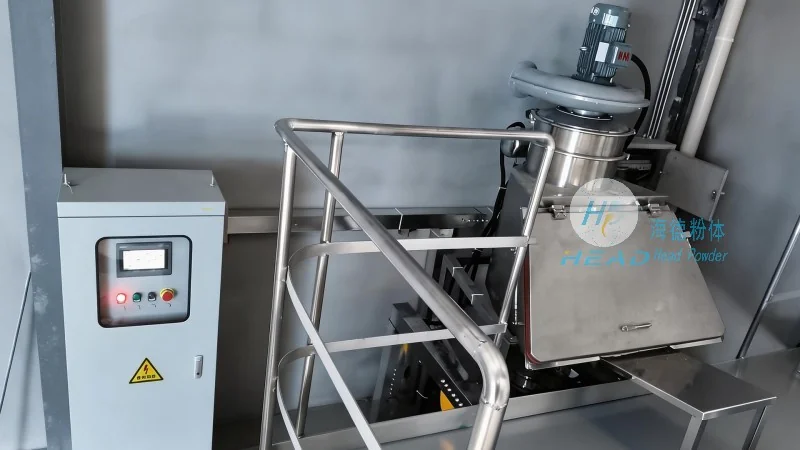
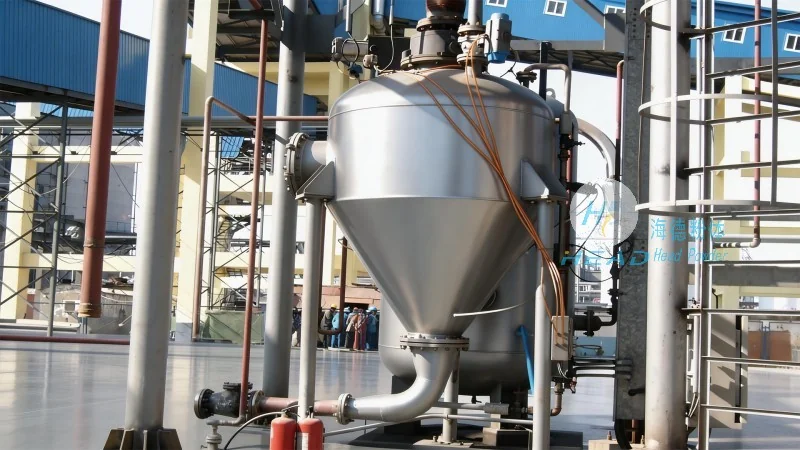
Selecting the correct components ensures system reliability and longevity. The blow tank must be designed with a conical discharge and sufficient aeration pads to prevent bridging. For abrasive limestone, the blow tank inner surface should be lined with wear-resistant steel or ceramic tiles. Pipe material selection is equally critical; schedule 80 carbon steel pipes with a minimum wall thickness of 8 mm are standard for straight sections, while bends require either a larger radius (R ≥ 10D) or hardened inserts to achieve a service life exceeding 12 months under continuous operation. The rotary airlock valve must feature carbide-tipped blades and an adjustable rotor-to-housing clearance to handle limestone dust without seizing. Filtration systems must be capable of handling heavy dust loads; a pulse-jet bag filter with a collection efficiency of 99.99% and a filtration velocity below 1.2 m/min is recommended. In 2026, the integration of IoT sensors for real-time monitoring of filter differential pressure and pipe vibration is becoming a standard requirement for predictive maintenance programs. headpowder's equipment selection framework incorporates these factors, with each component matched to the specific limestone grades and conveying distances encountered in the client's facility.
Accurate calculation of airflow and pressure drop is the foundation of a successful system. For limestone, the recommended saltation velocity—the minimum air velocity to prevent particle settling—is between 10 and 15 m/s for dense phase and 20 to 28 m/s for dilute phase. The total pressure drop must account for pipe friction, bends, fittings, and elevation changes. A typical dense phase system conveying 50 t/h of limestone over 300 meters at 4 bar may require a compressor capacity of 600–800 Nm³/h. The line layout should minimize the number of 90-degree bends, using 45-degree elbows or long-radius sweeps wherever possible. Horizontal sections should be limited to a maximum length of 150 meters before a vertical lift to prevent stratification. Industry standards from ISO 2947 and the 2026 revision of the pneumatic conveying handbook recommend a safety margin of 15% on compressor capacity to accommodate fluctuations in limestone moisture content. headpowder provides detailed hydraulic analysis for each project, simulating the conveying dynamics using computational fluid dynamics (CFD) to validate the design before fabrication.
In real-world limestone conveying, three challenges dominate. Abrasion is mitigated by selecting ceramic-lined bends and using replaceable wear sleeves in high-impact zones. Blockage, especially in horizontal runs, often results from moisture condensing inside the pipe. Installing insulation and trace heating on the convey line, along with a moisture trap at the air inlet, is a proven countermeasure. For extremely wet limestone (above 8% moisture), a combination of dense phase conveying with a low air velocity and a pre-drying pneumatic dryer upstream can maintain system stability. headpowder has documented a case study in a grinding mill in Shandong where a custom-designed venturi feeder reduced blockage incidents by 70% over 18 months. Regular inspection schedules, such as checking pipe wall thickness with ultrasonic sensors every quarter, are recommended to proactively manage wear. The company also offers remote monitoring services through a cloud-based platform that alerts operators to abnormal pressure fluctuations, ensuring minimal downtime.
With energy prices rising globally, optimizing power consumption is a top priority. A well-designed limestone pneumatic conveying system should achieve a specific energy consumption of 2.5–4.0 kWh per ton, depending on distance and lift. Using variable frequency drives (VFDs) on rotary compressors allows the air supply to match real-time demand, saving up to 30% on electricity compared to fixed-speed units. Additionally, installing a pressure recovery system at the end of the convey line can recover up to 15% of the expended energy. The 2026 market analysis indicates that limestone processors are increasingly adopting hybrid systems that combine dilute phase for short sections and dense phase for long-distance transport, balancing capital cost with operational economy. headpowder evaluates the total cost of ownership over a 10-year period for each client, factoring in maintenance, downtime, and energy consumption to recommend the most economical solution. For a typical 80 t/h limestone convey line, this analysis shows payback periods under 18 months when upgrading from an old dilute phase system to a modern dense phase design.
A successful installation requires careful planning of the blow tank location, compressor room layout, and electrical integration. The blow tank should be positioned as close to the limestone source as possible to minimize feeder height and structural support costs. Compressed air dryers and filters must be oversized by 20% to handle ambient conditions in hot, humid climates. During commissioning, progressive load testing is essential; starting with 50% of design capacity and increasing in 10% increments ensures that the control logic and safety interlocks function correctly. headpowder's commissioning team follows a standard protocol that includes checking air leakage rates (should be below 2% of total airflow), verifying pressure switch calibration, and conducting a 72-hour continuous run under full load. After installation, the company provides a digital twin of the system for operator training and fault diagnostics, aligning with Industry 4.0 standards that are increasingly required by major cement producers in 2026.
The complexity of limestone pneumatic conveying demands a partner with deep engineering expertise and proven field experience. headpowder has delivered over 200 limestone conveying systems globally, with capacities ranging from 10 t/h to 300 t/h. Each solution is backed by a structured warranty, spare parts inventory, and a 24/7 technical support team. The company's design philosophy centers on modularity, allowing easy expansion and retrofits as production demands evolve. By combining computer simulations with practical field data, headpowder ensures that every selection solution meets the specific wear, moisture, and distance requirements of the client's limestone. For a detailed feasibility study or a turnkey proposal, you can contact the team directly. (咨询热线:156-6277-7102)
Looking ahead, three trends will shape limestone conveying equipment selection in the next decade. First, the adoption of AI-driven predictive maintenance, where sensors on pipes and blowers feed data into machine learning models that forecast failures weeks in advance. Second, the use of low-pressure dense phase systems that operate at 1.5–2.5 bar, reducing compressor costs and enhancing safety. Third, the integration of carbon capture-ready designs, where the conveying system can be adapted for CO₂ transport without major modification. By 2027, it is estimated that over 60% of new limestone pneumatic conveying installations will incorporate at least one of these advanced features. headpowder is actively researching these developments and incorporating them into its standard offering, ensuring that clients receive not just a solution for today, but a foundation for tomorrow's operational efficiency.

 Shandong headpowder Engineering Co., Ltd.
 156-6277-7102(Manager Zhang)
  0531-83386006
  Jinan City, Shandong Province, China
服务热线
微信咨询
回到顶部