News
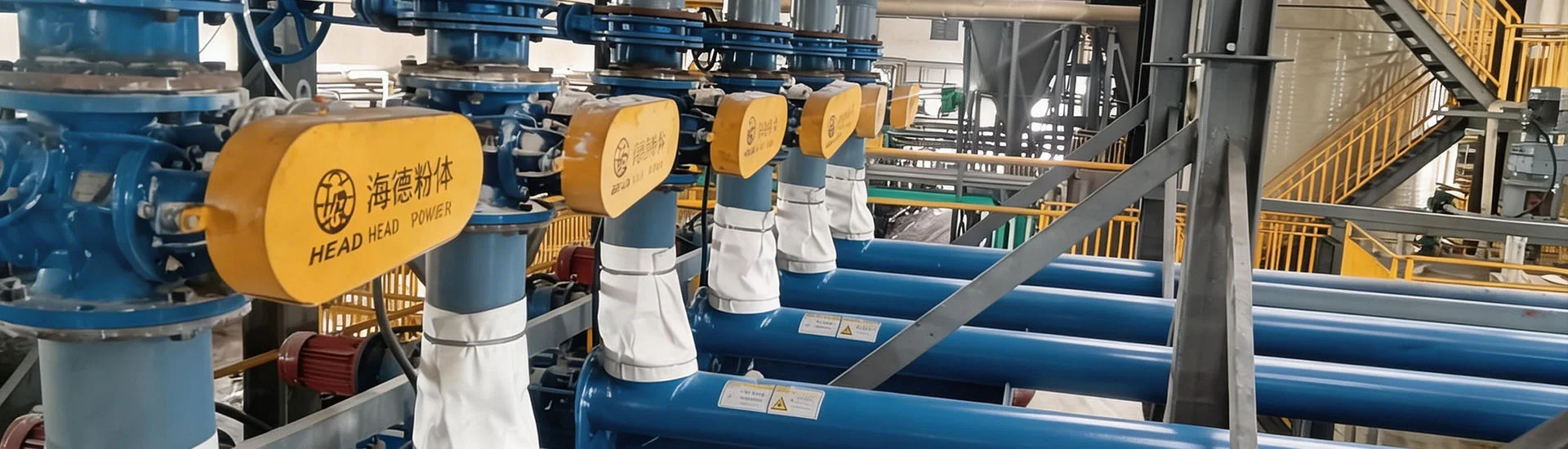
Rich project cases across industries, showing real implementation and proven technical strength.In the evolving landscape of industrial material handling, pneumatic conveying systems have become indispensable for transporting bulk powders, granules, and dust-laden smoke efficiently and safely. Among the most challenging applications is the handling of fine dust and smoke particles, which often pose risks of clogging, environmental contamination, and equipment wear. This article presents a comprehensive dust smoke pneumatic conveying system solution, drawing on industry best practices, technical parameters, and real-world deployment strategies. Designed for plant engineers, operations managers, and sustainability officers, the discussion focuses on system architecture, component selection, performance optimization, and regulatory compliance—all while demonstrating how headpowder's engineering expertise delivers measurable value in such demanding environments.
Unlike standard bulk solids, dust and smoke particles exhibit distinctive physical properties that complicate pneumatic transport. Particle sizes often range from sub-micron to 100 microns, leading to high cohesion, electrostatic attraction, and a tendency to agglomerate. Additionally, smoke streams may contain condensable vapors or reactive compounds, especially in industries like metallurgy, cement, chemical processing, and thermal power generation. These characteristics demand a system that maintains consistent flow velocity, prevents deposition in pipelines, and mitigates explosion risks. According to the 2026 Global Industrial Pneumatic Conveying Market Report, the demand for enclosed, low-emission conveying solutions has grown by 18% year-over-year, driven by stricter air quality regulations and the push for zero-leakage material transfer. A properly designed dust smoke pneumatic conveying system not only improves operational efficiency but also reduces fugitive emissions and maintenance downtime.
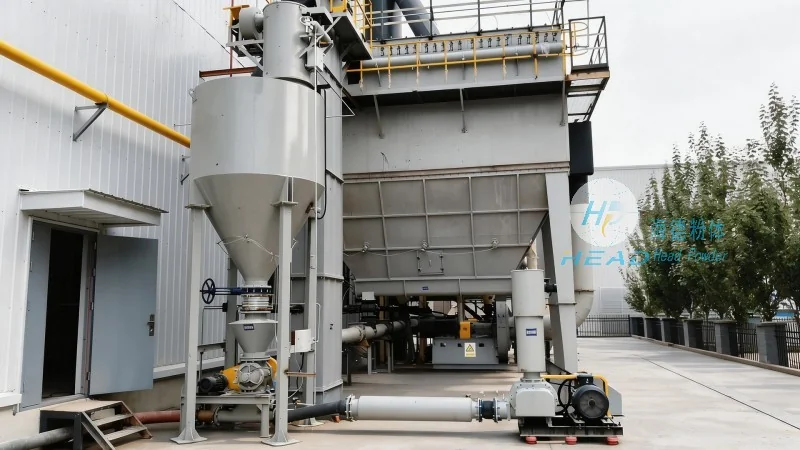
A dust smoke pneumatic conveying system typically operates under either dilute phase or dense phase principles, depending on material characteristics and distance requirements. In dilute phase systems, high-velocity air (typically 15–30 m/s) suspends particles in a continuous stream, suitable for low-density dusts and short-distance transport (up to 200 meters). Dense phase systems, on the other hand, use lower velocities (3–8 m/s) with higher material-to-air ratios, often applied for abrasive or fragile particles over longer distances (up to 500 meters). For smoke laden with fine particulates, a hybrid approach—combining positive pressure feeding with vacuum-assisted extraction—is often employed to minimize dust escape at loading points. The system comprises a feeding device (rotary valve or screw conveyor), a conveying pipeline with wear-resistant bends, a filtration unit (baghouse or cartridge filter), and a control panel with PLC-based flow regulation. Headpowder integrates pressure sensors and flow meters at critical nodes to provide real-time feedback, enabling predictive maintenance and energy optimization.
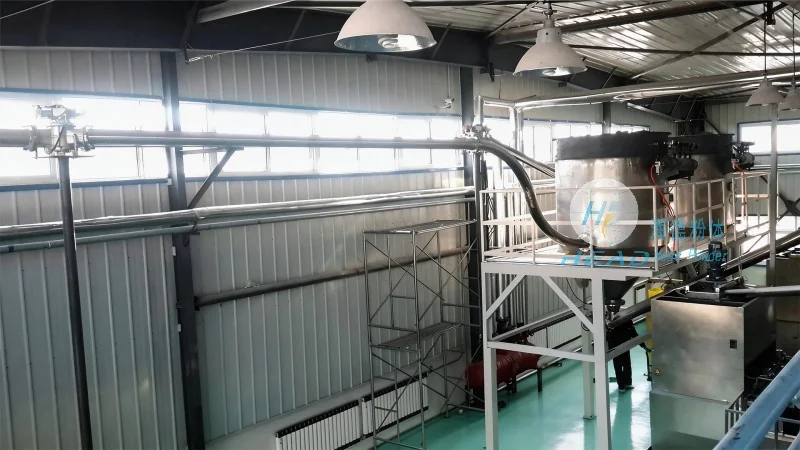
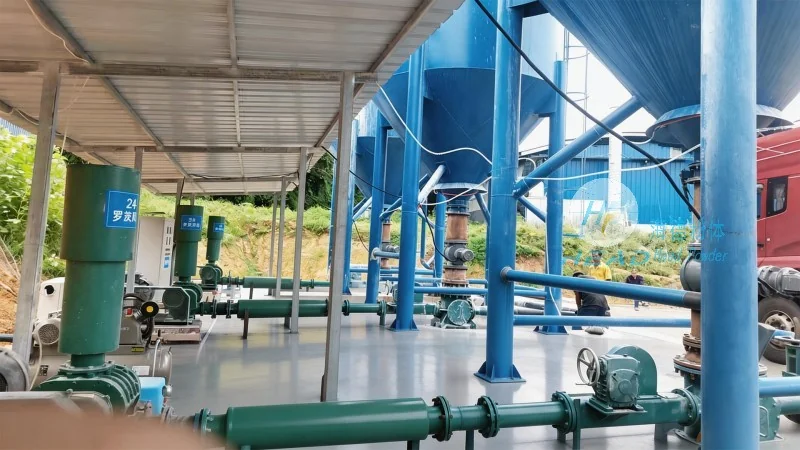
Selecting the right components is pivotal to system reliability. For dust and smoke applications, the following criteria must be carefully evaluated:
Headpowder follows a five-phase design methodology to ensure the dust smoke pneumatic conveying system solution meets site-specific requirements. Phase one involves comprehensive material characterization: particle size distribution (PSD), bulk density, angle of repose, moisture content, and explosion severity (Kst value). For smoke streams, the dew point and particulate concentration are measured across temperature ranges. Phase two uses computational fluid dynamics (CFD) modeling to simulate flow patterns, identify potential dead zones, and optimize pipeline routing. Phase three selects equipment based on the simulation results—incorporating safety factors for pressure drop and wear rates. Phase four covers installation support, including pipe sag calculations and grounding for electrostatic discharge. Phase five includes commissioning with stepwise performance validation, using tracer particles and real-time exhaust opacity monitors. A recent project for a steel plant's electric arc furnace (EAF) dust handling achieved a 99.7% availability rate over 18 months, reducing unscheduled downtime by 62% compared to the previous belt conveyor system.
Dust explosions remain a critical risk in pneumatic conveying. The 2025 update to ISO 6184 and NFPA 652 standards places tighter restrictions on combustible dust handling. For dust smoke systems, headpowder incorporates multiple layers of protection: (1) passive explosion venting panels placed every 10 meters along the pipeline, sized to relieve overpressure up to 10 bar; (2) active suppression using IR flame detectors that trigger pressurized extinguishing agents within 3 milliseconds; (3) isolation devices such as fast-acting flap valves and rotary valves with explosion-proof housings. In a case study handling aluminum dust (Kst 200 bar·m/s), the system passed all ATEX Zone 20 compliance tests with zero pressure rise beyond design limits. Grounding continuity checks are automated via resistance monitoring with alarms if impedance exceeds 10 ohms. Headpowder also provides training modules for operators on safe shutdown procedures and housekeeping protocols.
Energy consumption accounts for 40–60% of a pneumatic conveying system's lifecycle cost. For dust and smoke applications, optimizing air-to-material ratio is crucial. Headpowder's intelligent control algorithm uses machine learning to adjust blower speed and valve timing based on real-time pressure drop variations. In a cement plant preheater dust system, this resulted in a 28% reduction in specific energy consumption (from 12.3 kWh/ton to 8.9 kWh/ton). Additionally, using wear-resistant pipe linings extended component replacement intervals from 18 months to over 4 years, reducing maintenance costs by 35%. Capital expenditure is also optimized by selecting modular skid-mounted units that simplify on-site installation—reducing field labor by 40% compared to fully custom systems. When considering a typical 10-year period, the total cost of ownership for a headpowder dust smoke solution is typically 20–25% lower than conventional alternatives, based on internal data from over 120 installations worldwide.
To illustrate the versatility of the dust smoke pneumatic conveying system solution, three representative deployments are highlighted:
Regular maintenance ensures long-term reliability. Headpowder recommends a structured program that includes: weekly visual inspections of rotary valve seals and filter pulse-jet operation; monthly measurement of pipe wall thickness at known wear points; quarterly cleaning of pressure transmitter impulse lines; and annual calibration of all flow and pressure sensors. For high-availability installations, a condition monitoring package integrates vibration sensors on blower bearings, temperature sensors on filter housings, and acoustic emissions sensors on bends. The system's dashboard alerts operators when wear rates exceed baseline trends. In one instance, early detection of a worn elbow flange prevented a catastrophic failure during a 24/7 production run, saving an estimated $120,000 in lost production time. Headpowder also offers remote diagnostic services via secure VPN, allowing engineers to analyze system data and recommend adjustments without on-site visits.
Choosing an experienced engineering partner is as important as selecting the right equipment. Headpowder brings over 15 years of dedicated focus on pneumatic conveying for challenging materials, with a portfolio that spans 30+ countries. Our in-house test lab (ISO 17025 accredited) can process up to 2 tons of customer material per test run, providing accurate design data. We also offer turnkey project management from conceptual design through to performance guarantee, with typical lead times of 12–16 weeks for custom systems. For plant expansions or retrofits, our modular approach minimizes disruption; a recent installation at a chemical plant was completed during a scheduled 3-day shutdown with zero overtime. We invite you to discuss your specific dust or smoke conveying challenge and explore how our engineering team can develop a solution tailored to your process conditions, budget, and regulatory landscape. (咨询热线:156-6277-7102) For more technical documentation or to schedule a feasibility study, headpowder's application engineers are available for consultation.
Dust and smoke pneumatic conveying presents unique engineering challenges that demand specialized knowledge in particle behavior, flow dynamics, and safety protocols. A well-designed system not only improves material handling efficiency and reduces environmental impact but also significantly lowers operating expenses through reduced energy use and extended equipment life. Headpowder's comprehensive solution—built on a foundation of rigorous testing, advanced simulation, and field-proven components—enables industries to achieve reliable, compliant, and cost-effective conveyance of even the most difficult dust and smoke materials. As regulatory pressures and sustainability goals intensify, investing in a robust pneumatic conveying system becomes a strategic advantage rather than merely an operational necessity. By partnering with headpowder, you gain access to a dedicated team that prioritizes performance, safety, and long-term value—ensuring your material handling infrastructure remains a competitive asset for years to come.

 Shandong headpowder Engineering Co., Ltd.
 156-6277-7102(Manager Zhang)
  0531-83386006
  Jinan City, Shandong Province, China
服务热线
微信咨询
回到顶部