News
Rich project cases across industries, showing real implementation and proven technical strength.Ferrous oxide, commonly known as iron(II) oxide (FeO), plays a critical role in metallurgy, chemical processing, pigment manufacturing, and advanced materials production. As industries accelerate toward higher throughput and tighter environmental regulations, the need for reliable, enclosed material handling systems has never been greater. Pneumatic conveying technology offers a clean, efficient, and automated solution for transferring ferrous oxide powders and granules from storage to processing points without compromising product quality or operator safety. Headpowder, a specialized provider of pneumatic conveying equipment systems, has accumulated extensive field experience in designing tailored solutions for this abrasive, dense, and often hygroscopic material. This article provides a comprehensive overview of ferrous oxide pneumatic conveying equipment systems, covering system architecture, component selection, operational parameters, industry trends, and practical implementation insights. Whether you are evaluating a new production line or upgrading an existing facility, understanding the fundamental principles and engineering nuances of these systems will help you make informed decisions that optimize performance, reduce maintenance costs, and ensure regulatory compliance. The following sections break down the technical aspects in a modular, reader-friendly format, combining theoretical foundations with real-world application examples.
Ferrous oxide is a black to dark gray powder with a high bulk density typically ranging from 2.5 to 4.5 g/cm³ depending on particle size distribution and moisture content. Its primary applications include steelmaking as a fluxing agent, production of ferrites for electronics, catalyst manufacturing, and use in glass and ceramic coloring. However, handling ferrous oxide presents several distinct challenges. The material is abrasive, meaning that standard conveying components without proper wear protection may suffer accelerated erosion. It is also prone to agglomeration when exposed to moisture, leading to blockages in pipelines and feeders. Additionally, fine ferrous oxide dust poses respiratory and explosion hazards if conveyed in an uncontrolled manner. A well-engineered pneumatic conveying system must address these factors by incorporating appropriate material velocity control, filtration, dust collection, and explosion protection measures. The choice between dilute phase and dense phase conveying for ferrous oxide depends on particle friability, abrasion resistance, and required throughput. Headpowder's decades of hands-on experience have demonstrated that dense phase conveying, operating at lower velocities and higher material-to-air ratios, is often the preferred approach for preserving particle integrity and minimizing wear, especially when the material contains a significant fraction of fines.
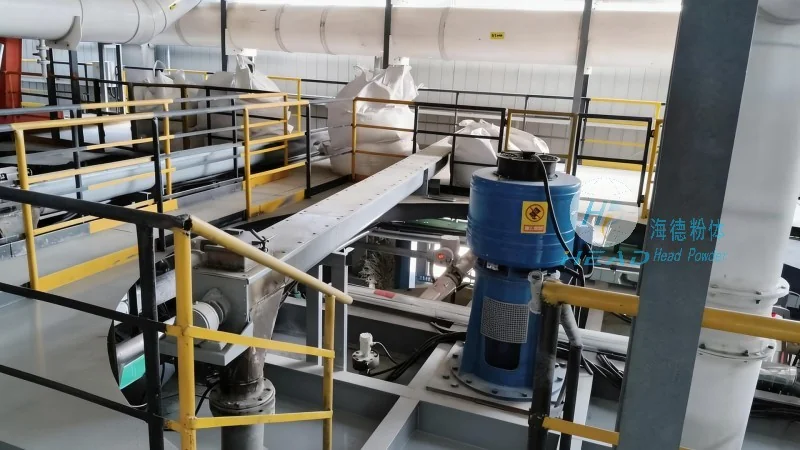
A complete ferrous oxide pneumatic conveying system comprises several interconnected modules, each engineered to handle the material's specific properties. The primary components include:
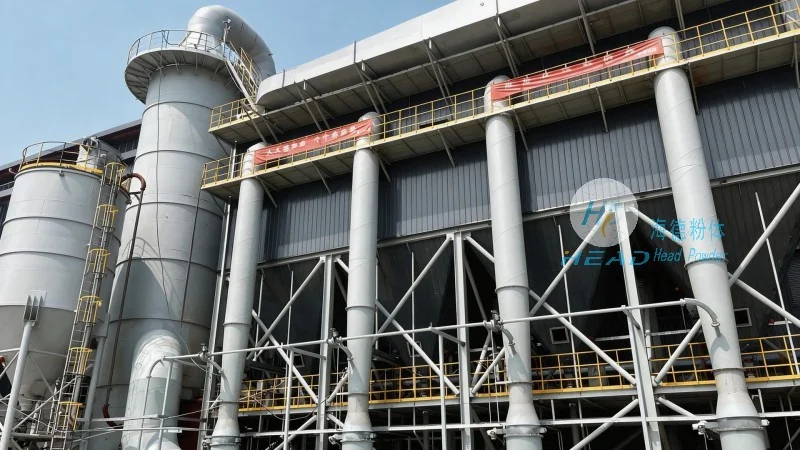
Each component must be selected and sized based on a thorough analysis of the material's flow characteristics, including angle of repose, cohesion, and deaeration rate. Headpowder performs in‑house flow testing using representative ferrous oxide samples to validate system design before fabrication.
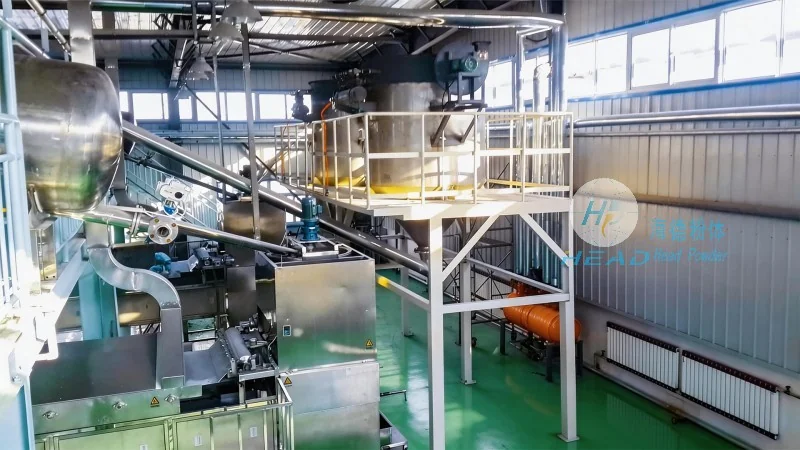
Designing a pneumatic conveying system for ferrous oxide requires a systematic approach that balances technical performance with economic feasibility. Key design parameters include:
Case studies from Headpowder's project portfolio show that systems designed with these parameters consistently achieve availability rates above 98 percent and maintain product quality within specification. For example, a ferrous oxide processing facility in Southeast Asia replaced their mechanical bucket elevator with a Headpowder dense‑phase pneumatic system, reducing dust emissions by 90 percent and eliminating weekly belt replacement downtime.
Once a system is installed, proper operation and maintenance are crucial for long‑term reliability. Routine inspections of rotary valves, filters, and pipe bends should be scheduled based on cumulative material throughput. For ferrous oxide, erosion typically becomes visible after 2,000–5,000 operating hours, depending on particle hardness. Headpowder recommends ultrasonic thickness testing at critical wear points every six months. Operators must be trained to respond to pressure fluctuations, filter differential pressure alarms, and material build‑up indicators. Safety protocols should include lockout‑tagout procedures during maintenance, confined space entry plans for filter hoppers, and regular explosion vent inspection. In 2025, the global market for pneumatic conveying equipment in the minerals and metals sector is projected to grow at a compound annual rate of 5.8 percent, driven by automation and stricter emission standards. Headpowder has been at the forefront of this trend, developing smart conveying systems that use artificial intelligence to optimize air‑to‑material ratios in real time. These systems not only reduce energy consumption but also extend component life by avoiding excessive velocities. A recent upgrade at a ferrous oxide briquetting plant in Eastern Europe reduced energy usage by 22 percent while decreasing maintenance incidents by 35 percent over 18 months.
Looking ahead to 2026, several technology trends are shaping the future of ferrous oxide pneumatic conveying. First, the integration of Industry 4.0 principles, including digital twins and predictive analytics, allows operators to simulate conveying scenarios and detect wear patterns before failures occur. Second, modular and skid‑mounted system designs are gaining popularity because they reduce installation time and enable future capacity expansions. Third, advances in ceramic and polymer lining materials are further extending pipeline life for abrasive ferrous oxide applications. Fourth, the push toward carbon neutrality is encouraging the use of electric‑driven blowers and heat recovery loops that capture thermal energy from compressed air. Headpowder's research and development team is actively exploring the use of recycled low‑pressure air from other plant processes to supplement conveying airflow, lowering overall carbon footprint. From a regulatory perspective, the European Union's updated ATEX directive and the U.S. EPA's revised NESHAP for metal processing facilities impose tighter limits on fugitive dust emissions. Headpowder's systems are designed to meet or exceed these requirements, incorporating sealed components and continuous monitoring of particulate levels. As the industry evolves, operators who invest in robust, data‑driven conveying solutions will gain a competitive advantage through reduced downtime, lower operating costs, and enhanced workplace safety.
Headpowder has delivered over 200 pneumatic conveying systems for ferrous oxide and related materials across steel, chemical, and pigment industries worldwide. Each project begins with a detailed site audit and material characterization, followed by custom engineering that accounts for existing plant constraints and future growth plans. Our team of process engineers, mechanical designers, and automation specialists works closely with clients from concept through commissioning, providing on‑site training and ongoing technical support. Whether your requirement is a compact 5‑ton‑per‑hour dosing line or a high‑capacity 80‑ton‑per‑hour main transfer system, Headpowder has the proven capability to deliver a solution that performs reliably under demanding conditions. The value of selecting an experienced partner extends beyond hardware; it includes optimized system layout, minimized compressed air consumption, and comprehensive warranty coverage. By choosing Headpowder, you gain access to years of empirical data, continuous improvement feedback loops, and a supply chain that prioritizes quality and delivery reliability. For more information about our ferrous oxide pneumatic conveying equipment systems and to discuss your specific application, please contact our technical sales team.
Headpowder (咨询热线:156-6277-7102) remains dedicated to advancing material handling technology for the minerals and metals sector. Our commitment to rigorous testing, innovative design, and customer partnership ensures that every system we deliver contributes to safer, cleaner, and more efficient production environments. As global demand for ferrous oxide continues to rise—driven by infrastructure development, electric vehicle manufacturing, and renewable energy technologies—the role of optimized pneumatic conveying will only become more central. With the right system, operators can achieve consistent product quality, lower total cost of ownership, and full compliance with evolving environmental and safety standards. Trust Headpowder to be your reliable partner in building the conveying systems of tomorrow, today.

 Shandong headpowder Engineering Co., Ltd.
 156-6277-7102(Manager Zhang)
  0531-83386006
  Jinan City, Shandong Province, China
服务热线
微信咨询
回到顶部