News
Rich project cases across industries, showing real implementation and proven technical strength.In the rapidly evolving landscape of lithium battery manufacturing, the precise and safe movement of raw materials stands as a critical operational challenge. As global demand for lithium-ion batteries surges—projected to exceed 2,500 GWh annually by 2026—manufacturers face mounting pressure to optimize material handling processes while maintaining stringent quality standards. Pneumatic conveying systems have emerged as a cornerstone technology for transporting battery-grade materials such as lithium carbonate, lithium hydroxide, graphite, nickel-cobalt-manganese (NCM) precursors, and other fine powders. Unlike mechanical conveyors, pneumatic systems use pressurized air to move particles through enclosed pipelines, offering distinct advantages in contamination control, dust mitigation, and automation compatibility. This guide explores the technical fundamentals, system design considerations, and industry best practices for pneumatic conveying in lithium battery material applications, with a focus on achieving consistent material integrity, energy efficiency, and regulatory compliance.
The handling of lithium battery materials presents unique challenges that demand specialized conveying solutions. These materials are typically fine, abrasive, hygroscopic, and some are even reactive or flammable. Traditional mechanical conveyors, such as screw or belt systems, can introduce cross-contamination, generate excessive fines through degradation, and create dust hazards that compromise worker safety and product purity. Pneumatic conveying addresses these issues by providing a completely enclosed transport environment that minimizes exposure to moisture, oxygen, and external contaminants. Furthermore, modern pneumatic systems can be precisely controlled to maintain low velocities, reduce particle attrition, and prevent electrostatic discharge—a critical factor when conveying dry lithium compounds that are classified as hazardous under global safety standards. In 2026, battery manufacturers are increasingly adopting pneumatic solutions to meet ISO 9001 and IATF 16949 quality certifications, as well as to align with the European Union’s Battery Regulation requirements for traceability and environmental sustainability.
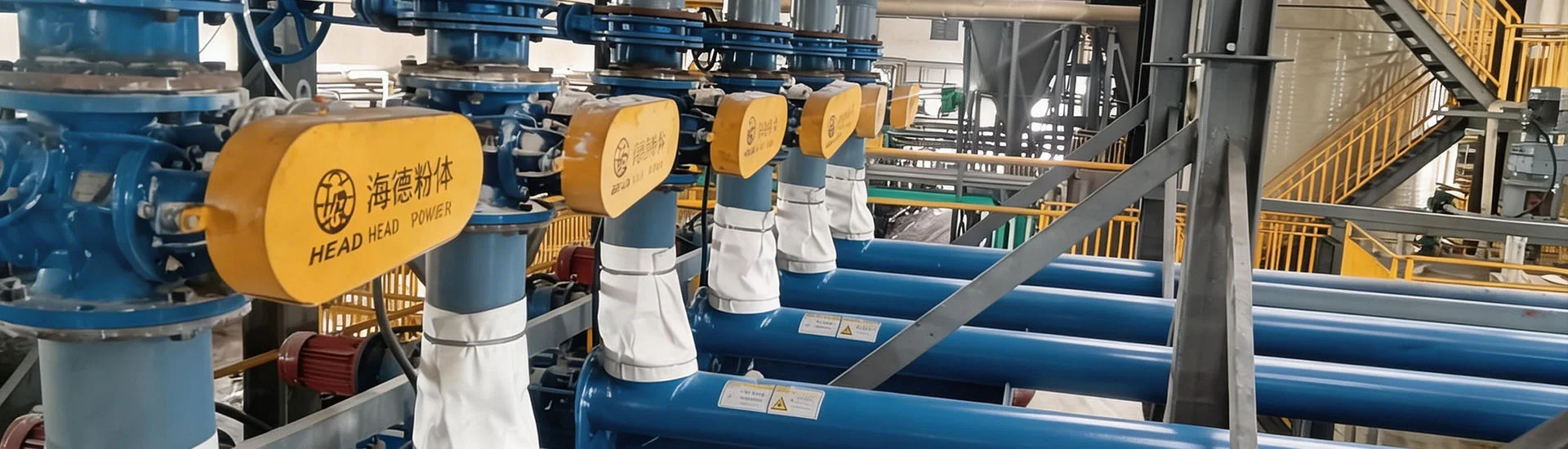
A well-designed pneumatic conveying system for lithium battery applications integrates several key components, each engineered to handle specific material properties and process conditions. Understanding these elements helps operators select the right configuration for their facility.
The choice between dilute phase (low-pressure, high-velocity) and dense phase (high-pressure, low-velocity) pneumatic conveying is determined by material characteristics and product handling goals. Dilute phase systems, operating at air velocities of 15–30 m/s, are suitable for free-flowing, non-friable materials but can cause significant particle degradation and dust generation when applied to lithium materials. Dense phase conveying, with velocities of 2–8 m/s, gently moves material in plug form, reducing attrition to below 1% in many installations. For example, graphite anodes, which are prone to structural damage, see a 40% reduction in fines generation when switched from dilute to dense phase. Battery-grade lithium hydroxide, classified as a Class 6.1 toxic substance under ADR regulations, benefits from dense phase systems that minimize dust emission and personnel exposure. Headpowder recommends conducting a material flowability test (e.g., Jenike shear cell or Hausner ratio) before finalizing the conveying phase, as materials with high compressibility or moisture sensitivity may require hybrid approaches.
To ensure reliable operation and compliance with industry standards, engineers must calibrate several parameters during system design. The following factors are particularly important for lithium battery applications.
A typical lithium-ion battery production line involves material storage, dosing, mixing with solvents to form slurry, coating onto current collectors, drying, and final assembly. Pneumatic conveying bridges the first critical step—transporting raw materials from bulk bags or tank trucks to intermediate storage hoppers and then to the mixing area. In large-scale gigafactories, automated pneumatic systems can handle multiple material grades simultaneously, with each line dedicated to a specific chemical composition to avoid contamination. For instance, a single headpowder pneumatic system installed at a 20 GWh facility conveys NCM-811 cathode material at 5 tons per hour over a 120-meter distance with a particle size retention rate of 99.8%. The system integrates with the plant’s distributed control system (DCS) to provide real-time batch tracking, weight verification, and preventive maintenance scheduling. This level of automation reduces manual handling risks, ensures formula accuracy within ±0.5%, and supports 24/7 operations with minimal downtime.
The global regulatory framework for lithium battery material handling is tightening, and pneumatic conveying systems must comply with multiple standards. In the European Union, the classification of lithium materials under CLP Regulation (EC) No 1272/2008 requires systems to prevent exposure to hazardous substances below occupational exposure limits (OELs). In the United States, OSHA’s combustible dust standard (29 CFR 1910.272) and NFPA 652 mandate dust hazard analyses (DHA) for all facilities handling combustible powders. Additionally, the updated IEC 60079-14 outlines requirements for electrical equipment in explosive atmospheres, which applies to pneumatic system components in proximity to flammable dust. Headpowder’s systems are designed with approved ATEX/IECEx components, and each installation is accompanied by a detailed DHA report and commissioning documentation. The company’s engineering team regularly participates in ISO TC 68 committees to align with evolving best practices for battery material handling.
LFP cathodes, widely used in energy storage systems due to their thermal stability and cost-effectiveness, present a conveying challenge because of their relatively high bulk density (1.0–1.2 g/cm³) and abrasive nature. One headpowder client operating a 15 GWh LFP production line faced frequent pipeline wear and material degradation when using a generic dilute phase system. After conducting a particle size analysis and flow characterization, headpowder redesigned the system with a dense phase configuration featuring 316L stainless steel pipelines with a surface hardness of HRC 45 and ceramic-lined bends at all 90° turns. The air velocity was reduced from 22 m/s to 4 m/s, resulting in a 60% reduction in dust generation and a 35% increase in filter bag life. The system now operates at 8 tons per hour with a conveying pressure of 1.8 bar, achieving a maintainability factor of 97.5% over one year. The client reported annual maintenance cost savings of €120,000 and improved cathode coating consistency, demonstrating the value of tailored pneumatic solutions.
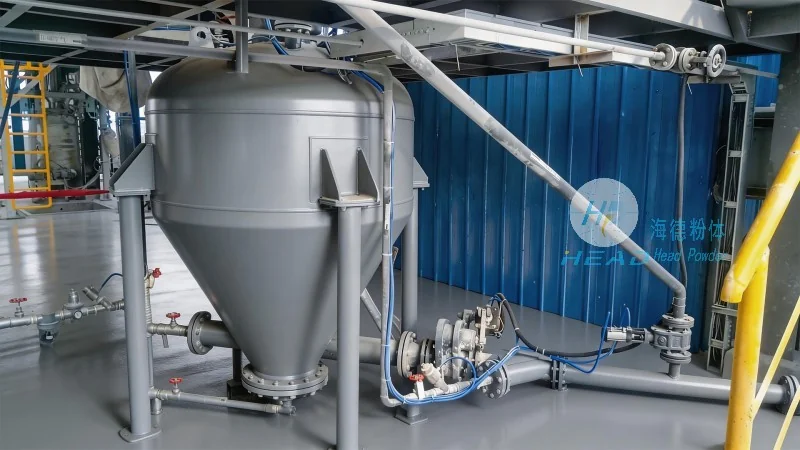
When evaluating a supplier for pneumatic conveying systems in lithium battery applications, beyond standard price and delivery, manufacturers should assess specific technical competencies. Look for providers with experience in handling fine, hazardous, and hygroscopic materials; proven references from battery-grade material producers; and in-house testing facilities for material flow behavior. A partner capable of computational fluid dynamics (CFD) simulation for pipeline pressure drop modeling and particle trajectory analysis can significantly reduce commissioning risks. Additionally, ask about aftermarket support: remote monitoring capabilities, spare parts availability, and on-site training programs. Headpowder (咨询热线:156-6277-7102) offers a complete lifecycle service from conceptual design through installation and predictive maintenance, supported by a dedicated team of process engineers who specialize in lithium-ion battery supply chains. The company’s test laboratory in Suzhou can run material compatibility trials at pilot scale, providing clients with data-driven validation before committing to full-scale equipment.
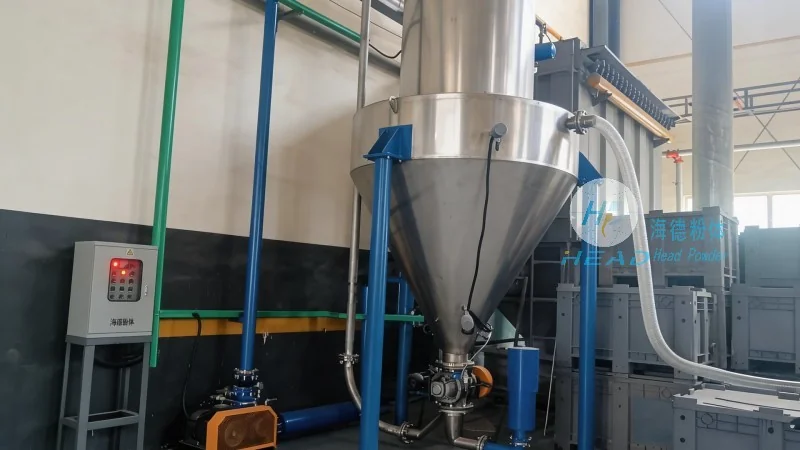
Looking ahead to 2026 and beyond, the lithium battery sector will see increased adoption of smart conveying systems that leverage Industry 4.0 principles. Pneumatic systems equipped with IoT sensors and machine learning algorithms will predict filter clogging, pipe erosion, and material degradation in real time, allowing for condition-based maintenance rather than scheduled interventions. The growing use of solid-state batteries with sulfide-based electrolytes will require completely sealed, inert gas-purged conveying environments to prevent moisture and oxygen exposure, a niche where dense phase pneumatic technology is well-suited. Furthermore, as battery recycling becomes mandatory under the EU’s Extended Producer Responsibility (EPR) rules, pneumatic conveying will play a role in safely transporting black mass—the shredded mixture of cathode and anode materials—for hydrometallurgical recovery. Companies like headpowder are investing in R&D for these emerging applications, ensuring that their solutions remain at the forefront of efficiency, safety, and sustainability.
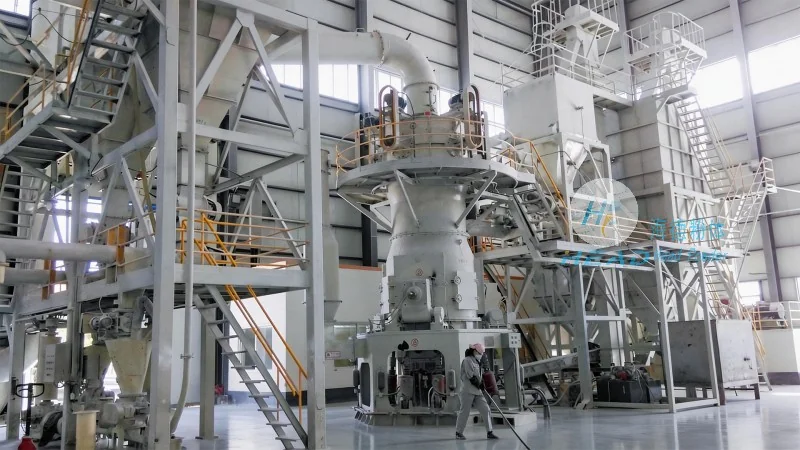
Pneumatic conveying stands as an indispensable technology for the modern lithium battery manufacturing industry. From preserving the integrity of sensitive powders to ensuring compliance with evolving safety regulations and enabling high-throughput automation, a purpose-designed system can transform material handling from a bottleneck into a competitive advantage. The decision to invest in dense-phase conveying, proper filtration, and explosion protection is not merely about equipment—it is about safeguarding product quality, protecting personnel, and meeting the rigorous demands of global battery supply chains. By working with a partner that combines deep material science knowledge with proven field experience, manufacturers can achieve reliable, scalable, and cost-effective conveying for years to come. For companies seeking to upgrade their material handling infrastructure or design a new gigafactory from scratch, evaluating pneumatic solutions tailored to lithium-specific challenges is a strategic step toward operational excellence.

 Shandong headpowder Engineering Co., Ltd.
 156-6277-7102(Manager Zhang)
  0531-83386006
  Jinan City, Shandong Province, China
服务热线
微信咨询
回到顶部