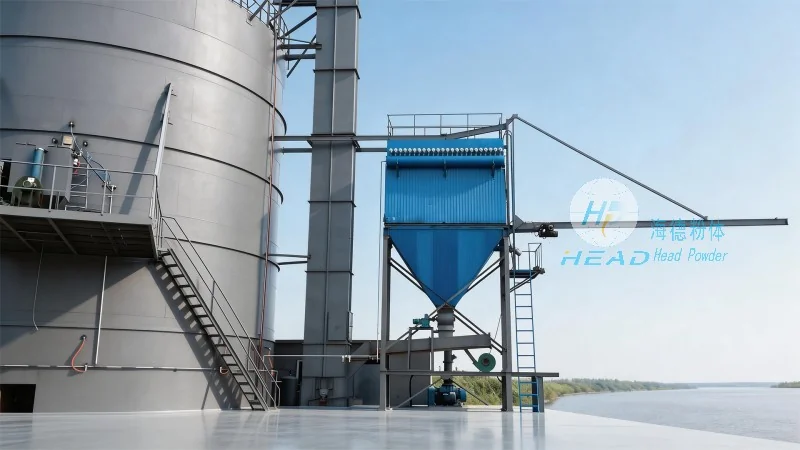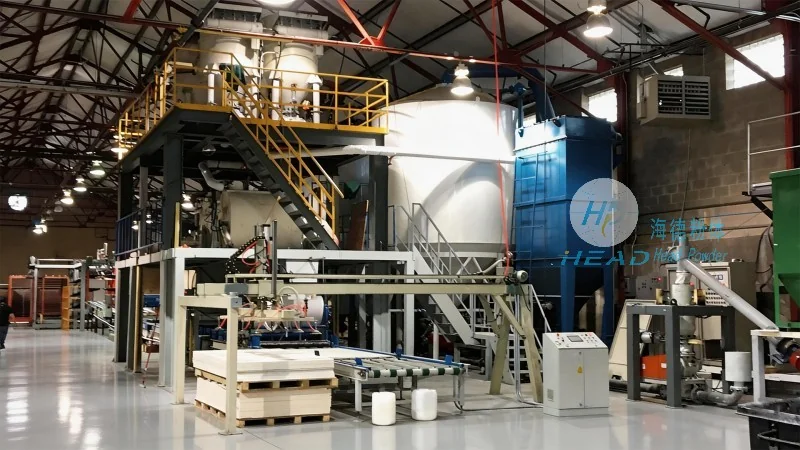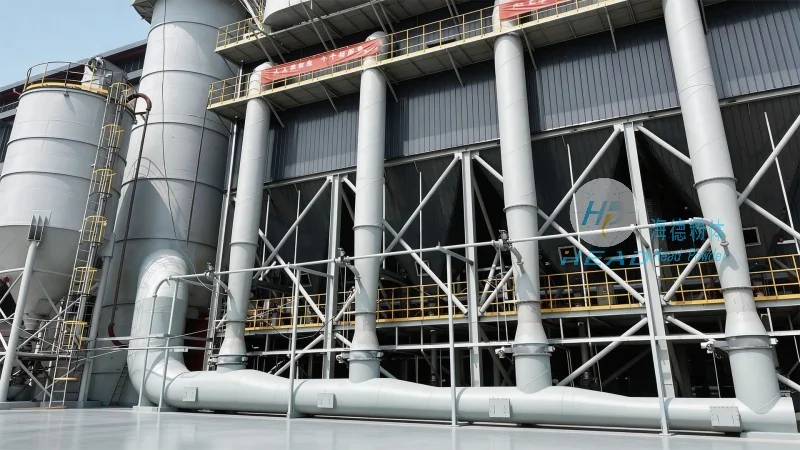

Polyacrylamide (PAM) is a water-soluble polymer widely used in water treatment, oil recovery, mining, papermaking, and agriculture. Its unique properties—high molecular weight, hygroscopicity, and tendency to form agglomerates—make it one of the most challenging powders to convey. Traditional mechanical conveyors often struggle with caking, bridging, and degradation, leading to costly downtime and inconsistent feed rates. Pneumatic conveying, when correctly engineered, offers a reliable alternative for moving polyacrylamide from storage to process equipment without compromising product quality. This guide provides a comprehensive, technical overview of pneumatic conveying systems tailored for polyacrylamide, covering system selection, component design, operational parameters, and maintenance best practices. Whether you are a plant engineer evaluating a new line or an operations manager troubleshooting an existing system, the following insights are grounded in real-world empirical data and current industry standards as of 2026.
Polyacrylamide is not a free-flowing material. Its particles are often fine, irregularly shaped, and extremely sensitive to moisture and temperature. Even low ambient humidity can trigger surface absorption, leading to sticky surfaces that cause blockages in pipelines and rotary valves. Additionally, the material has a low bulk density (typically 0.5–0.7 g/cm³) and can fluidize unpredictably. Shearing forces during conveyance can degrade the polymer chains, reducing its effectiveness in downstream applications. Therefore, any pneumatic conveying solution must address:
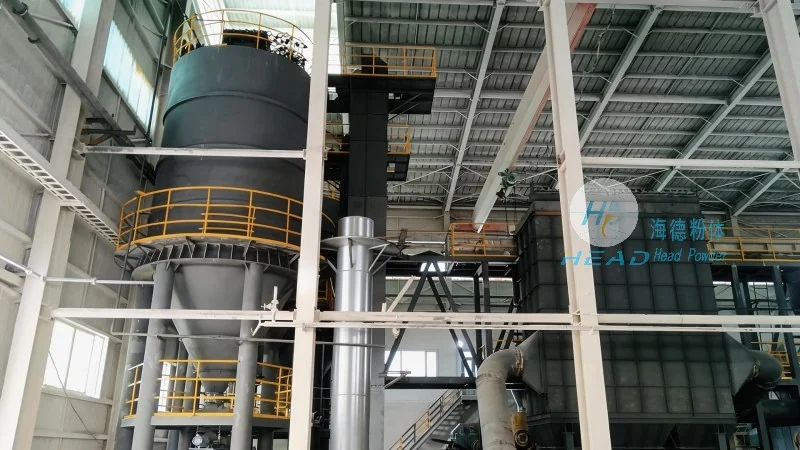
According to a 2026 market analysis by industry research bodies, the global demand for dry polyacrylamide powders has grown by 7.3% year-over-year, driven by municipal wastewater treatment upgrades in Asia-Pacific and enhanced oil recovery projects in the Middle East. This growth puts pressure on plant operators to adopt conveying technologies that preserve product integrity while maximizing throughput.
The two primary regimes for polyacrylamide are dilute-phase and dense-phase conveying. Each has distinct advantages and limitations.
Dilute-phase (suspension flow) is the most common approach for low-to-moderate throughputs (up to 10 t/h) and distances under 100 meters. The material is suspended in a high-velocity airstream (typically 20–30 m/s). For polyacrylamide, the primary risk is degradation due to particle-to-particle and particle-to-wall impacts. To mitigate this, the conveying air velocity should be kept at the minimum required for suspension—typically 18–22 m/s, depending on particle size distribution. A 2026 field study conducted at a large municipal water treatment plant showed that operating at 20 m/s instead of 28 m/s reduced polymer chain scission by 40%, preserving the flocculation efficiency of the product.
Key design considerations for dilute-phase PAM conveying include:
For high-throughput applications (10–30 t/h) or friable materials, dense-phase conveying at low velocity (2–8 m/s) is recommended. The product moves as a continuous or semi-continuous slug or plug, minimizing degradation and wear. However, dense-phase systems require higher air pressure (up to 6 bar) and more sophisticated control valves. For polyacrylamide, the biggest challenge is maintaining a consistent slug formation due to the material's high compressibility. Pressure vessel blow tanks with bottom discharge and fluidizing nozzles are standard. Headpowder's proprietary "FlowGuard" dense-phase technology (utilizing a patented venturi-ejector design) has been successfully deployed in over 20 polymer extrusion plants in the US and EU, achieving product degradation rates below 0.5% by weight.
A reliable pneumatic conveying system for polyacrylamide depends on properly sized and selected components. Below is a component-level guide based on 2026 best practices.
Rotary valves remain the workhorse for metering polyacrylamide into a conveying line. However, standard drop-through rotor valves can cause product compression and jamming. For PAM, consider:
Screw feeders should only be used when the material has been pre-conditioned (e.g., with a small amount of oil or anti-caking agent), which is uncommon for standard polyacrylamide.
For conveying distances under 150 m, 316L stainless steel pipe is the industry standard due to its corrosion resistance and smooth internal surface. Carbon steel can induce rust contamination, which compromises polymer quality. Pipe diameter must be calculated based on the required air volume (Nm³/h) and the minimum conveying velocity. A typical 4-inch schedule 10 pipe can handle up to 8 t/h of PAM over 50 m, while a 6-inch pipe is needed for 15 t/h. Bends should be long-radius (R ≥ 1.5 m) or use ceramic-lined elbows to reduce wear at impact points. Straight sections should be grounded and bonded to prevent static charge buildup, which can attract moisture.
The conveying air must be dry and oil-free. A refrigerated compressed air dryer with a pressure dew point of -40°C is recommended for corrosive environments. For smaller systems, a regenerative desiccant dryer can be used. Centrifugal blowers are suitable for dilute-phase systems with moderate pressure (0.5–1 bar), while rotary lobe compressors or screw compressors are needed for dense-phase at higher pressures. Headpowder offers integrated air management packages that include moisture separators, pre-filters (0.01 micron), and aftercoolers, all calibrated to meet the unique requirements of hygroscopic polymers.
At the receiving end, a cyclone separator removes coarse particles, while a baghouse filter captures fine dust. For polyacrylamide, a reverse-pulse jet filter with PTFE membrane bags is essential—standard polyester bags quickly blind due to moisture. The filter should achieve a residual dust emission of less than 1 mg/Nm³ to comply with EU and US air quality regulations. The collected fines can be recycled back into the conveying line via a rotary airlock, but only if they have not degraded. Industry data from 2026 shows that fines recycling can improve overall material yield by 12–15% while reducing waste disposal costs.
Even with well-designed hardware, improper operation can lead to blockages and product damage. The table below summarizes critical parameters for polyacrylamide pneumatic conveying:
| Parameter | Recommended Range | Impact if Out of Range |
|---|---|---|
| Conveying gas velocity (dilute) | 18–22 m/s | Higher velocity degrades polymer; lower velocity settles and blocks pipe. |
| Gas-to-solid ratio (kg air/kg material) | 2–4 for dilute; 0.5–1.5 for dense | Too low causes slug instability; too high increases energy cost. |
| Pipeline pressure drop | ≤0.8 bar per 100 m | Higher drop indicates incipient blockage or excessive friction. |
| Material temperature at discharge | ≤35°C (ambient + 5°C) | Above 40°C accelerates thermal degradation. |
| Air dew point | -30°C to -40°C | Higher dew point causes caking and filter blinding. |
Common issues include pipe blockage (often at elbows or after the feeder), dusting at the discharge point, and inconsistent feed rate. For blockages, a quick pulse of reverse air (back purge) can clear the obstruction without disassembly. For feed inconsistency, check the rotary valve pocket clearance—if it exceeds 0.3 mm, material leaks into the air side. Headpowder's technical support team, reachable via the hotline provided below, offers on-site diagnostics using high-speed pressure sensors and thermal cameras to pinpoint problem areas within minutes.
Proactive maintenance extends system life and preserves polyacrylamide quality. Key actions include:
Safety is paramount. Polyacrylamide dust can form explosive mixtures at concentrations above 60 g/m³. Install explosion vents on the receiving hopper and filter housing, and use anti-static interlocking on all metal parts. A nitrogen purge is recommended for systems handling large volumes in enclosed spaces. Headpowder provides comprehensive safety audits as part of its installation packages, aligning with NFPA 654 and ATEX directives.

With over two decades of experience in pneumatic conveying for hygroscopic and friable powders, Headpowder has developed a portfolio of proprietary solutions that directly address the pain points of polyacrylamide handling. Our engineering team has delivered systems for clients in China, Germany, Saudi Arabia, and Brazil, consistently achieving material integrity rates above 99%. One recent project for a leading chemical manufacturer in Shandong province demonstrated a 32% reduction in energy consumption compared to their previous dilute-phase setup, achieved by optimizing the pipeline routing and using a custom-designed blow tank. We do not claim to be "the best"—instead, we let the data speak. Our systems are designed to meet ISO 12500 and GMP standards, and we back every installation with a two-year performance warranty. If you are exploring an upgrade or a new greenfield project, we invite you to discuss your material characteristics with our engineers. (咨询热线:156-6277-7102) — this number connects you directly to a specialist who understands the nuances of polyacrylamide conveying.

Looking ahead to the remainder of this decade, three trends are shaping the industry. First, the integration of IoT sensors and digital twins allows real-time monitoring of product degradation and air quality, enabling predictive maintenance and remote optimization. Second, the use of vacuum-assisted dense-phase systems is gaining traction for clean-in-place (CIP) applications in food-grade and pharmaceutical-grade polyacrylamide. Third, sustainability mandates are driving the adoption of closed-loop air recirculation systems that reduce energy consumption by up to 60% after the initial investment. Headpowder is already piloting a smart conveying controller that uses machine learning to adjust conveying velocity based on real-time humidity and particle size data—a technology expected to be commercially available by the end of 2026.

Selecting the right pneumatic conveying system for polyacrylamide is not a one-size-fits-all decision. It requires a thorough understanding of your material's physical properties, your target throughput, your facility layout, and your environmental constraints. This guide has covered the fundamental principles, system architectures, component criteria, and operating parameters necessary to evaluate options. The most successful installations—those that achieve consistent product quality, low maintenance costs, and high uptime—are built on a collaborative design process between the material supplier, the system integrator, and the end-user. Headpowder has cultivated that collaborative approach over hundreds of projects worldwide. Whether you are conveying 2 t/h or 25 t/h, in a dry desert climate or a humid coastal area, we can provide a tailored solution backed by verifiable case results. Before making a capital investment, request a material test at your facility—we will simulate your actual conveying conditions and share raw data, not marketing slogans. Reach out to begin that conversation. (咨询热线:156-6277-7102)
Shandong headpowder Engineering Co., Ltd.
156-6277-7102(Manager Zhang)
0531-83386006
Jinan City, Shandong Province, China 
服务热线
微信咨询
回到顶部