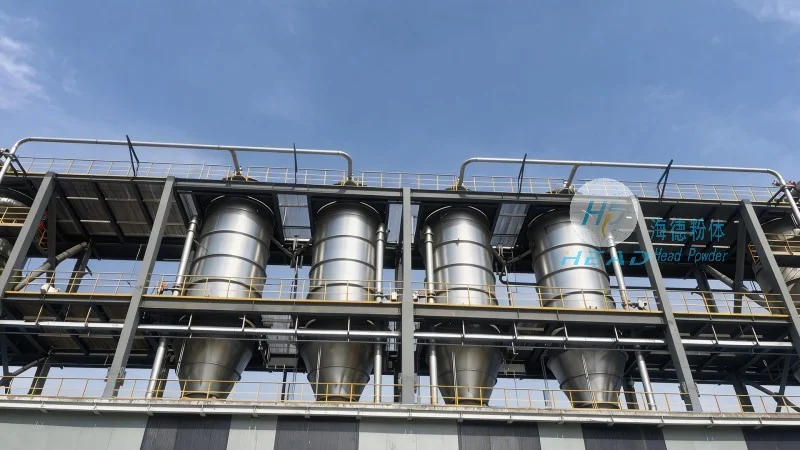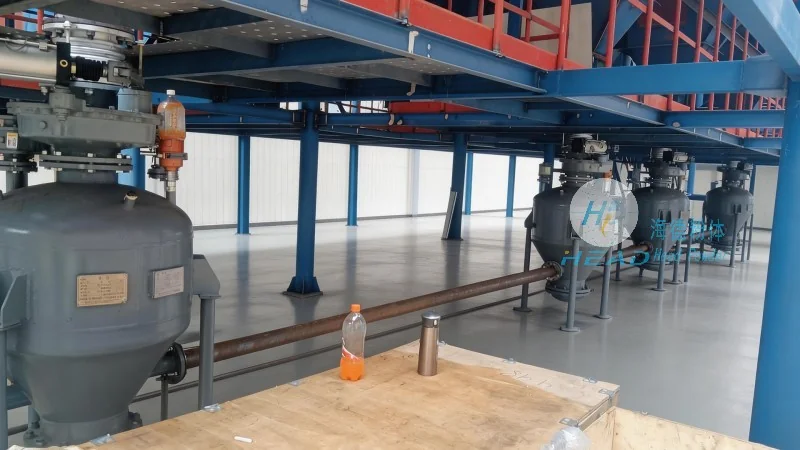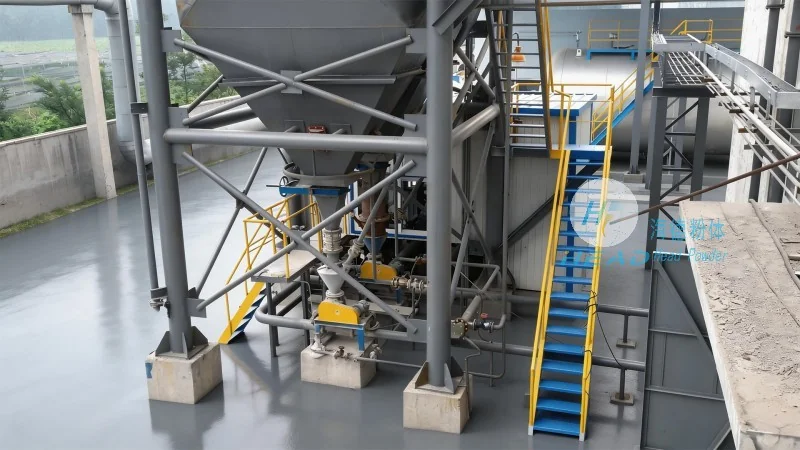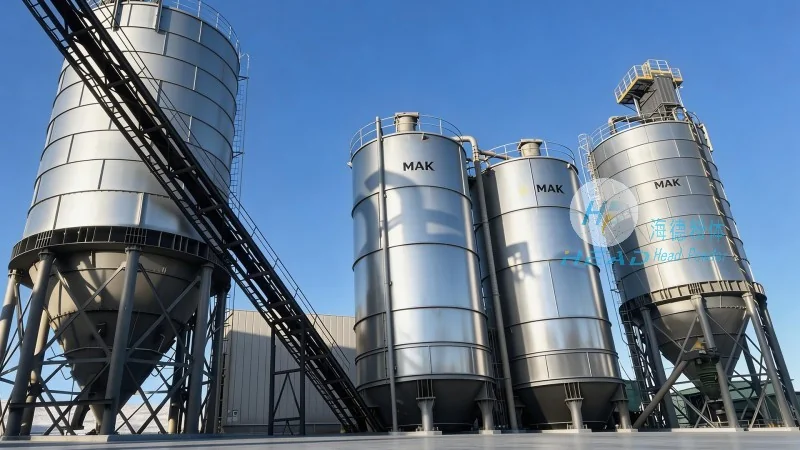

With over a decade of experience in the pneumatic conveying industry, our company specializes in a full range of pneumatic conveying system equipment.
您的当前位置:首页 >> News >> Technical FAQ

News

Rich project cases across industries, showing real implementation and proven technical strength.

Precipitated Barium Sulfate Conveying: Pneumatic Guide

2026-07-08

In the evolving landscape of industrial minerals processing, the efficient and safe handling of fine particulate materials remains a critical operational challenge. Among these materials, precipitated barium sulfate (BaSO₄) occupies a unique position due to its high density, small particle size, and abrasive characteristics. Conveying such a substance requires engineered solutions that go beyond conventional mechanical systems. Pneumatic conveying, specifically designed for dense-phase and dilute-phase transport, has emerged as the most reliable method for moving precipitated barium sulfate across processing stages, storage silos, and packaging lines. This guide provides an in-depth, technical exploration of pneumatic conveying systems tailored for precipitated barium sulfate, addressing system design, material properties, operational parameters, and practical considerations that directly impact productivity and equipment longevity. Whether you are upgrading an existing line or designing a new facility, understanding the interaction between the powder's physical properties and the conveying dynamics is essential for achieving consistent throughput and minimizing wear. The insights shared here draw from industry best practices, engineering principles, and real-world applications—offering a comprehensive resource for plant managers, process engineers, and procurement specialists seeking reliable, cost-effective conveying solutions.

Precipitated barium sulfate is distinct from ground barite due to its controlled particle morphology and narrow size distribution. Typically ranging from 0.5 to 30 microns, these particles exhibit low bulk density (0.6–0.9 g/cm³) and high true density (4.3–4.5 g/cm³). This combination makes the material prone to fluidization challenges and erosive wear. The conveying system must therefore account for particle settling velocity, saltation velocity, and pressure drop characteristics specific to fine, cohesive powders. A mistaken assumption that standard pneumatic designs for coarse granules can be applied directly often leads to plugging, degradation of product quality, and excessive energy consumption. Recognizing these nuances is the first step toward a robust conveying strategy.

Understanding Pneumatic Conveying Principles for Precipitated Barium Sulfate

Pneumatic conveying operates on the principle of using air or an inert gas to transport particles through a pipeline. Two primary regimes exist: dilute-phase (suspension flow) and dense-phase (non-suspension flow). For precipitated barium sulfate, dilute-phase conveying at high air velocities (20–35 m/s) is common for shorter distances but generates significant particle attrition and pipeline abrasion. Dense-phase conveying, operating at lower velocities (3–10 m/s) and higher solids-to-air ratios, reduces wear and maintains particle integrity. However, dense-phase requires careful control of pressure and air injection points to prevent blockage. The selection between these regimes depends on distance, throughput, and downstream process requirements.

Key Material Properties Influencing System Design

  • Particle size distribution: Finer particles increase inter-particle cohesion, requiring higher pressure differentials and specialized air injection lances to initiate flow.
  • Angle of repose and flowability: Precipitated barium sulfate typically exhibits a high angle of repose (40–55°), indicating poor flowability. Aeration pads or vibratory feeders may be necessary at the pick-up point.
  • Abrasion index: With a Mohs hardness of 3–3.5, the material can erode standard carbon steel piping over time. Ceramic-lined or wear-resistant alloys (e.g., 304L stainless steel with hardened surfaces) are recommended for elbows and reducers.
  • Moisture sensitivity: The hygroscopic nature of some grades demands dry air or nitrogen as the conveying medium to prevent agglomeration and caking in silos.

System Components and Configuration

A typical pneumatic conveying system for precipitated barium sulfate includes a feed hopper with a rotary valve or screw feeder, a conveying pipeline with appropriate bends, a receiver/filter separator, and a vacuum or positive displacement blower. The layout must minimize horizontal runs and avoid long-radius bends that promote settling. For dilute-phase systems, the blower capacity should be sized to achieve a minimum conveying velocity of 20 m/s at the material entry point. In dense-phase systems, a bypass air injection system using pulse valves can help maintain a stable plug flow. Filtration at the discharge point must use pulse-jet cartridge collectors with PTFE membranes to handle fine dust without blinding.

Pressure Drop and Air Consumption Calculations

Accurate pressure drop prediction is essential for selecting blower horsepower and avoiding undersized pipelines. The total pressure drop comprises four components: acceleration loss, friction loss through the pipe, loss through bends and fittings, and lift loss due to elevation change. For precipitated barium sulfate, the suspension velocity (the minimum air velocity required to keep particles airborne) is around 15–18 m/s for dilute phase. Using the conventional Darcy-Weisbach equation modified for two-phase flow, designers must account for the solids loading ratio (mass of solids per mass of air). Typical loading ratios for dilute phase range from 1:1 to 10:1, while dense-phase ratios can exceed 30:1. A common mistake is underestimating the friction factor for fine powders, which increases exponentially at low velocities. Industry-standard software like the Pneumatic Conveying Design Guide correlations (e.g., the Zenz model) provides reasonable estimates, but field validation via pilot testing is strongly advised for critical applications.

Wear Mitigation and Equipment Longevity

Abrasion is the most persistent operational issue when conveying precipitated barium sulfate. The combination of high particle hardness and velocity can erode pipe walls, especially at elbows where directional change occurs. Solutions include using long-radius bends (R/D ratio of 10–20), installing ceramic-tile lined elbows, or employing "blind tee" configurations that allow a dead bed of material to absorb impact. Additionally, the conveying velocity should be kept as low as possible without compromising transport—ideally just above the saltation velocity. Monitoring pipe wall thickness with ultrasonic sensors can preemptively identify wear zones. The rotary valve feeder, often a wear point, should have hardened tips and adjustable clearance to maintain efficient sealing without excessive metal-to-metal contact.

Energy Efficiency and Operational Cost Optimization

Pneumatic conveying systems are energy-intensive, with blowers representing the largest power draw. To optimize energy consumption, consider using variable frequency drives (VFDs) on blower motors to match speed with actual throughput. Implementing a dense-phase conveying mode can reduce air consumption by 40–60% compared to dilute phase, directly lowering electricity costs. Another strategy is to strategically locate the conveying line to minimize bends and horizontal runs. For a typical 50-tonne-per-hour conveying line over 150 meters, the difference between a well-optimized dense-phase system and a poorly designed dilute system can exceed $50,000 annually in operating costs. headpowder has extensive experience in retrofitting existing plants to reduce energy consumption while maintaining throughput, ensuring clients achieve rapid payback on system investments. (咨询热线:156-6277-7102)

Common Operational Challenges and Troubleshooting

Even well-designed systems encounter issues. Blockages at the feeder discharge, often caused by bridging of cohesive powder, can be alleviated by installing aeration cones or mechanical agitators. Pipeline blockages may result from moisture ingress or sudden changes in conveying velocity. A practical approach is to install pressure transmitters at regular intervals to detect incipient plugs. When a plug occurs, reversing the air flow or injecting high-pressure air at the blockage point can clear the line without disassembly. Product degradation (particle breakage) is more subtle but detectable through changes in bulk density or filter cake permeability. Switching to gentler dense-phase conveying or reducing the number of impact points can preserve particle morphology. Temperature control is also important—precipitated barium sulfate can retain heat from friction, and prolonged exposure above 80°C may alter its crystal form.

Regulatory and Safety Considerations

Precipitated Barium Sulfate Conveying: Pneumatic Guide

Precipitated barium sulfate is classified as a nuisance dust, but fine particulates can pose respiratory hazards in enclosed spaces. Conveying systems must include dust collection at all transfer points and silo vents to maintain workplace exposure below 10 mg/m³ (total dust) per OSHA and similar international standards. Additionally, the material is not flammable, but baghouse filters and silos should be grounded to prevent static accumulation. In facilities processing coated or surface-modified grades, volatile organic compounds (VOCs) released during conveying may require explosion-proof electrical classification. Compliance with ATEX (EU) or NEC (USA) standards is mandatory when handling these variants. A comprehensive risk assessment should precede system installation, documenting pressure relief devices, emergency shutoff procedures, and lockout/tagout protocols.

Future Trends and Technology Integration

Precipitated Barium Sulfate Conveying: Pneumatic Guide

The market for precipitated barium sulfate is projected to grow at a compound annual rate of 4.2% from 2026 to 2030, driven by demand in paints, coatings, plastics, and pharmaceuticals. This growth pressures producers to increase conveying throughput without expanding footprint. Innovations such as smart sensors with IoT connectivity allow real-time monitoring of air velocity, pressure, and material flow, enabling predictive maintenance. Additionally, computational fluid dynamics (CFD) simulation is becoming more accessible for optimizing pipeline geometry before installation. For companies seeking to reduce carbon footprint, combining pneumatic conveying with solar-powered blowers or waste-heat recovery systems is gaining traction. headpowder integrates these advanced technologies into turnkey solutions, ensuring clients benefit from lower emissions and higher equipment reliability without compromising on-line availability.

Conclusion: Building a Reliable Conveying Foundation

Precipitated Barium Sulfate Conveying: Pneumatic Guide

Selecting the right pneumatic conveying system for precipitated barium sulfate is not a one-size-fits-all decision. It demands a thorough understanding of material flow behavior, precise engineering of pressure and velocity parameters, and a commitment to wear-resistant infrastructure. By prioritizing dense-phase designs where feasible, investing in predictive monitoring, and partnering with experienced system integrators, manufacturers can achieve consistent, economic, and safe material transport. The long-term reward is reduced downtime, lower maintenance costs, and a product that reaches customers with its quality intact. For those evaluating a new installation or seeking to optimize existing operations, the technical details outlined here serve as a practical roadmap. Engage with specialists who possess hands-on familiarity with barium sulfate conveying to avoid costly redesigns and fully realize the potential of your production line.

相关推荐

Shandong headpowder Engineering Co., Ltd. All rights reserved.

回到顶部