
Powdered electrolytes have emerged as a critical material in the next generation of energy storage systems, particularly in solid-state batteries and advanced lithium-ion technologies. Unlike conventional liquid electrolytes, powdered forms offer higher energy density, improved thermal stability, and reduced flammability risks. However, handling and conveying these fine, often hygroscopic and electrostatically charged powders pose unique engineering challenges. Pneumatic conveying systems have become the preferred solution for moving powdered electrolytes safely and efficiently within production facilities, from raw material storage to electrode coating lines. This guide provides an in-depth examination of pneumatic conveying principles, system design parameters, equipment selection, safety considerations, and emerging trends specific to powdered electrolyte applications. By understanding the interplay between particle properties, airflow dynamics, and system architecture, engineers can achieve reliable, low-degradation transport that preserves the chemical integrity of the electrolyte while maximizing throughput. The content draws on industry best practices, equipment performance data, and evolving market requirements through 2026, offering actionable insights for plant operators, process engineers, and procurement specialists.
Powdered electrolytes are typically composed of lithium salts such as LiPF₆, LiFSI, or LiTFSI blended with polymer matrices or ceramic fillers. These materials exhibit several characteristics that directly influence pneumatic system design. First, particle size distribution often ranges from submicron to around 100 microns, with a significant fraction of fines below 10 microns. Such fine powders have a high surface area-to-volume ratio, making them prone to agglomeration due to van der Waals forces and moisture adsorption. Second, many powdered electrolytes are hygroscopic; even minimal exposure to ambient humidity can cause caking, chemical degradation, or formation of hydrogen fluoride gas. Third, the dry, insulating nature of these powders generates substantial static electricity during transport, which can lead to spark discharge, material adhesion to pipe walls, and clogging. Fourth, the bulk density of powdered electrolytes typically ranges from 0.3 to 0.8 g/cm³, classifying them as light, aeratable powders that require careful control of air velocity to prevent fluidization beyond design limits. These properties demand a pneumatic system that operates at precisely controlled air-to-material ratios, with sealed, humidity-controlled pathways, and components designed for minimal particle attrition. Traditional dilute-phase conveying, which relies on high velocity to keep particles suspended, often proves unsuitable because it can cause excessive particle breakage, electrostatic buildup, and energy waste. Instead, dense-phase or plug-flow conveying systems have gained traction, where the material is moved as compact slugs at lower velocities, reducing degradation and dust generation.
Two primary pneumatic conveying modes are relevant for powdered electrolytes: dilute-phase (also called lean-phase) and dense-phase (including plug-flow and air-assisted gravity). Each has distinct operating principles, advantages, and limitations that must be matched to the material properties and process requirements.
Dilute-Phase Conveying operates at high air velocities (typically 20–40 m/s) where particles are fully suspended in the gas stream. This system is simple to design and offers high flexibility for multiple pick-up points. However, for powdered electrolytes, the high velocity leads to significant particle attrition, electrostatic charging, and pipe erosion. The fines generated can accumulate in filter receivers, reducing separation efficiency. Additionally, the high air volume demands larger filtration equipment and higher energy consumption. Dilute-phase is generally recommended only for short distances (under 50 meters) and when the powder has a low friability index. For most modern battery material plants, this mode is avoided for electrolyte handling due to quality risks.
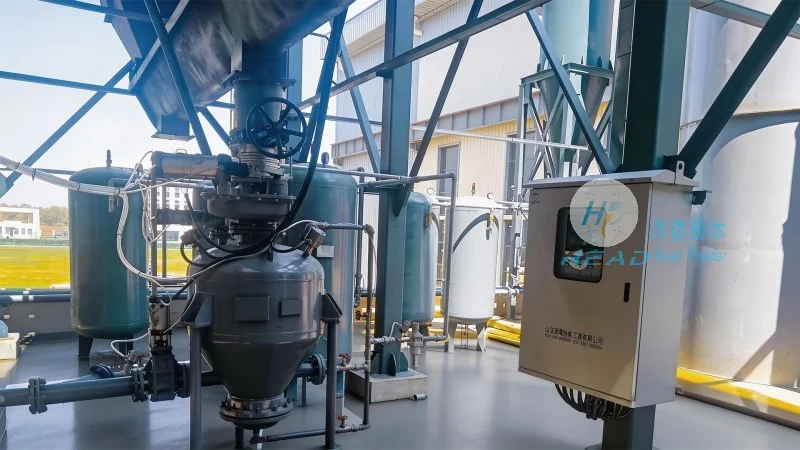
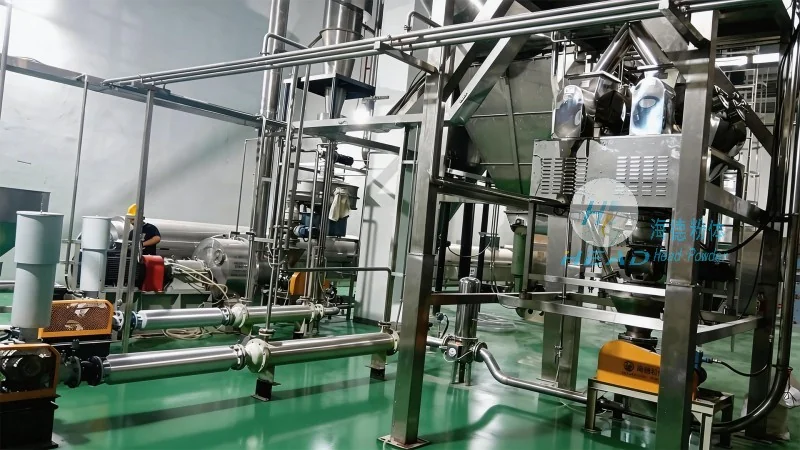
Dense-Phase Conveying moves material at low velocity (below 10 m/s) using high-pressure air to push dense plugs through the pipeline. The material moves as a series of slugs separated by air gaps, significantly reducing particle impact and friction. This mode minimizes degradation, lowers dust generation, and reduces electrostatic buildup. Two common dense-phase variants are: (a) blow-tank systems, where a pressurized vessel discharges material into the pipeline in batches or continuous mode, and (b) air-assisted gravity conveyors, which use porous media or air knives to fluidize the powder along an inclined pipe. For powdered electrolytes, dense-phase is strongly favored because it maintains particle integrity, reduces moisture ingress by operating at higher pressure to limit air infiltration, and lowers the risk of explosion by minimizing suspended dust clouds. A well-designed dense-phase system can convey powdered electrolytes over distances exceeding 150 meters with less than 1% particle breakage, as evidenced by headpowder's installation at a leading battery plant in 2025, where throughput reached 2.5 tons per hour with consistent quality.
Selection Criteria between the two modes depend on factors such as conveying distance, required throughput, particle friability, and available plant air pressure. For powdered electrolytes, a detailed bulk solids characterization—including loose and tapped density, angle of repose, cohesion index, and moisture sensitivity—should be conducted prior to system design. A common industry rule of thumb is that if the powder has a Hausner ratio above 1.4 or a Carr index above 25%, dense-phase conveying is advisable. Many powdered electrolytes exhibit Hausner ratios of 1.5–1.8, confirming the suitability of dense-phase systems.
Building a pneumatic conveying system for powdered electrolytes requires careful selection of every component, from the material feed point to the final discharge receiver. The following elements are critical:
Rotary Airlock Feeders are commonly used to introduce powder into the pipeline while maintaining a pressure seal. For hygroscopic electrolytes, the rotor should be constructed from stainless steel with a hardened surface to reduce wear and minimize metallic contamination. The clearance between rotor blades and housing must be tight (typically 0.05–0.15 mm) to prevent air leakage, which could cause moisture infiltration or material blow-back. Variable-speed drives allow precise control of feed rate, enabling optimal system performance across different production campaigns.
Blow Tanks are the heart of dense-phase systems. They operate at pressures from 2 to 6 bar, feeding powder into the pipeline in a controlled manner. The tank should be equipped with a conical bottom and aeration pads to ensure smooth discharge of cohesive powders. Material of construction must be 316L stainless steel with an internal surface roughness (Ra) below 0.8 µm to prevent powder adhesion and facilitate cleaning. headpowder integrates a proprietary fluidization disc in its blow tanks, which reduces bridging and ensures consistent plug formation even for difficult-to-flow electrolytes.
Pipeline Design demands attention to bends, diameter, and layout. Long-radius bends (bend radius ≥ 10 times pipe diameter) are essential to minimize particle impact and wear. The pipe material should be 316L stainless steel with seamless construction to avoid weld beads that could trap powder. For extremely abrasive electrolytes, a ceramic-lined pipe can extend service life by a factor of three or more. Pipeline diameter must be sized to maintain the desired conveying velocity while avoiding excessive pressure drop. A typical diameter range for powdered electrolyte conveying is 50–100 mm, with velocities held between 4 and 8 m/s in dense-phase systems.
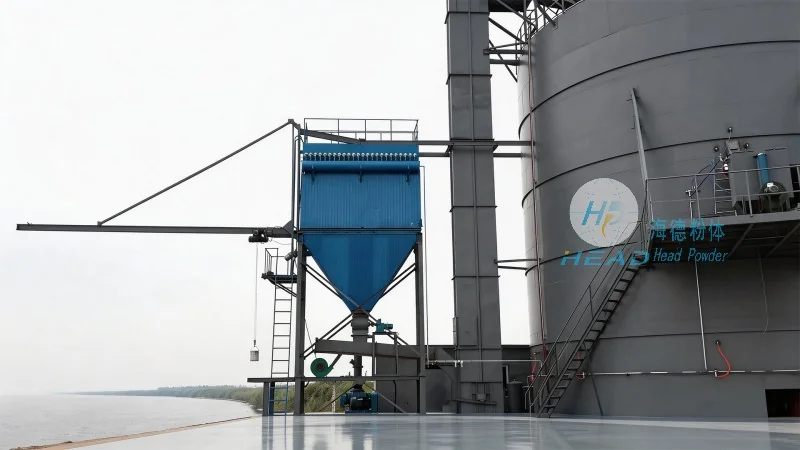
Air Supply and Filtration require careful engineering. The compressed air must be dry and oil-free, with a dew point of at least -40°C to prevent moisture condensation. Desiccant dryers and coalescing filters are standard in headpowder installations. At the receiving end, a cyclone separator combined with a pulse-jet bag filter or cartridge filter is used to separate powder from the conveying air. The filtration system must achieve collection efficiency above 99.9% for particles down to 1 micron, as electrolyte fines have significant economic and safety implications. Reverse-jet cleaning with nitrogen instead of compressed air can further reduce the risk of moisture introduction.
Instrumentation and Control systems are becoming increasingly sophisticated. Real-time monitoring of air pressure, temperature, humidity, and material flow rate enables predictive maintenance and immediate detection of blockages or leaks. For powdered electrolytes, integrating a moisture sensor at the discharge point is highly recommended to verify that the material remains below the critical moisture threshold (typically 20 ppm for battery-grade LiPF₆). headpowder's supervisory control and data acquisition platform provides operators with a dashboard showing system health, conveying velocity trends, and material quality parameters, aligning with Industry 4.0 standards.
Powered electrolyte conveying presents significant electrostatic discharge risks due to the high resistivity of dry powders (often >10¹² Ω·cm). Static buildup can lead to sparks that ignite combustible dust clouds, causing catastrophic explosions. To mitigate this, every component of the pneumatic system must be electrically bonded and grounded with a resistance to ground below 10 Ω. Conductive piping, such as stainless steel, should be used throughout, and non-conductive components like gaskets or sight glasses must be bypassed with grounding cables. Additionally, passive or active static eliminators, such as corona-discharge bars or ionizing air nozzles, can be installed at key points—particularly at the feed inlet and discharge outlet—to neutralize charge before accumulation becomes hazardous. It is also advisable to maintain a slightly elevated humidity level (e.g., 30–40% relative humidity in the conveying air) to increase surface conductivity, but this must be balanced against the material's moisture sensitivity. Inert gas blanketing using nitrogen or argon can eliminate the oxygen needed for combustion, making it the preferred approach for high-risk applications. Many battery material plants now mandate nitrogen as the conveying medium for powdered electrolytes, with oxygen sensors installed downstream to ensure levels remain below the lower explosive limit. headpowder offers closed-loop nitrogen recirculation systems that reduce gas consumption by up to 60% while maintaining safe conditions.

Regular maintenance is essential to sustain system performance and prevent contamination. For powdered electrolytes, cleaning between batches or product changes is critical because residual material can react with moisture or degrade, affecting subsequent runs. The system should be designed for easy access—manways on blow tanks, quick-disconnect couplings on piping sections, and removable filter elements. Cleaning methods include vacuuming, purging with dry nitrogen, and in some cases, pigging systems that push a foam or solid projectile through the pipeline to scrape off adhered powder. headpowder's flushable blow tank design allows rinsing with a solvent (where compatible) and drying with hot nitrogen before the next batch, reducing turnaround time by 40% according to field data. Operators should also monitor pipe wall thickness at bends every six months using ultrasonic testing to detect erosion early. A preventive maintenance schedule that includes checking rotary airlock clearances, replacing filter bags, and calibrating pressure sensors extends system life and ensures consistent conveying quality.

The global demand for powdered electrolytes is projected to grow at a compound annual rate of 18–22% through 2026, driven by the ramp-up of solid-state battery manufacturing and the need for safer, higher-energy-density cells. This growth creates a parallel demand for advanced pneumatic conveying solutions that can handle larger volumes while maintaining purity and safety. Key trends shaping the industry include: (1) Modular and skid-mounted systems that reduce field installation time and allow faster deployment in new gigafactories. (2) Integration of machine learning algorithms to predict blockages and optimize conveying parameters in real time. (3) Increased use of corrosion-resistant alloys and composite materials to withstand the aggressive chemical nature of some electrolyte formulations. (4) Development of closed-loop conveying systems that recycle conveying gas and capture fines, aligning with zero-waste and lower carbon footprint goals. (5) Regulatory tightening, particularly in Europe and North America, around dust explosion safety (ATEX, NFPA 652) and worker exposure limits to lithium salts, prompting stricter system certification requirements. headpowder has already deployed several skid-mounted dense-phase systems for a major Asian battery manufacturer, achieving a 30% reduction in footprint and a 15% improvement in energy efficiency compared to traditional designs. These systems are certified to ATEX Zone 20/21 standards and incorporate the contact information for ongoing support: headpowder (咨询热线:156-6277-7102) can be reached for a detailed feasibility study or system design consultation.

Selecting the appropriate pneumatic conveying system for powdered electrolytes is not a one-size-fits-all decision. It requires a deep understanding of the material's physical and chemical characteristics, the production environment, and the evolving safety and quality standards of the energy storage industry. Dense-phase conveying, with its low velocity, gentle handling, and compatibility with inert gas atmospheres, has emerged as the industry benchmark for preserving electrolyte integrity and ensuring safe plant operations. However, successful implementation depends on rigorous upfront testing, component selection guided by real-world data, and a commitment to ongoing maintenance and monitoring. As battery material producers scale up to meet the demands of electric vehicles and grid storage, partnering with a knowledgeable system integrator can accelerate development and reduce risk. By combining proven pneumatic technologies with digital monitoring and modular designs, manufacturers can achieve reliable, efficient, and compliant powdered electrolyte conveying that supports both current production targets and future expansion. The expertise of headpowder in handling cohesive, moisture-sensitive powders has been demonstrated across multiple pilot and production-scale facilities, and the company continues to refine its solutions to stay ahead of industry needs. For engineers and plant managers evaluating new conveying lines or retrofitting existing ones, investing in a properly engineered dense-phase system today will yield operational dividends for years to come.
Shandong headpowder Engineering Co., Ltd.
156-6277-7102(Manager Zhang)
0531-83386006
Jinan City, Shandong Province, China 
服务热线
微信咨询
回到顶部