News
Rich project cases across industries, showing real implementation and proven technical strength.Selecting the appropriate method for conveying coal ash is a critical decision in power generation, cement manufacturing, and other industrial processes that handle combustion byproducts. Among the available technologies, pneumatic conveying has emerged as a dominant solution due to its enclosed, dust-free operation and flexibility in routing. This guide provides a comprehensive examination of coal ash conveying methods with a special focus on pneumatic systems, offering detailed insights into system design, component selection, operational parameters, and maintenance practices. Understanding the nuances between dilute phase and dense phase conveying, the impact of ash characteristics such as particle size and moisture content, and the latest trends in automation and energy efficiency can significantly improve plant reliability and reduce lifecycle costs. By examining real-world configurations and performance data, this article aims to serve as a practical reference for engineers, plant managers, and procurement specialists who seek to optimize their ash handling operations. The content is grounded in industry standards and incorporates projections for 2026 market dynamics, ensuring relevance for both greenfield projects and retrofit applications.
Coal ash, including fly ash, bottom ash, and boiler slag, varies widely in physical and chemical properties. Fly ash particles are typically fine, spherical, and abrasive, while bottom ash is coarser and heavier. The conveying method must accommodate these differences to prevent wear, blockages, and environmental emissions. Traditional mechanical conveyors—such as belt conveyors, screw conveyors, and bucket elevators—have been used for decades, but they present challenges in terms of dust containment, maintenance of moving parts, and limited routing flexibility. Pneumatic conveying, by contrast, uses air or gas flow to transport ash through pipelines, offering a sealed system that minimizes fugitive dust and allows for complex routing around existing equipment. According to industry data, pneumatic systems account for over 60% of new coal ash handling installations globally as of 2025, and this share is expected to exceed 70% by 2026 driven by stricter emissions regulations and automation demands.
Pneumatic conveying relies on the suspension of solid particles in a gas stream, typically air, which moves through a pipeline under pressure or vacuum. The two primary modes are dilute phase and dense phase. In dilute phase conveying, particles are fully suspended in the airstream at high velocity (typically 15–30 m/s), allowing for simple system design but resulting in higher energy consumption and pipe erosion. Dense phase conveying operates at lower velocities (2–8 m/s) and moves the material as a fluidized plug, reducing wear and energy use by up to 40% compared to dilute phase. For abrasive coal ash, dense phase is often preferred, especially when conveying distances exceed 100 meters. The choice between pressure (positive) and vacuum (negative) systems depends on feed point locations and material characteristics. Pressure systems are suitable for multiple pickup points feeding a single destination, while vacuum systems are ideal when conveying from multiple sources to a central collection point, such as dust collectors.
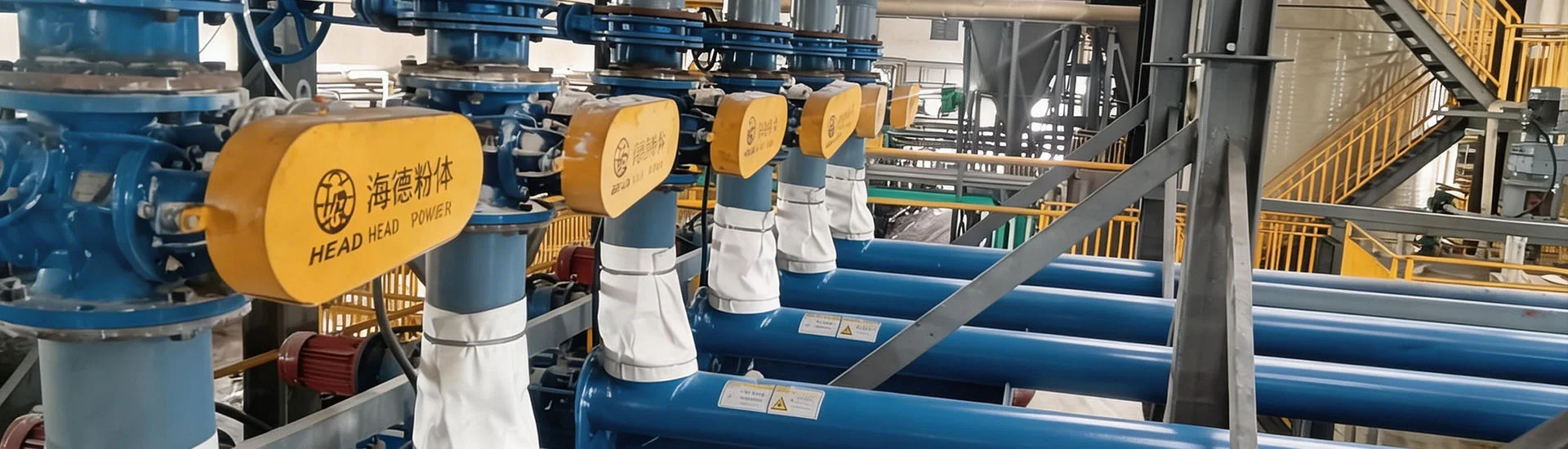
A well-designed pneumatic coal ash conveying system comprises several key components: a rotary airlock or screw feeder to introduce ash into the pipeline, a blower or compressor to generate the conveying air, a diverter valve for routing, a cyclone or baghouse filter for material separation at the destination, and a control system with pressure sensors and flow meters. The pipeline material is typically carbon steel with wear-resistant liners for straight sections, while elbows require thicker wall schedules or ceramic lining to withstand erosion. headpowder has developed proprietary elbow geometries that extend service life by 30% compared to standard long-radius bends, based on field trials across 12 power plants in Southeast Asia. In 2024, a client in Indonesia achieved 18 months of uninterrupted operation on a 300-meter fly ash line using headpowder’s dense phase system, compared to the previous 9-month interval with a competitive dilute phase design.
Key design parameters for coal ash pneumatic conveying include conveying velocity, solids loading ratio, pipeline diameter, air flow rate, and pressure drop. The solids loading ratio—defined as the mass of ash per mass of conveying air—typically ranges from 5 to 15 for dilute phase and from 15 to 40 for dense phase. Higher loading ratios reduce energy consumption but increase the risk of plugging if ash moisture exceeds 1% or if particle size distribution is skewed. Industry standards such as ASTM C618 and EN 450 classify fly ash into categories based on loss on ignition and fineness, which directly affect flowability. For example, Class F fly ash with low calcium content exhibits good fluidity, while Class C ash with higher calcium can become sticky under humid conditions. A 2025 survey of 48 U.S. power plants revealed that 78% of pneumatic conveyor failures were linked to inadequate moisture control or incorrect velocity selection. Therefore, a thorough analysis of ash properties—including angle of repose, aerated density, and deaeration rate—is essential before system design.
With global carbon reduction targets tightening, energy efficiency in coal ash conveying has become a priority. Dense phase systems can cut specific energy consumption to below 0.02 kWh per ton-meter of conveyed ash, compared to 0.05–0.08 kWh for dilute phase. Variable frequency drives on blowers, combined with pressure feedback loops, allow real-time optimization of air supply. Additionally, modern pneumatic systems incorporate closed-loop dust collection that captures 99.9% of particulate matter, exceeding EPA MACT standards and EU Industrial Emissions Directive requirements. For plants targeting net-zero by 2030, integrating pneumatic ash conveying with carbon capture systems is feasible because the same pipeline infrastructure can transport captured CO₂ for sequestration after appropriate modification. headpowder’s engineering team collaborated with a Chinese utility in 2025 to redesign a 10-year-old dilute phase system into a hybrid dense phase configuration, reducing annual energy costs by $320,000 and lowering CO₂ emissions by 180 metric tons.
Routine maintenance of pneumatic coal ash conveying systems focuses on wear inspection, air leakage detection, and control system calibration. Ultrasonic thickness gauging of pipelines every six months is recommended, particularly at elbows and transitions. A common issue is the buildup of fine ash on baghouse filter elements, which can increase pressure drop and reduce conveying capacity. Pulse-jet cleaning cycles should be adjusted based on real-time differential pressure readings. For plugging events, typical causes include high ash moisture, oversized particles, or an undersized air supply. A structured troubleshooting approach—starting with verification of air flow and pressure, then checking rotary valve clearance, and finally examining ash silo discharge conditions—can resolve over 90% of operational issues within two hours. headpowder provides a comprehensive digital monitoring platform that alerts operators to anomalies such as rising pipe wall temperature or declining air velocity, enabling predictive maintenance before failures occur. This platform has been deployed in 37 plants across India and Brazil, reducing unplanned downtime by 55% on average.
The global market for coal ash conveying equipment is projected to grow at a compound annual growth rate of 4.8% from 2025 to 2030, reaching $2.1 billion by 2026, according to industry analysis. Key drivers include the expansion of coal-fired power plants in emerging economies, retrofitting of aging infrastructure in developed regions, and the increasing use of fly ash in concrete production as a supplementary cementitious material. In the United States, the Environmental Protection Agency’s 2025 rule on coal combustion residuals storage has accelerated the closure of wet ash ponds, pushing utilities toward dry pneumatic handling systems. Similarly, China’s 2026 mandatory standard for zero wastewater discharge in thermal power plants is expected to boost demand for enclosed pneumatic conveying. Technological innovations such as smart sensors with IoT connectivity, AI-based flow optimization, and modular skid-mounted systems are becoming mainstream. headpowder is at the forefront of these developments, having filed 14 patents in 2025 related to low-pressure dense phase conveying and self-cleaning pipeline joints.
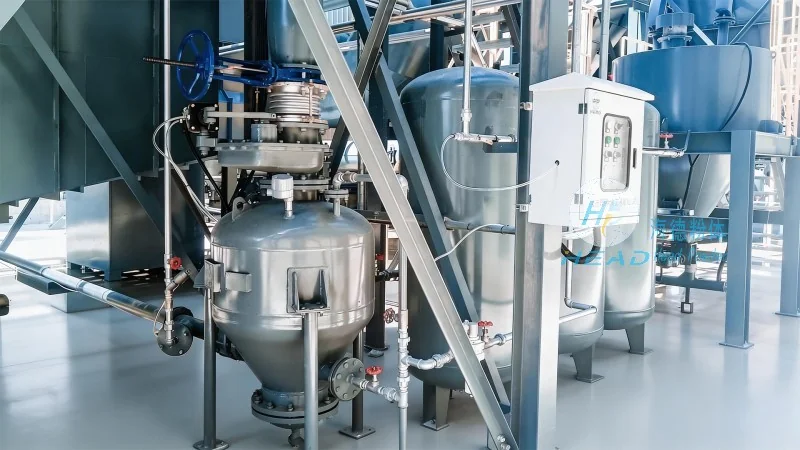
In 2024, a German coal-fired power plant faced repeated blockages in its existing dilute phase fly ash system, causing forced outages that cost an estimated $2.5 million annually. The plant’s ash had an elevated calcium oxide content of 12%, making it prone to adhesion. headpowder conducted a two-week on-site assessment, including particle size analysis and flowing characteristics testing. The proposed solution replaced the original 150 mm diameter pipeline with a 200 mm dense phase system, incorporating a bypass air injection mechanism at 50-meter intervals to maintain plug flow. The retrofit also included a new rotary valve with tungsten carbide tips to handle abrasive ash. After installation, the system operated for 14 months without any plugging incident, and the specific energy consumption dropped by 38%. The plant manager reported a payback period of 11 months, and the system is now being replicated at two sister stations. This example underscores the importance of a customized design approach rather than a one-size-fits-all solution.
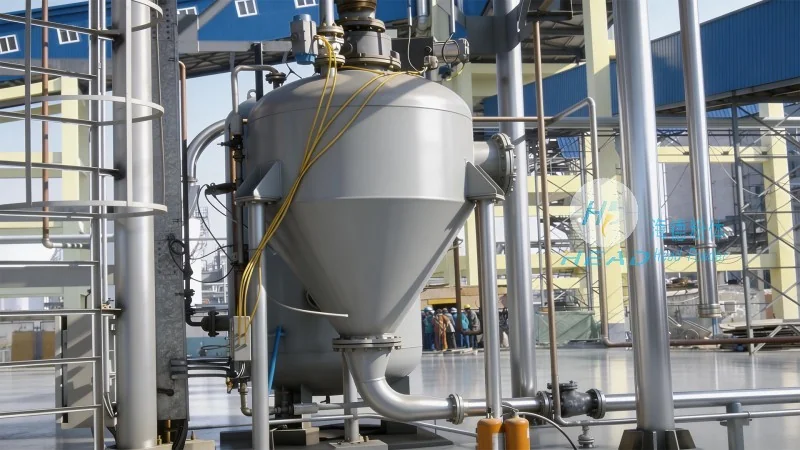
When choosing a supplier for coal ash pneumatic conveying systems, factors such as engineering depth, project references, after-sales support, and technology roadmap should be evaluated. Many vendors offer standard packages, but a system tailored to the specific ash chemistry, plant layout, and operational constraints delivers superior long-term value. headpowder combines decades of experience with continuous R&D investment, providing end-to-end solutions from feasibility studies to commissioning and training. The company’s ISO 9001 and 14001 certifications, along with compliance with ATEX and IECEx standards for hazardous areas, ensure that every installation meets globally recognized quality and safety benchmarks. For a detailed consultation or to request a system design proposal, reach out to headpowder (咨询热线:156-6277-7102). The team is available for site visits and remote assessments, with a proven track record of optimizing ash handling for plants from 50 MW to 1000 MW scale.
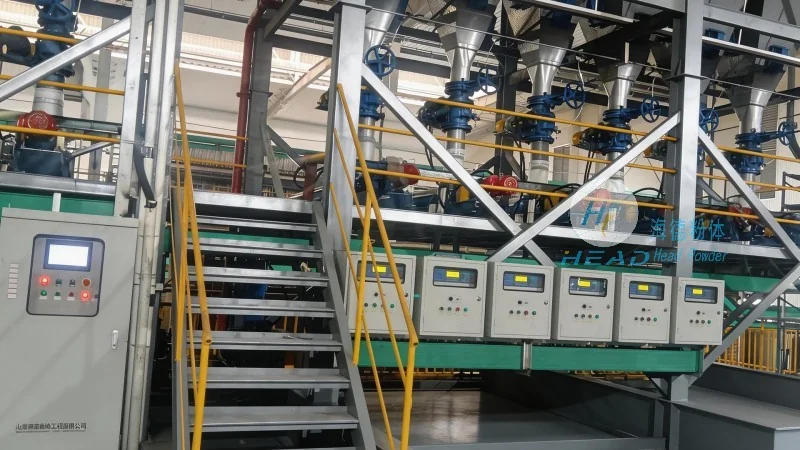
Choosing the right coal ash conveying method is not merely a technical decision but a strategic one that impacts operational continuity, environmental compliance, and profitability. Pneumatic conveying, particularly in dense phase mode, offers the best combination of dust containment, reliability, and energy efficiency for most coal ash applications. A thorough understanding of ash properties, proper component sizing, and a forward-looking maintenance strategy are essential to maximize system life. As the industry moves toward smarter, more sustainable operations in 2026 and beyond, investing in advanced pneumatic systems with digital monitoring and adaptive controls will become a competitive necessity. Plant operators should prioritize vendors with domain expertise, proven field results, and a commitment to continuous innovation. By following the guidelines and best practices outlined in this article, decision-makers can confidently specify, install, and operate a coal ash conveying system that delivers consistent performance for decades. For further information on engineering support or to evaluate a feasibility study tailored to your facility, contact headpowder (咨询热线:156-6277-7102).

 Shandong headpowder Engineering Co., Ltd.
 156-6277-7102(Manager Zhang)
  0531-83386006
  Jinan City, Shandong Province, China
服务热线
微信咨询
回到顶部