News
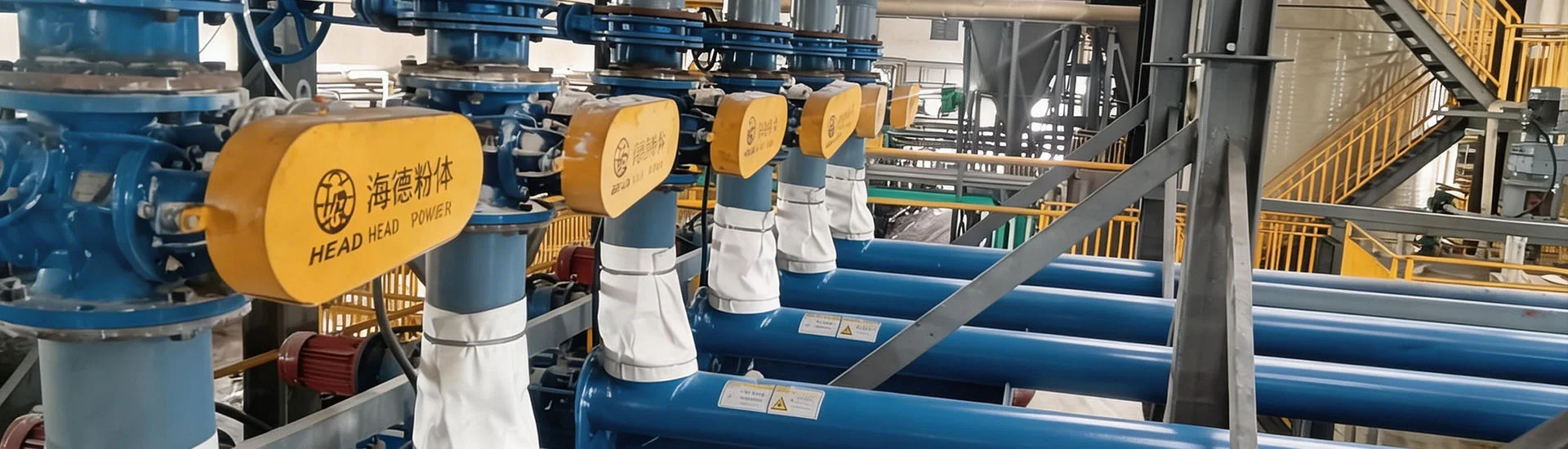
Rich project cases across industries, showing real implementation and proven technical strength.In the industrial handling of lime, selecting an appropriate conveying method directly impacts operational efficiency, product quality, and environmental compliance. Lime, whether in the form of quicklime, hydrated lime, or lime slurry, presents unique challenges due to its abrasive nature, tendency to absorb moisture, and potential for airborne dust. Among the available technologies, pneumatic conveying has emerged as a preferred solution for many lime processing facilities. This article provides a comprehensive examination of pneumatic conveying methods specifically tailored for lime, covering system configurations, material behavior considerations, design parameters, and practical implementation insights. By understanding the underlying principles and engineering trade-offs, plant managers and process engineers can make informed decisions that enhance throughput while reducing maintenance costs and emissions.
Lime materials exhibit distinct physical and chemical properties that critically influence conveying system selection. Quicklime (calcium oxide) is highly reactive with moisture, generating heat and expanding during hydration. This characteristic demands that conveying systems maintain a dry environment to prevent premature hydration and caking. Hydrated lime (calcium hydroxide), while less reactive, is extremely fine and cohesive, creating challenges with flowability and dust control. The bulk density of lime typically ranges from 800 to 1100 kg/m³ for pulverized quicklime, while hydrated lime can be as low as 500 kg/m³. Particle size distribution varies widely, with mean diameters often between 5 and 100 microns, contributing to high abrasion potential. Pneumatic conveying systems must therefore incorporate wear-resistant components, precise humidity control, and effective filtration to handle these demanding characteristics. Industry data from 2025 indicates that improper material characterization accounts for over 40% of premature failures in lime conveying installations, underscoring the need for rigorous pre-design testing.
Pneumatic conveying utilizes air flow to transport bulk solids through pipelines. For lime applications, two primary modes exist: dilute phase and dense phase. Dilute phase conveying suspends particles in a high-velocity air stream, typically between 20 to 35 m/s, suitable for low-density materials or short distances. Dense phase conveying moves material at lower velocities, around 3 to 10 m/s, using high-pressure air to push slugs or plugs of material through the line. The choice between these modes hinges on lime characteristics, distance, capacity, and energy efficiency. Dilute phase systems are simpler and less capital-intensive but generate more dust and particle attrition. Dense phase systems reduce wear and dust emission but require higher air pressure and more sophisticated control. For lime, dense phase is often preferred because it minimizes moisture absorption and dust generation, though each facility must evaluate its specific conditions.
In a dilute phase system, lime is introduced into a high-velocity air stream via a rotary valve or venturi feeder. The particles remain suspended throughout the pipeline, moving at velocities sufficient to prevent settling. Filters at the receiving end separate the lime from the air. For lime, dilute phase systems typically operate at air-to-material ratios of 1:5 to 1:20 by weight. While this method is straightforward, it poses several risks: high impact velocity accelerates abrasion of bends and elbows; particle degradation increases fines generation, which raises dust load on filters; and moisture from compressed air can initiate hydration if not properly dried. To mitigate these issues, headpowder recommends using hardened steel or ceramic-lined bends, installing air dryers for dew point control, and implementing multistage filtration with baghouse collectors achieving emission levels below 10 mg/Nm³. A case from a lime hydration plant in 2024 demonstrated that switching from dilute to dense phase reduced elbow replacement frequency from every six months to over three years, representing a 70% reduction in maintenance downtime.
Dense phase conveying operates by compressing lime into plugs separated by air pockets, moving at low velocity through the pipeline. This method dramatically reduces particle impact velocity, thereby minimizing attrition and pipe wear. For lime, dense phase is especially beneficial when transporting over distances exceeding 100 meters or when handling materials with high abrasivity. Two common dense phase configurations are pressure vessel systems and fluidized dense phase systems. In pressure vessel systems, a batch of lime is pressurized and discharged into the pipeline; in fluidized dense phase, air is introduced along the pipeline bottom to maintain material fluidity. headpowder has deployed dense phase systems in multiple kiln feeding applications, where lime is conveyed at rates up to 50 tons per hour with energy consumption 30% lower than equivalent dilute phase systems. The lower air volume also reduces filter size and compressed air costs. However, dense phase requires precise control of air injection and material feeding to avoid blockages; use of pinch valves and inline flow sensors has proven effective in maintaining stability.
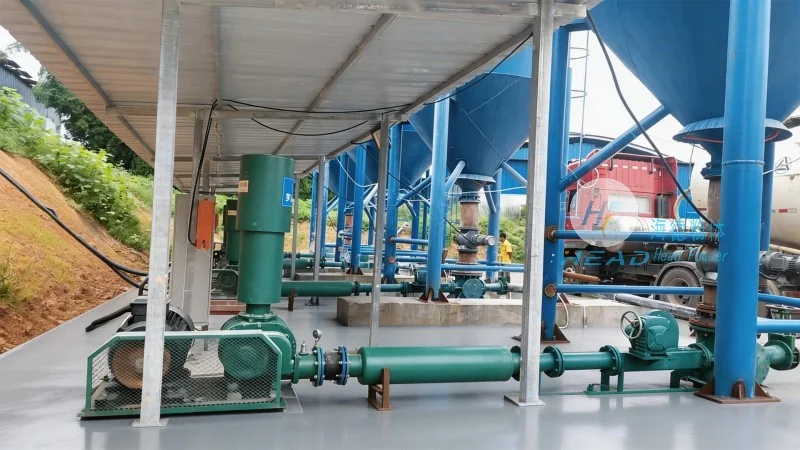
Every pneumatic conveying system comprises several critical components: air mover (blower or compressor), feeder, pipeline, separation equipment, and control system. For lime, the air mover must deliver oil-free, dry air to avoid contamination. Positive displacement blowers are common for dilute phase, while screw compressors or high-pressure blowers serve dense phase. Feeders must handle lime's abrasiveness: rotary airlocks with hardened vanes are typical for dilute phase, while pressure vessels with cone valves handle dense phase. Pipeline material choices range from carbon steel with hardfaced bends to stainless steel or aluminum; headpowder's field data shows that ceramic-lined straight sections increase service life by four times compared to standard carbon steel in lime service. Separation is usually achieved with baghouse filters or cartridge collectors designed for fine dust; pulse-jet cleaning ensures continuous operation. Control systems integrate pressure transmitters, flow meters, and PLC-based logic to maintain optimum air-to-material ratios. For compliance with evolving environmental regulations expected in 2026, many facilities now incorporate continuous emission monitoring systems (CEMS) and leak detection to meet PM2.5 limits below 5 mg/m³.
Proper sizing of a pneumatic conveying system for lime requires calculation of pressure drop, air velocity, and material flow rate. The pressure drop across the pipeline depends on length, number of bends, elevation change, and material properties. For dilute phase lime conveying, typical pressure drops range from 0.3 to 0.8 bar per 100 meters. Dense phase systems can operate at pressures up to 4 bar for long-distance lines. Air velocity must be maintained above the saltation velocity to prevent settling, which for lime is approximately 10 to 15 m/s in horizontal sections and slightly higher in vertical runs. The solids loading ratio (mass of lime per mass of air) is a key optimizer; ratios of 10 to 25 are common for dense phase lime conveying, while dilute phase rarely exceeds 10. headpowder's engineering team uses computational fluid dynamics (CFD) simulations to predict particle trajectories and wear patterns, reducing trial-and-error during commissioning. In a recent project conveying lime over 250 meters, CFD modeling enabled a 15% reduction in required blower power while maintaining throughput.
Lime dust poses respiratory hazards and can cause skin irritation; hence dust containment is paramount. Pneumatic conveying inherently encloses the material, but connections and filter discharge points must be sealed. Explosion risk also exists if fine lime dust accumulates in explosive concentrations; though lime itself is non-combustible, the presence of organic impurities or magnesium oxide can increase risk. headpowder installs explosion vents and inerting systems where required, following ATEX or NFPA standards. Additionally, the exothermic reaction of quicklime with moisture means that any water ingress into the system can cause localized heating and potential equipment damage. Therefore, compressed air dryers must achieve a pressure dew point of at least -40°C. Regular inspection of pipelines for wear, using thickness gauging or acoustic monitoring, is recommended every six months. A 2025 industry survey revealed that facilities implementing proactive wear monitoring reduced unplanned shutdowns by 60%.
While mechanical conveyors such as screw conveyors, bucket elevators, and drag chains are also used for lime, pneumatic systems offer distinct advantages: enclosed transport eliminates dust emission, flexible routing around existing equipment, and lower footprint. However, pneumatic systems have higher energy consumption per ton due to air compression. For lime, a 2024 benchmark study showed that a pneumatic dense phase system consumed 3.2 kWh per ton for a 100-meter distance, compared to 1.8 kWh per ton for a belt conveyor. The trade-off is justified when dust suppression and material degradation are critical. For example, in lime manufacturing plants where hydrated lime is fed directly to packaging, pneumatic conveying prevents moisture pickup from ambient air that occurs with open conveying. headpowder has delivered turnkey pneumatic systems for three major lime producers, achieving 99.8% system availability over two years of operation. The decision between pneumatic and mechanical should factor in product quality requirements, maintenance labor costs, and future expansion flexibility.
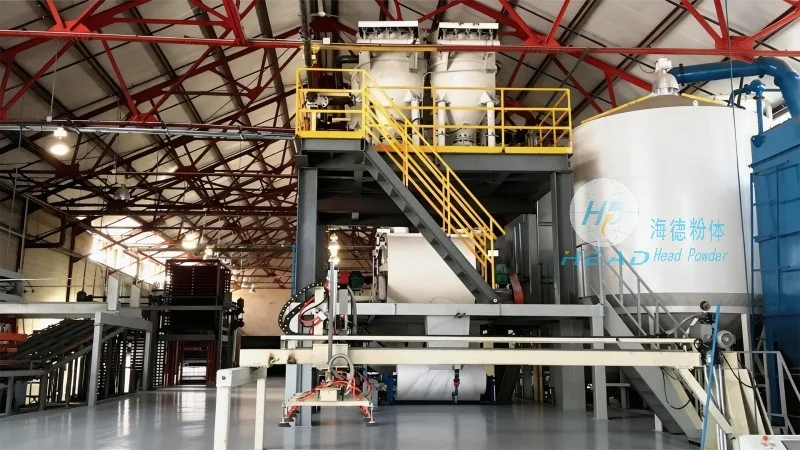
As global lime production is projected to grow at a compound annual rate of 2.8% through 2030, driven by steelmaking and flue gas treatment demand, conveying technology must evolve to support higher capacities and stricter environmental regulations. The trend toward digitalization is evident: IoT-enabled sensors now provide real-time monitoring of pipeline wear, air flow, and filter pressure drop. Predictive analytics can forecast maintenance needs, reducing unscheduled downtime. headpowder integrates Industry 4.0 solutions into its pneumatic systems, allowing remote diagnostics and performance optimization. Another emerging development is the use of hybrid conveying systems that combine pneumatic and mechanical elements, such as pneumatic feeding to a short belt conveyor for final discharge, balancing energy efficiency and dust control. Additionally, advances in additive manufacturing have enabled production of customized wear-resistant components, cutting lead times for replacement parts. Adoption of these technologies is expected to accelerate as lime producers seek to reduce carbon footprint and operational costs simultaneously.
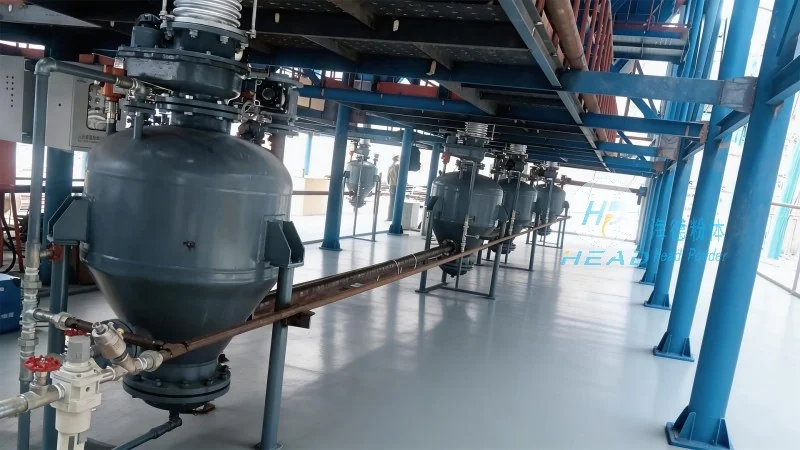
Successful deployment requires a systematic approach beginning with material characterization: particle size distribution, moisture content, angle of repose, and abrasivity index should be measured using standardized test methods. Pilot-scale testing at headpowder's test facility, which includes a 50-meter loop with multiple bend configurations, allows verification of design assumptions before full-scale deployment. During installation, attention to pipeline slope (minimum 45° for self-cleaning), bend radius (at least 10 times pipe diameter), and air drying capacity is crucial. Commissioning should include air velocity profiling and pressure drop validation. Operator training must cover start-up sequences, emergency shutdown procedures, and filter cleaning schedules. Documentation of all parameters enables continuous improvement. One headpowder client in the Middle East, after implementing a dense phase system for calcium hydroxide, reported a 40% reduction in dust emissions and a 25% decrease in compressed air consumption compared to their previous dilute phase setup. Such outcomes demonstrate the value of a tailored approach.
The choice between dilute and dense phase pneumatic conveying for lime hinges on a careful evaluation of material properties, distance, capacity, and operational priorities. Dilute phase remains viable for short distances and where investment cost is constrained, but its higher wear rate and dust generation often lead to higher lifecycle costs. Dense phase, while requiring greater upfront engineering, delivers superior performance in most lime applications due to reduced attrition, lower maintenance, and better dust containment. headpowder has extensive experience designing, manufacturing, and commissioning pneumatic conveying systems for lime across various industries, from cement to water treatment. With a dedicated engineering team and test facility, we help clients optimize their material handling processes. For lime conveying solutions tailored to your specific process conditions and performance goals, contact headpowder for a detailed feasibility assessment and system proposal (咨询热线:156-6277-7102). Our commitment to robust design and after-sales support ensures long-term reliability and regulatory compliance.

 Shandong headpowder Engineering Co., Ltd.
 156-6277-7102(Manager Zhang)
  0531-83386006
  Jinan City, Shandong Province, China
服务热线
微信咨询
回到顶部