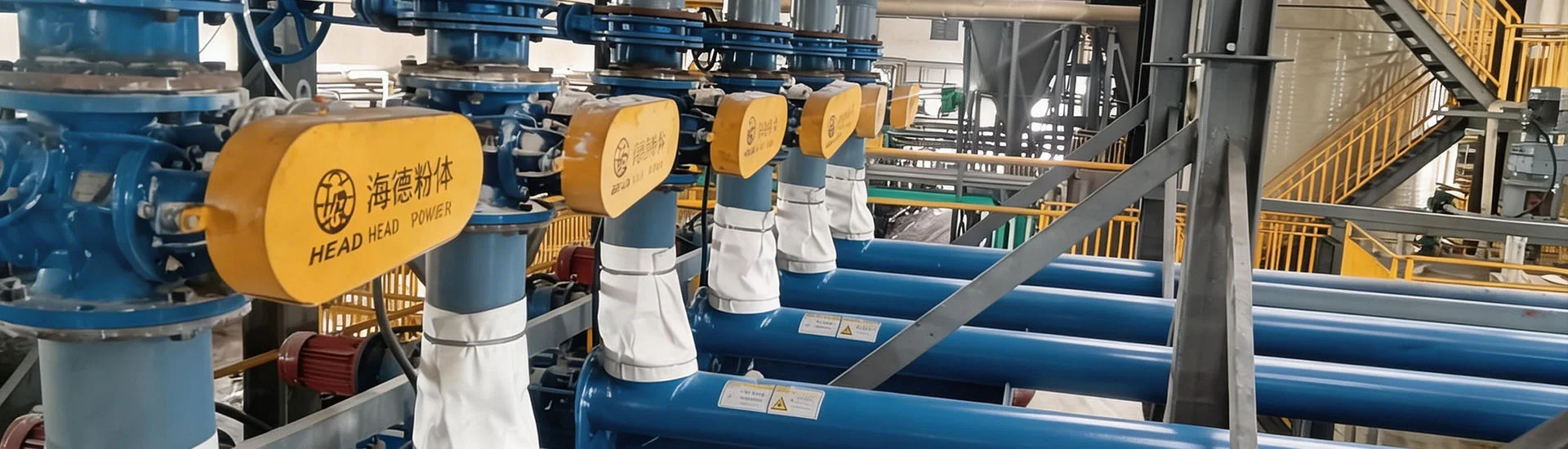
With over a decade of experience in the pneumatic conveying industry, our company specializes in a full range of pneumatic conveying system equipment.
您的当前位置:首页 >> News >> Company News

News

Rich project cases across industries, showing real implementation and proven technical strength.

Fine Ash Conveying Methods: Pneumatic Conveying Intro

2026-07-08

When industrial facilities handle fine ash—whether from coal combustion, biomass incineration, cement kilns, or metal smelting—the choice of conveying method directly impacts operational efficiency, maintenance costs, and environmental compliance. Fine ash, typically characterized by particle sizes below 100 microns, presents unique challenges: it is abrasive, prone to agglomeration, and readily airborne. Among the available technologies, pneumatic conveying has emerged as a preferred solution for many plants, largely due to its enclosed nature, flexibility in routing, and ability to handle varying material characteristics. This article provides a deep, technical exploration of fine ash conveying methods, with a focused introduction to pneumatic conveying systems. Drawing on industry data, equipment parameters, and real-world applications, we aim to help engineers and decision-makers evaluate the most suitable approach for their specific ash handling needs. Whether you are upgrading an existing system or designing a greenfield facility, understanding the nuances of pneumatic transport—pressure vs. vacuum, dilute vs. dense phase, material degradation, and energy consumption—will be critical. Throughout this discussion, we will reference the expertise and practical solutions developed by headpowder, a company with extensive experience in fine ash handling projects globally.

The global fine ash handling market was valued at approximately USD 4.2 billion in 2025 and is projected to grow at a compound annual growth rate of 5.8% through 2035, driven by stricter emission regulations and the expansion of waste-to-energy plants. Within this landscape, pneumatic conveying accounts for over 45% of new installations for fine ash applications, surpassing mechanical conveyors in sectors where dust containment and plant layout flexibility are paramount. This article systematically examines the key conveying methods—mechanical, pneumatic, and hybrid—before diving deep into pneumatic system design principles, component selection, and operational considerations. By the end, readers will have a clear framework for specifying a fine ash conveying system that balances capital expenditure, operational reliability, and long-term maintainability.

Understanding the Nature of Fine Ash

Fine ash is not a uniform material. Its physical and chemical properties vary significantly depending on the source: pulverized coal fly ash typically has a mean particle size of 20–60 microns with a bulk density ranging from 0.7 to 1.2 g/cm³, while biomass ash can be coarser but more fibrous. The key characteristics that influence conveying method selection include particle size distribution, moisture content, angle of repose, abrasivity, and temperature. For instance, ash from municipal solid waste incineration may contain hygroscopic salts that cause caking if not handled in a dehumidified environment. Pneumatic conveying, by utilizing dry compressed air or inert gas, can maintain low moisture exposure and reduce the risk of bridging in hoppers. Additionally, fine ash is often classified as a hazardous dust under regulations like the EU ATEX directives or OSHA combustible dust standards. Any conveying system must therefore incorporate grounding, explosion venting, and dust collection measures. headpowder has published several case studies demonstrating how tailored pneumatic designs can achieve <0.1% fugitive emissions while maintaining throughputs exceeding 50 tons per hour. Understanding these material-specific challenges is the first step toward selecting the optimal conveying technology.

Comparative Overview of Fine Ash Conveying Methods

Before focusing on pneumatic systems, it is useful to briefly compare the three main categories of fine ash handling:

  • Mechanical Conveying: Includes screw conveyors, bucket elevators, drag chains, and belt conveyors. These systems are robust, low-maintenance for coarse materials, and have low energy consumption per ton. However, for fine ash, mechanical systems suffer from dust leakage at transfer points, high wear rates (especially in screw conveyors with abrasive ash), and limited routing flexibility. They typically require multiple transfer points and lengthy enclosures, increasing installation footprint.
  • Pneumatic Conveying: Uses air or gas to transport fine ash through pipelines. Advantages include complete enclosure (zero fugitive emissions), ability to follow complex three-dimensional paths, reduced moving parts (lower mechanical wear), and suitability for hot materials (up to 400°C with specialized components). The primary trade-offs are higher energy consumption (compressed air generation) and potential for pipe erosion if the system is not sized correctly.
  • Hybrid or Combined Systems: Some facilities use a mechanical conveyor to move ash from collection points to a central location, then a pneumatic system for long-distance transport to storage silos. This approach can optimize capital costs while mitigating dust issues in high-traffic areas.

For plants handling more than 10 tons per day of fine ash, pneumatic conveying offers the most compelling balance of cleanliness, flexibility, and reliability—provided the system is designed with proper phase density, air velocity, and piping materials. The following sections detail pneumatic system types and design parameters.

Pneumatic Conveying: Pressure vs. Vacuum Systems

Pneumatic conveying systems for fine ash fall into two main configurations: pressure (positive) and vacuum (negative). Each has distinct operational characteristics and application niches.

  • Pressure Systems (Positive Dilute or Dense Phase): In a pressure system, compressed air is introduced at the material inlet, pushing the ash through the pipeline toward a receiving vessel. These systems are typically used when conveying from a single source to multiple destinations, as branching is easier with pressure. For fine ash, dilute-phase pressure conveying (high velocity, low pressure) is common for short distances (under 200 meters), while dense-phase conveying (low velocity, high pressure) is preferred for longer distances (up to 500–800 meters) to minimize pipe wear and particle degradation. headpowder has engineered dense-phase systems for cement plants where ash traveled over 600 meters with less than 2% pipe wear after 5 years of operation.
  • Vacuum Systems (Negative Dilute Phase): Here, an exhauster (fan or vacuum pump) creates suction that pulls the ash into the pipeline. Vacuum systems are ideal when dust containment is critical at the pickup point, as any leaks will draw air inward rather than releasing dust. They are commonly used for unloading from trucks, railcars, or multiple hoppers into a single central receiver. However, the conveying distance is limited to around 150 meters due to pressure drop constraints. For fine ash, vacuum systems require careful filter maintenance to prevent blinding of the vacuum receiver's filter bags.

The choice between pressure and vacuum depends on plant layout, required conveying distance, number of sources/destinations, and whether the ash is hot or prone to condensation. Most modern systems employ a combination: vacuum for collection from multiple points, then a pressure system for redistribution to storage silos.

Dilute Phase vs. Dense Phase: Selecting the Right Conveying Mode

The most critical technical decision in pneumatic conveying design is the operating phase—dilute or dense. This selection governs air velocity, pressure requirements, pipe size, and component durability.

  • Dilute Phase Conveying: Operates at air velocities typically between 15 and 30 m/s, with a high air-to-material ratio. Particles are suspended in the airflow, resulting in relatively high pipe wear (especially on bends) and potential particle degradation. For fine ash, dilute phase is suitable when the material is free-flowing, non-abrasive (e.g., some fly ash with low silica content), and when conveying distances are short. Energy consumption is higher per ton due to the large volume of compressed air required.
  • Dense Phase Conveying: Uses lower air velocities (typically 3–10 m/s) and a much higher material-to-air ratio. The ash moves in slugs or dune-like flows along the bottom of the pipe. This mode dramatically reduces pipe erosion (by up to 70% compared to dilute phase) and prevents particle degradation—critical for ash that is later used in cement or concrete applications where particle morphology matters. Dense phase requires higher supply pressures (up to 6–8 bar) and specialized blow tanks or pressure vessels. The trade-off is lower throughput per unit pipe diameter and the need for precise control of purge cycles. headpowder has documented a case where switching from dilute to dense phase for fly ash conveying reduced annual pipe replacement costs by 65% at a coal-fired power plant.

For fine ash with a high abrasivity index (e.g., bottom ash with quartz content >15%), dense phase is strongly recommended. The decision should be validated through material testing—using a pneumatic conveying test loop to measure saltation velocity, pressure drop, and wear rate—before finalizing the system design.

Key System Components for Fine Ash Pneumatic Conveying

Regardless of the phase chosen, a well-designed pneumatic conveying system comprises several critical components, each requiring careful selection for fine ash service:

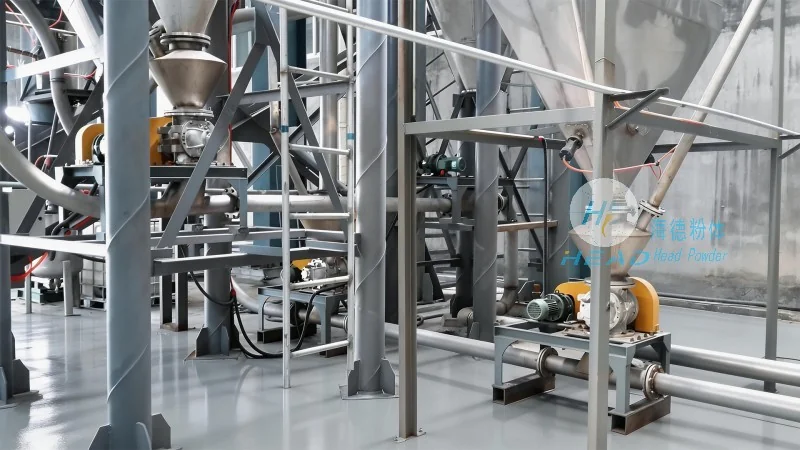
  • Blow Tank or Rotary Airlock: This is the feeding device that introduces fine ash into the pipeline. For dense phase, blow tanks (with fluidizing bottoms) are standard, while dilute phase often uses rotary airlocks with adjustable rotor speed. The blow tank must be designed to handle the bulk density and angle of repose of the ash, and it should include a vent filter to capture displaced air during filling.
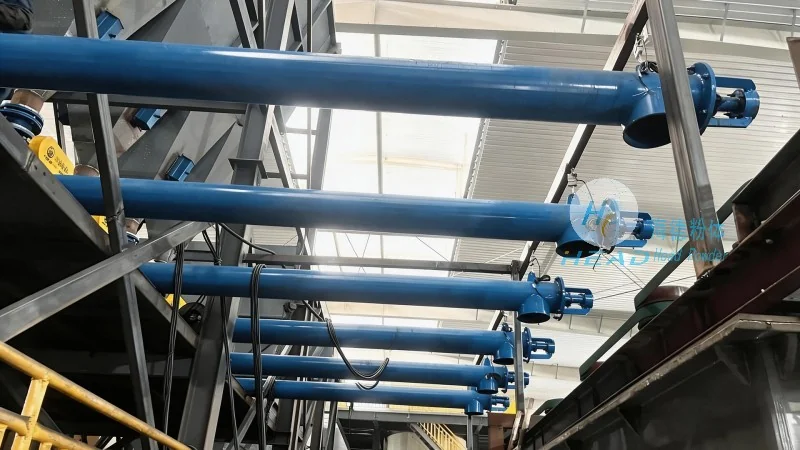
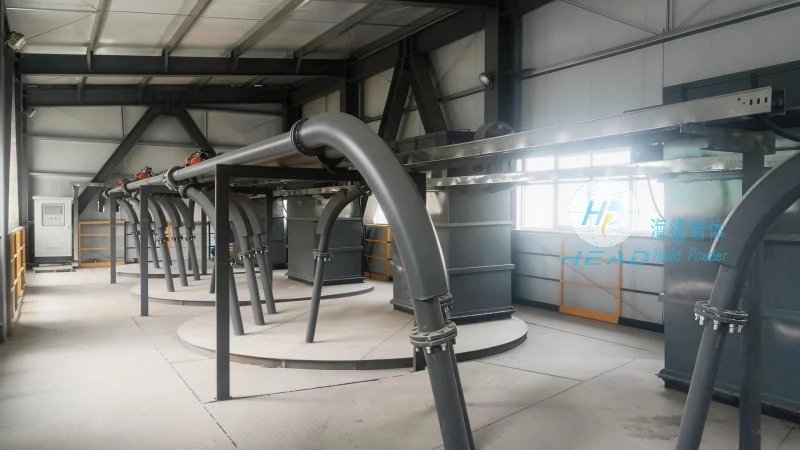
  • Pipeline and Bends: Schedule 40 or 80 carbon steel is common, but for highly abrasive ash, ceramic-lined pipes or hardened steel (e.g., AR500) are used at high-wear locations such as bends. Long-radius bends (R = 10D or more) reduce erosion and pressure drop. For hot ash (above 200°C), expansion joints and appropriate thermal expansion compensation are required.
  • Blowers and Compressors: Positive displacement blowers are typical for dilute phase and low-pressure dense phase (up to 1 bar). For high-pressure dense phase, screw compressors or piston compressors are necessary. The air supply must be oil-free to avoid contaminating the ash, especially if it is destined for cement or agricultural use.
  • Filters and Dust Collectors: At the receiving end, a filter (baghouse or cartridge) separates the ash from the conveying air. For fine ash with submicron particles, high-efficiency filter media (MERV 15 or HEPA) may be required to meet emission standards. Pulse-jet cleaning systems ensure sustained airflow and prevent blinding.
  • Control System: Modern systems use PLC-based controls with pressure transmitters, flow meters, and load cells to maintain optimal conveying parameters. For automatic operation, the system can adjust blow tank cycle times, air injection rates, and valve sequencing based on real-time dust loading.

Each component must be sized based on the required throughput (tons per hour), conveying distance, and elevation change. A common mistake is undersizing the air compressor, leading to velocity drop and line blockages—especially with fine ash that has a low saltation velocity.
Operational Considerations and Maintenance Best Practices

Fine Ash Conveying Methods: Pneumatic Conveying Intro

Even a well-designed pneumatic conveying system will suffer performance loss without proper operation and maintenance. For fine ash, the following points are critical:

  • Monitoring Air Velocity: Too high a velocity accelerates pipe wear; too low a velocity allows material to settle and block the line. Install velocity sensors or pressure differential transmitters along the pipeline to detect abnormal conditions. Many headpowder installations incorporate an automatic air-bleed system to maintain setpoint velocity as material flow varies.
  • Pipe Inspection and Wear Management: Schedule regular ultrasonic thickness testing at bend sections and after straight runs where erosion is highest. Replace wear-backing inserts or rotate pipes if applicable. For dense phase systems, wear is often minimal on straight sections but concentrated at the first bend after the blow tank.
  • Moisture Control: Fine ash can absorb moisture from compressed air, causing caking and line blockages. Install air dryers (refrigerated or desiccant) to achieve a dew point of -20°C or lower. In humid climates, consider nitrogen as the conveying gas for critical applications.
  • Holiday and Standby Operation: During plant shutdowns, the pneumatic system should be purged with dry air to remove residual ash and prevent moisture condensation. Many sites schedule a weekly automatic purge cycle.

Implementing a predictive maintenance program using vibration analysis on blowers and pressure trend logs can extend system life beyond 20 years. headpowder has provided training to dozens of plant maintenance teams, emphasizing that proactive care of airlocks and filters reduces unplanned downtime by up to 40%.
Environmental and Safety Compliance

Fine Ash Conveying Methods: Pneumatic Conveying Intro

Fine ash conveying is subject to stringent environmental and safety regulations. Pneumatic systems, when properly engineered, offer inherent advantages:

  • Zero Fugitive Emissions: Enclosed pipework prevents any dust release to the atmosphere. This aligns with EPA and EU BREF requirements for particulate matter (PM) emissions. For plants near residential areas, this can be a license-to-operate necessity.
  • Combustible Dust Management: Many fine ashes (especially carbon-rich fly ash) are classified as combustible dust. Pneumatic systems must include grounding bonds, explosion isolation valves, and rupture disks. The National Fire Protection Association (NFPA) 654 and 69 standards provide design guidance. headpowder has integrated spark detection and suppression systems into several ash handling projects for biomass power plants.
  • Thermal Safety: Hot ash (up to 400°C) requires careful material selection for pipes and seals. Expansion joints must accommodate thermal movement, and air cooling sections may be needed if the conveying distance is short. Using standard carbon steel above 300°C can lead to oxidation scaling and premature failure.

By designing with these safety factors in mind, plants can achieve OSHA VPP Star status and maintain continuous operation without costly incidents.
Conclusion and Expert Guidance

Fine Ash Conveying Methods: Pneumatic Conveying Intro

Selecting the right fine ash conveying method is a multifaceted decision that balances material properties, throughput requirements, plant layout, and regulatory constraints. Pneumatic conveying, whether in pressure or vacuum configuration, dilute or dense phase, offers the most effective path for most modern industrial facilities due to its cleanliness, flexibility, and ability to handle difficult materials. However, the success of any pneumatic system depends on rigorous upfront testing, proper component sizing, and ongoing maintenance. Industry data from 2025–2026 indicates that poorly designed pneumatic systems can consume 30–40% more energy than optimized counterparts—a significant operating cost premium. Engaging an experienced partner early in the project reduces these risks and ensures a system that delivers reliable performance over decades. For facilities looking to upgrade existing ash handling or design new installations, consulting with specialists who have hands-on experience across diverse ash types and application environments is recommended. headpowder has successfully delivered over 200 fine ash pneumatic conveying projects globally, ranging from 5 t/h to 120 t/h, and continues to develop innovative solutions for the evolving market. (咨询热线:156-6277-7102) By leveraging such expertise, plant managers can achieve lower total cost of ownership, improved workplace safety, and full environmental compliance.

相关推荐

Shandong headpowder Engineering Co., Ltd. All rights reserved.

回到顶部