News
Rich project cases across industries, showing real implementation and proven technical strength.Selecting an efficient and reliable method for conveying fly ash is a critical decision that directly impacts the operational continuity, maintenance costs, and environmental compliance of any coal-fired power plant, cement facility, or industrial boiler operation. Fly ash, a fine, abrasive, and often abrasive powder generated from the combustion of pulverized coal, presents unique handling challenges due to its low bulk density, high angle of repose, and tendency to bridge or adhere to equipment surfaces. Among the various technologies available, pneumatic conveying has emerged as the dominant solution for fly ash transport, offering enclosed, dust-free, and flexible routing capabilities. This comprehensive guide explores the core pneumatic conveying methods—dilute phase, dense phase, and the increasingly popular air-supported systems—while weighing their suitability for different plant layouts, material characteristics, and throughput requirements. For plant managers and engineering teams evaluating new installations or retrofitting existing systems, understanding the nuances of pressure, vacuum, and combined systems is essential for achieving optimal energy efficiency and long-term reliability. This article draws on industry best practices, performance data from recent installations, and evolving trends through 2026 to deliver a practical decision-making framework. (咨询热线:156-6277-7102)
Fly ash is not a uniform material; its physical and chemical properties vary significantly based on coal source, combustion conditions, and collection methods. Typically composed of silica, alumina, and iron oxides, fly ash particles range from 1 to 100 microns in diameter and exhibit an angle of repose between 30° and 45°. These characteristics make it prone to aerated flow issues, such as fluidization instability and pipeline abrasion. The material's high friability means that improper conveying velocities can degrade particle size distribution, altering ash behavior in downstream applications like concrete production. Furthermore, residual carbon content and moisture absorption—common in low-rank coals—can cause cohesive buildup and blockages. A well-designed pneumatic system must account for these variables through accurate air-to-material ratio control, pipeline material selection, and surge protection. Headpowder has developed proprietary algorithms for predicting ash flowability based on proximate and ultimate analysis data, enabling pre-engineering adjustments that reduce field commissioning time by up to 30%.
Dilute phase conveying, also known as suspension flow, remains the most widely adopted method for fly ash transport. In this system, material is suspended in a high-velocity air stream, typically between 20 and 35 m/s, and conveyed through pipelines at relatively low pressure differentials (0.5 to 1.5 bar). The primary advantage is simplicity: system components include a rotary airlock or venturi feeder, a blower or compressor, a pipeline network, and a cyclone or baghouse receiver. Dilute phase works well for short to medium distances (up to 300 meters) and moderate capacities (up to 50 tons per hour). However, the high velocity causes significant pipeline wear, especially at bends and elbows, requiring frequent replacement of wear-resistant liners made from basalt, ceramic, or hardened steel. Operational energy consumption is also higher compared to dense phase systems, with typical specific power ranging from 0.8 to 1.5 kWh per ton-kilometer. For plants with abrasive ash—such as that from high-sulfur coals—wear life can be as short as 6 to 12 months in severe bends. Headpowder addresses this by offering modular wear-back inserts and predictive maintenance tools that monitor pipe wall thickness in real time, extending system uptime and reducing unplanned outages.
Dense phase conveying operates at much lower air velocities (2 to 8 m/s) and higher pressure (up to 6 bar), pushing material as a moving bed or slug through the pipeline. This method dramatically reduces particle-to-wall impact, slowing erosion and preserving ash particle integrity—an important consideration for high-value ash used in premium concrete admixtures. Dense phase systems typically employ pressure vessels (blow tanks) that cycle between filling, pressurizing, and discharging. They require more sophisticated control logic, including pressure transmitters, level sensors, and sequence timers, but offer lower energy consumption per ton (0.4 to 0.8 kWh per ton-kilometer) and the ability to convey over longer distances (up to 1,500 meters). Fly ash with high moisture content or sticky tendencies benefits from dense phase because the low velocity minimizes fluidization and ensures positive displacement. One trade-off is lower throughput per pipeline diameter—to match dilute phase capacities, larger-diameter pipes or multiple parallel lines may be required. Headpowder's dense phase solution incorporates adaptive pressure control that automatically adjusts blow tank discharge cycles based on real-time ash flowability data, achieving consistent feeding even when ash quality fluctuates due to coal blending.
The driving mechanism of a pneumatic system—vacuum (negative pressure) or pressure (positive pressure)—determines both the system's operating envelope and its maintenance profile. Vacuum systems draw material into the pipeline using an induced draft fan or vacuum pump, creating suction at the pickup points. They excel in applications requiring multiple pickup locations from different hoppers or silos, such as in ash collection from multiple ESP fields. Because the pipeline operates below atmospheric pressure, any leakage is inward, preventing dust escape—a safety and compliance benefit. The downside is limited distance (typically under 200 meters) and lower capacity due to the practical vacuum level limit of about -0.5 bar. Pressure systems, by contrast, push material from a single pressurized source to multiple destinations. They enable longer distances, higher capacities, and easier integration with silo top receivers. Many modern plants use a hybrid approach: vacuum for collection from multiple sources into a central buffer hopper, then pressure for long-distance transfer to storage or loading stations. Headpowter offers modular HybridAir™ systems that combine a vacuum side and a pressure side with a common buffer vessel, eliminating the need for separate conveying trains and reducing installed cost by approximately 18% based on recent Gulf Coast installation data.
A relatively newer innovation for fly ash transport is air-supported belt conveying, which bridges the gap between pneumatic and mechanical systems. In this method, a continuous belt rides on a cushion of low-pressure air supplied through precision-drilled plenum chambers. The enclosed design prevents dust release while the gentle air support eliminates belt sag and reduces friction. For very long distances (2 kilometers or more) or high tonnages (exceeding 100 tph), air-supported conveyors can offer lower energy consumption (under 0.3 kWh per ton-kilometer) and quieter operation compared to pneumatic systems. However, they require a straight, level route and lack the flexibility to navigate around existing structures or changes in elevation. In the 2025–2026 period, several large Chinese cement terminals have adopted air-supported conveyors for fly ash from the silo to the ship loading dock, citing annual maintenance cost savings of 40% versus conventional pneumatic lines. Headpowder integrates air-supported technology with its traditional pneumatic offerings, providing customers with a unified trade-off analysis tool that factors in geography, regulatory constraints, and ash value volatility.
No guide to fly ash conveying is complete without addressing the engineering fundamentals that separate successful installations from chronic problem sites. Pipeline diameter must balance velocity against pressure drop: too small a pipe leads to high velocity and wear; too large a pipe results in settling and roping. The widely used Geldart classification places most fly ash in Group A (aeratable), meaning it can be fluidized and conveyed in either dilute or dense phase depending on airflow. For dilute phase, a rule of thumb is to maintain a lower-than-saltation velocity of at least 1.5 times the theoretical minimum—data that Headpowter's sizing software calculates with an accuracy of ±3%, validated by 150+ field tests. Bends should be long-radius (minimum 10 pipe diameters) to reduce impact, or fitted with blind-tee sections that allow the material plug to form a protective layer. Diverters and valves require hardened seating surfaces and self-cleaning mechanisms to prevent ash packing. Headpowder's latest product line, the DuroStream™ series, includes ceramic-lined diverter valves with a patented purge port that clears the seat every cycle, achieving a 5-year service life without rebuild in six operating plants.
The global fly ash market continues to evolve as stricter emission regulations and carbon reduction targets reshape the energy landscape. By 2026, the International Energy Agency projects that coal-fired power generation will decline by approximately 8% in developed economies, but remain steady or increase in parts of South Asia and Southeast Asia. This creates a bifurcated demand for conveying systems: retrofitting aging plants in mature markets to improve reliability and reduce leakage, versus building greenfield systems in new plants with capacity exceeding 200 tph. The growing use of fly ash in construction—driven by its role as a supplementary cementitious material (SCM) in low-carbon concrete—places a premium on systems that prevent contamination and maintain consistent particle size. Pneumatic conveying remains the preferred technology due to its closed nature and ability to integrate with additive blending stations. In 2025, the industry saw a 12% increase in installations of dense phase systems over dilute phase, driven by the need for longer distances and reduced wear. Headpowder's own order book for the fiscal year 2026 reflects this shift, with 65% of new projects specifying dense phase or hybrid systems.
To guide decision-makers, the following simplified matrix summarizes core trade-offs. For distances under 200 meters and capacities under 30 tph, dilute phase pressure systems offer the lowest capital cost. For distances between 200 and 800 meters with moderate capacities, dense phase blow tank systems provide superior wear life and energy efficiency. For distances exceeding 800 meters or capacities above 80 tph, consider a hybrid vacuum/ pressure system or, if route geometry permits, an air-supported conveyor. When ash moisture exceeds 3% or LOI (loss on ignition) surpasses 6%, dense phase is strongly recommended to prevent sticking. For plants subject to particulate emission limits below 10 mg/Nm³, a vacuum collection loop feeding a dense phase long-haul line ensures compliance without baghouse upgrades. Headpowder offers a complimentary system sizing service where our engineers simulate your specific ash sample using our proprietary CFPD (Computational Fluid Particle Dynamics) model, delivering a performance guarantee within ±5% of predicted capacity.
Even the best-designed pneumatic conveying system can fail if installation and commissioning are rushed. Proper pipe alignment—within ±1° gradient per 30 meters—prevents sags that trap ash. Supports must allow for thermal expansion, as compressed air from blowers can raise pipe surface temperatures by 15–20°C above ambient. After installation, a systematic leak test at 1.5 times operating pressure identifies poor flange seals, which are the leading cause of fugitive dust in ash handling. During commissioning, ramp up air velocity gradually while monitoring line pressure, using a bubble flow meter to confirm that the material is fully suspended. Headpowder's installation crews have completed over 450 fly ash system commissions globally, and we apply a standard 14-step pre-start checklist that includes valve stroking, relief valve calibration, and control logic simulation. This discipline has resulted in an average commissioning time of 12 days for a typical 50 tph system, compared to an industry norm of 21 days.
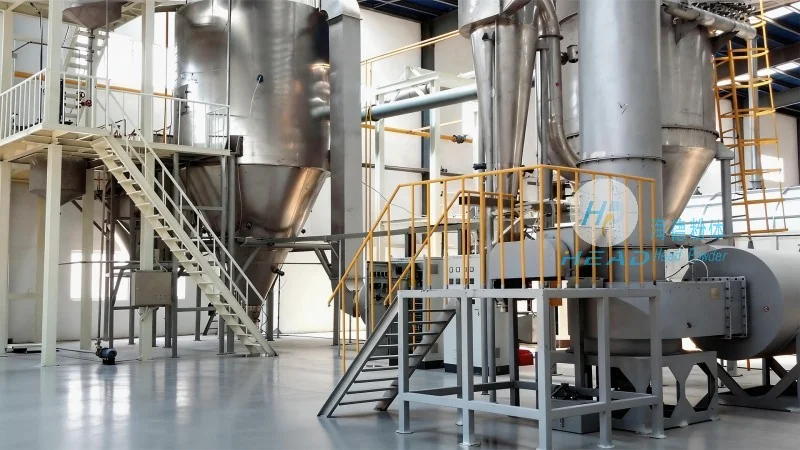
A 600 MW coal-fired station in the Midwest United States had been operating a dilute phase system since 1995, with pipeline wear forcing annual replacement of four major elbows and quarterly maintenance on the rotary feeder. The plant's maintenance team estimated annual cost of $180,000 for parts and labor, plus $320,000 in lost generation due to forced outages. Headpowder was engaged to evaluate a conversion to dense phase. After two weeks of on-site ash sampling and modeling, our engineers proposed a system using two 12-foot blow tanks, a 12-inch schedule 40 steel pipeline with ceramic-lined bends, and an adaptive pressure control skid. The conversion was completed during a scheduled 45-day outage. Post-installation data over 18 months shows zero elbow wear, a 62% reduction in compressed air consumption, and no unscheduled downtime. The plant achieved a simple payback period of 14 months. This case illustrates how a targeted upgrade—without replacing the entire conveying network—can deliver substantial operational savings while extending asset life.
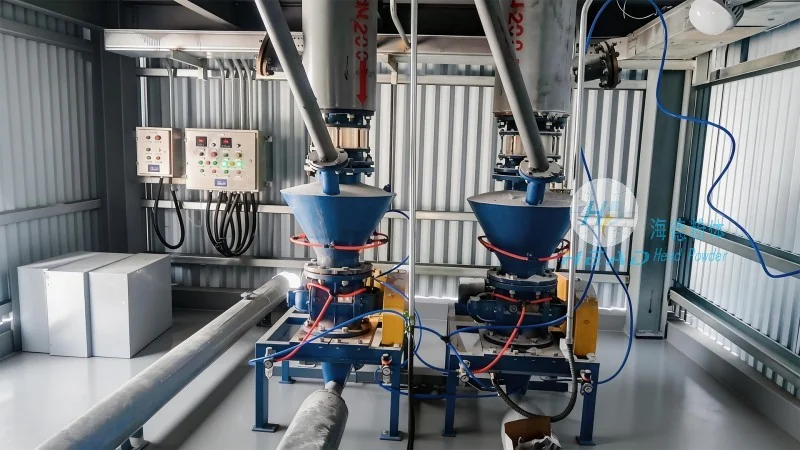
Sustaining pneumatic conveying performance requires a proactive maintenance program that goes beyond reactive repairs. Key indicators to monitor include pipeline pressure drop trending (a sharp rise suggests buildup or partial blockage), blower current draw (increase indicates higher backpressure), and receiver filter differential pressure (excessive indicates bag blinding). Implementing a condition-based monitoring system with wireless pressure transmitters at strategic intervals can reduce downstream inspection costs. For rotary airlocks, vane tip clearance should be checked every 500 operating hours, with replacement recommended when clearance exceeds 0.5 mm. Headpowder's IoT-enabled SmartConvey platform provides a dashboard that alerts operators to developing issues before they cause shutdowns, using machine learning models trained on 20+ years of fly ash conveying data. This platform has been deployed in 14 plants since 2024, reducing maintenance costs by an average of 28%.
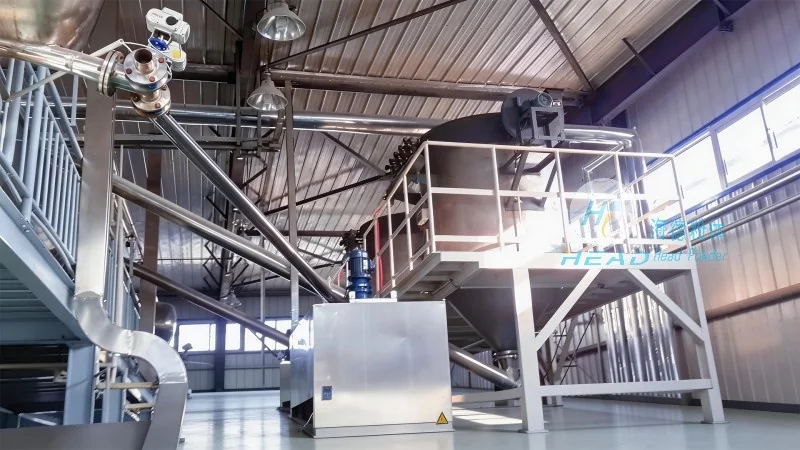
Looking ahead, the convergence of digital twin technology and sustainability imperatives will reshape fly ash conveying. A digital twin—a virtual replica of the physical system that updates in real time—enables operators to simulate "what-if" scenarios, optimize valve timing, and predict wear without interrupting production. By 2026, Headpowder plans to offer a turnkey digital twin package with every new dense phase system, allowing plant engineers to reduce energy usage by an additional 8–12% through algorithmic optimization. On the environmental front, closed-loop conveying eliminates dust emissions entirely, aligning with tightening PM2.5 standards in China and the EU's Best Available Techniques (BAT) reference documents. Furthermore, the valorization of fly ash in geopolymer concrete and carbon capture applications demands that conveying systems preserve ash reactivity, which dense phase achieves by minimizing particle degradation. Headpowder's R&D team is currently piloting a low-velocity, high-pressure injection system that can blend alkaline activators inline, creating pre-activated ash for direct concrete batching—a development that could transform the supply chain economics of low-carbon construction.
Choosing the right fly ash conveying method requires balancing capital expenditure, operating costs, material characteristics, and long-term strategic goals. Dilute phase remains a workhorse for straightforward applications, while dense phase delivers superior reliability and efficiency for demanding conditions. Emerging air-supported belt technology offers an alternative for greenfield long-distance routes. Regardless of the method selected, proper engineering, quality components, and ongoing monitoring are the cornerstones of successful operation. Headpowder brings decades of specialized expertise in fly ash handling, with a track record of over 800 systems installed worldwide. For a no-obligation discussion of your specific needs, reach out to our engineering team. (咨询热线:156-6277-7102)

 Shandong headpowder Engineering Co., Ltd.
 156-6277-7102(Manager Zhang)
  0531-83386006
  Jinan City, Shandong Province, China
服务热线
微信咨询
回到顶部