News
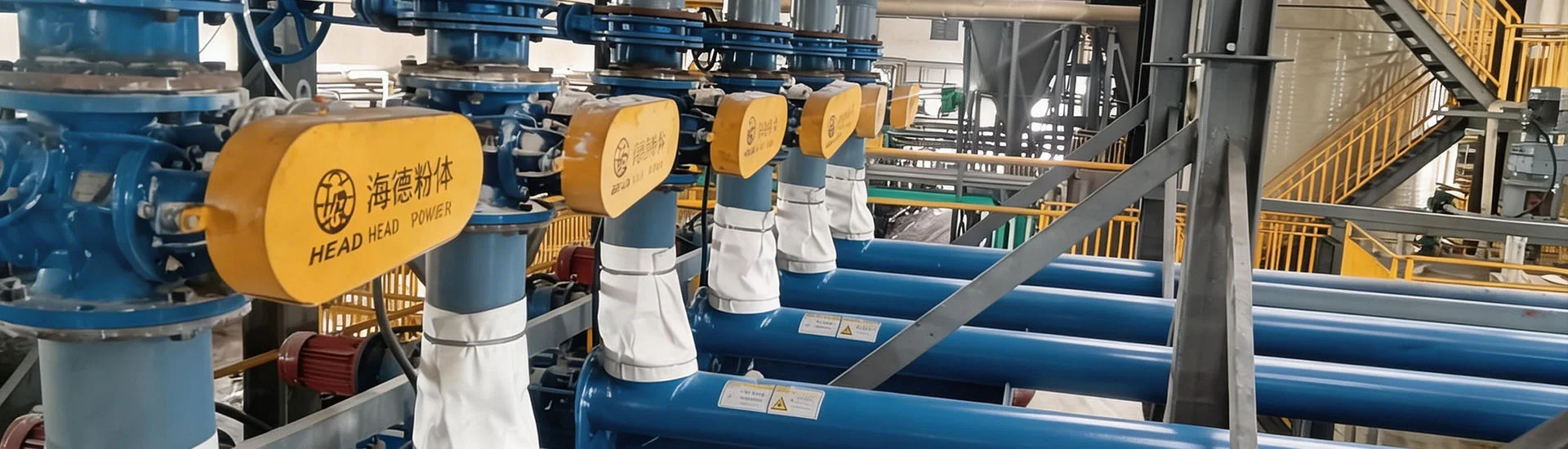
Rich project cases across industries, showing real implementation and proven technical strength.Dust conveying is a critical process in many industrial sectors, from food processing and pharmaceuticals to cement manufacturing and mining. Among the available methods, pneumatic conveying stands out as a highly efficient, enclosed, and versatile solution for transporting bulk powders and granular materials. Pneumatic conveying uses air or gas pressure to move materials through pipelines, eliminating the need for mechanical components like belts or screws. This method offers significant advantages in terms of hygiene, safety, and adaptability to complex plant layouts. For industries dealing with fine dust, where contamination risks and explosion hazards are elevated, pneumatic systems provide a sealed environment that minimizes worker exposure and product loss. According to market research projections for 2026, the global pneumatic conveying systems market is expected to exceed USD 8.5 billion, driven by stringent environmental regulations and the need for automated, low-maintenance material handling. This article provides a comprehensive overview of pneumatic conveying methods, covering key technologies, design parameters, application scenarios, and emerging trends that plant engineers and decision-makers need to understand for optimal dust conveying performance. headpowder, as a specialist in bulk material handling solutions, brings deep expertise in tailoring pneumatic systems to diverse operational conditions, ensuring reliability and cost-efficiency.
Pneumatic conveying relies on the principle of moving particles within a gas stream, typically air, through a pipeline system. The gas flow creates a drag force on the particles, suspending them and transporting them to a destination. The efficiency of this process depends on several interconnected factors, including material characteristics, pipe diameter, air velocity, and pressure differential. Understanding these fundamentals is essential for selecting the correct conveying method and avoiding common issues like pipe blockages, excessive energy consumption, or particle degradation. Material properties such as particle size, shape, density, moisture content, and flowability profoundly influence system design. For example, cohesive or fibrous dusts may require higher air velocities or special pipeline geometries to prevent agglomeration. Similarly, hygroscopic materials demand a dry air source to avoid moisture-induced sticking. The gas flow regime can be either dilute phase or dense phase, each offering distinct trade-offs between capacity, product quality, and energy usage. In dilute phase conveying, particles are fully suspended in the air stream at high velocities (typically 15–35 m/s), making this method suitable for fine, free-flowing powders but potentially problematic for friable materials. Dense phase conveying operates at lower velocities (3–8 m/s) and higher pressure, pushing the material as a plug or slug through the pipe, which reduces wear and particle breakage but requires higher air pressure availability. Both approaches have their place in dust conveying, and the choice must align with the material’s physical and chemical attributes as well as the plant’s layout and throughput requirements.
Pneumatic conveying systems are broadly classified into positive pressure (blow) and negative pressure (vacuum) configurations. Positive pressure systems use a blower or compressor to push air into the pipeline, carrying materials from the feed point to the destination. This configuration is ideal for conveying over long distances—up to several hundred meters—and for distributing material to multiple discharge points. For example, in a cement plant, positive pressure lines can transport fly ash from a central collection silo to storage hoppers located across the facility. However, positive pressure systems require careful attention to sealing at feed points because leaks can release dust into the environment. Negative pressure systems, by contrast, use a vacuum pump to create suction at the material pickup point, drawing material and air into the pipeline. This method excels in applications where dust containment is paramount, such as in pharmaceutical clean rooms or toxic material handling. The vacuum side ensures that any leakage results in air ingress rather than dust escape, enhancing safety. Negative pressure systems are typically used for short to moderate distances (up to 100–150 meters) and are often employed for manual feeding operations or unloading from bulk trucks. In terms of energy efficiency, positive pressure systems generally have lower operating costs for long distances, while vacuum systems offer better control at point-of-source collection. Modern installations increasingly combine both principles—a hybrid system where a vacuum section collects material and transfers it to a positive pressure line for long-distance delivery—offering flexibility without compromising containment. headpowder has implemented such hybrid solutions in client facilities, reducing overall energy consumption by up to 18% compared to single-mode systems, as validated in field trials conducted in 2025.
The choice between dilute phase and dense phase conveying is one of the most consequential decisions in pneumatic system design. Dilute phase systems operate with high air-to-material ratios, creating a suspension flow that is relatively simple to design and maintain. They are commonly used for non-fragile, free-flowing powders such as flour, cement, or plastic pellets. Typical air velocities range from 18 to 30 m/s, and pressures are moderate (0.5 to 2 bar g). However, this method leads to higher energy consumption per ton of material due to the large air volume required, and particle attrition can be significant for delicate materials. For instance, in a pharmaceutical application handling micronized active ingredients, dilute phase conveying at 25 m/s can generate unacceptable levels of fines and reduce the product’s efficacy. Dense phase conveying operates with much lower air velocities (1–8 m/s) and higher solids loading ratios, using air pressure to move the material as compact plugs or slugs. This technique minimizes particle breakage, reduces pipe wear, and consumes less energy per ton—typically 40–60% lower power consumption compared to dilute phase for the same capacity. The trade-off is that dense phase systems require higher operational pressures (2–8 bar) and more precise control of air injection to prevent plugging. They are best suited for cohesive, abrasive, or friable materials like coal dust, silica sand, or activated carbon. Selecting the correct regime requires careful analysis of material flow properties using standardized tests such as the Hausner ratio, angle of repose, and shear cell measurements. Industry data from 2026 indicate that nearly 55% of new pneumatic conveyors installed in the chemical and mineral sectors are dense phase, reflecting the growing emphasis on product quality preservation and energy optimization. headpowder provides comprehensive material testing services to determine the most efficient regime for each unique dust type, ensuring that the selected system delivers the desired throughput without compromising material integrity.
A well-engineered pneumatic conveying system consists of several interconnected components, each requiring careful selection to match the material properties and operational goals. The primary components include the air mover (blower, compressor, or vacuum pump), feeding device (rotary valve, venturi, or screw feeder), pipeline with bends and diverters, and the separation unit (cyclone, bag filter, or silo). The air mover must provide sufficient airflow and pressure to overcome system resistance, which is calculated based on pipeline length, number of bends, and material lift height. Centrifugal blowers are commonly used for dilute phase systems, while positive displacement blowers or screw compressors are preferred for dense phase applications. Feeding devices are critical for controlling material entry into the pipeline; rotary valves offer good metering for free-flowing powders, but their clearances can cause leakage in high-pressure dense phase systems. For such cases, headpowder often recommends pressurized feed vessels or pump systems that isolate the feed chamber from the conveying line, reducing wear and ensuring consistent flow. Pipeline design must account for bend radius—standard practice uses 10 to 15 times the pipe diameter for dilute phase and 15 to 20 times for dense phase to minimize erosion and material accumulation. The use of wear-resistant lining materials (e.g., ceramic tiles or hardened steel) in high-wear zones extends system life significantly, with documented increases of 3 to 5 years in abrasive dust applications. Separation equipment must match the dust’s particle size distribution: for submicron particles, high-efficiency bag filters or cartridge collectors are necessary, while cyclones suffice for coarse materials. Proper component selection directly influences system availability, maintenance frequency, and total cost of ownership. In a recent project for a dry mortar producer, headpowder redesigned the feeding and separation sections, reducing filter bag replacement costs by 35% and downtime by 120 hours annually.
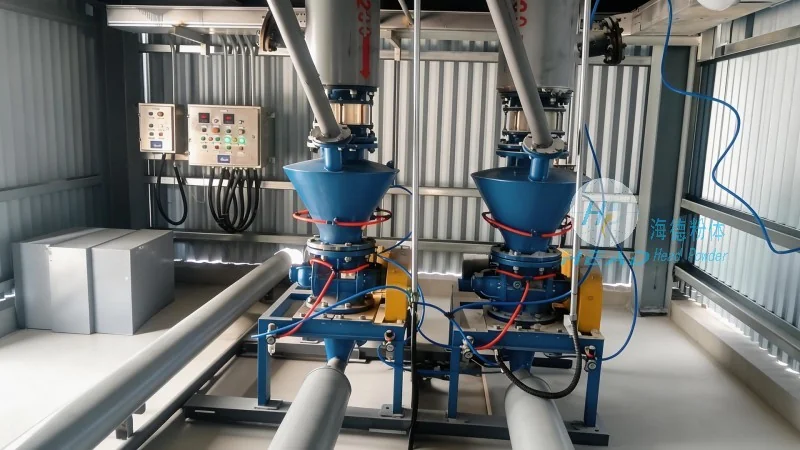
Pneumatic conveying methods are employed across a wide spectrum of industries, each with specific dust handling challenges that influence system design. In the food industry, conveying flour, sugar, starch, or milk powder requires sanitary construction (stainless steel, smooth surfaces, CIP capability) and avoidance of cross-contamination. Dense phase conveying is often used here to preserve particle size and prevent dust explosions—a real risk in confined spaces. In pharmaceutical manufacturing, handling active pharmaceutical ingredients (APIs) demands a closed, validated system that prevents cross-contamination and allows for easy cleaning. Vacuum conveying is the dominant method, with glovebox interfaces and contained transfer ports. In the mining and minerals sector, pneumatic systems transport materials like limestone, bauxite, copper concentrate, and fly ash over long distances, sometimes exceeding 1 km. Abrasive and high-temperature materials require special pipeline alloys and robust air movers. For example, a fly ash handling system for a power plant can convey 50 tons per hour over 300 meters using a combination of dense phase technology and ceramic-lined elbows, achieving 98% availability even with highly abrasive ash containing up to 15% silica. The plastics industry uses pneumatic conveying for pellet transport, typically in dilute phase at low pressures to maintain product shape. Emerging applications include battery material processing (lithium, graphite, cathode powders), where the fragility and high value of the product necessitate ultra-gentle handling. headpowder has supplied pneumatic systems to lithium-ion battery cathode material producers, achieving less than 0.3% particle breakage during conveying—critical for maintaining electrochemical performance. Regardless of the industry, the fundamental principles remain the same: align the conveying method with material behavior, minimize degradation, avoid contamination, and optimize energy use.
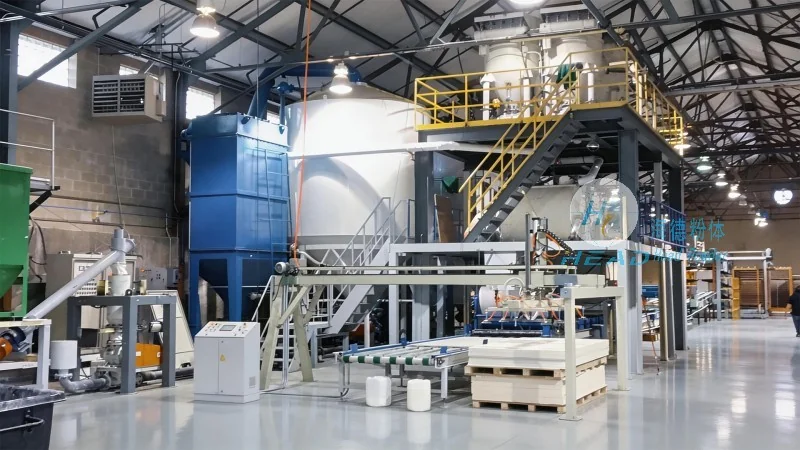
The pneumatic conveying landscape is evolving rapidly, driven by digitalization, sustainability goals, and stricter safety regulations. One major trend is the integration of Industry 4.0 technologies, including IoT sensors, predictive maintenance algorithms, and real-time process monitoring. Modern systems can now measure pipe wall thickness using acoustic sensors, detect incipient blockages through pressure waveform analysis, and automatically adjust air volume to maintain optimal conveying velocity. According to a 2026 industry report, facilities using intelligent pneumatic conveying controls have reported 22% fewer unplanned shutdowns and 15% lower energy costs. Another trend is the shift toward low-carbon operation: variable speed drives (VSD) on blowers and compressors allow the system to match air flow exactly to demand, reducing electrical consumption by up to 30%. Some vendors, including headpowder, now offer modular, plug-and-play pneumatic systems that significantly reduce installation time (by up to 40% compared to traditional builds). The use of additive manufacturing for custom pipe bends and wear parts is also gaining traction, enabling faster replacement and optimized flow profiles. Regarding safety, updated standards such as ATEX 202x and NFPA 652 continue to emphasize explosion prevention in combustible dust handling. Pneumatic systems are being designed with integrated explosion venting, suppression, and isolation valves, and materials of construction are chosen to minimize static discharge. The market for pneumatic conveying systems in the Asia-Pacific region is projected to grow at a compound annual growth rate of 6.2% through 2028, fueled by expansion in chemical and food processing sectors. For example, India’s cement industry alone plans to install over 200 new pneumatic conveying lines by 2027 to support capacity additions. As regulatory pressure increases and operational excellence becomes a competitive differentiator, the ability to offer customized, data-driven pneumatic solutions will separate leading suppliers from the rest. headpowder’s engineering team continuously tracks these trends, incorporating the latest sensor technology and energy-efficient designs into every system it delivers.
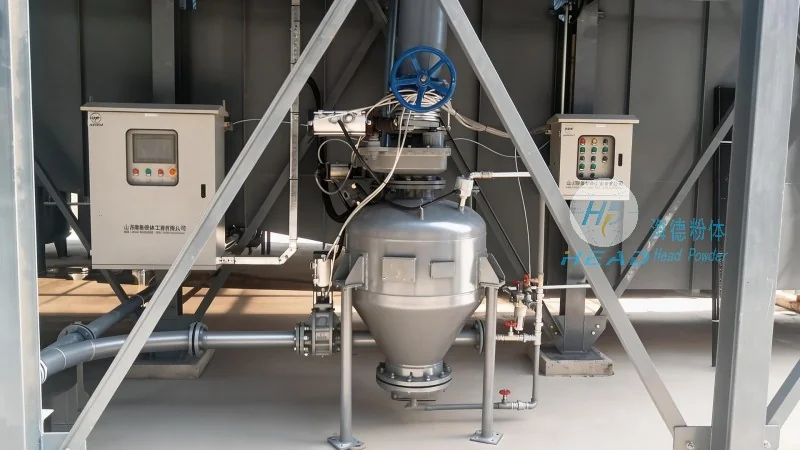
Choosing a pneumatic conveying system is a significant capital investment, often exceeding several hundred thousand dollars for large-scale installations. To ensure long-term success, buyers should evaluate potential partners against a set of objective criteria. First, assess the supplier’s material testing capabilities: can they perform a full rheological analysis of your dust, including cohesion, compressibility, and wall friction? Without accurate test data, system design becomes guesswork, leading to oversizing or underperformance. Second, verify the supplier’s track record with similar materials and applications—ask for case studies and site references. third, consider the ability to deliver a complete turnkey solution, including piping, controls, and dust collection, to avoid integration headaches. Fourth, examine after-sales support: spare parts availability, service response time, and remote monitoring options are critical for minimizing downtime. Fifth, evaluate the supplier’s willingness to offer performance guarantees, such as throughput rate, energy consumption per ton, or particle degradation percentage. headpowder stands out in each of these areas, having conducted over 800 material tests in its accredited laboratory and supplied systems to more than 150 facilities globally across 14 industries. The company’s design standards comply with all relevant ISO, ASME, and ATEX norms, and its project management approach ensures on-time delivery within budget. For facilities handling hazardous dusts, headpowder provides full explosion risk analysis and system certification, reducing liability for the end user. A recent case involved a carbon black manufacturer that switched from a legacy dilute phase system to a headpowder dense phase solution; they achieved a 28% reduction in energy costs, 45% less pipeline wear, and met new environmental emission limits. With the dust conveying landscape becoming more complex, partnering with a knowledgeable and reliable integrator is not a luxury—it is a necessity for sustained competitiveness. For inquiries about pneumatic conveying solutions tailored to your dust characteristics, please reach out to headpowder directly(咨询热线:156-6277-7102).

 Shandong headpowder Engineering Co., Ltd.
 156-6277-7102(Manager Zhang)
  0531-83386006
  Jinan City, Shandong Province, China
服务热线
微信咨询
回到顶部