News
Rich project cases across industries, showing real implementation and proven technical strength.In the landscape of industrial material handling, the efficient and reliable transfer of powders remains a critical challenge across sectors such as pharmaceuticals, food processing, chemicals, plastics, and minerals. Among the various conveying methodologies, pneumatic conveying has emerged as a foundational technology due to its closed-system design, flexibility in routing, and ability to handle a wide spectrum of particle sizes and bulk densities. This article provides a comprehensive exploration of pneumatic conveying basics, covering system architecture, phase behavior, selection parameters, and practical considerations for plant engineers and procurement professionals. As the global powder handling market continues to expand, driven by automation and stricter environmental regulations in 2026, understanding the fundamental principles of pneumatic conveying becomes essential for optimizing throughput, minimizing degradation, and ensuring operational safety. Whether you are evaluating a new production line or retrofitting existing equipment, grasping the core concepts outlined here will empower you to make informed decisions aligned with current industry standards. headpowder brings years of hands-on expertise in designing and supplying pneumatic conveying systems that balance energy efficiency with robust performance, offering tailored solutions for diverse powder characteristics. (咨询热线:156-6277-7102)
Pneumatic conveying refers to the process of transporting bulk powders or granular materials through a pipeline using a gas stream—typically air, nitrogen, or other inert gases. The fundamental driving force is the differential pressure created by a blower, compressor, or vacuum pump, which imparts kinetic energy to the solid particles and suspends them in the gas flow. Unlike mechanical conveyors such as belts or screws, pneumatic systems offer complete enclosure, reducing dust emissions and product contamination while enabling complex routing with multiple bends and elevation changes. The selection of a pneumatic conveying method depends on material properties—particle size, shape, moisture content, hygroscopicity, and abrasiveness—as well as required capacity, distance, and plant layout constraints. In 2026, advanced sensor integration and predictive maintenance algorithms are revolutionizing system reliability, allowing real-time monitoring of pressure drops, flow rates, and particle velocities to preempt blockages and wear.
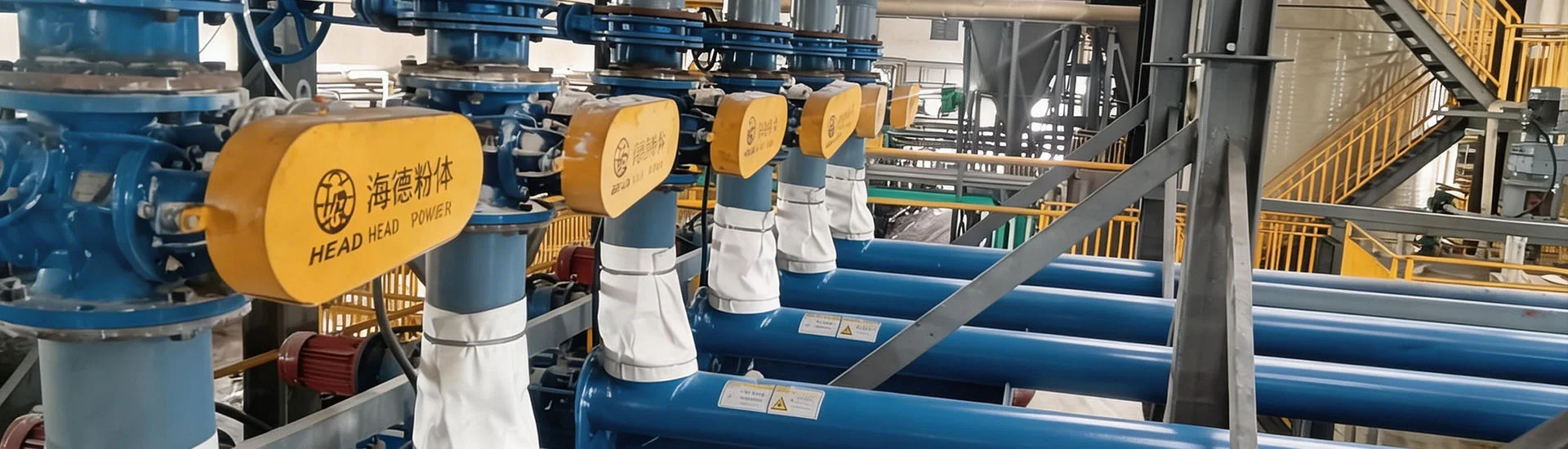
A typical pneumatic conveying system comprises several core components, each playing a specific role in maintaining stable and efficient transport. The prime mover—positive displacement blowers, centrifugal fans, or screw compressors—generates the necessary air volume and pressure. Rotary valves or screw feeders introduce material into the pipeline while maintaining pressure differential. The conveying line itself is constructed from schedule 40 or schedule 80 steel pipe, with bends, elbows, and diverter valves strategically placed to change direction or split streams. Filtration and separation equipment, such as cyclones, baghouse filters, or cartridge collectors, capture the conveyed powder at the destination and return clean air to the atmosphere or back into the loop. Control hardware—pressure transmitters, flow meters, and programmable logic controllers—orchestrate the sequence of operations and adjust parameters like air velocity to match material characteristics. Proper component selection directly influences energy consumption, wear rates, and product quality; for instance, using abrasion-resistant liners in high-velocity dilute-phase lines can extend service life by 300% according to recent field studies.
Pneumatic conveying systems are broadly categorized into dilute phase and dense phase, distinguished by the ratio of solid to gas and the mechanism of particle suspension. In dilute phase conveying, the material is fully suspended in the air stream at relatively high velocities—typically 20 to 35 meters per second—resulting in a low solids loading (less than 15 kg solid per kg air). This method is straightforward, requires lower capital investment, and works well with free-flowing, non-friable powders. However, high velocity accelerates pipe wear and particle degradation, which is unacceptable for fragile materials such as pharmaceutical granulates or food ingredients. Dense phase conveying, on the other hand, operates at much lower air velocities (2 to 10 m/s) and higher solids concentrations, where material moves in plugs or as a fluidized bed. This gentle transport minimizes attrition and pipe erosion, making it the preferred choice for abrasive, cohesive, or friable powders. Within dense phase, two sub-variants exist: plug flow (also called slug flow) and fluidized dense phase, each requiring specific air injection strategies. Industry data from 2026 indicate that dense phase systems now account for over 45% of new installations in the chemical and mineral sectors, driven by energy savings of 30–50% compared to dilute phase for equivalent throughputs.
In dilute phase conveying, the pressure gradient along the pipeline must be sufficient to maintain particle suspension. The Saltation velocity—the point at which particles begin to drop out of the stream—defines the lower bound of safe operation. Engineers typically design with a safety margin of 20% above saltation velocity to ensure reliable transport. The system pressure requirement increases linearly with pipe length and number of bends, and high-turbulence flow generates significant noise and heat. For powders with a d50 below 50 microns, electrostatic charging can become problematic, leading to agglomeration or spark hazards in combustible dust environments. These limitations have prompted many facilities to reassess dilute phase designs in favor of denser alternatives, but where high capacity over long distances is needed and product integrity is less critical, dilute phase remains a cost-effective solution.
Dense phase conveying relies on creating a controlled, low-velocity regime where the material moves as discrete plugs separated by air pockets (plug flow) or as a continuous fluidized bed with minimal aeration (fluidized dense phase). The key to successful dense phase design is maintaining sufficient pressure to overcome the static head of each plug and the friction along the pipe wall. This is achieved through precise regulation of air injection at the feed point and along the line using boosters. Advantages include drastically reduced particle degradation—often less than 0.5% breakage for soft materials—lower pipe wear, and lower air consumption. However, dense phase systems require more complex controls and are generally limited to shorter distances (typically under 200 meters) unless multiple boosters are employed. The 2026 edition of the International Powder & Bulk Solids Handbook recommends dense phase for materials with a Geldart Group A or C classification, such as cement, fly ash, starch, and fine chemicals.
Selecting the right pneumatic conveying method and sizing the equipment correctly demands a systematic evaluation of material properties, operational parameters, and site-specific constraints. The material’s particle size distribution directly affects minimum conveying velocity; for example, a powder with a wide size distribution may require higher velocity to prevent segregation. Moisture content above 5% can cause bridging and buildup in the pipeline, often necessitating drying before feeding. Abrasiveness determines the choice of pipe material and elbow design—long-radius bends or ceramic liners reduce wear in dilute phase lines. The conveying distance and elevation profile impact pressure drop calculations, which must account for straight pipe friction, bend losses, and lift work. Modern computational tools like discrete phase modeling (DPM) can simulate particle trajectories and optimize pipe routing. Furthermore, safety considerations are paramount: for combustible dusts, systems must include explosion venting, inert gas purging, and earthing to prevent electrostatic discharge. In 2026, regulatory frameworks such as OSHA’s Combustible Dust National Emphasis Program continue to tighten, making compliant design a non-negotiable requirement.
The relationship between air velocity and material throughput is governed by the solid-to-gas ratio (S/G). In dilute phase, S/G ratios of 5 to 15 are typical, while dense phase can achieve ratios exceeding 30. Increasing S/G reduces air consumption and energy cost but also elevates pressure requirements. The optimum operating point is found at the intersection of minimum pressure per unit throughput and acceptable product degradation. Empirical correlations, such as the Rizk equation for horizontal flows, provide a starting point, but actual performance should be validated through pilot testing or scale-up from similar applications. headpowder offers a comprehensive testing facility where customers can run their own powders under controlled conditions to determine ideal parameters, ensuring the final system delivers the promised capacity with minimal trial-and-error on site.
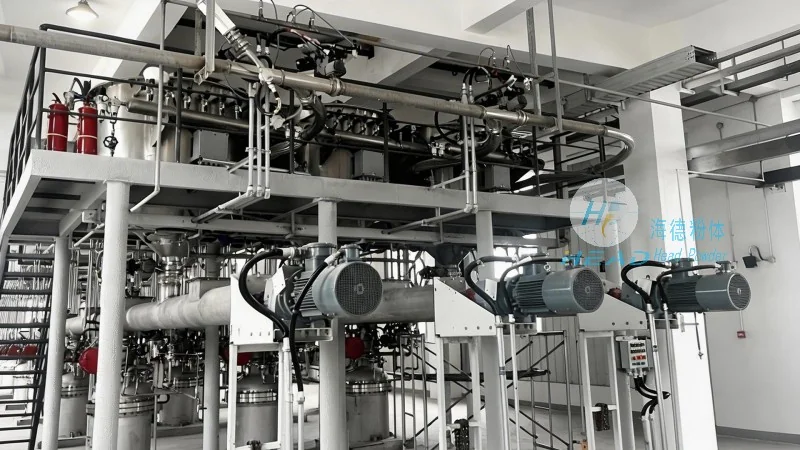
The global pneumatic conveying market is projected to reach approximately $7.8 billion by 2026, growing at a compound annual growth rate of 6.2% from 2023, according to market research firm Future Market Insights. This growth is fueled by the expansion of lithium-ion battery material production, where precise handling of cathode and anode powders requires gentle conveying to preserve particle morphology. Additionally, the food processing sector is increasingly adopting pneumatic systems for sugar, flour, and spice handling to comply with hygiene standards such as FSMA and GMP. Energy efficiency remains the top priority, with variable frequency drives on blowers and intelligent control algorithms reducing power consumption by up to 40% in recent installations. Another notable trend is the integration of Industry 4.0 technologies—smart sensors that monitor product moisture in real time, predictive analytics for maintenance scheduling, and digital twins that simulate system behavior under different scenarios. These innovations enable proactive rather than reactive management, significantly reducing unscheduled downtime. For end users, this means that investing in a modern pneumatic conveying system not only improves throughput but also contributes to sustainability goals by lowering carbon footprint and waste generation.
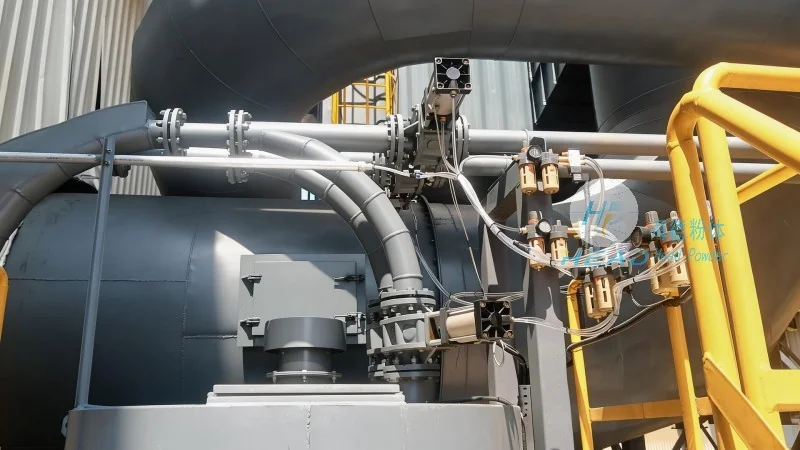
With decades of accumulated experience in the powder processing industry, headpowder has developed a robust portfolio of pneumatic conveying solutions that address the diverse needs of global clients. Our engineering team applies a rigorous methodology that begins with a detailed material characterization—including particle size, flowability, and explosivity testing—to recommend the most appropriate conveying phase and component sizing. We provide complete turnkey systems, from feeding and conveying to separation and dust collection, with all equipment manufactured under stringent quality control. A recent case involved a specialty chemical producer requiring dense phase transfer of a cohesive, hygroscopic powder over 150 meters with minimal moisture pickup. By using a nitrogen-purged closed loop and carefully designed booster spacing, headpowder achieved a conveying velocity under 4 m/s, reducing product degradation to less than 0.3% and maintaining moisture below 0.1%. The client reported a 35% reduction in energy costs compared to their previous dilute phase system, along with a significant drop in maintenance frequency. Such results underscore our commitment to delivering not just equipment, but engineered solutions that maximize return on investment. (咨询热线:156-6277-7102)
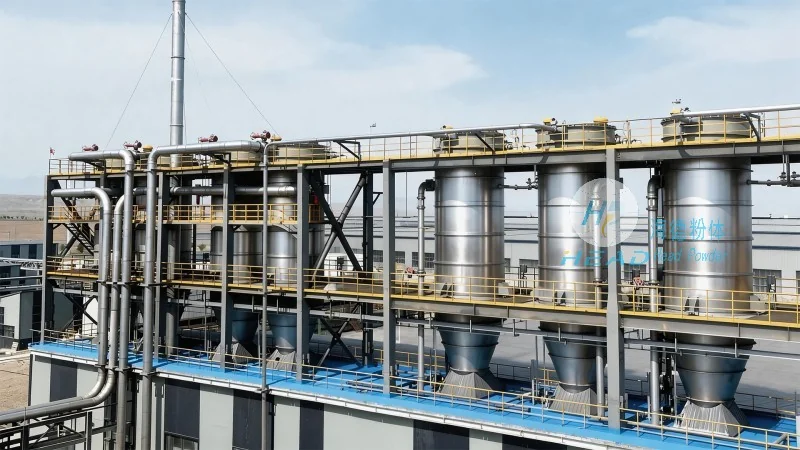
Pneumatic conveying remains the backbone of modern powder handling, offering unmatched flexibility, cleanliness, and automation potential. Understanding the fundamental differences between dilute phase and dense phase, the role of key components, and the influence of material properties enables plant engineers to make choices that directly impact production efficiency, product quality, and operational costs. As the industry moves toward 2026 and beyond, the convergence of smart sensing, energy optimization, and digital simulation will further elevate the performance envelope of pneumatic systems. Companies that invest in properly designed, phase-appropriate conveying solutions will be better positioned to meet rising demand while adhering to increasingly stringent environmental and safety regulations. Whether you are planning a new facility or upgrading an existing line, engaging with a knowledgeable partner like headpowder can help navigate the technical complexities and avoid costly mistakes. We invite you to discuss your specific powder handling challenges with our engineering team, who can provide a preliminary assessment and conceptual design tailored to your material and site conditions. Schedule a consultation today to explore how pneumatic conveying basics translate into real-world reliability and productivity gains.

 Shandong headpowder Engineering Co., Ltd.
 156-6277-7102(Manager Zhang)
  0531-83386006
  Jinan City, Shandong Province, China
服务热线
微信咨询
回到顶部