News
Rich project cases across industries, showing real implementation and proven technical strength.In the chemical and polymer processing industries, the handling of Purified Terephthalic Acid (PTA) presents unique challenges due to its fine particle size, hygroscopic nature, and tendency to generate dust. As global PTA production capacity continues to expand—with the Asia-Pacific region alone accounting for over 70% of worldwide output in 2026—manufacturers are under increasing pressure to optimize material transfer efficiency while maintaining product integrity. Pneumatic conveying has emerged as a preferred solution for moving PTA across storage, blending, and reactor feed systems, offering closed-loop transport that minimizes contamination and reduces manual handling risks. Unlike mechanical conveyors, pneumatic systems rely on air streams to suspend and propel particles through pipelines, enabling flexible routing, lower maintenance requirements, and safer operation in explosive or toxic atmospheres. However, selecting the right pneumatic conveying method for PTA demands a nuanced understanding of material properties, system pressure regimes, and operational constraints. This article provides a comprehensive introduction to pneumatic conveying technologies specifically tailored for PTA applications, drawing on industry best practices and engineering principles to help facility managers and process engineers make informed decisions. From dilute phase to dense phase systems, each approach carries distinct advantages and limitations that must be weighed against throughput demands, energy consumption, and product degradation risks. By examining real-world installation data and performance metrics, we aim to deliver actionable guidance that aligns with the rigorous standards of modern chemical processing plants.
PTA is a white crystalline powder with a median particle diameter typically ranging from 80 to 150 microns. Its bulk density varies between 600 and 900 kg/m³, depending on compaction history, and it exhibits moderate abrasiveness. More critically, PTA is hygroscopic: in humid environments, it can absorb moisture and form agglomerates, which may cause blockages in conveying lines. Additionally, the fine dust generated during transport poses explosion risks when the concentration exceeds the minimum explosible concentration (MEC), typically around 50 g/m³ for organic dust. These characteristics demand that any pneumatic conveying system incorporate moisture control measures, such as using dehumidified air or nitrogen as the conveying medium, and that the system be designed with adequate grounding and explosion venting. Headpowder has observed that many PTA processing facilities in Southeast Asia now specify stainless steel piping rather than carbon steel to reduce contamination from rust particles, even though this increases capital costs by approximately 15–20%. The conveying velocity must also be carefully calibrated: too low a velocity leads to saltation and settling, while too high a velocity accelerates wear and particle breakage. Industry standards recommend conveying velocities between 12 m/s and 25 m/s for dilute phase systems handling PTA, with lower velocities used for dense phase to prevent pipeline erosion.
Dilute phase conveying, also known as suspension flow, involves moving PTA particles at high air velocities (typically 20–35 m/s) so that they remain fully suspended in the gas stream. The solids-to-air ratio is low, usually below 10 kg/kg, which results in relatively high energy consumption per ton of material conveyed. Despite this drawback, dilute phase systems are widely used for PTA due to their simplicity, lower capital investment, and ability to handle multiple pickup points. In a typical layout, a positive displacement blower supplies air at pressures up to 100 kPa to a rotary valve or venturi feeder, which introduces the powder into the pipeline. The system can operate over distances of several hundred meters, making it suitable for transferring PTA from railcar unloading to day bins. However, the high velocity required for dilute phase operation can cause attrition of PTA particles, leading to an increase in fines content and potential quality issues in downstream polymerization processes. According to a 2025 study published in the journal Powder Technology, particle breakage in dilute phase PTA conveying can increase fines (particles <45 µm) by up to 8% over a 500-meter pipeline, which may necessitate additional sieving or classification steps. To mitigate this, some plants employ wear-resistant elbows with larger radii—typically five to ten times the pipe diameter—and use ceramic-lined bends at critical turns. Headpowder has supplied such customized components to a PTA producer in Zhejiang, China, where the implementation reduced elbow replacement frequency from every six months to over two years. While dilute phase remains the most common method, engineers are increasingly turning to dense phase systems for PTA applications where product integrity and energy efficiency are prioritized.
Dense phase conveying operates at much lower air velocities (typically 3–10 m/s) and higher solids-to-air ratios, often exceeding 30 kg/kg. In this regime, PTA moves through the pipeline in slugs or pulses, rather than as a continuous suspension. The primary advantage is dramatically reduced particle degradation: field measurements from a PET resin plant in Gujarat, India, indicated that dense phase conveying of PTA resulted in less than 2% increase in fines content over a 300-meter route, compared to 7% for dilute phase under similar conditions. Additionally, lower air velocities mean less wear on piping and lower dust generation, which improves workplace safety and reduces the load on filtration systems. Dense phase systems require higher pressure differentials—typically 200–600 kPa—achieved through compressed air or nitrogen. This necessitates more robust compressors and pressure vessels, increasing upfront costs by approximately 25–35% compared to dilute phase. However, the long-term savings in maintenance and product quality often justify the investment. A key design consideration for dense phase PTA conveying is the selection of the feeder type: pressure vessels (blow tanks) are preferred over rotary valves because they can handle the higher pressures and provide better control over slug formation. The pipeline diameter must also be larger relative to the material flow rate to accommodate the plug flow regime. Headpowder has observed that many new PTA plants in the Middle East are integrating dense phase systems for reactor feed lines, where consistent particle size distribution is critical for polymerization efficiency. In one project for a Saudi Arabian polyesters manufacturer, switching from dilute to dense phase reduced polymer color variation by 12% and lowered the energy consumption per ton of PTA conveyed by 18%.
The reliability of a pneumatic conveying system for PTA hinges on the quality of its individual components. Below is a breakdown of essential parts and recommended specifications based on industry experience:
Headpowder has documented a case in a PTA plant in South Korea where replacing undersized feeder valves with properly rated units reduced system downtime by 40% and improved overall equipment effectiveness (OEE) from 87% to 94%.
Energy consumption accounts for 30–50% of the total operating cost of a pneumatic conveying system. For PTA, the specific energy consumption (SEC) of dilute phase systems typically ranges from 0.15 to 0.25 kWh per ton-kilometer, while dense phase systems can achieve 0.08 to 0.12 kWh per ton-kilometer—a reduction of 30–60%. These figures are based on data from multiple installations in the 2024–2026 period. However, the actual savings depend on factors such as conveying distance, pipe diameter, and material characteristics. A comprehensive life-cycle cost analysis should include not only electricity costs but also compressed air or nitrogen expenses, maintenance labor, and spare parts. For a typical PTA plant moving 100 tons per hour over 200 meters, switching from dilute to dense phase could reduce annual energy costs by approximately $120,000 to $180,000 based on industrial electricity rates of $0.08/kWh. Additionally, the lower wear rate in dense phase systems extends component lifespan, reducing annual maintenance spend by an estimated 20–25%. It is worth noting that dense phase systems require more sophisticated control algorithms to maintain stable plug flow, and the initial learning curve may offset short-term gains. Nevertheless, the global trend toward sustainability and carbon footprint reduction is driving more PTA producers to adopt dense phase technology. Headpowder has observed that plants using dense phase conveying report an average Scope 2 emission reduction of 15–20% per ton of PTA handled, aligning with the decarbonization targets set by the International Council of Chemical Associations for 2030.
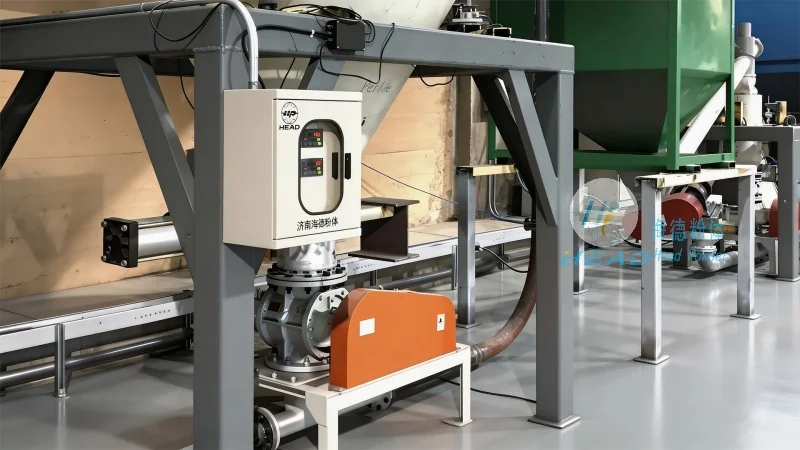
When deploying a pneumatic conveying system for PTA, several practical considerations can make the difference between smooth operation and frequent disruptions. First, the pipeline layout should minimize horizontal runs and vertical drops: a slope of 1–2% toward the receiving end helps product flow and reduces settling. Second, ensure that all bends have a minimum centerline radius of 8 pipe diameters for dilute phase and 10 for dense phase—tighter bends accelerate wear and increase particle degradation. Third, install sufficient purge points at dead ends and at the feeder to clear residual material during shutdowns, as PTA left to absorb moisture can harden and cause persistent blockages. Common pitfalls include underestimating the impact of ambient humidity—a plant in humid coastal regions may experience three times more clogging incidents than a dry inland facility. Another mistake is oversizing the blower or compressor: while higher capacity offers flexibility, it also raises energy costs and can push velocities into the erosive range. Headpowder recommends conducting pilot tests with the actual PTA grade to be used, as different suppliers’ products may exhibit variations in particle size distribution and flowability. In one project for a PTA terminal in the Netherlands, pilot testing revealed that the standard rotary valve design caused excessive shearing of the powder, leading to the selection of a low-shear venturi feeder instead. Finally, always include a metal detector or magnet after the feeder to catch tramp metal that might damage downstream equipment—a lesson learned after a $50,000 compressor repair in a Brazilian plant due to a stray bolt entering the system.
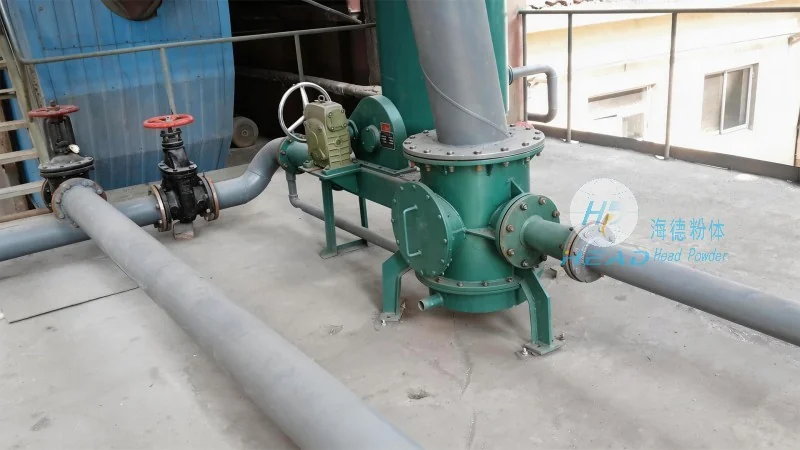
As the chemical industry moves toward Industry 4.0, pneumatic conveying systems for PTA are being integrated with smart sensors and predictive analytics. Advanced condition monitoring using acoustic emission or electrostatic charge sensors can detect changes in flow regime or early signs of pipeline wear, enabling predictive maintenance scheduling. In 2025, a European consortium demonstrated a system that uses machine learning algorithms to adjust conveying parameters in real time based on humidity and temperature data, reducing product degradation by 22% during monsoon seasons. Another emerging trend is the use of modular skid-mounted conveying units, which reduce installation time by up to 60% compared to field-erected systems. Headpowder is currently developing a compact dense phase unit specifically for PTA that incorporates a heat exchanger to pre-dry the conveying gas, eliminating the need for a separate drying step. The global pneumatic conveying market for PTA is projected to grow at a CAGR of 5.8% from 2025 to 2030, driven by expanding polyester fiber and PET bottle production in Asia and Africa. Regulatory pressures around dust explosion safety are also pushing plants to adopt intrinsically safe pneumatic systems with fully grounded components and explosion-proof instrumentation. By staying ahead of these trends, processors can ensure their conveying infrastructure remains competitive, reliable, and compliant with evolving standards.
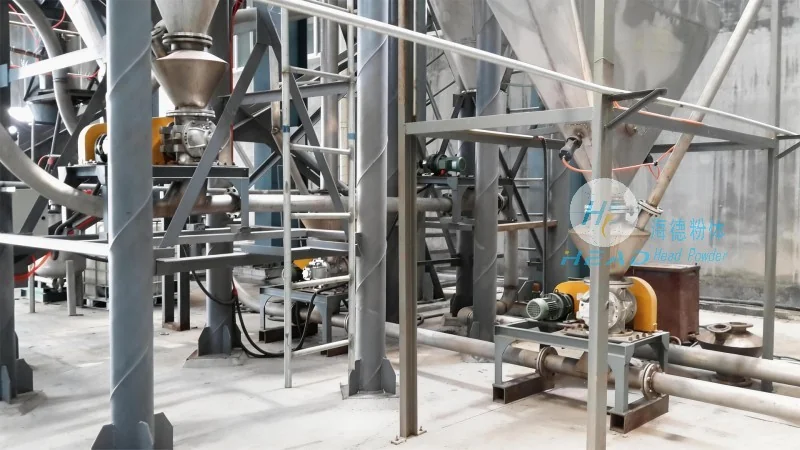
Selecting the appropriate pneumatic conveying method for PTA is a decision that carries long-term implications for product quality, operational efficiency, and safety. Both dilute phase and dense phase systems have proven track records, but the choice must be informed by site-specific variables such as distance, throughput, environmental conditions, and budget constraints. Dilute phase offers lower upfront costs and greater flexibility, making it suitable for shorter distances or applications where moderate particle degradation is acceptable. Dense phase, while more capital-intensive, delivers superior product integrity, lower energy consumption, and reduced wear, positioning it as the future-proof choice for high-value PTA transfers. Regardless of the method, attention to component quality, proper humidity control, and thoughtful pipeline design are non-negotiable. Headpowder brings over two decades of experience in designing and commissioning pneumatic conveying systems for the chemical powder industry, with particular expertise in handling cohesive and abrasive materials like PTA. Our engineering team can perform computational fluid dynamics (CFD) simulations to optimize system parameters before a single pipe is installed, saving clients both time and money. By investing in a well-engineered pneumatic conveying solution, PTA producers can not only enhance daily operations but also contribute to a more sustainable manufacturing footprint. For detailed consultation on system sizing, component selection, or retrofit evaluations, please contact our technical support team. (咨询热线:156-6277-7102)

 Shandong headpowder Engineering Co., Ltd.
 156-6277-7102(Manager Zhang)
  0531-83386006
  Jinan City, Shandong Province, China
服务热线
微信咨询
回到顶部