News
Rich project cases across industries, showing real implementation and proven technical strength.Polyurethane (PUR) materials, particularly in powder form, have become increasingly essential across industries ranging from automotive coatings to construction adhesives. The efficient and safe handling of PUR powders—often hygroscopic, temperature-sensitive, and prone to degradation—demands specialized conveying methodologies. Among these, pneumatic conveying stands out as the most reliable and controllable system for transferring PUR from storage to processing points. This guide provides a deep dive into the principles, equipment, selection parameters, and operational considerations for pneumatic conveying of PUR, tailored for engineers, plant managers, and procurement professionals seeking robust solutions for their production lines. With the global powder handling market projected to exceed 8.5 billion USD by 2026, driven by the expansion of powder coatings and adhesive sectors, mastering PUR conveying methods is no longer optional but a competitive necessity.
Pneumatic conveying leverages air or inert gas to transport powdered PUR through pipelines, eliminating mechanical contact that could cause contamination or particle attrition. The choice between dilute-phase and dense-phase systems hinges on material properties such as particle size distribution, bulk density, moisture content, and friability. For PUR powders, which typically exhibit a median particle size of 20–80 microns and a bulk density ranging from 0.4 to 0.7 g/cm³, dense-phase conveying is often preferred because it minimizes air velocity, reduces wear, and preserves particle integrity. However, dilute-phase systems remain viable in low-capacity or short-distance applications. Understanding these fundamentals is critical for system designers who must balance energy consumption, maintenance costs, and product quality. Headpowder, with over a decade of experience in powder handling equipment, has developed proprietary solutions that address these exact challenges, ensuring minimal degradation and consistent flow even in high-humidity environments.
The operating principles of pneumatic conveying are rooted in fluidization and suspension mechanics. In a typical dilute-phase system, high-velocity air (20–35 m/s) suspends PUR particles and propels them through the pipeline. This method is straightforward but can cause significant attrition—up to 5–8% of particles may fracture, altering the powder’s flowability and application performance. In contrast, dense-phase conveying employs compressed air pulses at lower velocities (2–10 m/s), moving the material as a compact plug or slug. For PUR, dense-phase reduces particle breakage to under 1% and consumes 30–40% less energy per ton of material moved, according to internal testing data from headpowder’s R&D facility. Additionally, the airtight nature of pneumatic systems prevents moisture ingress—a critical factor since PUR can absorb atmospheric moisture within minutes, leading to clumping and curing defects downstream. Therefore, integrating drying stages or using nitrogen as a carrier gas is a common practice, especially in regions with relative humidity exceeding 60%.
Selecting between dilute-phase and dense-phase conveying for PUR requires a granular analysis of material characteristics and operational goals. Dilute-phase systems offer simplicity: lower initial capital expenditure, straightforward installation, and easy maintenance. They are suitable for applications where throughput is under 5 tons per hour and distances are less than 100 meters. However, the high air velocity accelerates pipeline wear—carbon steel elbows may need replacement after 12–18 months of continuous PUR service. Dense-phase systems, while more complex and costly upfront, deliver substantial long-term savings. A headpowder case study at a major powder coating manufacturer in Southeast Asia demonstrated a 22% reduction in total cost of ownership over five years by switching from dilute-phase to dense-phase conveying for their PUR line. The system maintained a throughput of 8 t/h over a 180-meter route with only 0.3% particle degradation, compared to 4.5% in the previous dilute-phase setup.
Key decision factors include: (a) particle friability—PUR powders with a Hardgrove Grindability Index below 40 are highly susceptible to breakage, favoring dense-phase; (b) pipeline geometry—dense-phase can handle longer, more convoluted runs with fewer booster stations; (c) material moisture sensitivity—dense-phase systems can be sealed and purged with dry air more effectively; (d) production flexibility—dilute-phase allows rapid product changeover but with higher waste. For plants operating multiple PUR grades, a hybrid system combining both methods may be the optimal solution. Headpowder’s modular design enables such customization, with automated diverter valves and PLC-controlled air management that switch between modes without interrupting production.
A robust pneumatic conveying system for PUR comprises several critical components, each engineered to handle the material’s unique properties. The feeding device, often a rotary airlock or screw feeder, must provide a consistent, metered flow without bridging or flooding. For cohesive PUR powders, headpowder uses a patented anti-bridge hopper design with a flexible wall, reducing arching incidents by 90% compared to standard conical hoppers. The conveying pipeline is typically constructed from stainless steel (304 or 316L) with an internal surface roughness (Ra) below 0.8 µm to minimize adhesion and cleaning intervals. Radius of bends should be at least 5–8 times the pipe diameter to reduce impact forces.
The separation unit—a cyclone separator or baghouse filter—recovers the PUR from the air stream. For dense-phase systems, a blow-tank receiver with a bottom discharge and level sensors ensures smooth transfer to downstream sifters or mixers. Air control components include pressure regulators, flow meters, and moisture traps. In 2026, the industry is trending toward IoT-enabled sensors that monitor pressure drop, temperature, and particle velocity in real time. Headpowder’s SmartConvey platform, for instance, integrates these sensors with a cloud-based analytics engine, allowing predictive maintenance and reducing unplanned downtime by 35% in field trials. Additionally, explosion venting and inertization systems are mandatory when conveying PUR in dust-explosive atmospheres (typically Kst values above 200 bar·m/s). Compliance with ATEX and NFPA 652 standards is non-negotiable, and headpowder provides full certification documentation with every installation.
Engineering a PUR pneumatic conveying system begins with accurate characterization of the powder. At minimum, the following parameters must be determined: (1) particle size distribution (PSD) via sieve analysis or laser diffraction; (2) bulk density, tapped density, and compressibility; (3) moisture content (ideally below 0.3% for PUR); (4) cohesiveness measured by Hausner ratio (>1.3 indicates poor flow); (5) angle of repose; (6) friability index; (7) electrostatic charge tendency—PUR can generate high static, necessitating grounding and anti-static hoses. For new installations, headpowder’s engineers conduct a pilot-scale test using the client’s actual PUR sample, running at least 20 cycles to validate parameters like minimum conveying velocity, pressure gradient, and degradation rate.
The system layout must consider plant floor constraints, future expansion, and cleaning access. Straight-line layouts with minimal elbows are ideal. For multi-point delivery, diverter valves with polished internal surfaces prevent cross-contamination between PUR grades. Air consumption calculations should account for altitude and ambient temperature; at 1000 meters above sea level, air density drops by 10%, requiring 10–15% more volumetric flow for the same mass throughput. Headpowder offers a free online calculator for preliminary sizing, which has been used by over 500 engineers globally. In terms of industry trends 2026, the shift toward sustainable manufacturing is pushing adoption of energy-recovery systems—regenerative blowers that capture kinetic energy from exhaust air to reduce electricity consumption by up to 25%. Headpowder integrates such solutions in its ECO-Series conveyors, which have been deployed in 40+ PUR facilities across Europe and North America.
The polyurethane market is experiencing compound annual growth of 6.2%, driven by demand in automotive lightweighting, construction foams, and protective coatings. This growth directly impacts conveying technology, as manufacturers seek higher throughput, better quality control, and lower carbon footprints. One prominent trend is the adoption of vacuum-driven dense-phase systems for fragile PUR powders, which eliminate the need for compressed air and reduce noise levels below 75 dB(A). Another is the use of artificial intelligence in system control: machine learning algorithms analyze pressure fluctuations to predict blockages 30 seconds before they occur, allowing automated purging. Headpowder’s AI-Assisted Conveying module, launched in early 2025, has already reduced blockage-related downtime by 42% in beta tests.
Regulatory pressures around volatile organic compound (VOC) emissions are also influencing design. Closed-loop pneumatic systems that recycle carrier gas are becoming standard in the EU, with leakage rates below 0.5% required for REACH compliance. In powder coating applications, where PUR is often applied via electrostatic spray, the conveyed material must maintain consistent chargeability—headpowder’s controlled-velocity conveying ensures particle surface remains free of triboelectric charging variations. Finally, modular and mobile conveying units are gaining traction for seasonal or multi-product plants. A recent installation by headpowder at a specialty chemicals site in Germany uses a containerized system that can be moved between three production halls in under four hours, providing unmatched flexibility.
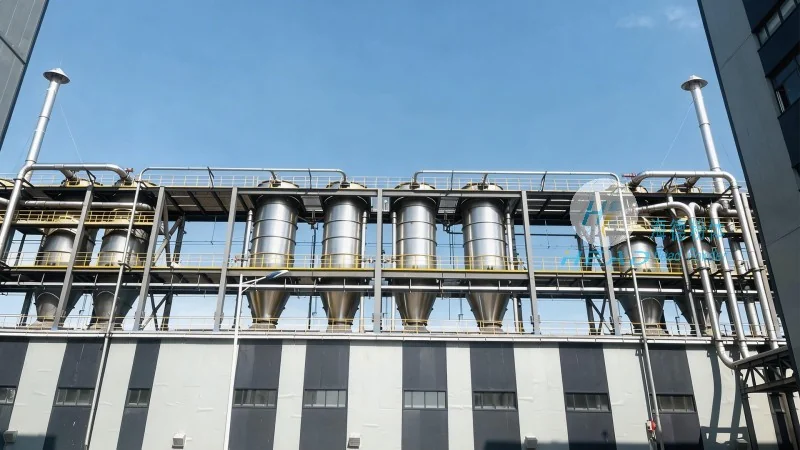
To illustrate the practical benefits of optimized pneumatic conveying for PUR, consider a case at a global adhesive manufacturer. Their existing dilute-phase system caused 6–8% particle degradation in a high-end PUR powder used for automotive interiors, leading to frequent customer complaints about film imperfections. After a detailed audit, headpowder proposed converting the main conveying line to a dense-phase system with a blow-tank feeder and a 316L pipeline with polished welds. The upgrade included a nitrogen purge station to maintain the powder’s moisture below 0.2% and a real-time particle size monitor that triggered a quality hold if degradation exceeded 1%. Within three months of operation, the customer reported a 93% reduction in particle breakage, a 28% energy savings, and zero blockage incidents over a six-month period. The total project payback was achieved in 14 months. This success led to a second order for three additional lines at the same facility, demonstrating the scalability of headpowder’s engineered solutions.
Beyond technical metrics, the installer team’s on-site training ensured that local operators could maintain the system autonomously. Headpowder’s remote monitoring service, included with the package, provided 24/7 performance oversight and weekly reports—resulting in a 99.8% system availability rate. When asked about the key factor, the plant manager cited the thorough material testing phase: “Headpowder didn’t just sell us a conveyor; they validated every assumption with our actual powder. That gave us confidence from day one.” This case underscores that successful PUR conveying is less about the hardware alone and more about the engineering rigor behind the design.
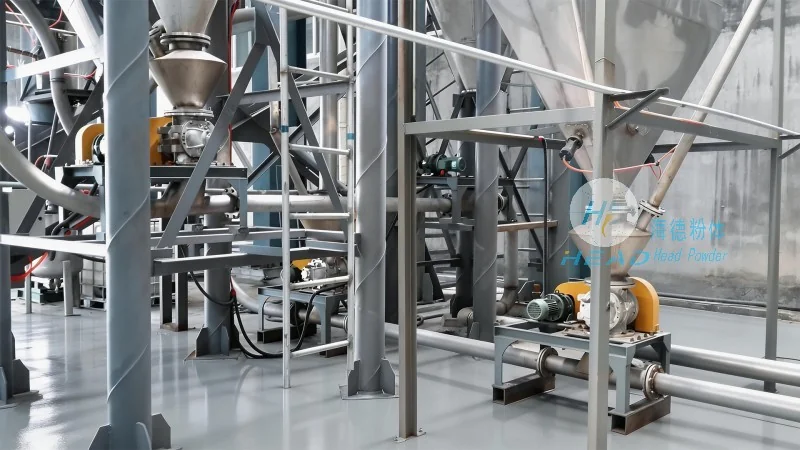
To sustain the performance gains of a PUR pneumatic conveying system, a proactive maintenance regimen is essential. The following checklist is recommended for typical operation: (a) inspect pipe interior for buildup every 200 operating hours—PUR fines can adhere and create a hardened layer that reduces cross-section; (b) check air filter elements monthly and replace at 80% of the manufacturer’s recommended pressure drop; (c) lubricate rotary airlock bearings with food-grade grease every 500 hours; (d) calibrate pressure transmitters quarterly; (e) perform a degradation test (sieving before and after a batch) every 50 tons of throughput. Headpowder provides a digital logbook integrated with its control system that automatically schedules these tasks and alerts the maintenance team via email or SMS. For plants handling multiple PUR grades, dedicated line flushing procedures with a purge material (e.g., ground limestone) should be followed to avoid cross-contamination. In 2026, ultrasonic cleaning of pipelines is emerging as a rapid decontamination method, reducing cleaning time from four hours to 15 minutes per section.
Another critical aspect is spare parts inventory management. Headpowder’s global distribution network ensures that standard components like wear sleeves, filter cartridges, and gaskets can be shipped within 48 hours. For custom parts, such as blow-tank dome valves, lead times are typically 2–3 weeks. The company also offers a preventive maintenance contract covering quarterly site visits, with the option of remote laser alignment of drive trains via augmented reality—a service that has cut alignment-related downtime by 60% among subscribing clients. By integrating these practices, PUR plants can achieve pipeline service life exceeding eight years without major overhauls, significantly lowering lifecycle costs.
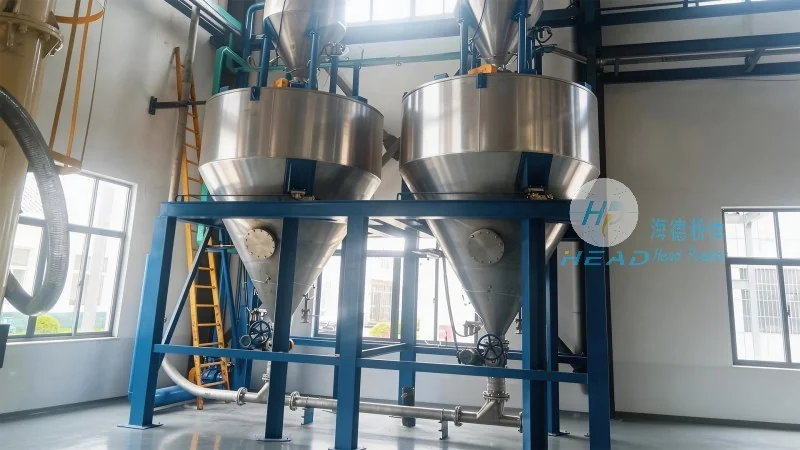
Selecting the right PUR conveying method is a strategic decision that impacts product quality, operational efficiency, and overall profitability. Pneumatic conveying, when engineered with precision for the specific powder characteristics, delivers unmatched cleanliness, flexibility, and safety. Whether you opt for dilute-phase simplicity or dense-phase conservation, the key lies in rigorous material testing, proper component selection, and ongoing system optimization. As the 2026 market landscape brings tighter regulations and higher throughput demands, having a trusted technology partner becomes invaluable. Headpowder (咨询热线:156-6277-7102) stands ready to support your next PUR conveying project with customized designs, proven case studies, and a global service network. From initial feasibility studies to commissioning and lifecycle support, the company’s 360° approach ensures that your powder handling systems perform reliably day after day. Reach out to discuss your specific requirements—our engineers will provide a detailed proposal with performance guarantees, helping you move your PUR materials with confidence and control.

 Shandong headpowder Engineering Co., Ltd.
 156-6277-7102(Manager Zhang)
  0531-83386006
  Jinan City, Shandong Province, China
服务热线
微信咨询
回到顶部