News
Rich project cases across industries, showing real implementation and proven technical strength.When handling hygroscopic, abrasive, and chemically reactive bulk solids like sodium nitrate, the choice of conveying technology directly impacts operational safety, product quality, and total cost of ownership. Sodium nitrate, widely used in fertilizers, glass manufacturing, pyrotechnics, and food preservation, presents unique challenges: it absorbs moisture rapidly, can form hard agglomerates, and under certain conditions may pose explosion risks. Traditional mechanical conveyors struggle with maintenance costs and material degradation. Pneumatic conveying has emerged as the preferred solution for sodium nitrate transfer, particularly in industries requiring enclosed, dust-free, and automated handling. This guide provides a deep technical overview of pneumatic conveying systems specifically tailored for sodium nitrate, covering fundamental principles, system architecture, material behavior, design parameters, and operational best practices. Whether your application involves railcar unloading, batch feeding to reactors, or long-distance transfer to storage silos, understanding these aspects will help you achieve reliable, safe, and efficient conveying. Headpowder brings over a decade of field experience in designing and optimizing pneumatic systems for challenging powders and granular materials, including sodium nitrate, ensuring that every installation meets rigorous performance and safety standards. (咨询热线:156-6277-7102)
Sodium nitrate (NaNO₃) is a white crystalline solid with a melting point of about 308 °C. Its bulk density typically ranges from 1.2 to 1.5 g/cm³, with particle sizes varying from fine powders (<100 μm) to granular crystals up to several millimeters. The material is moderately hygroscopic: at relative humidity above 60%, it begins to absorb atmospheric moisture, leading to caking and flowability issues. Additionally, sodium nitrate is a strong oxidizer, meaning it can support combustion and may accelerate fires if exposed to organic contaminants or high temperatures. These properties demand careful consideration in pneumatic system design. For instance, the conveying air must be dry (dew point below -40 °C) to prevent moisture pickup. The system velocity must be high enough to keep the material suspended but not so high that it causes excessive particle attrition or pipe erosion. Moreover, electrostatic charge generation during conveying must be managed through proper grounding and conductive components. Ignoring these factors can result in blockages, product degradation, or even safety incidents. Headpowder engineers conduct thorough material characterization before any system design, including particle size distribution, moisture absorption isotherms, and flow function testing, to ensure the pneumatic solution aligns with the actual behavior of your sodium nitrate batch.
Pneumatic conveying uses a gas stream—typically air or an inert gas like nitrogen—to transport bulk solids through a pipeline. Two primary modes exist: dilute phase (high velocity, low pressure) and dense phase (low velocity, high pressure). For sodium nitrate, dilute phase conveying is most common due to its simplicity and ability to handle varying particle sizes. In dilute phase, the material is suspended in the air stream at velocities between 18 and 30 m/s. However, because sodium nitrate is abrasive, the pipe wall material and bends require special attention—hardened steel or ceramic-lined elbows significantly reduce wear. Dense phase conveying, where the material moves as a moving bed or fluidized plug at lower velocities (2–8 m/s), offers lower attrition and less pipe wear, but requires higher air pressure and more precise control. It is suitable for larger granular sodium nitrate where fragile crystals must be preserved. The choice between dilute and dense phase depends on factors such as conveying distance, desired capacity, particle friability, and plant layout. Headpowder provides both technologies, often recommending dense phase for long-distance transport of premium-grade sodium nitrate used in specialty glass or food applications to maintain crystal integrity.
A complete pneumatic conveying system for sodium nitrate comprises several critical subsystems: the material intake (feeding device), the pipeline network, the air mover (blower or compressor), the separation equipment (cyclone, bag filter, or cartridge collector), and the control system with interlocks for safety. The feeding device must accurately meter the material into the air stream without bridging or flooding. Rotary airlocks are standard, but for sticky or caked sodium nitrate, a screw feeder with a vent can improve performance. Pipeline diameter is calculated based on the required capacity, conveying velocity, and pressure drop. As a rule of thumb, for sodium nitrate, the pipeline should maintain a minimum velocity of 18 m/s at the pickup point to prevent settling, gradually rising to 25–30 m/s at the end due to pressure decrease. The conveying air volume is typically 3–6 m³ per kg of material, but this varies with distance. Pressure drop calculations must account for straight pipe friction, bend losses, and elevation changes. Each 90° bend contributes an equivalent of 10–15 meters of straight pipe in pressure loss. Additionally, because sodium nitrate is an oxidizer, all electrical components must be explosion-proof to ATEX or NEC Class II standards, and the system should include pressure relief vents and automatic shutoff in case of temperature spikes. Headpowder designs each component with a safety margin, using computational fluid dynamics (CFD) to validate flow patterns and identify potential dead zones where material could accumulate.
Moisture is the number one enemy in sodium nitrate pneumatic conveying. Even trace humidity can cause the powder to stick to pipe walls, forming a layer that gradually thickens until flow stops. To mitigate this, the conveying air must be dried using desiccant dryers with dew point monitoring. Additionally, the entire system should be purged with dry air after each conveying cycle to prevent overnight moisture absorption. If caking occurs downstream, injecting a small amount of inert drying agent (such as colloidal silica) or using vibration on hopper walls can help. Another common issue is blockages at bends, especially where the material impacts the wall. Long-radius bends (R/D > 10) or blind tees reduce wear and prevent buildup. For severe cases, Headpowder installs replaceable wear-back ceramic tiles at high-impact zones. Regular inspection intervals (every 200–500 operating hours) are recommended, with visual checks of bends and airlock blades. In one case, a client processing sodium nitrate for industrial glass experienced weekly blockages until Headpowder redesigned the bend geometry and added an air dryer, reducing downtime by 80%.
Given that sodium nitrate is an oxidizer, pneumatic conveying systems must comply with strict safety codes. The conveying gas should be non-flammable and free of organic vapors. In some applications, nitrogen is used as the conveying medium, eliminating the risk of oxygen-supported combustion. The system must be equipped with spark detection and suppression, explosion venting, and isolation valves. Pipe runs should avoid enclosed spaces where fines could accumulate. All dust collection filters must be in explosion-proof enclosures. Headpowder conducts a full Hazard and Operability (HAZOP) analysis for every sodium nitrate project, ensuring that the system design meets local regulations such as NFPA 69, NFPA 68, and ATEX 2014/34/EU. For example, in a recent installation at a South American fertilizer plant, the entire conveying line was built from 316L stainless steel to resist corrosion from any nitrate residues, and each motor was equipped with thermal overload protection. These measures not only ensure operator safety but also protect the investment in the conveying infrastructure.
The air mover is the heart of any pneumatic conveying system. For sodium nitrate, positive displacement blowers (Roots-type) are the most common choice for dilute phase, delivering constant volume flow against variable back pressure. For dense phase systems, screw compressors or oil-free piston compressors are used to generate the higher pressures (up to 6 bar gauge). The filtration system must capture fine sodium nitrate particles efficiently to meet emission standards (typically <10 mg/m³). High-efficiency cartridge filters with pulse-jet cleaning are preferred because they maintain low pressure drop even with sticky powders. Headpowder offers customized filter media with oleophobic and hydrophobic coatings to prevent moisture-induced clogging. In one application where the sodium nitrate contained trace organic binders, a sacrificial pre-coat layer was added to the filter to extend the cartridge life by 300%.
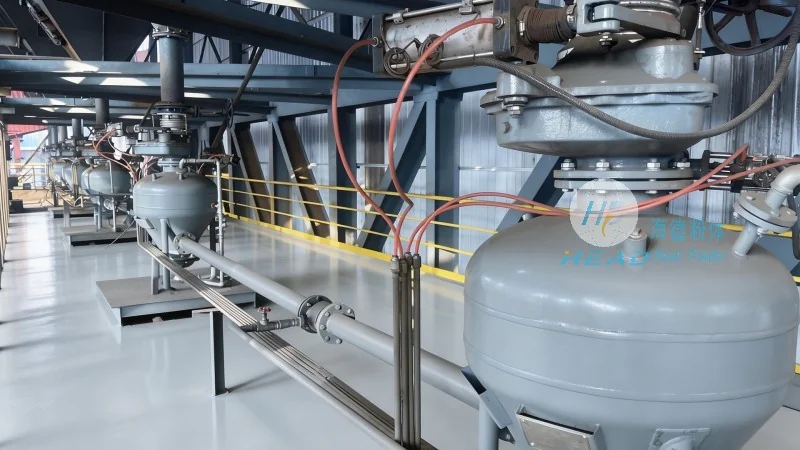
The global sodium nitrate market is projected to grow at a compound annual growth rate (CAGR) of 3.8% through 2026, driven by demand from the glass and solar salt industries. As production scales up, pneumatic conveying systems are increasingly favored for their flexibility and low labor cost. However, tighter environmental regulations are pushing manufacturers toward closed-loop systems with zero emission. By 2026, more plants will adopt digital twin technology to monitor conveying parameters in real time, predicting wear and blockages before they occur. Headpowder already integrates IIoT sensors in its systems, providing clients with dashboards that show air velocity, pressure drop, material flow rate, and filter condition. This data enables predictive maintenance, reducing unplanned downtime by over 30%. Furthermore, the trend toward modular, skid-mounted systems allows faster installation and easier relocation. For sodium nitrate handling, modular systems also simplify cleaning and changeover between different grades of material. Headpowder has delivered over 200 modular pneumatic systems worldwide, with typical payback periods of less than 18 months due to reduced maintenance and improved product quality.
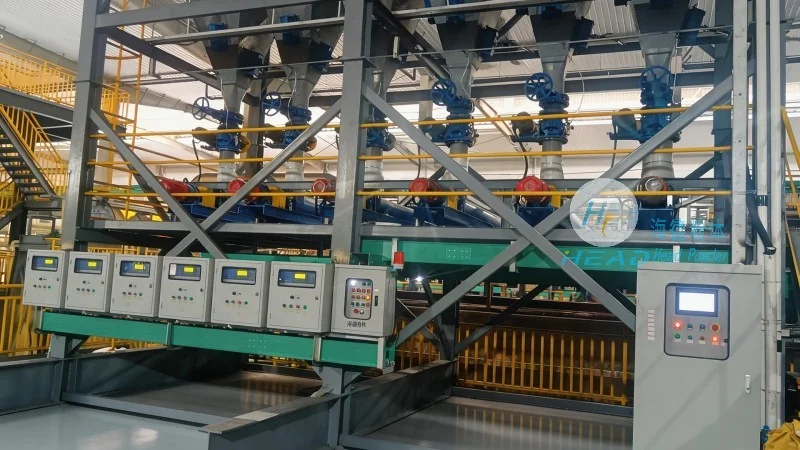
A leading manufacturer of optical glass required a pneumatic system to transfer high-purity sodium nitrate from storage silos to a batch mixing station. The existing mechanical conveyor caused excessive dust generation and crystal breakage, impacting the glass clarity. Headpowder proposed a dense phase conveying system operating at 3 bar with nitrogen as the carrier gas. The system included a specially designed venturi feeder to handle a wide particle size range (50–2000 μm) and a ceramic-lined pipeline to withstand abrasion. To address moisture sensitivity, the conveying air was dried to -50 °C dew point, and the entire system was insulated and heat-traced in humid climates. The result: product breakage reduced by 95%, dust emissions below detectable limits, and energy consumption 40% lower than the previous mechanical system. The plant reported a 9-month return on investment. This case exemplifies how tailoring the pneumatic solution to the specific material properties can transform operational performance.
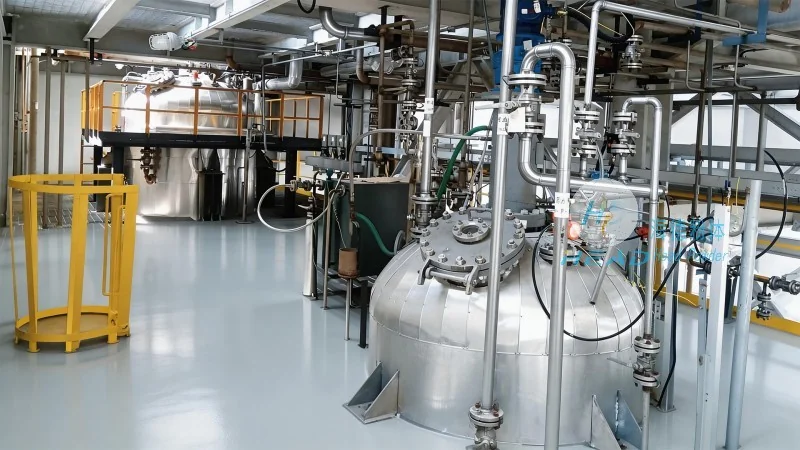
Effective pneumatic conveying of sodium nitrate requires more than off-the-shelf components; it demands a deep understanding of the material’s chemical and physical behavior, combined with robust engineering practices for safety and reliability. From selecting the correct conveying phase and pipe material to integrating moisture control and explosion protection, every decision influences the system’s long-term viability. As the industry moves toward higher automation and stricter environmental standards, adopting advanced monitoring and modular designs becomes a competitive advantage. Headpowder stands ready to support your project with decades of domain expertise, custom engineering, and proven field installations. Whether you are upgrading an existing line or building a greenfield plant, our team can conduct feasibility studies, provide detailed design, and oversee commissioning to ensure your sodium nitrate conveying system delivers consistent, efficient, and safe operation for years to come. (咨询热线:156-6277-7102)

 Shandong headpowder Engineering Co., Ltd.
 156-6277-7102(Manager Zhang)
  0531-83386006
  Jinan City, Shandong Province, China
服务热线
微信咨询
回到顶部