News
Rich project cases across industries, showing real implementation and proven technical strength.Lithium fluoride (LiF) is a critical inorganic compound widely used in the production of ceramics, glass, welding fluxes, and as a key additive in lithium-ion battery electrolytes. Its fine powder form, low bulk density, and hygroscopic nature present unique challenges for material handling. Pneumatic conveying systems have emerged as the preferred solution for transporting lithium fluoride in a safe, dust-free, and efficient manner. Unlike mechanical conveyors, pneumatic systems use gas flow to move particles through enclosed pipelines, eliminating contamination risks and reducing maintenance requirements. In this article, we examine the technical architecture of pneumatic conveying tailored for lithium fluoride, including system types, component selection, pressure drop calculations, and safety protocols. We also discuss how headpowder integrates proven engineering practices to deliver reliable, high-purity material handling solutions that meet the stringent demands of the chemical and battery industries.
As the global market for lithium-based compounds continues to expand — with forecasts indicating a compound annual growth rate of over 8% for lithium fluoride through 2026 — manufacturers face increasing pressure to optimize their production processes. Efficient conveying directly impacts throughput, product quality, and operational costs. A poorly designed system can lead to particle degradation, segregation, or moisture absorption, all of which compromise the final product. Therefore, selecting the right pneumatic configuration — whether dilute phase, dense phase, or vacuum-based — is essential. This article provides a comprehensive guide for engineers and plant managers seeking to implement or upgrade their lithium fluoride conveying infrastructure, with a focus on practical, data-driven decision-making.
Lithium fluoride exhibits several physical and chemical characteristics that must be accounted for in the pneumatic system design. First, its bulk density typically ranges from 0.6 to 1.2 g/cm³ depending on particle size distribution and compaction. This relatively low density means that conveying velocities must be carefully controlled to avoid both saltation and excessive energy consumption. Second, LiF is moderately abrasive — while not as aggressive as silica or alumina, the angular particles can cause wear in bends and elbows over extended operation. Third, its hygroscopic nature demands that the conveying gas be dry and that the system be sealed to prevent moisture pickup, which could lead to caking or altered flow properties. Fourth, particle size distribution often spans from a few microns to over 100 microns, requiring consideration of fines generation and potential dust explosion risks. According to industry safety standards (e.g., NFPA 654 and EN 1127-1), lithium fluoride dust may form explosive atmospheres under certain conditions, necessitating explosion venting, inert gas blanketing, or grounding provisions. Understanding these parameters enables the design of a pneumatic system that maintains product integrity while ensuring safe, continuous operation.
Three primary pneumatic conveying configurations are commonly deployed for lithium fluoride: dilute phase, dense phase, and vacuum conveying. Each has distinct advantages and limitations depending on the specific application requirements.
In dilute phase systems, the material is suspended in a high-velocity gas stream, typically 20–35 m/s. This method is suitable for short distances (< 100 m) and relatively free-flowing powders. For lithium fluoride, dilute phase can achieve high throughput rates (e.g., 5–15 tons per hour) with simple infrastructure. However, the higher velocity increases particle attrition and pipe erosion. Wear-resistant components, such as radiused bends with ceramic liners, are recommended to extend service life. headpowder frequently implements dilute phase systems for customers requiring moderate distances and where bulk density is consistent.
Dense phase conveying operates at lower gas velocities (typically 3–10 m/s) and higher solids-to-gas ratios. The material moves in plugs or slugs along the pipeline, minimizing particle damage and energy consumption. For lithium fluoride, dense phase is particularly attractive when conveying over long distances (up to 500 m) or when product purity is critical. The reduced velocity also lowers the risk of dust generation and explosion. However, dense phase systems require higher pressure (up to 6 bar) and more sophisticated control valves. headpowder has successfully deployed dense phase systems for lithium fluoride in battery-grade material plants, achieving less than 0.5% fines generation and maintaining consistent moisture levels below 100 ppm.
Vacuum (or negative pressure) conveying is ideal for unloading bulk bags, feeding mixers, or transferring material from multiple sources to a single destination. It inherently contains dust and is well-suited for hygienic applications. For lithium fluoride, vacuum systems are often used in upstream blending or dosing steps where low throughput (0.5–3 t/h) is adequate. The maximum conveying distance is typically limited to 50–80 m due to pressure drop constraints. headpowder offers modular vacuum conveying units with integrated filtration and automatic bag-dump stations to reduce operator exposure.
Reliable pneumatic conveying of lithium fluoride depends on proper selection of every component in the material flow path. Below are key elements and typical specifications:
When designing for lithium fluoride, headpowder also incorporates desiccant dryers and moisture analyzers to maintain gas dew point below -40°C, preventing hygroscopic reactions during conveying.
Accurate sizing is essential to avoid underperforming or oversized systems. The primary parameters include:
headpowder engineers use computational fluid dynamics (CFD) and proprietary software to model particle trajectories and optimize pipeline geometry. In a recent project for a lithium fluoride crystal production line, headpowder reduced conveying energy consumption by 18% compared to the client's previous system by adjusting pipe diameter from DN150 to DN125 and incorporating a booster valve at a critical elevation change.
Handling lithium fluoride requires adherence to several international standards. The material is classified as a health hazard (irritant, toxic if inhaled) and a potential dust explosion risk if finely divided. Key safety measures in pneumatic system design include:
Regular maintenance — including inspection of valve seals, pipeline thickness measurement, and filter bag replacement — is recommended every 6–12 months depending on duty cycle.
headpowder has delivered multiple lithium fluoride pneumatic conveying solutions across different scales. One notable project involved a customer producing high-purity LiF for electrolyte applications. The existing mechanical conveyor suffered from frequent bearing failures and cross-contamination. headpowder designed a dense phase system with a conveying distance of 180 meters, a capacity of 3.5 t/h, and a stainless steel pipeline with polished internal surfaces. The system achieved a particle degradation rate below 0.3% (by weight) and maintained product moisture below 80 ppm. After installation, the client reported a 35% reduction in maintenance costs and a 20% increase in throughput due to reduced downtime.
Another case involved a ceramic glaze manufacturer that needed to transfer lithium fluoride from bulk bags to a mixer. headpowder implemented a vacuum conveying system with an integrated bag-dump station, a 2 m³ surge hopper, and a loss-in-weight feeder for precise dosing. The system handled 1.2 t/h with an accuracy of ±0.5% setpoint. The client appreciated the sealed design, which eliminated dust in the workplace and reduced material waste by 15%.
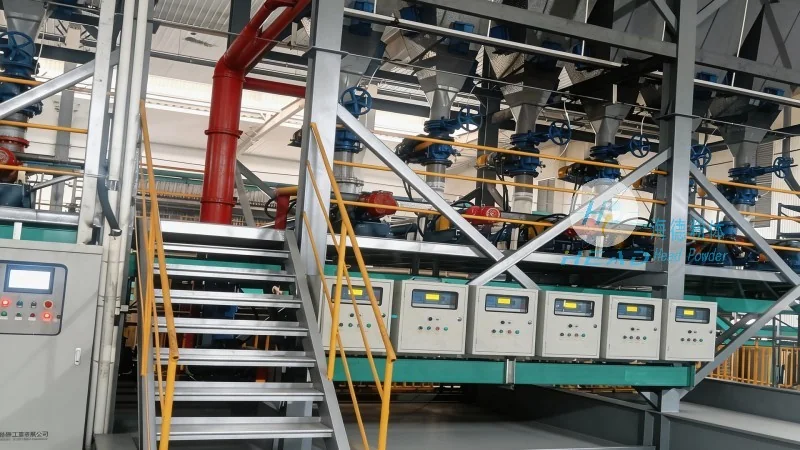
With over a decade of experience in powder handling, headpowder combines deep material science knowledge with proven engineering methodologies. Our team conducts on-site material testing in our laboratory (including shear cell tests, particle size analysis, and moisture sensitivity assessment) to validate design assumptions before fabrication. We offer turnkey solutions from conceptual design through commissioning, with a strong focus on automation and digital integration. For every lithium fluoride project, we provide detailed documentation including P&IDs, cause-and-effect matrices, and O&M manuals. (咨询热线:156-6277-7102) Whether you need a small-scale vacuum system or a high-capacity dense phase line, headpowder delivers systems that are safe, energy-efficient, and compliant with global standards.
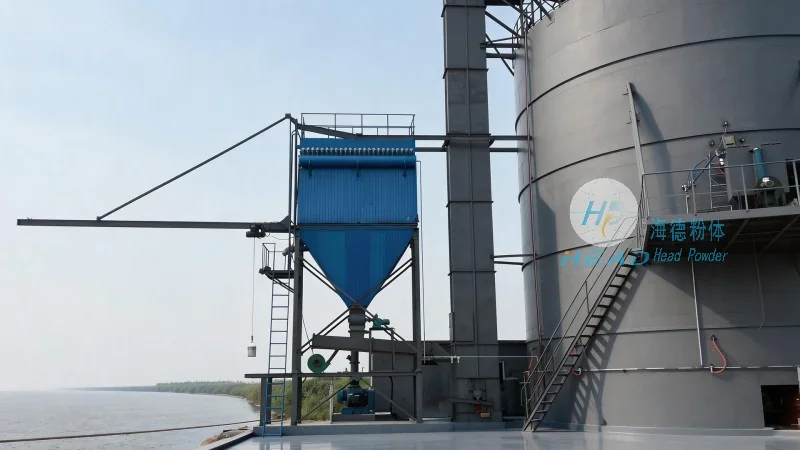
As lithium-ion battery production scales toward 3 TWh globally by 2030, demand for ultra-high-purity lithium fluoride is increasing. This drives the need for smarter conveying systems that can monitor product quality in real time. Emerging technologies include inline particle size analyzers, near-infrared moisture sensors, and AI-driven predictive maintenance algorithms that alert operators before wear occurs. headpowder is actively developing a digital twin platform that simulates the entire conveying process, allowing virtual commissioning and optimization without disrupting production. Additionally, sustainability considerations are pushing manufacturers toward energy-recovery systems that capture and reuse compressed air energy, reducing carbon footprint.
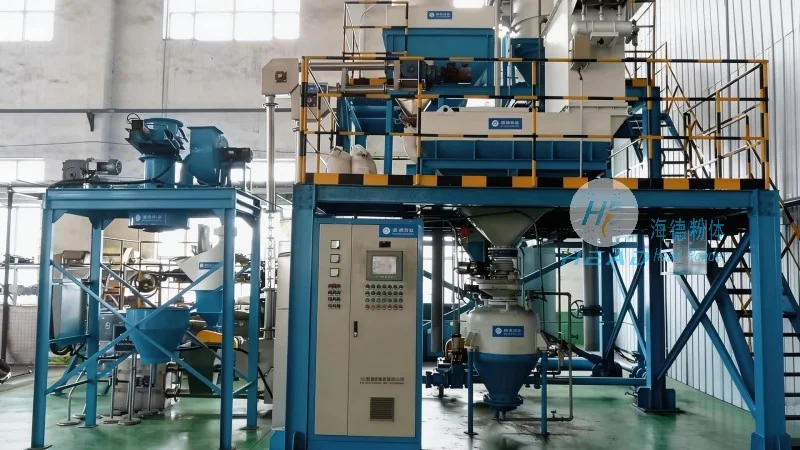
Pneumatic conveying remains the most versatile and clean method for transporting lithium fluoride in industrial environments. By carefully considering material properties, choosing between dilute and dense phase, selecting robust components, and integrating safety measures, engineers can achieve reliable, high-integrity material transfer. headpowder’s track record in delivering customized solutions — from concept to operation — demonstrates the value of deep expertise in this specialized field. As the industry evolves, investing in a well-engineered pneumatic system not only improves current production efficiency but also positions manufacturers to meet future quality and sustainability challenges.

 Shandong headpowder Engineering Co., Ltd.
 156-6277-7102(Manager Zhang)
  0531-83386006
  Jinan City, Shandong Province, China
服务热线
微信咨询
回到顶部