News
Rich project cases across industries, showing real implementation and proven technical strength.The global coffee industry has experienced exponential growth over the past decade, with the specialty coffee market alone projected to surpass USD 100 billion by 2026. As roasters and instant coffee manufacturers scale up production, the challenge of efficiently and safely conveying coffee powder—from green bean handling to ground coffee transfer—becomes increasingly critical. Coffee powder, whether fine espresso grind or coarse filter grind, presents unique handling difficulties: it is hygroscopic, prone to caking, can generate explosive dust, and its particle size distribution directly impacts final product quality. Pneumatic conveying systems have emerged as the preferred solution for moving coffee powder across processing stages due to their enclosed, sanitary, and flexible design. This guide provides an in-depth examination of pneumatic conveying principles, system configurations, material considerations, and selection criteria tailored specifically for coffee powder applications, drawing on industry best practices and the latest technological advancements. Whether you are designing a new roasting line or upgrading an existing facility, understanding the nuances of coffee powder conveying is essential to maintain product integrity, minimize waste, and achieve operational efficiency.
Coffee powder conveying is not a one-size-fits-all process. The physical properties of ground coffee—such as bulk density (typically 300–450 kg/m³ depending on grind size), angle of repose (around 35–45°), and moisture content (usually 2–5% after roasting)—strongly influence the choice of conveying method. Dilute phase pneumatic conveying, often used for long-distance transport at high velocities, can cause particle degradation and generate fines, while dense phase conveying operates at lower speeds and reduces attrition. Moreover, the explosion hazard of coffee dust (with a minimum ignition energy as low as 10 mJ) demands careful attention to system design, including grounding, explosion venting, and inerting options. This guide integrates these technical parameters with practical installation considerations, helping engineers and plant managers make informed decisions that balance throughput, product quality, safety, and total cost of ownership. By the end of this article, you will have a clear roadmap for implementing a robust pneumatic conveying system for coffee powder that aligns with current industry standards and future market trends.
Pneumatic conveying has become the dominant method for moving coffee powder in commercial and industrial settings, replacing traditional mechanical conveyors such as screw conveyors, bucket elevators, and belt conveyors. Several factors drive this preference, especially as the coffee industry embraces automation and higher hygiene standards.
According to a 2025 industry survey, over 70% of new coffee powder processing lines installed in North America and Europe now employ pneumatic conveying for at least one transfer stage. By 2026, the adoption rate is expected to exceed 85%, driven by regulatory pressure on dust control and the push for fully enclosed production. Headpowder, as a specialist in bulk material handling solutions, has supported numerous roasters in transitioning from manual or mechanical methods to automated pneumatic systems, achieving consistent throughput of 2–12 tons per hour with less than 0.5% product loss.
A well-designed pneumatic conveying system for coffee powder typically consists of several interconnected components, each playing a critical role in reliable operation. Understanding these parts helps in specifying a system that meets your throughput, distance, and product quality requirements.
At the entry point, coffee powder must be introduced into the conveying pipeline uniformly and without significant air leakage. Common feeders include rotary airlocks (valves), venturi eductors, and screw feeders. For coffee powder, the rotary airlock is the most widely used due to its ability to handle the fine, free-flowing nature of ground coffee while maintaining a pressure differential. The rotor pocket design should be smooth to prevent powder accumulation, and clearances must be tight (typically 0.1–0.3 mm) to minimize air bypass. Headpowder's rotary valves feature wear-resistant carbide tips and adjustable rotor speed, ensuring consistent metering for both dilute and dense phase applications.
The pipeline material and geometry directly affect product quality and system longevity. Stainless steel (304 or 316L) is standard for food-grade applications, with internal surface finish Ra ≤ 0.8 μm to reduce friction and prevent coffee oil buildup. The pipe diameter must be selected based on the desired conveying velocity and product loading ratio. For coffee powder, typical velocities range from 12–20 m/s in dilute phase and 3–8 m/s in dense phase. Long-radius bends (R/D ratio of at least 6) or sweep bends minimize particle impact and reduce the risk of blockages. In high-wear areas, such as bends immediately after the feeder, ceramic-lined elbows can extend service life by 5–10 times.
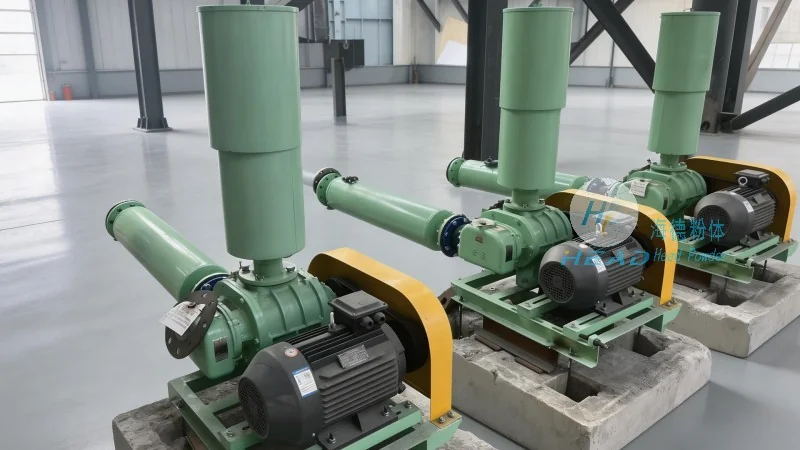
An efficient air mover (positive displacement blower, compressor, or vacuum pump) provides the motive force. For coffee powder, oil-free air is mandatory to avoid contamination. The system must include a primary filter (e.g., baghouse or cartridge filter) at the discharge end to separate product from air, and often a secondary filter for the conveying air return. Filter media should be anti-static and easy to clean, especially when handling fine coffee dust. Recent advancements in pulse-jet self-cleaning filter technology have reduced maintenance downtime by up to 40%.
Modern pneumatic conveying systems rely on PLC-based controls with HMI interfaces for monitoring pressure, air flow, product level, and motor status. Closed-loop pressure control allows automatic adjustment of conveying velocity to maintain optimal conditions, reducing energy consumption and product degradation. Integration with upstream roasters and grinders via Ethernet/IP or Profibus enables synchronized production. Headpowder's smart control platform provides real-time data analytics, predicting wear cycles and alerting operators to potential blockages before they occur.
The selection between dilute phase and dense phase pneumatic conveying is arguably the most critical decision in designing a coffee powder handling system. Each method has distinct characteristics that impact product quality, capital cost, energy consumption, and system complexity.
In dilute phase (also called suspension flow), coffee powder is suspended in a high-velocity air stream, typically at velocities above 15 m/s. The material-to-air ratio is low (commonly 1–5 kg of product per kg of air). This method is straightforward, requires less sophisticated feeders, and can handle long horizontal distances (up to 300 m) with multiple discharge points. However, the high velocity causes significant particle-to-wall and particle-to-particle collisions, leading to attrition and the generation of fine dust. For coffee powder, this can result in up to 2–3% loss of desirable particle size, affecting extraction consistency in espresso brewing. Dilute phase is best suited for applications where throughput is moderate (under 5 t/h), distances are long, and product quality degradation is acceptable—for example, conveying defective or low-grade coffee powder.
Dense phase conveying moves coffee powder in a non-suspension mode, where the material fills the pipe cross-section and moves as plugs or slugs at low velocity (3–8 m/s). The material-to-air ratio is high (typically 10–30 kg/kg), requiring compressed air instead of a blower. This method dramatically reduces particle attrition—studies show less than 0.3% size degradation for coffee powder over a 100 m distance, compared to 1.5% in dilute phase. Additionally, lower velocity minimizes dust generation and explosion risk. Dense phase systems are more capital-intensive (higher compressor cost, more robust piping) and require precise control of air injection to avoid plugging. They excel in applications where product integrity is paramount, such as conveying premium single-origin grounds directly to packaging.
For most coffee powder applications, a combination approach is often optimal: dense phase for critical transfer from grinder to packaging, and dilute phase for secondary transfers like silo filling or rejected product removal. Headpowder has implemented hybrid systems for major roasters in Europe and Asia, achieving an average of 98.5% product integrity retention while maintaining overall system cost within 15% of a pure dilute design.
Successful pneumatic conveying of coffee powder requires careful attention to three material-specific properties that can make or break system performance.
Ground coffee ranges from extremely fine (espresso grind: 100–300 microns) to coarse (French press: 700–1200 microns). The presence of a broad distribution means that fine particles tend to segregate and can fluidize differently than coarse ones. In dilute phase, fines can become airborne and cause backflow or filter blinding. In dense phase, coarser particles may form stable plugs while fines trickle through. To address this, designers often incorporate particle size analysis before system design. A 2026 trend is the use of in-line particle measurement sensors that adjust air velocity in real time to maintain uniform plug formation. Headpowder's test facility can simulate your specific coffee blend to determine optimal velocity and pressure parameters, ensuring scale-up accuracy.
Roasted coffee powder typically has a moisture content between 2% and 5% by weight, depending on roast level and storage conditions. At higher humidity environments (above 60% RH), coffee particles can absorb moisture, becoming sticky and prone to bridging in hoppers and conveying lines. This is particularly problematic in dense phase conveying, where moisture-induced cohesion can cause plugging. Solutions include pre-conditioning the coffee with dehumidified conveying air (dew point < –20°C) or adding trace amounts of flow aids (e.g., silicon dioxide, up to 0.5% allowed for organic certifications). Additionally, pipe insulation and trace heating prevent condensation inside the line when conveying in cold climates.
Coffee dust has a minimum explosive concentration (MEC) of approximately 50 g/m³ and a KSt value of 80–120 bar·m/s, classifying it as St1 (weak to moderate explosivity). However, the wide particle size distribution and presence of oil on particle surfaces can increase reactivity. Key safety measures include:
The NFPA 69 standard (2024 edition) introduced new requirements for deflagration isolation on pneumatic conveying lines longer than 30 m. All Headpowder systems are designed to meet NFPA 68, 69, and ATEX 2014/34/EU directives, with documentation packages that simplify local authority approvals.
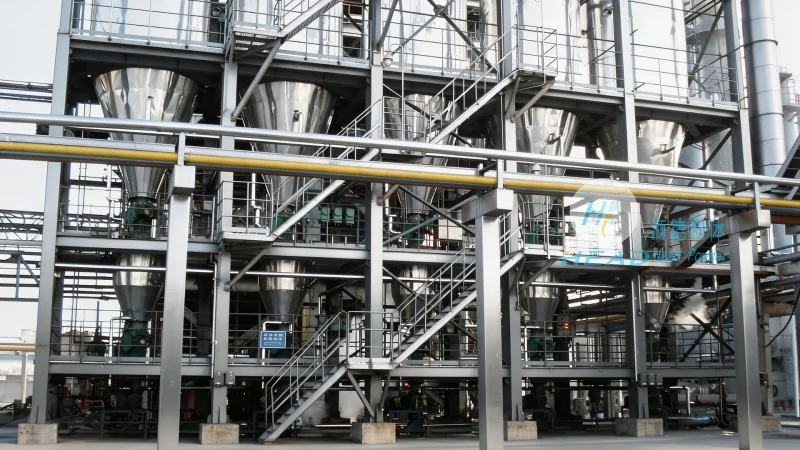
As the coffee industry moves toward sustainability and digitalization, several emerging trends are reshaping how coffee powder is conveyed and handled.
Energy-optimized systems: Rising electricity costs and carbon reduction targets are driving demand for variable-speed drives and intelligent air control. By 2026, over 50% of new pneumatic installations are expected to incorporate predictive algorithms that adjust blower speed based on real-time product flow, cutting energy consumption by 20–35%. Headpowder's Eco-Flow module, for instance, uses machine learning to learn the coffee powder's flow characteristics over the first 50 hours of operation and then self-optimizes.
Modular and skid-mounted designs: Coffee producers increasingly prefer pre-engineered, modular systems that can be installed quickly and expanded later. Skid-mounted conveying stations with integrated feeder, filter, and controls reduce field installation by up to 60%. This approach also simplifies maintenance by allowing quick swap of modules.
Digital twin and remote monitoring: Leading manufacturers now offer digital twin simulators that model the entire conveying process, from feeding to discharge. Operators can simulate different coffee types, grind settings, and ambient conditions to optimize performance without risking production. Remote monitoring platforms aggregate data from multiple sites, enabling predictive maintenance and performance benchmarking. Headpowder's IoT-enabled system transmits pressure, temperature, and vibration data to a cloud dashboard, reducing unplanned downtime by an average of 45% for early adopters.
Food-grade cleanliness and CIP capability: The trend toward clean-label and organic products demands hygienic conveying systems that can be cleaned without disassembly. New designs feature smooth welds, sloped bottom pipes, and integrated clean-in-place (CIP) ports that allow flushing with hot water or food-safe solvents. These systems are especially popular for handling decaffeinated or flavored coffee powders, where cross-contamination must be avoided.
Selecting a pneumatic conveying system for coffee powder involves a systematic evaluation of your specific operational parameters. Follow these steps to narrow down the options:
Headpowder offers a no-cost feasibility study for coffee powder applications, where our engineers visit your facility, sample your coffee, and run computational fluid dynamics (CFD) simulations to recommend the optimal system configuration. With over 200 coffee industry installations worldwide, we have encountered every common challenge—from sticky decaf powder to ultra-fine Turkish grind—and developed proven solutions.
The coffee powder conveying landscape is evolving rapidly, driven by consumer demand for consistent quality, stricter safety regulations, and the imperative to reduce operational costs. Choosing the right pneumatic conveying system is not merely a technical decision—it directly impacts your brand reputation, production efficiency, and bottom line. A well-designed system ensures that your carefully roasted and ground coffee arrives at the packaging stage with its particle integrity intact, free from contamination, and with minimal energy consumption. As the industry moves toward smart factories and sustainable practices, investing in a flexible, data-enabled conveying solution today will pay dividends for years to come. Whether you are processing 500 kg per day or 20 tons per hour, the principles outlined in this guide provide a solid framework for evaluation. For a detailed discussion tailored to your specific coffee powder handling needs, our technical team at Headpowder is ready to support you with test results, system drawings, and payback analysis. Contact us to begin the journey toward a more efficient and reliable coffee powder conveying process. (咨询热线:156-6277-7102)

 Shandong headpowder Engineering Co., Ltd.
 156-6277-7102(Manager Zhang)
  0531-83386006
  Jinan City, Shandong Province, China
服务热线
微信咨询
回到顶部