News
Rich project cases across industries, showing real implementation and proven technical strength.In the ever-evolving landscape of industrial material handling, the efficient transport of bulk solids remains a critical challenge, particularly for light, fibrous, and abrasive materials like sawdust. Sawdust, a byproduct of woodworking, furniture manufacturing, and lumber mills, presents unique handling difficulties: it is often dusty, prone to bridging, can have variable moisture content, and may be highly combustible under certain conditions. Pneumatic conveying has emerged as the preferred solution for these challenges, offering a closed, flexible, and automated system that moves sawdust from collection points to storage, processing, or disposal areas with minimal material degradation and reduced labor costs. This comprehensive guide explores the principles, system components, design considerations, and best practices for implementing a reliable pneumatic conveying system tailored to sawdust. Whether you are evaluating a new installation or optimizing an existing line, understanding the nuances of air velocity, pressure drop, material-to-air ratio, and particle characteristics is essential to achieving consistent throughput and long-term operational efficiency.
The global bulk material handling market is projected to exceed USD 35 billion by 2026, with pneumatic conveying systems claiming a significant share driven by the growth of the wood products industry and stricter environmental regulations around dust emissions. Sawdust, with its bulk density typically ranging from 100 to 200 kg/m³ and a mean particle size between 0.1 and 5 mm, requires careful engineering to avoid plugging, erosion, or explosion hazards. Modern systems leverage advanced sensor technology and variable speed drives to adapt to fluctuating feed rates, ensuring stable conveying. For companies like headpowder, a seasoned provider of pneumatic conveying solutions, the focus is on delivering systems that balance capital cost with energy efficiency while meeting safety standards such as ATEX or NFPA guidelines for combustible dust. This guide will walk you through the key decisions—dilute phase versus dense phase, positive pressure versus vacuum, rotary valve versus venturi pick-up—so you can select the approach that best matches your facility’s layout and production goals.
Before specifying a pneumatic system, it is essential to characterize the sawdust in your specific operation. The physical properties of sawdust vary significantly based on the source wood species (softwood versus hardwood), the cutting process (band saw, planer, sander), and the moisture content. Dry sawdust from kiln-dried lumber may have a moisture content as low as 6–10%, while green sawdust from wet milling can exceed 50% moisture. Higher moisture increases the bulk density and makes the material stickier, raising the risk of adhesion inside pipes and at bends. Particle shape is another factor—sawdust from sanding operations tends to be finer and more spherical, while planer shavings are long and stringy, which can cause bridging in hoppers and plugging in pneumatic lines. Testing your material’s angle of repose, cohesion, and aerated bulk density is recommended before finalizing the conveying velocity and air volume. For typical dry sawdust, an air velocity of 18–25 m/s in dilute phase conveying is common, whereas moist or stringy material may require velocities toward the upper range to keep particles suspended. headpowder’s engineering team often conducts on-site material sampling and lab analysis to validate these parameters, ensuring the system design matches the actual material behavior.
The choice between dilute phase and dense phase conveying is one of the most consequential decisions in sawdust handling. Dilute phase systems suspend particles in a high-velocity airstream, typically using air velocities above 15 m/s. These systems are simple, cost-effective, and well-suited for dry, free-flowing sawdust over moderate distances (up to 100–150 meters). Components such as venturi eductors or rotary airlocks feed sawdust into the pipeline, where it is transported to a cyclone separator or filter receiver. However, dilute phase systems consume more energy per ton of material moved due to the high air volume and pressure requirements. They also cause more particle attrition and pipe erosion, especially at bends where impact velocity is high. For abrasive sawdust from hardwood operations, this can lead to frequent maintenance of elbows and wear liners.
Dense phase conveying, by contrast, moves material at lower velocities (typically below 10 m/s) and higher material-to-air ratios. Sawdust is pushed in slugs or plugs through the pipeline using compressed air or a positive displacement blower. Dense phase is ideal for fragile or abrasive materials because of reduced wear and degradation. It also offers lower energy consumption per ton over long distances (over 150 meters) and can handle moist sawdust better by minimizing separation. The trade-off is higher initial equipment cost—dense phase systems require a blow tank or pressure vessel, more sophisticated controls, and often larger pipe diameters. For sawdust with high moisture or irregular particle shapes, dense phase is frequently the better choice despite the upfront investment. Many sawmills and wood pellet plants combine both approaches: dilute phase for short collection runs from multiple saws, and dense phase for transferring sawdust to distant storage silos. headpowder has successfully deployed hybrid systems that use a central vacuum dilute phase network to pull sawdust from production areas into a holding hopper, then feed a dense phase blow tank for delivery to the boiler or pellet mill.
A well-designed pneumatic conveying system for sawdust consists of several interdependent components, each requiring careful specification. The material pickup point is usually a feed hopper or cyclone under a dust collector. Here, a rotary airlock (also known as a rotary valve) is the standard device for metering sawdust into the airstream while minimizing air leakage. The valve’s rotor pockets should be sized to match the maximum feed rate, and the housing should be constructed from abrasion-resistant materials such as hardened steel or with replaceable wear liners. For sticky or stringy sawdust, an open-pocket rotor design or a drop-through configuration may help prevent jamming. Alternatively, a venture-based pickup without moving parts can be used for lower feed rates, though it requires a higher air velocity at the inlet.
The pipeline itself is typically made from carbon steel for general applications, but for abrasive hardwood sawdust, stainless steel or ceramic-lined pipe sections in high-wear areas (especially bends) can extend service life dramatically. Pipe diameter is calculated based on the required air velocity and material flow rate—too small a diameter increases pressure drop and risk of blockage; too large a diameter reduces velocity and allows particles to settle. Standard practice is to size the pipe for a conveying line velocity that keeps the sawdust suspended, which for dilute phase is typically 1.5 times the saltation velocity derived from Rizk’s correlation. Elbows should be long-radius (minimum 6–10 times the pipe diameter) or use blind-tee configurations to minimize impact wear for abrasive materials. headpowder often recommends replaceable wear-back elbows in sawdust systems, as they can be rotated or swapped without replacing the entire fitting.
At the discharge end, a cyclone separator is the most common device for air-material separation. Cyclones use centrifugal force to spin sawdust out of the airstream, with collection efficiencies exceeding 99% for particles above 10 microns. The cyclone’s diameter and cone angle must be matched to the expected air volume and particle size distribution. Following the cyclone, a secondary filter—such as a baghouse or cartridge filter—captures fines that escape. The fan or blower is the heart of the system, providing the necessary pressure and airflow. For dilute phase systems, a centrifugal fan with a moderate pressure rise (20–50 kPa) is typical. For dense phase systems, a rotary screw compressor or roots blower generating 100–200 kPa is used. Variable frequency drives (VFDs) are strongly recommended to adjust the airflow in response to changing material flow rates, reducing energy consumption and wear. Control systems should include pressure transmitters at key points, rotary valve feedback, and an emergency shutdown interlock tied to level switches in the receiver.
Designing a pneumatic conveying system for sawdust requires calculating several critical parameters: conveying air velocity, material-to-air ratio, pressure drop, and power consumption. The material-to-air ratio (mass of sawdust per mass of air) for dilute phase is typically between 0.5 and 2.0; for dense phase, it can range from 5 to 15. A higher ratio means more efficient use of air but increases the risk of plugging if the material’s flow characteristics are poor. The conveying velocity must stay above the saltation velocity, which for sawdust can be estimated using empirical correlations such as the one by S. M. F. Ali or based on published charts for granular solids. For example, for dry sawdust with a mean particle size of 0.5 mm and a density of 150 kg/m³, the saltation velocity in a 100 mm diameter pipe at a material-to-air ratio of 1 is roughly 10–12 m/s, so a design velocity of 18 m/s is prudent.
Pressure drop calculations involve summing losses from straight pipe, bends, fittings, and the material acceleration section. The Darcy-Weisbach equation modified for two-phase flow is commonly used, with additional loss factors for bends (typically 15–30% of the straight pipe drop per bend). For sawdust, bends can contribute significantly more because of particle impact—each 90-degree long-radius elbow may add the equivalent of 5–10 meters of straight pipe. A conservative approach is to use computational fluid dynamics (CFD) simulation for critical runs, though many experienced engineers rely on proprietary software or spreadsheets validated with field data. headpowder’s design team uses a combination of analytical models and historical data from hundreds of sawdust installations to predict pressure drops within 5% accuracy. Power consumption is then calculated as the product of airflow rate and total pressure divided by fan efficiency; for a typical 50 m long dilute phase sawdust system conveying 10 t/h, the blower motor may be in the 30–50 kW range.
Sawdust is classified as a combustible dust under standards such as NFPA 61 (Agricultural and Food Products) and NFPA 68 (Explosion Protection). An integrated pneumatic conveying system must incorporate safety measures to mitigate the risk of dust explosions. Primary prevention starts with minimizing ignition sources: all electrical components should be rated for the appropriate hazardous area classification (e.g., Zone 22 for sawdust handling in normal operation), and bonding and grounding of pipes and equipment are non-negotiable to dissipate static electricity generated as sawdust flows through the pipe. In addition, oxygen concentration cannot be easily reduced in an open conveying system, so the focus shifts to containment and relief. Explosion vents should be installed on cyclones, baghouses, and storage bins. For indoor systems, flameless venting or suppression systems (e.g., chemical suppressant injection) are often required.
Another critical safety feature is the use of rotary valves with explosion-resistant housings and design to prevent flame propagation upstream or downstream. A rotary airlock can effectively act as a choke between high-pressure zones and low-pressure areas, but it must be rated to withstand the maximum explosion pressure (typically 3–10 bar). headpowder supplies rotary valves with certified explosion-proof capabilities and offers integrated spark detection systems that can shut down the blower and close isolation gates within milliseconds if a spark is detected in the pipe. Regular housekeeping to prevent sawdust accumulation in drops, dead legs, and horizontal sections also reduces secondary explosion hazards. The system should include pressure relief dampers on the blower discharge and a emergency stop pull-cord along the conveying line for quick intervention. An explosion scenario modeled according to NFPA 68 guidelines can guide the proper sizing of vents—the required vent area for a typical cyclone handling sawdust may be 0.1–0.3 m², depending on its volume and shape.
To achieve consistent performance and maximum uptime, sawdust pneumatic conveying systems require a planned maintenance schedule. Daily checks include monitoring the rotation of rotary valves for unusual noises or vibration, verifying the airlock seals are not leaking (which increases energy consumption and reduces pick-up efficiency), and inspecting the fan or blower for bearing temperature. Weekly visual inspections of pipe elbows for wear should be performed—if the wall thickness is reduced by 50% in a high-wear area, the elbow should be replaced or rotated before a breach occurs. headpowder recommends stocking spare elbows and rotary valve components specific to the sawdust grade, as wear rates can be unpredictable with hardwood dust.
Another key operational practice is managing the sawdust moisture content before it enters the conveyor. If possible, avoid feeding extremely wet sawdust or wood chips larger than the pipe diameter’s 1/3. Installing a magnetic separator or screen before the pick-up point removes tramp metal (nails, staples) that can damage valves and cause blockages. The air-to-material ratio should be adjusted periodically using a VFD or bleed valve to compensate for seasonal changes in density and moisture. For dense phase systems, the blow tank discharge cycle pressure should be logged and analyzed—a rapidly increasing cycle time may indicate line plugging or material compaction. Many sawdust handling operations have realized a 15–20% reduction in energy costs after implementing a closed-loop control that optimizes the blower speed based on real-time pressure feedback. headpowder provides remote monitoring solutions that alert operators to abnormal pressure spikes or power draws, enabling preventive maintenance before a breakdown occurs.
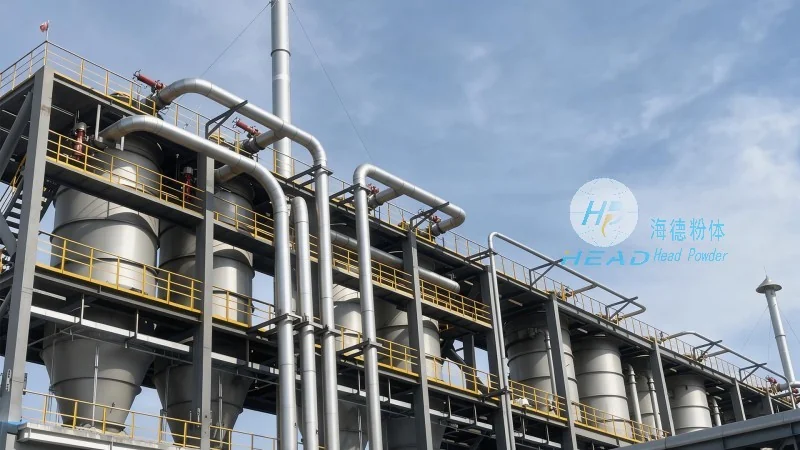
A mid-sized wood pellet manufacturer in the Pacific Northwest had been using a dilute phase conveying system to transfer sawdust from its planer mill to a storage silo 80 meters away. The existing system suffered from frequent plugging at four 90-degree elbows, requiring manual rodding every two shifts. Sawdust moisture content averaged 12%, but during wet weeks it spiked to 18%, causing severe accumulation in the horizontal sections. After an audit by headpowder, the team identified that the original pipe size (100 mm) was too small for the material-to-air ratio of 3.5 being used, and the blower was undersized at 22 kW. The solution involved replacing the main conveying line with a 125 mm diameter pipe, installing a larger centrifugal blower (37 kW with VFD), and replacing the standard elbows with long-radius ceramic-lined bends. The rotary airlock was upgraded to an open-pocket design with a variable-speed drive to precisely match the sawdust feed rate from the planer. Additionally, a moisture sensor was placed just before the airlock, and the control system was programmed to reduce the feed rate when moisture exceeded 15%, preventing blockages.
Installation was completed over a weekend without production downtime. After the upgrade, the plugging incidents dropped to zero in the first six months. The specific energy consumption fell from 8.5 kWh per ton to 5.2 kWh per ton, saving the plant approximately USD 18,000 annually. Furthermore, the reduced velocity decreased erosion, and the ceramic-lined bends are expected to last three years before needing replacement compared to the previous six-month interval. The plant manager noted that the system now runs unattended for most of the shift, freeing workers to focus on other tasks. headpowder continues to support the facility with an annual inspection and a remote monitoring dashboard that tracks key metrics like pressure differential across the rotary valve and blower current.
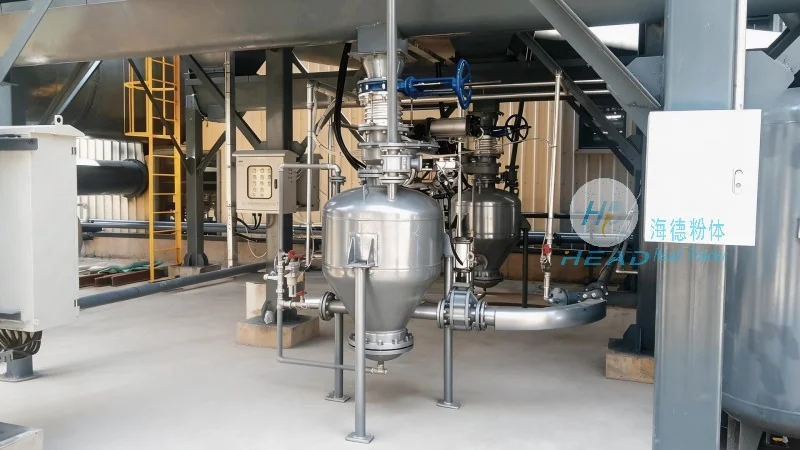
Looking toward 2026 and beyond, several technology developments are shaping the next generation of sawdust conveying systems. The integration of Industry 4.0 sensors—such as real-time particle size analyzers, inline moisture probes, and acoustic flow monitors—allows predictive maintenance and dynamic process optimization. Digital twins of conveying systems enable engineers to simulate changes in material properties or operating conditions without risk. headpowder is actively developing self-learning algorithms that tune the air velocity and material feed rate based on historical performance data, reducing human intervention. Another trend is the use of low-pressure dense phase conveying with controlled pulsation, which further reduces energy consumption while handling even sticky sawdust blends. Additionally, modular, skid-mounted systems are gaining popularity for smaller sawmill sites, offering plug-and-play installation and scalability. Finally, tighter environmental regulations around fugitive dust emissions are driving the adoption of fully enclosed conveying with integrated filtration, which makes pneumatic systems even more attractive compared to mechanical belt or screw conveyors that are difficult to seal.
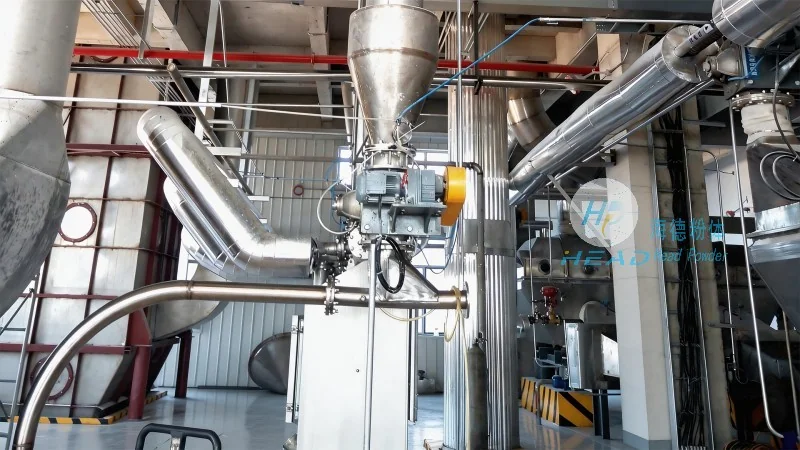
Investing in a pneumatic conveying system for sawdust is a long-term decision that directly impacts production efficiency, safety, and operating costs. The right partner brings not only equipment but also process knowledge, field experience, and post-installation support. headpowder has delivered over 300 sawdust and wood residue conveying systems globally, from small sawdust collection loops for craft workshops to large-scale bulk handling for pellet mills and biomass power plants. Our engineering team starts with a thorough assessment of your material properties and facility constraints, followed by a detailed simulation using validated software. We offer standard and custom designs with a full range of components—rotary airlocks, blow tanks, cyclones, bin vents, control panels, and pipework—all manufactured under ISO 9001 quality systems. We also provide installation supervision, commissioning, training for your operators, and a responsive spare parts network. Whether you are looking to retrofit an existing system or build from the ground up, we invite you to discuss your needs with our specialists. (咨询热线:156-6277-7102)
Every sawdust conveying application is different, but the core principles remain the same: match the air velocity to the material’s saltation point, select durable components for the abrasiveness of the dust, and build in safety from the outset. With careful planning and professional execution, a pneumatic conveying system can become a reliable and efficient backbone of your wood processing operations. As the industry moves toward fully automated, energy-optimized material handling, staying informed about design best practices and emerging technologies will help your facility remain competitive and compliant. We encourage you to use this guide as a starting point for your next project evaluation and to reach out to our experts for a tailored feasibility study.

 Shandong headpowder Engineering Co., Ltd.
 156-6277-7102(Manager Zhang)
  0531-83386006
  Jinan City, Shandong Province, China
服务热线
微信咨询
回到顶部