News
Rich project cases across industries, showing real implementation and proven technical strength.In the modern food processing industry, the movement of raw materials, intermediate products, and finished goods demands a level of hygiene, efficiency, and precision that traditional mechanical conveyors often struggle to provide. As global food safety regulations tighten and production lines scale to meet rising consumer demand, pneumatic conveying has emerged as a cornerstone technology for dry and granular food products. Unlike belt or screw conveyors, pneumatic systems use air pressure or vacuum to transport materials through sealed pipelines, eliminating cross-contamination risks and reducing dust emissions. This guide provides a comprehensive examination of pneumatic conveying methods tailored to food applications, covering system types, component selection, operational parameters, and maintenance best practices. Whether you are handling flour, sugar, starch, spices, or powdered ingredients, understanding the nuances of dilute phase, dense phase, and vacuum conveying is essential for optimizing throughput while preserving product integrity. Headpowder, a specialist in powder and bulk material handling solutions, has observed that many food manufacturers underestimate the impact of particle degradation and segregation during transport. By adopting the correct pneumatic conveying method, processors can achieve consistent flow rates, reduced energy consumption, and extended equipment lifespan. This article draws on industry data from 2025–2026 market trends, including the growing adoption of clean-in-place (CIP) systems and real-time monitoring sensors, to help you make informed decisions for your facility. The following sections break down each method, compare their advantages and limitations, and provide actionable selection criteria. Whether you are designing a new line or retrofitting an existing one, this guide serves as a practical reference for engineers, operations managers, and quality assurance professionals.
Pneumatic conveying relies on the principle of moving particulate solids through a pipeline using a gas stream, typically air. The gas velocity and pressure differential determine whether the material flows as a suspended cloud or as a dense slug. For food applications, the choice between these regimes hinges on factors such as particle size, moisture content, friability, and hygiene requirements. A key distinction lies between open-loop and closed-loop systems. Open-loop systems draw ambient air and exhaust it after separation, while closed-loop systems recirculate inert gases like nitrogen to prevent oxidation or moisture pickup. According to industry reports published in 2026, closed-loop pneumatic systems now account for nearly 35% of new food installations due to stricter oxygen-level regulations for high-fat powders and dairy blends. Additionally, the material's bulk density and flowability directly influence the required air volume and pipeline diameter. For instance, free-flowing materials like granulated sugar can be conveyed with lower air velocities, whereas cohesive powders like cocoa require careful velocity control to prevent blockages. Headpowder's engineering team recommends conducting a material characterization test—including angle of repose, compressibility, and particle size distribution—before finalizing any system design. This data-driven approach minimizes trial-and-error during commissioning and ensures that the conveying method aligns with the specific product's behavior under airflow.
Dilute phase conveying, also known as suspension flow, uses high air velocities—typically between 15 and 30 meters per second—to keep particles suspended in the airstream. This method is widely adopted in food facilities for handling non-abrasive, free-flowing ingredients such as rice, coffee beans, and powdered milk. The primary advantage is simplicity: the system requires fewer moving parts, lower capital investment, and straightforward maintenance. However, the high velocity can cause particle attrition, leading to fines generation and product degradation. For brittle materials like extruded cereals or freeze-dried fruits, dilute phase may not be suitable without additional impact-reduction measures. In terms of pressure, dilute phase systems operate at low positive pressure (typically 0.2–1 bar) or under vacuum. Vacuum dilute phase systems are particularly popular for food applications because they prevent dust leakage into the work environment and allow multiple pick-up points from bags, bins, or silos. A 2025 survey of North American food processors found that 62% of new installations for seasoning blends employ vacuum dilute phase due to its dust control benefits. System components include rotary airlocks, venturi eductors, and cyclone separators. The rotary airlock serves as a metering device, regulating the feed rate into the conveying line. Selecting the correct rotor configuration—open-end or enclosed—depends on the material's permeability and particle shape. For example, fine flour tends to pack under compression, necessitating an enclosed rotor with adjustable clearances. Headpowder's case studies show that replacing standard rotary valves with sanitary washdown-rated models can reduce cleaning downtime by 40% in facilities handling multiple allergens.
When product integrity is paramount, dense phase conveying offers a gentle alternative. This method moves material at low velocities (2–10 m/s) in a non-suspended state, often as discrete slugs or fluidized beds. Positive pressure dense phase systems push material through the pipeline using compressed air or a blow tank, while vacuum dense phase systems draw material using a high-vacuum source. The low velocity minimizes particle breakage and dust generation, making it ideal for fragile foods such as breakfast cereals, dehydrated vegetables, and snack pellets. However, dense phase systems require higher air pressure (2–6 bar) and more sophisticated control valves, resulting in higher initial costs and energy consumption. That said, the energy efficiency per ton of material conveyed can be better than dilute phase when dealing with materials that have high bulk density or poor flowability. Recent developments in acoustic and radar-based flow monitoring have made dense phase conveying more predictable. According to a 2026 technical paper from the International Powder & Bulk Solids Conference, real-time slug detection sensors can reduce pipeline wear by up to 30% by enabling automatic air injection adjustments. For food processors dealing with sticky or hygroscopic powders like whey protein concentrate, dense phase with a nitrogen purge has proven effective in preventing caking. Headpowder has implemented a twin-tank dense phase system for a major snack manufacturer, achieving a 15% reduction in fines generation compared to their previous dilute phase setup. The system also integrated automated line flushing between product changeovers, which supported the manufacturer's goal of achieving SQF Level 3 certification.
The choice between vacuum and positive pressure conveying depends on the plant layout, distance, and material characteristics. Vacuum systems are inherently safer for dust explosive environments because the conveying line operates below atmospheric pressure, preventing dust escape. They are also easier to clean and can draw material from multiple sources, such as bulk bags and tote dump stations. Conversely, pressure systems can convey material over longer distances—up to 500 meters—and handle higher throughput rates. For food facilities with centralized receiving areas and multiple processing destinations, a combination of vacuum for intake and pressure for distribution is common. A notable trend in 2026 is the increased use of modular skid-mounted pneumatic systems. These pre-engineered units reduce installation time and allow for future capacity expansion without major civil works. Additionally, the integration of variable frequency drives (VFDs) on blowers and vacuum pumps enables precise airflow control, adapting to changing production rates and reducing energy waste. Industry benchmarks indicate that VFD-equipped pneumatic systems can achieve 20–30% lower specific energy consumption compared to fixed-speed alternatives. When selecting a system, consider the material's explosion classification. For example, starch and sugar dust are combustible, requiring ATEX or NFPA compliant components such as explosion vents, grounding, and spark detection. Headpowder's team offers a risk assessment service that helps clients align their pneumatic design with OSHA and EU directives, a critical step for export-oriented food brands.
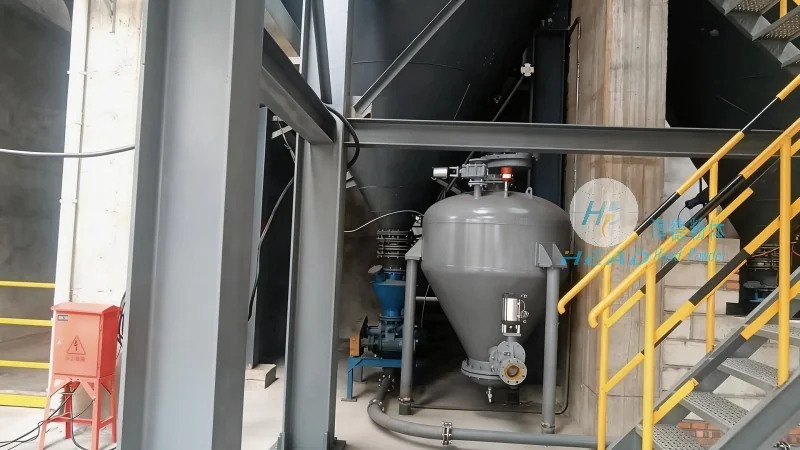
A pneumatic conveying system is only as reliable as its components. In food applications, every part that contacts the product must meet sanitary standards, preferably with 3-A or EHEDG certification. Pipes should be of stainless steel (304 or 316L) with internal surface finishes of at least 32 Ra to prevent bacterial adhesion. Bends should have a radius-to-diameter ratio of at least six to minimize product buildup and wear. Airlocks, diverter valves, and filters must be designed for cleanability. Rotary airlocks with washdown-duty motors and FDA-approved seals are now considered standard for dairy and confectionery lines. The filtration system, often a baghouse or cartridge dust collector, plays a dual role: protecting the blower from dust and ensuring that exhaust air meets workplace particulate limits. High-efficiency HEPA filters are recommended for facilities handling allergens like peanut flour or wheat dust. Another critical component is the pneumatic conveying controller. Modern PLC-based systems with touchscreen interfaces allow operators to monitor line pressure, velocity, and temperature in real time. Data logging capabilities support traceability and continuous improvement initiatives. Headpowder (咨询热线:156-6277-7102) offers a proprietary controller that automatically adjusts air injection based on material flow feedback, reducing the risk of surge or blockage. Integration with existing ERP or MES systems is also possible through OPC-UA protocols. For example, a beverage powder manufacturer using Headpowder's integrated solution was able to reduce manual intervention by 60% and achieve a 99.5% uptime rate over a 12-month period.
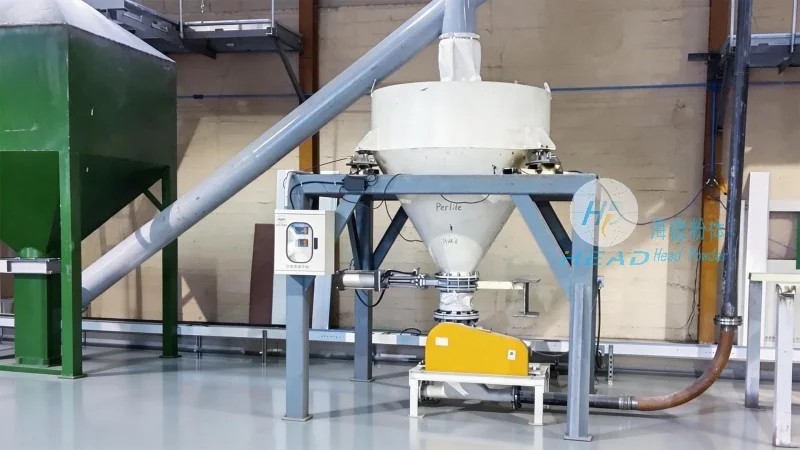
Predictive maintenance is transforming how food processors manage pneumatic conveying systems. By monitoring parameters such as pressure drop, vibration, and current draw, maintenance teams can detect wear in airlocks, filters, and pipelines before a failure occurs. A 2026 study by the Food Processing Suppliers Association indicated that predictive maintenance can reduce unplanned downtime by 40% and extend system lifespan by 30%. Common issues in food pneumatic conveyors include pipeline blockages due to moisture condensation, rotary valve leakage caused by seal degradation, and filter blinding from fine particles. Maintaining the correct conveying air temperature and installing moisture traps at strategic points can mitigate condensation problems. Regularly inspecting the rotary valve for physical wear and checking the clearance between rotor and housing is essential. For dense phase systems, the blow tank's dome valve and discharge cone are high-wear areas that may require replacement every 12–18 months depending on material abrasiveness. It is also important to vacuum test the system annually to ensure no air leaks, which can reduce efficiency and introduce contaminants. Headpowder provides a comprehensive maintenance program that includes quarterly inspections, spare parts kits, and remote diagnostics. One of their clients in the instant soup industry extended the service interval of their pneumatic line from 6 months to 18 months after switching to Headpowder's wear-resistant ceramic-lined bends. The lifecycle cost analysis demonstrates that while the initial investment in quality components is higher, the total cost of ownership over 10 years is often 15–20% lower due to reduced maintenance and energy expenses.
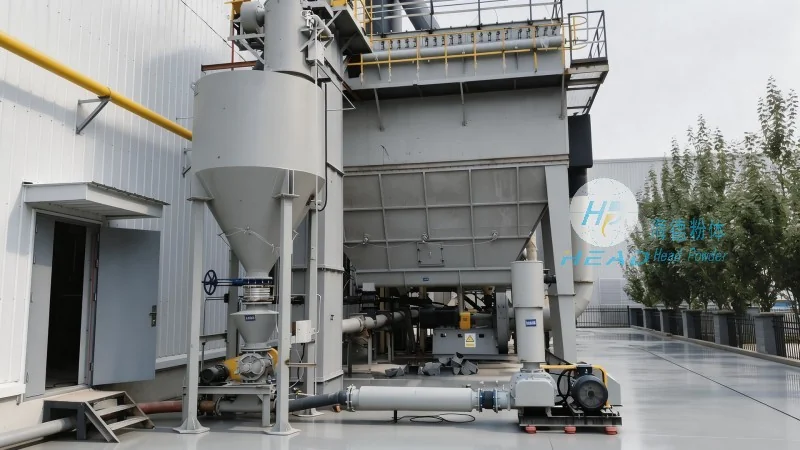
The food conveying industry is evolving rapidly, driven by sustainability goals, digitalization, and safety requirements. One emerging method is low-velocity slug phase conveying, which combines the gentle handling of dense phase with the simplicity of dilute phase systems. This method uses controlled air pulses to advance material plugs, achieving energy savings of up to 25% compared to conventional dense phase. Another innovation is the use of air-assisted gravity conveyors for free-flowing powders, which can operate with extremely low air consumption. On the regulatory front, the FDA's Food Safety Modernization Act (FSMA) continues to push for sanitary design principles in all equipment that contacts food ingredients. As of 2026, many retailers and foodservice chains require suppliers to provide documentation of pneumatic system sanitary design and cleaning validation. Additionally, the European Commission's revision of the Machinery Directive (2006/42/EC) has introduced stricter noise and vibration limits for conveying equipment, encouraging the adoption of low-noise diffusers and vibration-dampening mounts. Sustainability is also a key driver. Carbon footprint analysis now influences system selection; for example, using regenerative blowers instead of positive displacement blowers can reduce CO₂ emissions by up to 18% per ton conveyed. Headpowder is actively developing a hydrogen-compatible pneumatic conveying solution for facilities that generate green hydrogen as a byproduct, aligning with global net-zero manufacturing targets. By staying informed of these trends and partnering with a knowledgeable conveying specialist, food processors can future-proof their operations while maintaining the highest product quality and safety standards.

 Shandong headpowder Engineering Co., Ltd.
 156-6277-7102(Manager Zhang)
  0531-83386006
  Jinan City, Shandong Province, China
服务热线
微信咨询
回到顶部