News
Rich project cases across industries, showing real implementation and proven technical strength.In the rapidly evolving landscape of advanced manufacturing and metal powder processing, the efficient and reliable transportation of copper powder stands as a critical operational challenge. Copper powder, valued for its exceptional thermal and electrical conductivity, plays an indispensable role in industries ranging from additive manufacturing and powder metallurgy to electronic pastes and thermal management solutions. However, its inherent characteristics—high density, irregular particle morphology, and susceptibility to oxidation—demand a conveying methodology that balances throughput, product integrity, and safety. Pneumatic conveying has emerged as the dominant solution for handling bulk copper powder, offering enclosed, dust-free, and flexible transport pathways. This comprehensive overview examines the principles, system configurations, selection criteria, and operational best practices for pneumatic conveying of copper powder, drawing on real-world applications and industry standards projected toward 2026. Whether you are scaling production lines or retrofitting existing facilities, understanding the nuanced interplay between material properties and system design is essential for achieving consistent, cost-effective, and safe powder transport.
Pneumatic conveying utilizes a stream of air or inert gas to transport particulate solids through a pipeline. For copper powder, the choice between dilute-phase and dense-phase conveying is influenced by particle size distribution, bulk density, and friability. Dilute-phase systems, where particles are suspended in a high-velocity gas stream, are suitable for fine copper powders with low abrasion resistance. However, the high velocity can cause particle degradation and pipeline erosion. Conversely, dense-phase conveying operates at lower gas velocities, moving the powder as a fluidized bed or plug flow, significantly reducing wear and preserving particle morphology. Modern system designs increasingly adopt dense-phase technology for copper powder, especially when handling irregular or dendritic particles common in electrolytic and atomized copper powders. A well-engineered pneumatic system must also account for moisture content; copper powder is hygroscopic, and any moisture pickup can lead to agglomeration, bridging, and oxidation. Therefore, using dry, dehumidified compressed air or nitrogen as the conveying gas is a standard practice to maintain product quality over long transfer distances.
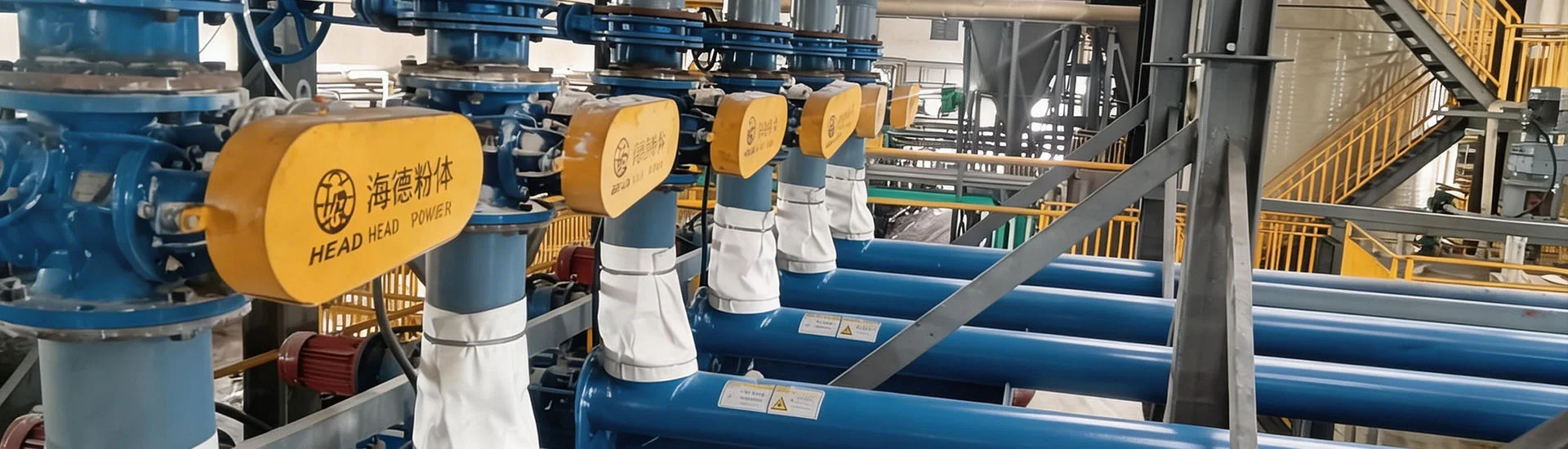
A complete copper powder pneumatic conveying system consists of several key components: a feeder that introduces powder into the pipeline, a gas mover (such as a roots blower or screw compressor), a separation device (cyclone or bag filter), and a control system. The feeder is the most critical element; for copper powder, rotary airlocks, venturi eductors, and pressure-differential dense-phase feeders are commonly deployed. Rotary airlocks work well for free-flowing spherical powders but may struggle with irregular or cohesive copper particles. Headpowder's engineering team has developed a proprietary feeding mechanism that combines vibration-assisted feeding with a low-leakage rotary valve, ensuring consistent material entry without gas blowback. The conveying pipeline design must address the high density of copper—approximately 8.9 g/cm³ for solid particles, though bulk density ranges from 2.0 to 4.5 g/cm³ depending on particle shape. This high density increases the pressure drop and requires thicker pipe walls to resist abrasion. Many operators specify schedule 80 or even schedule 160 stainless steel pipes, with wear-resistant bends to minimize erosion at direction changes. The separation stage typically employs a high-efficiency cyclone followed by a pulse-jet baghouse, achieving collection efficiencies above 99.9% to prevent copper dust emissions into the workspace.
Selecting between dilute-phase and dense-phase pneumatic conveying for copper powder depends on multiple technical and economic factors. Dilute-phase systems are simpler and lower in initial capital cost, operating at velocities of 20 to 30 m/s. They handle high throughputs but cause particle attrition—a study from the International Powder Metallurgy Directory projects that by 2026, the acceptable particle breakage rate in premium copper powder for medical-grade applications will be below 0.5% by mass, a threshold difficult to achieve with dilute-phase transport. Dense-phase systems, operating at 2 to 8 m/s, preserve particle integrity and consume less energy per ton transported, though they require more sophisticated pressure control and are sensitive to material permeability. Copper powder with a high fines content (particles under 10 microns) can experience fluidization instability in dense-phase systems, leading to plugging. Headpowder recommends a preliminary flowability analysis using the Jenike shear cell and aerated bulk density tests before system specification. When dealing with copper powder blends containing lubricants or binders—common in powder metallurgy press-ready mixes—dense-phase conveying with a pulse-pressure injection method is often the most reliable choice, reducing segregation and maintaining blend uniformity.
Beyond basic flow properties, copper powder presents specific challenges that must be addressed in pneumatic system design. Oxidation is the foremost concern: even at normal ambient temperatures, freshly reduced or atomized copper powder can develop a surface oxide layer that degrades sintered part quality. Nitrogen inerting is the industry standard for sensitive applications, with oxygen levels maintained below 2% in the conveying gas. Additionally, copper dust is classified as a combustible solid; the Minimum Explosible Concentration (MEC) for copper powder is around 40 g/m³, and the KSt value (deflagration index) for fine fractions can exceed 200 bar·m/s. Therefore, explosion protection measures—including deflagration venting, suppression systems, and intrinsically safe electrical controls—are mandatory under NFPA 484 and ATEX directives. Headpowder's systems incorporate integrated oxygen monitoring, spark detection, and passive explosion isolation valves as standard for copper powder applications, ensuring compliance with global safety regulations projected to tighten further by 2026. Another practical issue is the electrostatic charge accumulation during pneumatic transport. Copper is conductive, but the oxide layer can increase electrical resistivity, leading to static discharge risks. Grounding of all system components, including flexible hoses and filter elements, is non-negotiable.
Accurate system sizing begins with establishing the required conveying rate, distance, and elevation change. For copper powder, typical conveying rates range from 500 kg/h in small batch operations to 15,000 kg/h in large powder metallurgy plants. The conveying line pressure drop comprises contributions from gas-solid acceleration, straight pipeline friction, bends, and vertical lifts. Using the modified Darcy-Weisbach equation combined with empirical solids-loading ratios (typically 5 to 15 for dilute phase and 20 to 50 for dense phase), engineers can estimate the required blower capacity. A practical rule of thumb for copper powder: each 90-degree bend adds the equivalent of 10 to 15 meters of straight pipe in pressure loss. Headpowder's technical documentation library includes proprietary nomographs calibrated for copper powder with various particle size distributions, allowing rapid preliminary estimates. For a 50-meter horizontal run conveying 2,000 kg/h of -100 mesh copper powder, a dilute-phase system would require a blower delivering approximately 1,500 Nm³/h at 80 kPa pressure drop, whereas a dense-phase system would need only 400 Nm³/h at 60 kPa, translating to 60% lower energy consumption. Energy costs are especially relevant as global electricity prices for industrial users are forecast to rise 8–12% by 2026, making energy-efficient dense-phase systems increasingly attractive for long-term operations.
The copper powder pneumatic conveying landscape is evolving with several emerging technologies. One promising development is the use of machine learning algorithms for real-time flow regime detection. By analyzing pressure fluctuations and acoustic emissions from the pipeline, predictive models can anticipate blockages or material degradation before they disrupt production. Headpowder is currently piloting an AI-based monitoring module that adjusts injection cycles and gas pulses automatically, reducing manual intervention. Another trend is the shift toward modular, skid-mounted conveying units that reduce installation time and allow easy scale-up. As additive manufacturing expands—the global copper powder market for 3D printing is expected to grow at a CAGR of 18% through 2026—the demand for fine, spherical, and oxygen-free copper powders will drive innovation in gentle conveying methods. Vacuum-assisted dense-phase systems, where powder is drawn through the pipeline under negative pressure, are gaining traction for transferring finished powders directly from atomization towers to blending silos without exposure to ambient air. Additionally, the integration of continuous flow measurement using coriolis meters or laser diffraction sensors enables closed-loop control of powder feed rate, ensuring precise dosing in downstream processes.
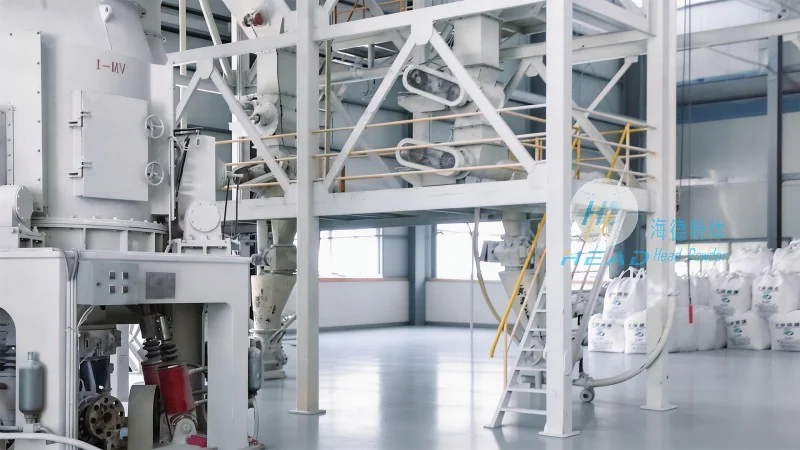
To maximize the lifespan and reliability of a copper powder pneumatic conveying system, operators must adhere to preventive maintenance protocols. Daily inspections should focus on filter bag integrity, rotary valve clearance, and pipeline wear points—especially at bends where erosion is most aggressive. Copper powder accumulation in dead zones can cause spontaneous combustion if fine particles remain in contact with oxygen; regular purge cycles using inert gas are recommended. Headpowder recommends a scheduled pipe wall thickness measurement every six months using ultrasonic testing, with a replacement threshold of 60% of original wall thickness. The conveying gas quality must be monitored continuously: dew point should be maintained below -30°C to prevent moisture condensation, and oil content from compressors should be kept under 0.01 ppm to avoid contamination of the copper powder. When upgrading or expanding existing systems, it is important to note that copper powder behaves differently under varying pressure and temperature; a system designed for summer ambient conditions may experience condensation issues in winter unless the gas drying system is adequately sized. Training operators on the signs of erratic flow—such as surging pressure or fluctuating amperage on the blower motor—can prevent costly downtime. Headpowder has extensive experience in copper powder conveying; consult our team for customized solutions (咨询热线:156-6277-7102).
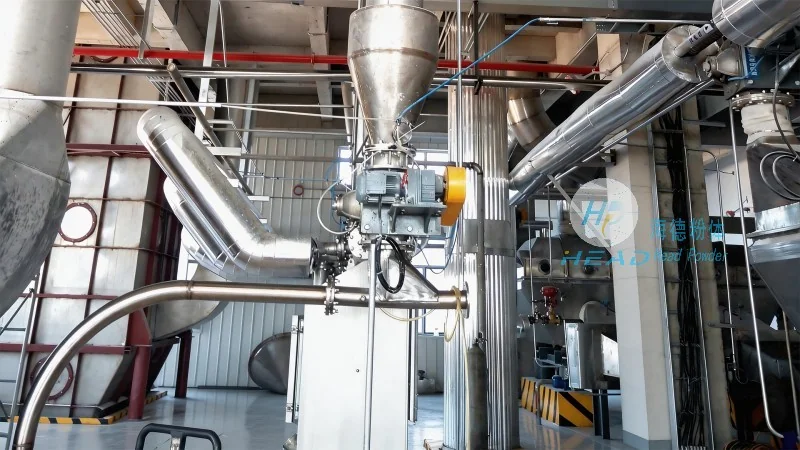
Investing in a well-designed pneumatic conveying system for copper powder offers clear economic returns through reduced labor costs, minimized material loss, and improved workplace safety. A typical payback period for replacing manual handling with an automated pneumatic system is 12 to 24 months, based on reduced spillage and increased throughput. Environmentally, enclosed conveying eliminates fugitive dust emissions, helping facilities comply with increasingly strict particulate matter (PM2.5 and PM10) regulations. Energy efficiency gains from dense-phase systems can lower the carbon footprint of powder transport by up to 40% compared to older dilute-phase designs. Moreover, copper scrap and off-spec powder can be reclaimed through the same pneumatic network, routed to recycling hoppers, supporting circular economy goals. As the industry moves toward net-zero manufacturing by 2030, the ability to integrate pneumatic systems with renewable energy sources—such as solar-powered compressors—will become a competitive differentiator. Headpowder's engineering team is already developing low-pressure-drop pipeline designs and heat recovery units that capture compression heat for preheating powder drying systems.
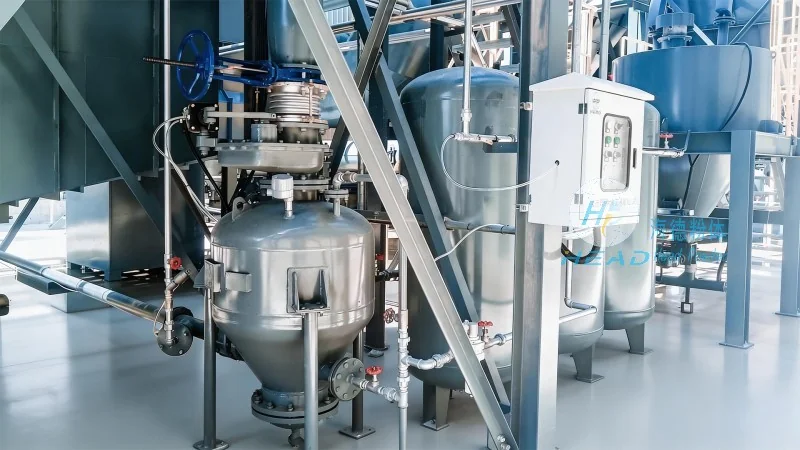
The successful pneumatic conveying of copper powder demands a holistic understanding of material science, fluid dynamics, safety engineering, and process control. From the initial feasibility assessment through system commissioning and ongoing optimization, every decision impacts product quality, operational efficiency, and regulatory compliance. As we approach 2026, the convergence of advanced sensing, automation, and sustainable design principles will redefine the standards for powder handling. Organizations that invest in carefully engineered systems—tailored to their specific copper powder grades and production environments—will gain significant competitive advantages in throughput, consistency, and safety. Headpowder has been at the forefront of this field, delivering turnkey pneumatic conveying solutions for copper powder across multiple continents. Our integrated approach combines rigorous testing, data-driven design, and responsive aftermarket support. For a detailed evaluation of your copper powder conveying requirements and a proposal aligned with your capacity goals, please reach out to our technical team (咨询热线:156-6277-7102). With over two decades of powder handling expertise, we are committed to engineering systems that convey not just material, but value—reliably, safely, and efficiently.

 Shandong headpowder Engineering Co., Ltd.
 156-6277-7102(Manager Zhang)
  0531-83386006
  Jinan City, Shandong Province, China
服务热线
微信咨询
回到顶部