News
Rich project cases across industries, showing real implementation and proven technical strength.Sodium chloride, commonly known as table salt, is one of the most widely handled bulk materials in the chemical, food, pharmaceutical, and water treatment industries. Its hygroscopic nature, crystalline morphology, and varying particle sizes present unique challenges for conveying systems that must maintain product purity, prevent caking, and ensure consistent flow rates. Pneumatic conveying has emerged as a preferred method for moving sodium chloride over short and long distances within processing plants, offering enclosed transfer, low maintenance, and reduced risk of contamination. However, designing a reliable pneumatic conveying system for salt requires a deep understanding of material behavior, system pressure dynamics, and equipment selection tailored to specific process conditions.
At headpowder, we have developed a comprehensive technical solution for sodium chloride pneumatic conveying that addresses these challenges through engineered system configurations, component optimization, and validated process parameters. This article explores the core principles, equipment architecture, and operational considerations that define a high-performance salt conveying system. Whether handling fine ground salt for food processing or coarse rock salt for industrial applications, the technical solution must account for moisture content, abrasion characteristics, and electrostatic buildup. By integrating pneumatic conveying with advanced filtration, drying, and conditioning technologies, processors can achieve reliable operation while minimizing energy consumption and material degradation.
The global market for pneumatic conveying systems has been expanding steadily, driven by the need for automation and safe handling of bulk solids. In the sodium chloride sector, industry estimates indicate that pneumatic conveying will account for over 35% of all powder handling installations by 2026, as companies seek to replace mechanical conveyors that suffer from corrosion and spillage. This shift is particularly evident in chlor-alkali plants, where salt is a primary feedstock for chlorine and caustic soda production. Understanding the technical demands of sodium chloride pneumatic conveying is therefore essential for engineers and plant managers aiming to improve throughput, reduce downtime, and comply with stringent hygiene standards.
Before specifying any pneumatic conveying equipment, it is critical to characterize the sodium chloride being handled. The material's bulk density typically ranges from 1.2 to 1.5 g/cm³ depending on particle shape and compaction history. Moisture absorption is a primary concern: even a small increase in humidity can cause salt particles to agglomerate, leading to bridging in feed hoppers or blockages in conveying lines. The angle of repose for sodium chloride generally falls between 30 and 40 degrees, but this can shift dramatically with changes in humidity and particle size distribution. Additionally, the abrasive nature of salt crystals, especially those with sharp edges from mechanical crushing, accelerates wear on pipe bends and valves. For these reasons, a sodium chloride pneumatic conveying solution must incorporate moisture control strategies, wear-resistant materials, and appropriately sized air locks and feeders.
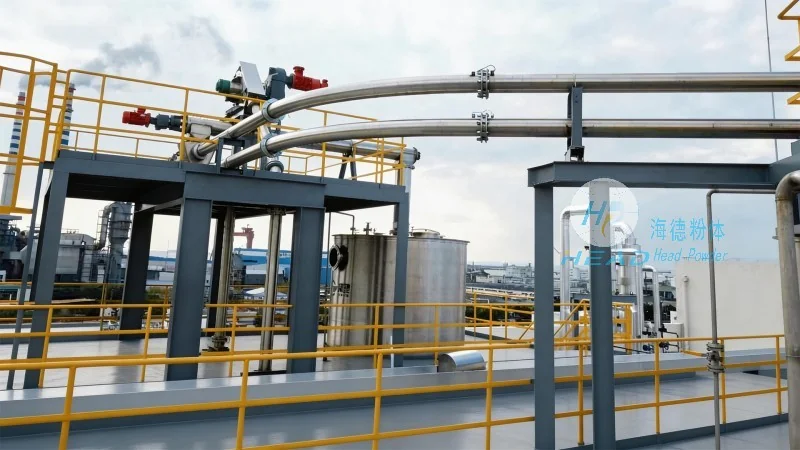
Particle size also influences the conveying velocity required to keep the material in suspension. For typical table salt with a mean particle size of 200–500 microns, a conveying velocity of 15–25 m/s is common in dilute phase systems. However, if the salt contains fines below 100 microns, higher velocities may be needed to avoid settling, while coarse salt above 2 mm may require lower velocities to prevent impact damage. headpowder's approach begins with a detailed material analysis, including particle size distribution, moisture content, and flow function tests, to establish accurate design parameters. This ensures that the system operates within the optimal saltation velocity window, minimizing energy waste and line wear.
Two primary pneumatic conveying modes are suitable for sodium chloride: dilute phase and dense phase. Dilute phase conveying uses high-velocity air to suspend salt particles in a stream, making it ideal for short distances and moderate capacities. It is relatively simple to implement and cost-effective for applications where degradation is not a major concern. However, the high velocity can accelerate abrasion on elbows and increase the risk of particle attrition, which may be unacceptable for food-grade salt where appearance and crystal integrity matter. Dense phase conveying, on the other hand, operates at lower velocities (3–10 m/s) and higher solids-to-air ratios, moving the material as a plug or fluidized bed. This mode significantly reduces wear and product degradation, making it the preferred choice for high-value salt products or fragile crystals. The trade-off is that dense phase systems require higher pressure (typically 3–6 bar) and more sophisticated control valves, but the long-term benefits in product quality and equipment longevity often justify the investment.
Within these two categories, headpowder offers several system subtypes tailored to specific salt handling scenarios. For example, vacuum conveying (negative pressure) is excellent for drawing salt from multiple points, such as bag dump stations or silo outlets, into a central receiver. This configuration minimizes dust escape and is commonly used in food processing environments where cleanliness is paramount. Conversely, pressure conveying (positive pressure) is better suited for long-distance transfer, especially when discharging salt to elevated storage bins or mixing tanks. A hybrid approach, combining vacuum pickup with pressure delivery, can also be designed for complex plant layouts. Each configuration is engineered with proper line diameter, bend radius, and air supply sizing to match the material's flow characteristics.
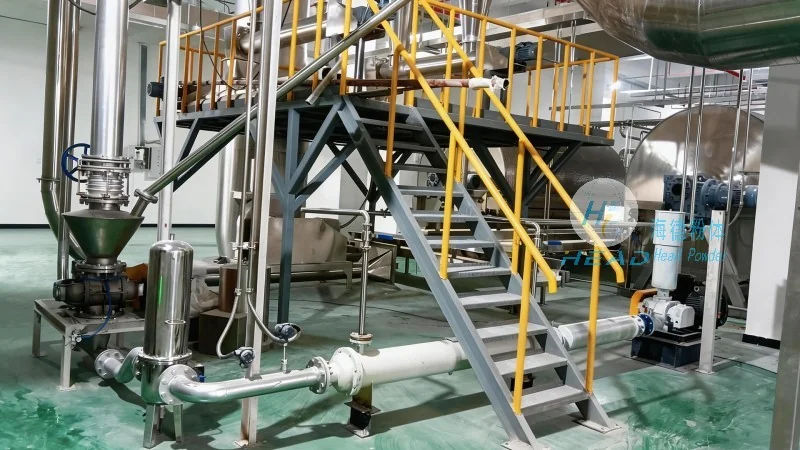
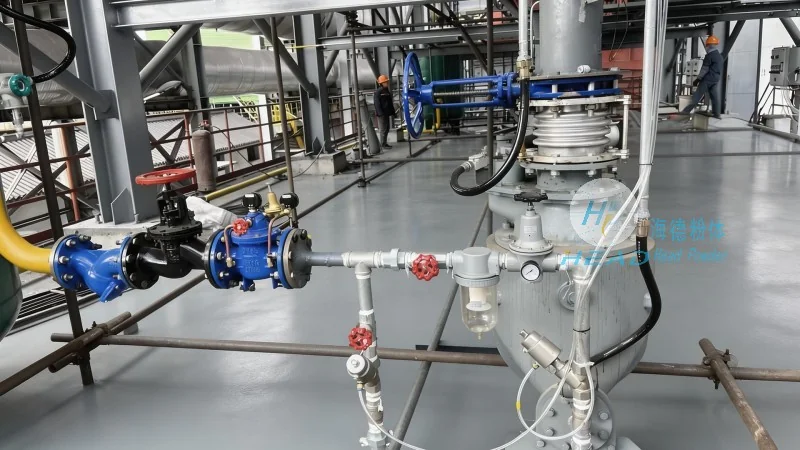
A robust technical solution for salt conveying requires careful selection of each component along the material path. The starting point is the feeding device: rotary airlocks, screw feeders, or venturi eductors, depending on whether the system is dilute or dense phase. For sodium chloride, rotary airlocks with hardened steel or ceramic-coated surfaces are recommended to resist abrasion. The housing should be designed to prevent leakage of pressurized air into the feed hopper, which could cause flooding or poor flow. Next, the conveying pipeline must be made of materials that resist corrosion and wear. Stainless steel 304 or 316L is standard for food-grade applications, while carbon steel with internal coatings can be used for industrial salt. Bends must have a radius of at least 6 to 10 times the pipe diameter to reduce impact erosion. headpowder often incorporates replaceable wear backs at high-wear zones to extend system life.
At the discharge point, a cyclonic separator or a filter receiver separates the salt from the conveying air. For fine salt dust, baghouse filters or cartridge filters are essential to meet emission regulations and recover valuable product. The filter area must be sized based on the air volume and dust loading – typically 100–150 m² of filter media per 1000 m³/h of air for salt applications. A discharge airlock, usually a rotary valve or a flap gate, then transfers the salt into storage hoppers or process equipment. Additionally, automatic valves and diverters enable routing salt to multiple destinations without cross-contamination. All components in contact with salt must be designed for easy cleaning, especially in food and pharmaceutical settings where sanitary design standards (e.g., 3-A or EHEDG) may apply.
Modern sodium chloride pneumatic conveying systems rely on advanced control strategies to maintain consistent performance despite variations in material properties and ambient conditions. Programmable logic controllers (PLCs) with human-machine interfaces (HMIs) allow operators to monitor conveying pressure, air flow rate, product velocity, and fill levels in real time. Pressure transmitters at key points along the line provide feedback for adjusting air supply or pinch valves. For dense phase systems, a sequence of timed pulses or blow tanks ensures that salt plugs move smoothly without collapsing. headpowder integrates proprietary algorithms that automatically compensate for changes in moisture content or bulk density, preventing line blockages and reducing operator intervention.
Data logging and remote monitoring capabilities are increasingly important for predictive maintenance and GEO optimization. By tracking wear indicators such as bend pressure drop or filter differential pressure, plant managers can schedule component replacements before failures occur. This not only reduces unplanned downtime but also extends the overall equipment life. In addition, automation facilitates integration with upstream and downstream processes, such as salt drying units or mixing stations. For example, the conveying system can be synchronized with a batch mixer to deliver precise quantities of salt at predefined intervals, improving recipe accuracy and reducing waste. These digital features align with Industry 4.0 trends and help processors achieve higher overall equipment effectiveness (OEE).
To illustrate the practical application of the technical solution, consider a medium-sized food processing facility that needed to convey 8 tons of fine table salt per hour from a storage silo to a packaging line 80 meters away. The salt had a moisture content of 0.3% and an average particle size of 300 microns, with strict requirements for crystal integrity and no contamination from lubricants or wear debris. The client initially considered a bucket elevator but was concerned about spillage and cleaning difficulties. headpowder proposed a dense phase pneumatic conveying system using a blow tank feeder and a 4-inch stainless steel pipeline with long-radius bends. The system operated at 4 bar supply pressure and conveyed the salt at 8 m/s, achieving a solids-to-air ratio of 12:1. A sintered metal filter receiver with reverse pulse cleaning was installed at the packaging line, ensuring zero dust emissions. Over 18 months of operation, the system demonstrated less than 0.1% particle attrition, zero blockages, and energy consumption 30% lower than the client's previous dilute phase system. Maintenance costs were minimal, with only quarterly inspection of the blow tank discharge valve required. This case demonstrates how a well-engineered pneumatic solution can meet stringent quality and reliability targets while offering tangible operational savings. For more details on how headpowder can design a custom system for your sodium chloride application, contact our engineering team (咨询热线:156-6277-7102).
Even the most robust pneumatic conveying system requires periodic maintenance to sustain peak performance. For sodium chloride, the most common issue is pipe blockage caused by moisture-induced caking. Preventive measures include installing trace heating or insulation on outdoor lines in humid climates, and including a compressed air drying system (refrigerated or desiccant dryer) to maintain dew point below -10°C. Additionally, pressure drop can increase gradually as salt deposits build up on pipe walls. Establishing baseline pressure readings at several points and monitoring trends helps identify developing blockages early. Another frequent problem is wear in rotary airlocks and bends, which can lead to salt leakage or product contamination. Using non-contact rotor seals or purge air connections can reduce abrasive wear. headpowder's standard maintenance program includes a semi-annual inspection of all wearing components, plus on-site operator training to recognize early signs of performance degradation. Spare parts kits for valves, filters, and wear liners are kept in stock to minimize downtime.
As the industry moves toward greater sustainability and automation, several technological trends are shaping sodium chloride pneumatic conveying. One development is the use of variable frequency drives (VFDs) on blowers and compressors to match air supply with actual demand, reducing energy consumption by 25–40% compared to fixed-speed systems. Another trend is the integration of real-time moisture sensors and air conditioning units that adjust conveying air humidity on the fly, preventing caking without excessive energy use. In the food sector, more plants are adopting hygienic design standards, such as electro-polished pipe surfaces and quick-disconnect fittings, which facilitate cleaning and reduce the risk of microbial growth. Additionally, the use of computational fluid dynamics (CFD) modeling is becoming more common in the design phase. headpowder employs CFD simulations to optimize pipeline layout, predict pressure profiles, and minimize erosion, ensuring that the first installation meets performance targets without costly field modifications. These innovations promise to make sodium chloride pneumatic conveying even more reliable, efficient, and adaptable to diverse process environments.
In summary, the technical solution for sodium chloride pneumatic conveying requires a holistic understanding of material properties, system configuration options, component durability, and intelligent control. By choosing the right conveying mode, specifying corrosion-resistant materials, and implementing robust automation, processors can achieve consistent material flow, minimal degradation, and low operating costs. headpowder brings decades of hands-on experience in bulk solids handling to each project, delivering systems that not only meet but exceed industry expectations. Whether you are upgrading an existing line or building a new facility, a properly designed pneumatic conveying system for salt can significantly enhance your production efficiency and product quality. The key is to partner with a knowledgeable engineering team that tailors the solution to your specific salt characteristics and plant layout – a commitment that headpowder has consistently fulfilled across hundreds of installations worldwide.

 Shandong headpowder Engineering Co., Ltd.
 156-6277-7102(Manager Zhang)
  0531-83386006
  Jinan City, Shandong Province, China
服务热线
微信咨询
回到顶部