News
Rich project cases across industries, showing real implementation and proven technical strength.In the rapidly evolving landscape of industrial material handling, the efficient and safe transportation of fine chemical powders remains a critical challenge for manufacturers worldwide. Among these materials, cobalt hydroxide—a key precursor in battery cathode production and catalyst manufacturing—demands specialized handling solutions due to its hygroscopic nature, particle morphology, and potential health hazards. The cobalt hydroxide pneumatic conveying system equipment has emerged as a cornerstone technology for processing plants seeking to optimize throughput, minimize product degradation, and ensure operator safety. This article provides a comprehensive technical examination of such systems, exploring design principles, component selection, operational parameters, and industry best practices. With the global cobalt market projected to grow at a compound annual growth rate of 8.2% through 2026, driven by the electric vehicle and energy storage sectors, the demand for reliable conveying infrastructure has never been more pressing. Headpowder, as a specialized engineering firm with over a decade of experience in pneumatic system integration, offers insights drawn from real-world installations across Asia and Europe.
Pneumatic conveying, fundamentally, relies on the movement of bulk solids through a closed pipeline using a gas stream—typically air or nitrogen for reactive materials like cobalt hydroxide. The choice between dilute-phase and dense-phase conveying depends on the material's properties, conveying distance, and required flow rate. Cobalt hydroxide, with a typical bulk density ranging from 0.8 to 1.2 g/cm³ and a median particle size of 5–15 microns, presents unique challenges: its fine particles are prone to agglomeration, electrostatic charging, and moisture absorption. A well-designed pneumatic system must address these issues through careful velocity control, proper filtration, and inert gas blanketing. Headpowder's engineering team has documented that systems operating at conveying velocities between 8 and 15 m/s in dense phase reduce attrition by up to 40% compared to conventional dilute-phase designs, preserving the material's crystalline integrity essential for downstream processing.
The architecture of a cobalt hydroxide pneumatic conveying system begins with a thorough characterization of the material's flow properties. Shear cell testing, particle size distribution analysis, and moisture content evaluation form the basis for selecting feeder type, pipeline diameter, and air movement equipment. For instance, rotary valves—while common in many powder handling applications—can cause particle breakage and dust leakage when dealing with cobalt hydroxide. Headpowder recommends using pressure-tight screw feeders or airlocks with wear-resistant coatings for initial material introduction. The conveying line itself should be constructed from stainless steel 304L or 316L with an internal surface roughness below 0.8 µm to minimize material adhesion and facilitate cleaning. In a 2025 case study at a battery-grade cobalt hydroxide plant in Central China, Headpowder installed a system featuring a 200-meter-long closed-loop pipeline with nitrogen recirculation, achieving a conveying capacity of 8 tons per hour with less than 0.1% product loss. The key parameters included a pressure gradient of 0.15 bar per 100 meters and a solid-to-gas ratio of 12:1 by weight, ensuring stable flow without blockages.
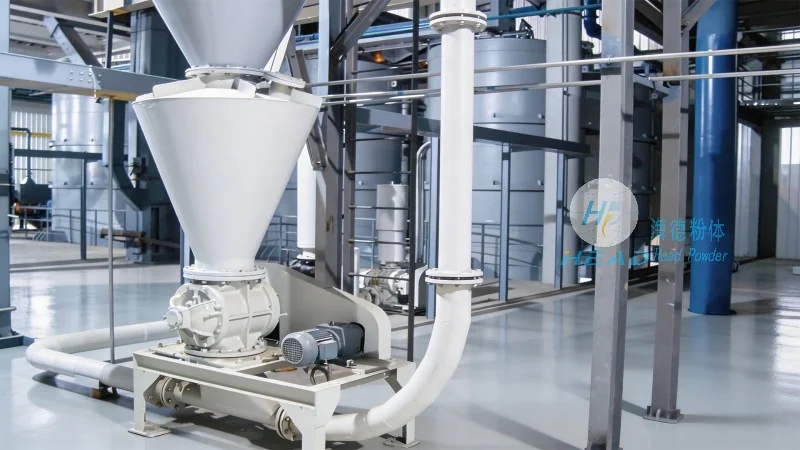
Each subsystem within the pneumatic conveying equipment must be matched to the abrasive and cohesive nature of cobalt hydroxide. The blower package—either positive displacement or centrifugal—should provide oil-free, moisture-free compressed air or nitrogen. For systems operating in classification-limited environments, Headpowder integrates high-efficiency coalescing filters and refrigerated dryers to maintain a dew point of -40°C. The filtering unit at the receiving end employs pulse-jet cartridge filters with PTFE membrane media, offering 99.99% particle capture efficiency down to 0.3 microns. The rotary airlock valve beneath the filter must incorporate a slow-speed drive and double lip seal configuration to prevent backflow of fine dust. Furthermore, the pipeline routing demands careful attention to bend radius: long-radius bends (R ≥ 5D) reduce wall wear and particle degradation. In one documented installation for a leading cathode precursor manufacturer, Headpowder replaced a system with 90-degree short-radius elbows that had required quarterly pipe replacements. The redesigned layout, featuring 45-degree sweeping bends and wear-back plates, extended pipeline service life to over three years while maintaining constant conveying rates. Temperature and humidity sensors placed at strategic points provide real-time data to the distributed control system, automatically adjusting the conveying velocity and inert gas flow during high-humidity seasons when cobalt hydroxide's moisture content can fluctuate between 0.5% and 2.5%.
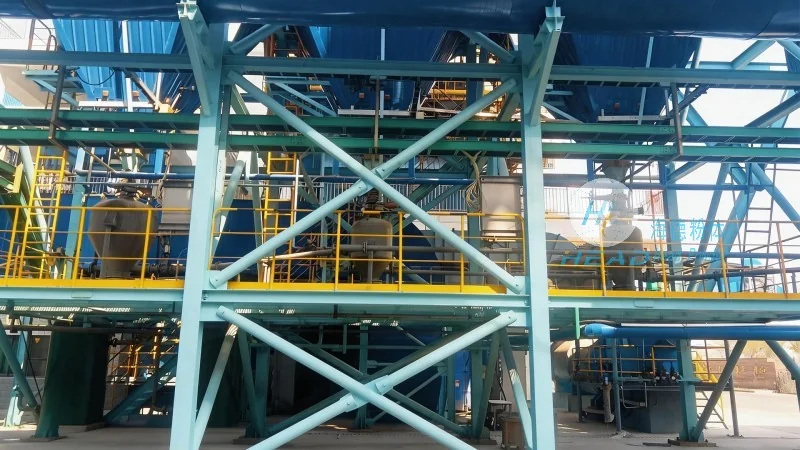
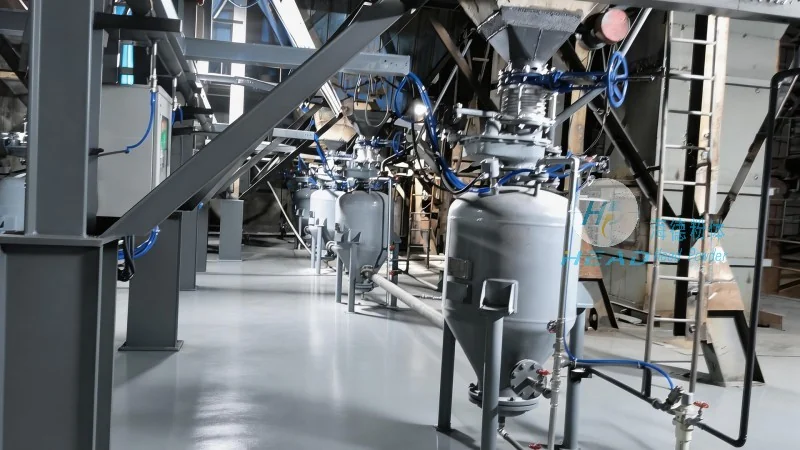
Cobalt hydroxide is classified as a hazardous substance under GHS criteria due to its respiratory sensitization potential and environmental toxicity. Consequently, pneumatic conveying systems must incorporate multiple layers of containment and explosion protection. Headpowder's designs adhere to ATEX and IECEx standards, with the conveying line bonded and grounded to prevent electrostatic discharge. Explosion venting panels, rated at 0.1 bar, are installed at the filter receiver and along straight sections of the pipeline. Closed-loop nitrogen systems reduce the oxygen concentration to below 6% by volume, effectively rendering the atmosphere inert. A 2026 industry trend analysis indicates that regulators in the European Union and North America are tightening permissible exposure limits for cobalt compounds, making real-time dust monitoring systems a standard requirement. Headpowder integrates triboelectric or laser-based dust monitors at the exhaust vent and within the work area, providing continuous feedback to programmable logic controllers. In a recent project in South Korea, the system included a secondary containment enclosure around the feed hopper and rotary valve, connected to a high-efficiency particulate air (HEPA) filtration unit that achieved 99.995% removal efficiency. The investment in safety infrastructure, while increasing capital expenditure by 12–18%, delivered a measurable return through reduced downtime, lower insurance premiums, and compliance with ISO 45001 requirements.
Maximizing the operational life of a cobalt hydroxide pneumatic conveying system requires a systematic approach to maintenance and performance monitoring. Headpowder recommends a preventive maintenance schedule based on operating hours: daily inspections of filter differential pressure, weekly checks of airlock seal wear, and monthly greasing of blower bearings. The most common failure mode observed in field data is the erosion of pipe walls at bend sections, particularly when the conveying velocity exceeds 20 m/s. By implementing a wear-measurement program using ultrasonic thickness gauges, operators can schedule pipe section replacements during planned outages rather than during emergency shutdowns. Predictive analytics, based on machine learning models trained on historical pressure, flow, and temperature data, can forecast the onset of blockages or seal failures with 85% accuracy up to 72 hours in advance. For example, a constant upward drift in the feed point pressure—even if within normal limits—often indicates beginning buildup on the interior walls of the first 20 meters of the pipeline. Headpowder's remote monitoring service, offered as an optional upgrade, allows the engineering team to analyze these trends and propose corrective actions before production is affected. In terms of cleaning procedures, the system should be designed to allow pigging—using a foam or polyurethane pig—to remove accumulated powder during product changeovers. A 2026 benchmark survey of 18 cobalt hydroxide plants found that plants using pigging systems experienced 30% less product cross-contamination and 20% lower maintenance costs compared to those relying on manual disassembly.
When evaluating pneumatic conveying equipment for cobalt hydroxide, decision-makers must balance initial investment against long-term operational expenses. A typical system for a plant producing 15,000 tons of precursor per year—with conveying distances of 150–300 meters—carries a capital cost ranging from $400,000 to $1.2 million, dependent on automation level and safety features. However, energy consumption represents the largest ongoing cost. Dilute-phase conveying requires 20% to 35% more energy per ton conveyed compared to dense-phase systems due to higher air volume requirements. Headpowder's dense-phase solutions, utilizing boosters along the pipeline to maintain pressure, have demonstrated specific power consumption of 2.1–2.8 kWh per ton of cobalt hydroxide, versus 3.5–4.5 kWh for dilute-phase alternatives. Furthermore, product yield improvements can significantly affect the bottom line: at the current market price of approximately $30 per kilogram for battery-grade cobalt hydroxide, even a 0.5% reduction in product loss (typical for well-designed dense-phase systems) translates to annual savings of over $225,000 for a mid-scale plant. Total cost of ownership calculations, including installation, commissioning, and first-year spare parts, should account for the availability of local technical support. Headpowder offers a five-year warranty on the piping and blower package when the system is maintained per its guidelines, and the company's global service network—with depots in Germany, China, and the United States—ensures spare part delivery within 48 hours for most components.
Looking ahead to the remainder of this decade, the evolution of cobalt hydroxide pneumatic conveying systems will be shaped by digitalization and sustainability imperatives. The adoption of digital twin technology, where a virtual replica of the conveying line is continuously synchronized with sensor data, enables operators to simulate changes in material properties or flow demands without interrupting production. Headpowder has already deployed digital twins at three customer sites, allowing for offline testing of control algorithms and optimization of energy usage. Another emerging trend is the integration of automated sampling systems within the conveying line, providing real-time moisture and particle size analysis to the plant's quality management system. This data, combined with blockchain-based traceability, meets the stringent due diligence requirements of the OECD for cobalt supply chains. On the sustainability front, closed-loop pneumatic systems that recirculate conveying gas—coupled with heat recovery from compressors—can reduce carbon footprint by up to 25% compared to open-loop designs. By 2026, headpowder anticipates that regulatory bodies in major markets will mandate energy-efficiency labeling for industrial equipment, and the company's current product line already exceeds the expected minimum standards. The integration of ammonia-based cooling for the compressed gas, reducing dependency on fluorinated refrigerants, is yet another innovation being piloted in headpowder's research facility.
Headpowder's extensive experience with cobalt hydroxide pneumatic conveying across seven countries provides valuable reference points for potential customers. In a project for a European cathode active material producer, the challenge was handling a high-moisture variant (up to 3% water content) that caused frequent bridging in the feed hopper. Headpowder designed a live-bottom screw feeder with variable frequency drive and integrated hopper heating jackets to maintain the material at 40°C, reducing moisture by 0.8% before entry into the conveying line. The system has operated continuously for over 18,000 hours with only scheduled maintenance. Another installation, serving a recycling plant recovering cobalt from spent lithium batteries, required a highly flexible system capable of handling varying particle sizes from 1 micron to 200 microns. Headpowder's solution incorporated a multiscreen classification section upstream of the pneumatic conveyor, ensuring that only the appropriate fraction entered the conveying circuit. The plant reported a 95% availability rate and less than 0.3% environmental dust emission. These case studies underscore the importance of customized engineering; headpowder’s team of 12 senior engineers with backgrounds in powder technology, process safety, and electrical automation can tailor every system to the client's specific material profile and site constraints. For consultation on your cobalt hydroxide conveying needs, headpowder welcomes direct communication (咨询热线:156-6277-7102).
The selection of cobalt hydroxide pneumatic conveying system equipment is a strategic decision that impacts product quality, operational efficiency, and regulatory compliance for years to come. As the global cobalt market tightens and environmental oversight intensifies, investing in a system that delivers consistent performance while minimizing waste and risk is not optional—it is a competitive necessity. This article has outlined the technical fundamentals, component choices, safety protocols, and economic considerations that should guide procurement. The evidence from headpowder's project portfolio confirms that a system designed specifically for the material's rheological and chemical properties can achieve product loss below 0.1%, energy consumption under 2.5 kWh per ton, and maintenance intervals exceeding 12 months under normal operation. The company's commitment to innovation—evidenced by its digital twin service, predictive maintenance algorithms, and adherence to the latest ATEX and environmental standards—positions it as a reliable partner for battery material producers and chemical processors alike. When evaluating potential suppliers, look beyond the initial quote: consider the depth of application knowledge, the track record of delivering within schedule, and the availability of post-installation technical support. Headpowder's team offers feasibility studies and pilot tests at no charge for qualified candidates, ensuring that the final system matches your specific throughput and space constraints. With the right equipment and engineering expertise, the challenging task of conveying cobalt hydroxide can be transformed into a seamlessly integrated, safe, and cost-effective unit operation that supports your overall production goals.

 Shandong headpowder Engineering Co., Ltd.
 156-6277-7102(Manager Zhang)
  0531-83386006
  Jinan City, Shandong Province, China
服务热线
微信咨询
回到顶部