News
Rich project cases across industries, showing real implementation and proven technical strength.In the rapidly evolving landscape of industrial material handling, the efficient and reliable transport of abrasive minerals remains a critical challenge. Quartzite, a hard metamorphic rock composed almost entirely of silicon dioxide, presents unique flow characteristics that demand specialized equipment. As a pneumatic conveying system provider, headpowder has developed comprehensive solutions tailored to the demanding requirements of quartzite processing plants. This article provides an in-depth overview of the equipment, design principles, and operational considerations for pneumatic conveying systems designed specifically for quartzite applications, drawing on industry standards and projected market trends through 2026.
The global demand for high-purity quartzite continues to rise, driven by its essential role in the production of silicon metal, ferrosilicon alloys, glass, ceramics, and solar-grade quartz. According to recent industry analyses, the quartzite market is expected to grow at a compound annual growth rate (CAGR) of approximately 5.8% through 2026, with downstream sectors emphasizing cleaner, more energy-efficient handling methods. Pneumatic conveying offers distinct advantages over mechanical systems: it eliminates dust emissions, reduces maintenance costs associated with belt wear, and enables enclosed transport over long distances with minimal product degradation. However, the extreme hardness (Mohs 7) and highly abrasive nature of crushed quartzite impose strict engineering requirements on every component in the conveying line. This article examines the core equipment categories, from air movers to separation devices, with a focus on wear resistance, pressure optimization, and system reliability.
A well-engineered quartzite pneumatic conveying system typically operates under dilute phase or dense phase conditions, depending on the particle size distribution, moisture content, and required throughput. Dilute phase systems, which operate at lower pressures (0.5–1.5 bar) and higher air velocities (20–30 m/s), are commonly used for materials with particle sizes below 10 mm. For coarser quartzite fractions or when minimizing particle attrition is critical, dense phase systems with pressures up to 3.5 bar and velocities below 10 m/s are preferred. The fundamental components include a positive displacement blower or rotary screw compressor, a feeding device such as a rotary airlock valve or pressure vessel, conveying piping with wear-resistant linings, and a separation system at the destination.
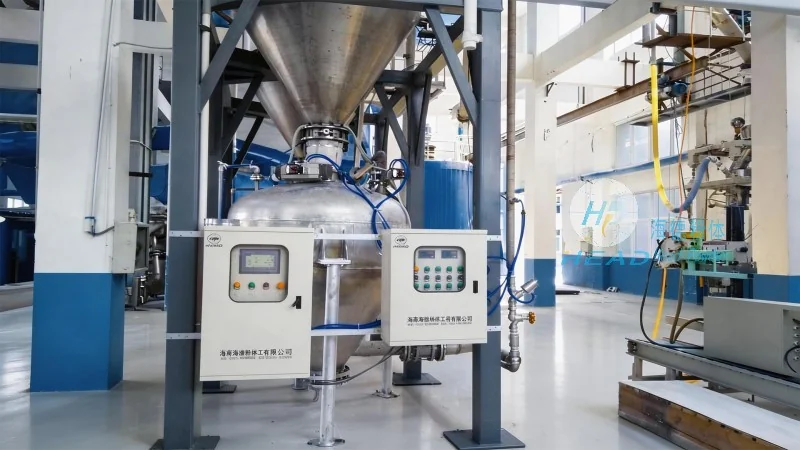
Choosing the correct air mover is the first step. For quartzite, oil-free rotary lobe blowers are widely adopted because they provide high volumetric flow at moderate pressures without introducing lubricant contamination. In larger installations, centrifugal compressors offer greater efficiency but require careful filtration to prevent erosion from fine silica dust. headpowder‘s standard design uses blowers with oversized bearings and hardened rotors to withstand continuous operation in mineral processing environments. The feeding device must precisely meter quartzite into the air stream while minimizing air leakage. Rotary airlock valves with abrasion-resistant housing inserts and adjustable rotor tip clearance are essential. For very coarse or hot quartzite, a pressure tank system with pinch valves or ceramic gate valves is more suitable, as it avoids the shear forces that can cause premature wear in rotating feeders.
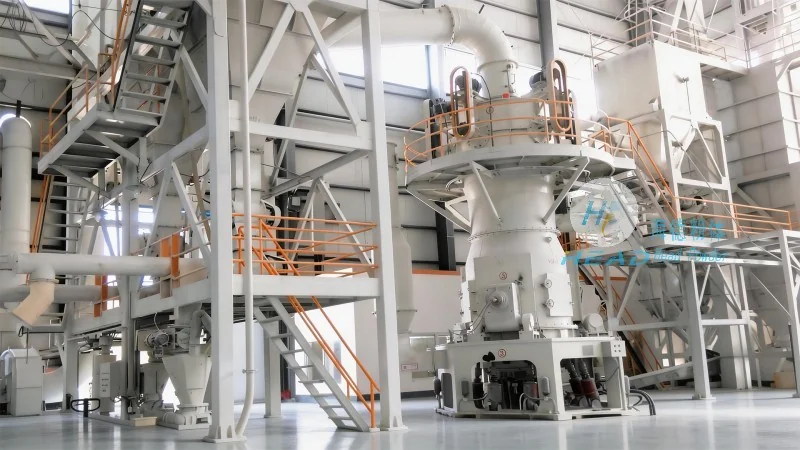
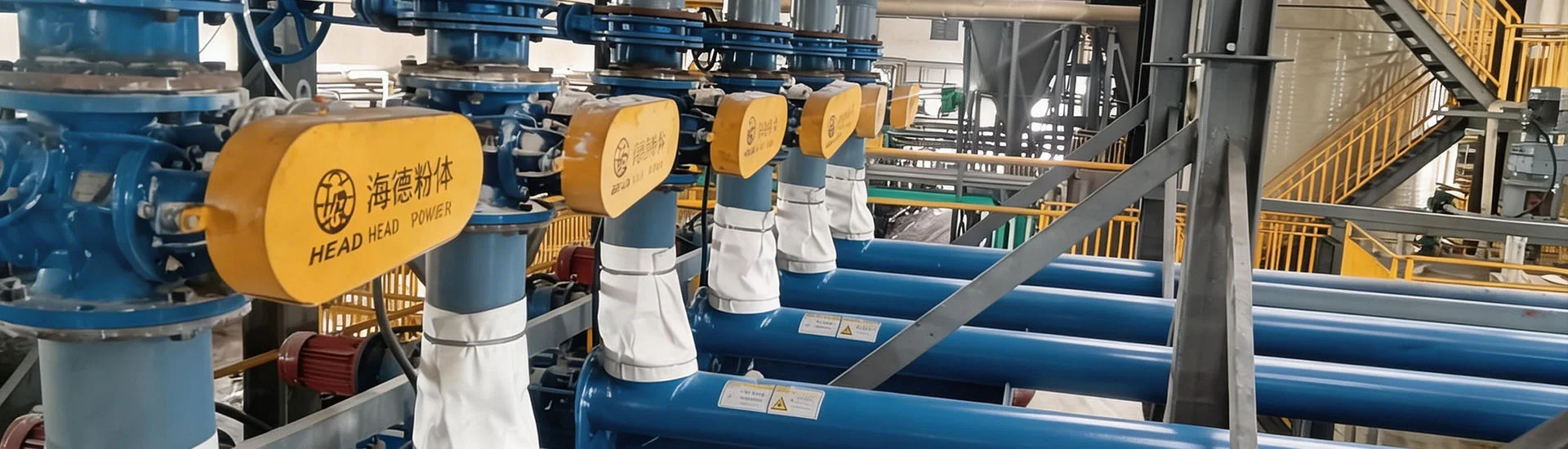
The most significant operational challenge in quartzite pneumatic conveying is abrasive wear on pipelines, bends, and diverter valves. Standard carbon steel piping, even with increased wall thickness, can fail within weeks under high-velocity quartzite flow. Industry best practice, backed by extensive field data, mandates the use of ceramic-lined pipes for all straight sections and bends. These linings, typically 92% or 99.5% alumina, provide hardness exceeding that of quartzite itself (Mohs 9 for alumina), delivering service lives of 5–10 years under normal conditions. headpowder specifies centrifugally cast ceramic tiles bonded to an outer steel jacket, with inner diameters tailored to maintain optimal conveying velocity. Bends are the most vulnerable points; a long-radius bend (R/D ratio of 10–15) with removable ceramic wear boxes allows for periodic inspection and replacement without cutting the pipeline. For smaller diameter systems, cast basalt linings offer a cost-effective alternative where extreme longevity is not required.
Additional wear mitigation techniques include the use of venturi sections to reduce particle impact angles at bends, and the strategic placement of air injection points to accelerate slow-moving material plugs that cause frictional wear. Pipeline layout should minimize the number of horizontal-to-vertical transitions, as these zones experience the highest momentum changes. Using a modular flanged piping system rather than welded joints simplifies replacement of worn sections and reduces system downtime. Regular wall thickness measurements, conducted with ultrasonic sensors, allow operators to schedule maintenance before catastrophic failure occurs. headpowder maintains a database of wear patterns observed across dozens of quartzite installations worldwide, enabling predictive design improvements for each new project.
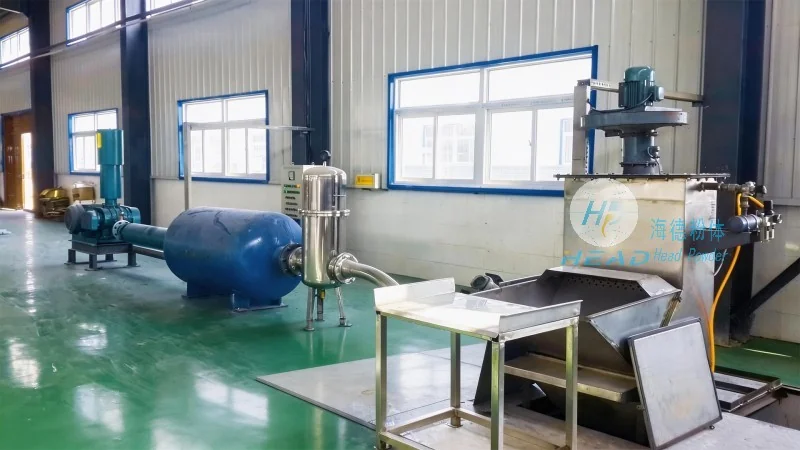
At the receiving end of the pneumatic system, the quartzite must be separated from the conveying air and directed to storage silos or process bins. Cyclone separators are the primary bulk separation device, achieving 99% capture efficiency for particles above 10 microns. For quartzite fines, a secondary baghouse filter or cartridge filter is necessary to meet stringent environmental regulations. The selection of filter media is critical: polyester needle felt with a PTFE membrane coating resists dust adhesion and moisture-related blinding, while also handling the slight attrition fines generated during transport. Pulse-jet cleaning systems with compressed air manifold should be oversized to account for the higher dust load typical of quartzite conveying. headpowder integrates a pre-separation settling chamber before the main filter to reduce the peak dust concentration entering the filter elements by up to 40%, extending filter life and reducing compressed air consumption.
For installations that require simultaneous de-dusting and material cooling, a combined cyclone and heat exchanger can be specified. Hot quartzite from calcining processes (up to 300°C) demands specialised filter bags and housing insulation to prevent condensation and corrosion. The rotary airlock at the filter discharge must be sized to handle the full system throughput without bridging, especially when handling damp quartzite with moisture above 3%. A trickle valve or double-flap valve arrangement provides an added barrier against air leakage while maintaining continuous material discharge. These design considerations are not merely theoretical—they have been proven in field trials at a major quartzite processing facility in Brazil, where a headpowder-supplied system achieved 8,000 hours of uninterrupted operation with filter pressure drop remaining below 1.5 kPa.
Modern quartzite pneumatic conveying systems are moving toward fully integrated digital control architecture. Programmable logic controllers (PLCs) with touchscreen human-machine interfaces (HMIs) offer real-time monitoring of air pressure, material flow rate, pipeline velocity, and equipment status. By 2026, the industry is expected to adopt predictive maintenance algorithms using machine learning to anticipate blower bearing failure, pipeline erosion, and filter bag blinding based on historical operating data. For example, a pressure transmitter placed at the product pickup point can detect subtle changes in differential pressure that signal an incipient pipeline blockage caused by moisture variation or particle size segregation. headpowder incorporates open-protocol communication (Modbus TCP, Profinet) as standard, allowing seamless integration with existing plant DCS systems.
Variable frequency drives (VFDs) have become almost universal on blower motors because they allow precise velocity control to match conveying requirements for different quartzite grades. During idle periods, VFDs reduce power consumption by up to 60% compared to fixed-speed systems. Another emerging trend is the use of sonic flow meters to measure air velocity directly, rather than relying on pressure-derived estimates. This data enables closed-loop control of the product-to-air ratio, reducing energy waste and minimizing wear. For multi-product lines that handle both quartzite and softer minerals, rapid changeover sequences with automated valve switching can reduce downtime from hours to minutes. The latest European Union Energy Efficiency Directive (2024 revision) has set benchmarks for specific energy consumption in pneumatic conveying, and compliant systems typically achieve 2.5–3.5 kWh per ton of quartzite transported over a 100-meter horizontal distance, a metric that top-tier manufacturers including headpowder already meet or exceed.
Successful deployment of a quartzite pneumatic conveying system hinges on thorough pre-installation planning and rigorous commissioning. The first critical parameter is the actual particle size distribution of the source material. Quartzite mined from different deposits can range from blocky, angular fragments (10–50 mm) to finely crushed dust (below 1 mm). A representative sample analysis, including sieve curve, bulk density (typical 1.5–2.0 t/m³), and moisture content, must be used to calculate the minimum transport velocity to prevent saltation (particle dropout). Standard equations, such as the Zenz correlation or the newer Klinzing model, are applied with a safety factor of 15% to account for irregularities. For a typical coarse quartzite application, a 150 mm diameter pipeline operating at 20 m/s will handle 30–40 t/h at a pressure drop of 0.8 bar over a 200 m route.
During installation, all piping must be supported with vibration dampeners at intervals of 3–4 meters to avoid stress fatigue from the pulsed flow. Expansion joints should be placed at blower discharge and at the filter inlet to accommodate thermal expansion when conveying hot material. A properly designed purge sequence is essential: before startup and after shutdown, the system must be purged with air alone to clear any residual material that could settle and harden. Operators need training on rapid identification of signs of wear, such as increased noise at bends or visible dust leakage. headpowder provides on-site commissioning support with a detailed start-up protocol, including two weeks of process tuning to optimize air-to-material ratio for the specific quartzite grade. One notable case involved a German quartzite plant that reduced their annual maintenance cost by 40% after headpowder replaced an old mechanical conveyor with a dense phase pneumatic system, eliminating conveyor belt replacement and reducing housekeeping labor.
Regulatory pressure on industrial dust emissions continues to tighten globally. The World Health Organization's updated air quality guidelines (2021) and subsequent national implementations require particulate matter (PM10 and PM2.5) concentrations at plant boundaries to remain below 50 µg/m³. A closed pneumatic system inherently contains the quartzite stream, but the weakest link is often the venting and filter discharge. headpowder integrates bag leak detection monitors combined with automatic isolation dampers to prevent any fugitive emission event. For systems handling fine quartzite dust below 5 microns, wet scrubbers or electrostatic precipitators can be added downstream of the baghouse to achieve <10 mg/Nm³ emission levels. Additionally, noise reduction enclosures for blowers and compressors bring sound levels below 85 dB(A) at 1 meter, a requirement in many European and North American permits. The systems are designed with multiple emergency stops, pressure relief valves set at 4.0 bar, and flame arrestors if the conveying air might contain combustible dust (quartzite is non-combustible, but residual organic binders in some processed forms require caution). Proper grounding and bonding of all metallic components prevent electrostatic discharge, especially in dry climates where quartzite particles can generate static charges exceeding 20 kV.
While the initial capital expenditure for a ceramic-lined pneumatic conveying system is higher than for a conventional belt or screw conveyor, the total cost of ownership over a 10‑year period strongly favors the pneumatic solution for quartzite. Reduced labor costs, elimination of spillage cleanup, lower maintenance spend, and higher process availability (typically exceeding 98% uptime) contribute to a payback period of 18–24 months. The sealed nature of the system also prevents product contamination from external dirt, preserving the high purity that commands premium pricing in the solar-grade quartz market. According to a 2025 industry benchmark report, plants using modern dense-phase pneumatic conveying for quartzite report 30% less energy per ton compared to legacy dilute-phase designs, thanks to the reduced air volume requirement. As renewable energy demand continues to drive silicon production, the ability to expand conveying capacity without additional civil works (by upgrading blower speed and pipeline pressure rating) gives operators flexibility to meet future market growth. For any project evaluation, headpowder offers free preliminary feasibility analysis using computational fluid dynamics (CFD) modelling to predict system performance and deliver accurate budget estimates. (咨询热线:156-6277-7102)
In conclusion, the overview of quartzite pneumatic conveying system equipment presented here underscores the necessity of specialized engineering solutions. From the selection of abrasion-resistant materials to the integration of smart automation, every design choice directly impacts operational efficiency and profitability. As the global quartzite market continues to expand through 2026 and beyond, investing in a robust, well-designed pneumatic conveying system is not merely a matter of handling logistics—it is a strategic decision that influences product quality, environmental compliance, and long-term competitiveness. By staying abreast of technological developments and tailoring each system to the specific physical properties of the quartzite being conveyed, plant operators can achieve reliable, low-cost transport that meets the highest industry standards. headpowder remains committed to advancing these technologies, providing equipment that combines wear life, energy efficiency, and ease of maintenance for the most demanding mineral processing applications.

 Shandong headpowder Engineering Co., Ltd.
 156-6277-7102(Manager Zhang)
  0531-83386006
  Jinan City, Shandong Province, China
服务热线
微信咨询
回到顶部