News
Rich project cases across industries, showing real implementation and proven technical strength.In the rapidly evolving landscape of bulk material handling, the transport of purified terephthalic acid (PTA) powder presents unique challenges that demand specialized engineering solutions. PTA, a key intermediate in polyester production, is typically produced as a fine, free-flowing powder with a bulk density ranging from 0.5 to 0.7 g/cm³ and particle sizes predominantly between 50 and 200 microns. These characteristics make it prone to dust generation, electrostatic buildup, and degradation under mechanical stress. Conventional mechanical conveyors, such as belt or screw systems, often fall short in maintaining product integrity and preventing contamination. Pneumatic conveying, by contrast, offers a closed, dust-free, and highly flexible method for moving PTA powder from storage silos to production lines. This article explores the core principles, equipment configurations, and operational strategies behind PTA powder pneumatic conveying systems, providing a professional reference for engineers and decision-makers evaluating such solutions. With the global PTA market projected to grow at a compound annual growth rate of approximately 5.2% through 2026, driven by expanding polyester fiber and bottle resin demand, the need for reliable and efficient conveying infrastructure has never been more critical.
The design of a pneumatic conveying system for PTA powder begins with a thorough understanding of the material's flow properties and the specific process requirements. Dilute phase conveying, where the material is suspended in high-velocity air, is common for short distances but may cause particle attrition and pipe erosion due to high impact velocities. For PTA powder, which is sensitive to impact and can generate fines that affect downstream melt flow, dense phase conveying is generally preferred. In dense phase systems, the powder is transported at low air velocities using positive pressure or vacuum, forming slugs or moving bed plugs that minimize product damage. The conveying pressure typically ranges from 1 to 4 bar(g) for positive pressure systems, while vacuum systems operate at about -0.5 to -0.7 bar(g). Selecting the appropriate blower type—roots blowers, screw compressors, or side channel blowers—depends on the required airflow, pressure, and energy efficiency. For a typical PTA powder transfer rate of 10 to 50 tonnes per hour, a system designed with a material-to-air ratio of 10:1 to 30:1 by weight can achieve both low energy consumption and gentle handling.
Key equipment components in a PTA powder pneumatic conveying solution include the feed system, conveying pipeline, separation system, and control unit. The feed system often employs a rotary airlock valve or a blow tank, depending on whether the process demands continuous or batch conveying. Rotary valves must be designed with tight clearances and hardened wear surfaces to handle PTA powder's abrasiveness, while blow tanks offer better control for dense phase transport. Pipelines should be constructed from stainless steel or carbon steel with smooth internal surfaces to reduce friction and prevent material buildup. Bends must be sweep-type with generous radii—typically at least 10 times the pipe diameter—to prevent stagnation zones where PTA powder might agglomerate or block. At the receiving end, a cyclone separator or a bag filter is used to disengage the product from the conveying air. For PTA powder, reverse pulse jet bag filters with PTFE membranes are recommended to achieve particulate emission levels below 10 mg/Nm³, meeting stringent environmental regulations. The entire system is governed by a programmable logic controller (PLC) that monitors pressure, flow, and differential pressure across filters, enabling automatic adjustments to maintain optimal conveying conditions.
One of the critical challenges in conveying PTA powder is moisture control. Even small amounts of moisture—above 0.3% by weight—can cause caking, bridging, and flow irregularities. Therefore, the conveying air must be dried to a dew point of -20°C or lower using refrigeration or desiccant dryers. Additionally, the system should be equipped with purge gas injection points at strategic locations to clear any residual material after a conveying cycle. Another factor is electrostatic discharge, which can pose ignition risks in PTA powder plants. The use of conductive pipes, grounding straps, and inert gas padding in closed-loop systems can mitigate these hazards. A well-designed pneumatic conveying solution also incorporates maintenance-friendly features such as quick-opening inspection hatches, wear-resistant pipe liners at bends, and centralized grease points for rotating equipment. When evaluating suppliers, it is essential to review case studies or performance data from installations handling similar materials. Headpowder, as a specialist in powder handling equipment, has deployed multiple PTA pneumatic conveying systems across polyester production facilities in Asia and the Middle East, achieving consistent powder transfer without degradation or process interruptions.
Before finalizing a pneumatic conveying solution, a detailed material characterization study is indispensable. For PTA powder, key parameters include particle density, bulk density, angle of repose, moisture content, and adhesion characteristics. Laboratory flowability tests, such as the Hausner ratio or Carr index, help predict whether the material will flow freely or require vibration aids. For PTA with an angle of repose between 30° and 40°, standard hopper designs with a minimum outlet diameter of 0.5 meters are generally adequate. However, if the powder shows a tendency to arch, mechanical agitators or air pads may be necessary. The conveying velocity is another critical variable: for dilute phase transport, velocities typically range from 15 to 25 m/s, while dense phase systems operate at 2 to 8 m/s. The saltation velocity—the point at which particles begin to drop out of suspension—must be calculated using empirical correlations such as the Zenz or Rizk equations. A safety margin of 1.2 to 1.5 times the saltation velocity is standard practice to ensure stable flow. Pipeline pressure drop calculations should account for straight sections, bends, vertical rises, and fittings, using methods like the Darcy-Weisbach equation adapted for two-phase flow. For a 200-meter horizontal line and a 30-meter vertical lift handling 20 t/h of PTA, the expected pressure drop might range from 0.6 to 1.2 bar, depending on pipe diameter and bend configuration.
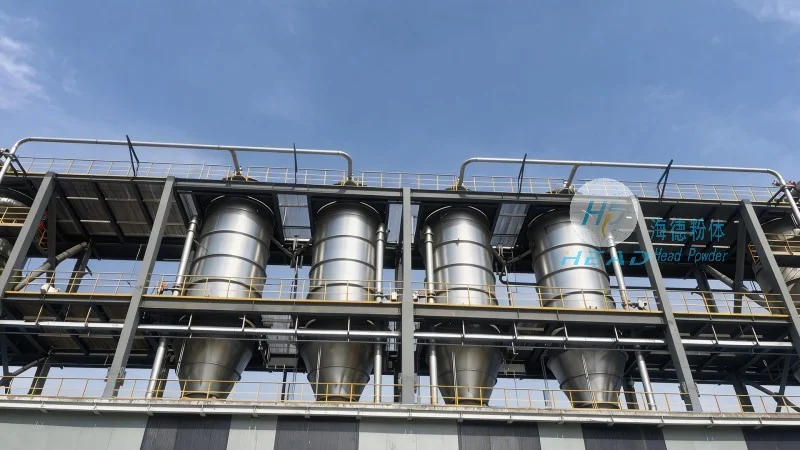
Selecting the right components for a PTA powder pneumatic conveying system directly impacts operational uptime and maintenance costs. Blowers should be sized with a 10% to 15% capacity margin to accommodate future throughput increases. For PTA applications, liquid ring compressors are sometimes favored for their ability to handle moist gas, but dry screw compressors offer better energy efficiency and oil-free operation. Valves, especially diverter valves and pinch valves, must be resistant to PTA's abrasive nature. Ceramic-lined valves have shown excellent durability in field trials, extending service life by three to five times compared to standard steel. Filter receivers must be designed with adequate cloth area: a typical rule of thumb is 0.6 to 0.8 m² of filter media per tonne per hour of capacity for PTA powder. Automatic differential pressure cleaning ensures continuous operation without manual intervention. Headpowder incorporates condition monitoring sensors—vibration probes on blowers, pressure transmitters along the pipeline, and dust monitors on exhausts—into its control systems, enabling predictive maintenance alerts. In one documented case, a Headpowder system for a major polyester producer in Southeast Asia achieved 99.8% equipment availability over 18 months of continuous operation, with only scheduled shutdowns for filter bag replacement.
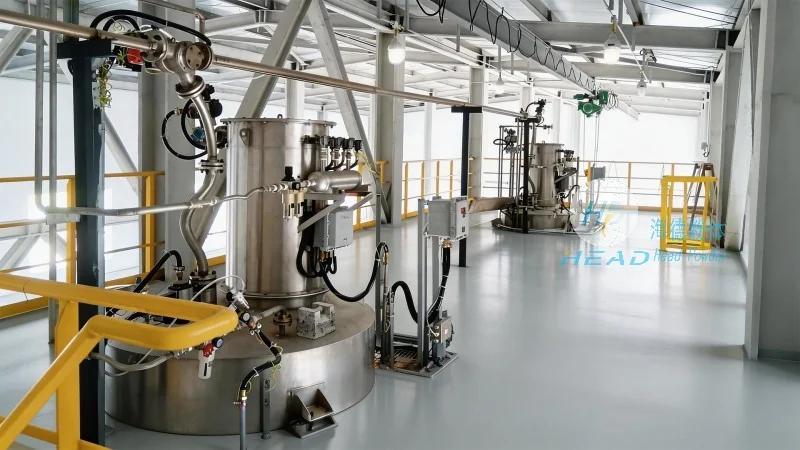
Another dimension of reliability is the conveying line's behavior during startup, shutdown, and blockages. Soft-start algorithms for blowers and gradual pressurization of blow tanks help prevent slugging that can damage pipes. Emergency purging sequences, triggered by high-pressure alarms, automatically inject compressed air to clear blockages. The control logic should include lost-flow detection: if the product does not reach the destination within a calculated time window, the system initiates a remote purge before a complete blockage can form. For plants handling multiple PTA grades or switching between different polyesters, a flexible conveying solution with multiple pick-up points and diverter stations is essential. Headpowder's modular designs allow plant engineers to reconfigure conveying routes without major mechanical changes, reducing changeover downtime by up to 40%.
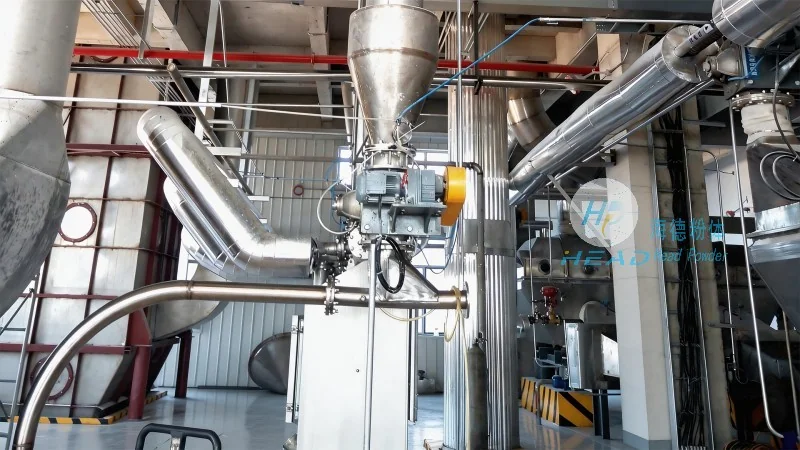
Energy consumption in pneumatic conveying can represent a significant portion of a plant's operating cost. For PTA powder, optimizing the air-to-material ratio is the most effective lever. In dense phase systems, this ratio can be as low as 5 kg of air per kg of product, versus 15 to 20 in dilute phase. Variable frequency drives (VFDs) on blower motors allow precise control of air volume, reducing energy usage by 20% to 35% compared to constant-speed operation. Heat recovery from the blower's discharge air can also be integrated into plant heating or drying processes, further improving overall efficiency. Environmentally, closed-loop pneumatic conveying eliminates dust emissions to the atmosphere. Baghouse filters with high-efficiency cartridge elements capture particulates down to 1 micron, ensuring compliance with even the strictest local air quality standards. For PTA powder, which can be hygroscopic, the conveying air must be conditioned to prevent condensation inside the filter bags. Heated filter housings or desiccant purge systems are often specified. Headpowder provides lifecycle energy analysis for each system, helping customers quantify potential savings. In one recent project, a 30 t/h PTA dense phase system retrofitted with VFDs and optimized pipeline sizing reduced annual power consumption by 128,000 kWh compared to the client's previous dilute phase system.
Safety and dust explosion prevention are paramount in PTA powder handling. Even though PTA's minimum ignition energy (MIE) is relatively high—typically around 100 mJ—accumulated fine dust in enclosed spaces can still be hazardous. Pneumatic conveying systems must comply with standards such as ATEX or NFPA 654. Headpowder designs all equipment with explosion isolation valves, vent panels, and grounding systems. The conveying air is often enriched with nitrogen or carbon dioxide to reduce oxygen concentration below the limiting oxygen concentration (LOC), which for PTA is about 12% by volume. Pressure shock-resistant construction is used for blow tanks and filter vessels, rated for at least 10 bar(g) to withstand deflagration events. These engineering controls, combined with rigorous cleaning protocols and maintenance schedules, ensure that the conveying system meets the highest safety benchmarks.
A typical Headpowder project for PTA powder pneumatic conveying follows a structured engineering workflow: conceptual design, detailed engineering, factory acceptance testing, installation supervision, and commissioning. In a recent deployment for a Chinese polyester fiber plant, the system was designed to transfer 25 t/h of PTA from a railway unloading station to three day bins located 180 meters away, with an elevation gain of 22 meters. The client's existing mechanical conveyors caused significant dust emissions and required weekly cleaning. After a four-month engineering phase, Headpowder installed a dense phase pressure system featuring a 12 m³ blow tank, a 6-inch stainless steel pipeline with sweeping bends, and a reverse jet baghouse. The total installed cost was 15% lower than competing bids, and the system achieved a power consumption of 1.8 kWh per tonne of material—a 30% improvement over the client's earlier estimates. Two years after start-up, the system continues to operate with 0.2% product degradation (measured by particle size distribution shift), well within the 0.5% specification. The client reported a 95% reduction in baghouse maintenance frequency and a 60% decrease in visible dust around the unloading area.
Long-term support is a critical aspect of any industrial equipment investment. Headpowder offers remote monitoring capabilities, allowing its service engineers to access real-time data from the PLC and diagnose issues before they cause downtime. Spare parts—including rotary valve components, filter bags, and valve seals—are stocked in regional warehouses to ensure rapid delivery. For plants that anticipate future capacity expansions, the system can be designed with plug-and-play provisions for additional blow tanks or pipelines. Headpowder also provides periodic system audits to optimize conveying parameters as material characteristics change over time. These services, combined with a robust warranty program, give operators confidence in the long-term reliability of their PTA powder handling infrastructure.
When considering a pneumatic conveying solution for PTA powder, decision-makers should evaluate not only the upfront capital cost but also the total cost of ownership, including energy, maintenance, and downtime. A system optimized for dense phase transport, equipped with advanced control and monitoring, and built with abrasion-resistant materials will deliver superior returns over a 10-year lifecycle. Headpowder combines deep material knowledge with practical field experience to engineer solutions that meet the specific demands of each application. For those planning new polyester production lines or upgrading existing material handling systems, a detailed consultation with experienced engineers is the first step toward a successful installation. (咨询热线:156-6277-7102) Headpowder's team is ready to discuss your project requirements and provide a tailored proposal that aligns with your capacity, budget, and quality objectives.
In summary, the effective pneumatic conveying of PTA powder requires a holistic approach that balances material properties, equipment selection, energy efficiency, and safety compliance. With the global polyester market expanding and production facilities pushing for higher throughput and lower emissions, investing in a well-designed pneumatic system is a strategic move. The technology has matured to the point where dense phase conveying can handle even challenging powders like PTA with minimal degradation and dust. By partnering with a specialist like Headpowder, companies can leverage decades of experience in powder handling, from feasibility studies through to after-sales support. Whether the need is a single conveyor line or an integrated plant-wide solution, the principles outlined here provide a solid foundation for evaluating and implementing a reliable PTA powder pneumatic conveying system.

 Shandong headpowder Engineering Co., Ltd.
 156-6277-7102(Manager Zhang)
  0531-83386006
  Jinan City, Shandong Province, China
服务热线
微信咨询
回到顶部