News
Rich project cases across industries, showing real implementation and proven technical strength.In the rapidly evolving landscape of advanced industrial processing, the efficient and reliable handling of bulk materials remains a critical determinant of operational success. Among the many materials that pose unique challenges, aluminum oxide powder stands out due to its abrasive nature, high density, and tendency to form cohesive agglomerates. Pneumatic conveying systems designed specifically for aluminum oxide powder are not merely a matter of moving material from point A to point B; they represent a comprehensive solution that integrates engineering precision, material science, and process control. This article explores the core components, system architecture, selection parameters, and emerging trends in pneumatic conveying equipment for aluminum oxide powder, providing a detailed reference for plant managers, process engineers, and decision-makers seeking to optimize their powder handling operations. With a focus on real-world applicability and technical depth, we examine how tailored system designs can mitigate common issues such as pipe wear, particle degradation, and energy inefficiency, ultimately delivering measurable improvements in throughput and cost-effectiveness. The discussion draws on industry best practices and current market data, reflecting the state of the art as of 2026, and highlights the value of partnering with experienced system integrators who understand the nuances of this demanding application.
Aluminum oxide (Al₂O₃), often referred to as alumina, is a widely used industrial material with applications ranging from abrasives and ceramics to refractories and catalysts. Its physical characteristics directly influence pneumatic conveying system design. With a typical bulk density ranging from 0.8 to 1.5 g/cm³ depending on grade and particle size distribution, and a Mohs hardness of approximately 9, aluminum oxide is one of the hardest common powders. This hardness accelerates wear on conveying pipelines, bends, and diverter valves, necessitating the use of wear-resistant materials such as ceramic-lined pipe or hardened steel. Additionally, the powder often exhibits poor flowability due to its irregular particle shapes and surface roughness, which can lead to bridging, rat-holing, and plugging in storage vessels. The particle size distribution, typically between 0.5 and 100 micrometers, also influences the conveying regime—dense phase or dilute phase—and the required air velocity. Understanding these properties is the foundation for selecting the right pneumatic conveying equipment system solution, and it underscores why a one-size-fits-all approach is inadequate for aluminum oxide powder.
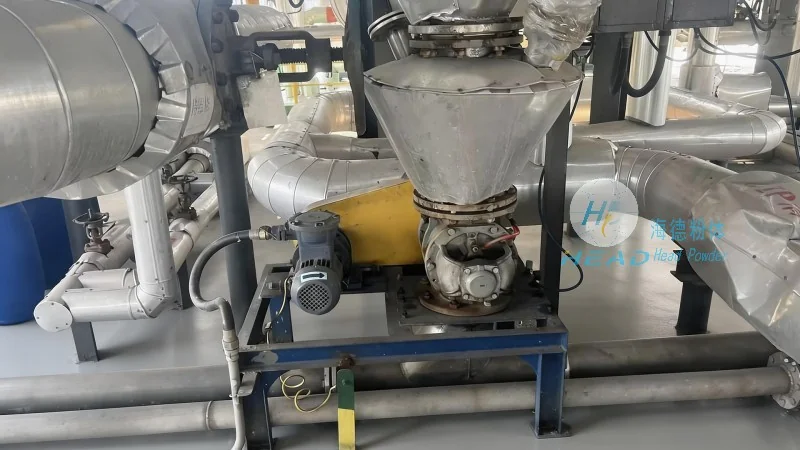
A robust pneumatic conveying system for aluminum oxide powder comprises several key subsystems, each engineered to handle the material's demanding characteristics. The feeding device—often a rotary airlock valve or a screw feeder—must provide a consistent, controlled material flow into the conveying line while minimizing air leakage. For abrasive powders, rotary valves with hardened rotor tips and replaceable wear sleeves are standard. The conveying pipeline itself requires careful routing to minimize bends, as each change in direction accelerates erosion. Long-radius bends with ceramic backing or replaceable wear sections are industry recommendations. The air mover—typically a positive displacement blower or a roots-type compressor—must deliver the necessary pressure and volume to maintain the desired phase regime. Filtration and separation at the discharge point are equally critical; baghouse filters or cartridge collectors with high-efficiency filtration media prevent dust emissions while recovering the product. Control systems incorporating PLCs with adaptive logic allow operators to adjust conveying parameters in real time based on material moisture content or line pressure fluctuations. Each component must be sized and specified based on the specific plant layout, conveying distance, and throughput requirements, which can range from 1 ton per hour in small batch operations to over 50 tons per hour in large-scale alumina refineries.
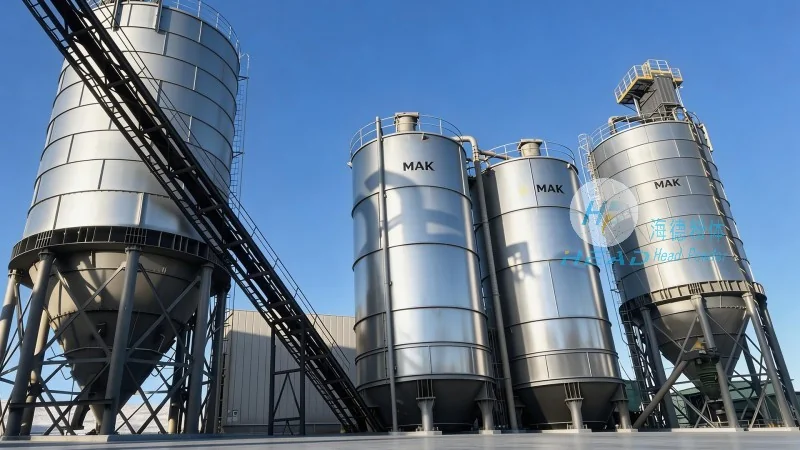
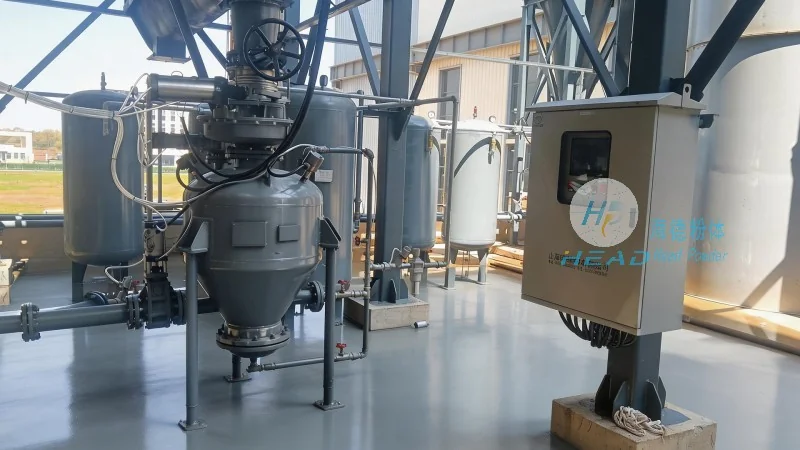
Two primary pneumatic conveying regimes exist for aluminum oxide powder: dilute phase and dense phase. Dilute phase conveying, characterized by high air velocities (typically 15–30 m/s) and low product-to-air ratios, is suitable for short distances and when particle degradation is not a primary concern. However, for aluminum oxide, the high velocity accelerates pipe wear and can cause significant particle attrition, especially for friable grades used in catalyst applications. Dense phase conveying, operating at lower velocities (2–8 m/s) and higher material concentrations, offers distinct advantages: reduced wear, lower energy consumption per ton, and minimal particle damage. The trade-off includes higher initial capital costs and more complex system design, as the material must be pressurized and fluidized effectively. Plug-flow dense phase systems, often employing pulse-phase technology, are particularly effective for cohesive alumina powders, as they move the material in discrete slugs rather than a continuous stream, reducing line pressure fluctuations. The selection between these regimes should be guided by a thorough analysis of material properties (particle size, shape, moisture content), conveying distance (under 100 meters typically favors dense phase for abrasive materials), and the acceptable level of fines generation. Industry data from 2026 indicates that over 65% of new aluminum oxide powder handling installations in the chemical and ceramics sectors now opt for dense phase systems, driven by long-term maintenance cost savings and improved product quality.
Wear management is arguably the most critical design factor in aluminum oxide powder pneumatic conveying. Without proper mitigation, pipe wall thinning can lead to leaks, unscheduled downtime, and safety hazards. Common strategies include the use of high-chromium alloy steel, alumina ceramic tiles bonded to pipe interiors, or cast basalt linings. For bends, the application of a replaceable wear box or a blind tee design allows maintenance without full line replacement. Additionally, system designers must optimize air-to-material ratios to avoid unnecessary energy consumption. A well-designed system can reduce specific energy consumption by 15–25% compared to a poorly matched configuration. Computational fluid dynamics (CFD) simulations are increasingly employed during the engineering phase to model particle trajectories, identify high-wear zones, and predict pressure drops. These simulations, combined with empirical data from pilot tests, enable engineers to balance wear life and energy use. For example, reducing conveying velocity from 20 m/s to 12 m/s in a dilute phase system can extend pipe life by a factor of three while cutting blower power draw by approximately 40%. However, such changes must be validated to ensure that the powder remains suspended and does not settle. A comprehensive approach—integrating material testing, flow modeling, and component selection—delivers a solution that aligns with both operational budgets and sustainability goals.
A pneumatic conveying system does not operate in isolation; it must seamlessly interface with storage silos, dryers, classifiers, grinding mills, and packaging lines. For aluminum oxide powder, moisture control is a recurring challenge. Even small amounts of moisture (above 0.5% by weight) can drastically reduce flowability and promote caking, leading to blockages in conveying lines. Therefore, integrating a pre-conveying drying step or a heated air supply is often necessary, particularly in humid climates. On the downstream side, the conveying system must deliver the powder to a receiving hopper or process vessel that can handle the material's abrasive nature without excessive wear. In many installations, vibratory feeders or air-assisted discharge devices help maintain consistent flow out of the receiver. Additionally, the control system should communicate with upstream processes to synchronize material feed rates with production demand. For example, in a ceramics plant producing aluminum oxide grinding media, the conveying system might feed directly into a pressing station where powder is compacted into green bodies. Any interruption in the conveying line can halt the entire production line, making reliability paramount. headpowder has developed integrated solutions that include proprietary wear-monitoring sensors and predictive maintenance algorithms, allowing operators to replace wear components proactively rather than reactively, reducing unplanned downtime by up to 30% in field studies.
The global market for pneumatic conveying equipment is projected to grow at a compound annual growth rate of 5.2% through 2030, driven by increasing demand for advanced ceramics, lithium-ion battery components (where aluminum oxide is used as a separator coating), and high-purity alumina for semiconductor applications. In 2026, the aluminum oxide powder conveying segment accounts for an estimated 12% of the total bulk materials handling market, with particular strength in Asia-Pacific and North America. Key technology trends include the adoption of IoT-enabled monitoring systems that track pipeline wear rates in real time using ultrasonic sensors, and the use of variable frequency drives (VFDs) on blower motors to optimize energy consumption based on production load. Environmental regulations are also shaping system designs: many jurisdictions now require dust collection efficiency exceeding 99.9% for fine alumina dust, pushing filter manufacturers to develop nanofiber media with lower pressure drops. Furthermore, the industry is seeing a shift toward modular, skid-mounted conveying systems that can be rapidly deployed and relocated, reducing installation time by as much as 40%. These market dynamics emphasize the importance of selecting a system solution that is not only technically sound but also adaptable to future process changes and regulatory requirements.
To illustrate the practical impact of proper system design, consider a recent installation at a mid-sized specialty chemicals facility that required conveying 12 tons per hour of calcined aluminum oxide over a distance of 85 meters, with a vertical lift of 18 meters. The original dilute phase system suffered from severe pipe wear requiring biannual replacement, and the product experienced a 3% increase in fines due to particle degradation. After a detailed material analysis and CFD modeling, headpowder engineers recommended a transition to a plug-flow dense phase system with ceramic-lined bends and a dedicated air dryer. The new system reduced pipe wear to levels requiring maintenance only once every five years, lowered energy consumption by 22%, and cut fines generation to under 0.5%. The project payback period was under 14 months, driven by savings in replacement parts and improved product yield. This example underscores the value of a tailored solution that addresses the specific challenges of aluminum oxide powder, and it demonstrates how a systematic approach can deliver tangible financial and operational benefits.
Implementing a high-performance pneumatic conveying system for aluminum oxide powder demands more than off-the-shelf components; it requires a partner with deep materials handling expertise and a proven track record. headpowder, with decades of experience in designing and manufacturing bulk solids handling equipment, brings a comprehensive approach that begins with laboratory-scale powder characterization and extends through commissioning and post-installation support. The company's engineering team utilizes proprietary software to simulate conveying dynamics and predict wear patterns, ensuring that every component—from the feeder to the filter—is correctly sized. Moreover, headpowder offers on-site training for maintenance personnel, as well as remote diagnostics to minimize response time. For organizations looking to upgrade existing systems or build greenfield plants, partnering with a specialist who understands the complexities of aluminum oxide powder can be the difference between a problematic installation and a smooth-running operation. (咨询热线:156-6277-7102) For more detailed consultation on system specifications or to schedule a site evaluation, industry professionals are encouraged to reach out directly to the headpowder team.
Looking ahead, the pneumatic conveying of aluminum oxide powder will continue to evolve alongside advances in automation and sustainability. Closed-loop control systems using artificial intelligence algorithms are beginning to predict conveying line blockages before they occur, adjusting air velocity or material feed rate dynamically. These smart systems can reduce energy consumption by an additional 10–15% beyond current best practices. Sustainability initiatives are also driving the adoption of regenerative blowers and heat recovery systems that capture compressed air heat for other plant processes. For alumina powder specifically, the push toward carbon-neutral production in the ceramics and metals industries will require conveying systems that minimize dust emissions and resource waste. headpowder is investing in research to develop low-wear, high-efficiency conveying components using additive manufacturing techniques, which could enable custom geometries that reduce turbulence and pressure loss. As the industry moves toward Industry 4.0 principles, the role of pneumatic conveying equipment will expand from a simple transport function to a fully integrated element of the digital plant floor, providing real-time data for decision-making and optimization.
In summary, an aluminum oxide powder pneumatic conveying equipment system solution must be built on a solid understanding of material properties, careful selection of conveying regime, rigorous wear management, and seamless process integration. The market in 2026 demands solutions that are not only efficient and reliable but also adaptable to future technological and regulatory changes. By prioritizing engineering precision and partnering with experienced providers like headpowder, companies can achieve lower total cost of ownership, reduced downtime, and improved product quality. Whether the application involves high-purity alumina for electronics or coarse-grained alumina for abrasives, a thoughtful, data-driven system design remains the key to unlocking operational excellence. (咨询热线:156-6277-7102) For those ready to evaluate their current conveying setup or explore a new installation, professional guidance is available to turn these technical insights into a practical, high-performing solution.

 Shandong headpowder Engineering Co., Ltd.
 156-6277-7102(Manager Zhang)
  0531-83386006
  Jinan City, Shandong Province, China
服务热线
微信咨询
回到顶部