
In the modern coffee production industry, the method by which green or roasted coffee beans are moved between processing stages directly influences product quality, operational efficiency, and overall cost management. Pneumatic conveying has emerged as a preferred solution for handling coffee beans due to its closed-system design, gentle material handling, and adaptability to complex facility layouts. Unlike mechanical conveyors that rely on belts, buckets, or screws, pneumatic systems use air pressure or vacuum to transport beans through sealed pipelines. This technology eliminates dust emissions, reduces the risk of cross-contamination, and minimizes bean breakage—a critical advantage given that even minor mechanical damage can affect bean integrity and subsequent roasting consistency. For facilities processing hundreds of kilograms per hour, a well-designed pneumatic conveying system can reduce labor requirements, lower maintenance downtime, and provide precise control over flow rates. As the global coffee market continues to grow—projected to reach over 500 million bags annually by 2026—processors are seeking reliable, scalable conveying solutions that integrate seamlessly with roasting, grinding, and packaging lines. This guide explores the engineering principles, system configurations, and best practices for deploying pneumatic conveying specifically for coffee beans, with actionable insights for plant managers, process engineers, and facility designers.
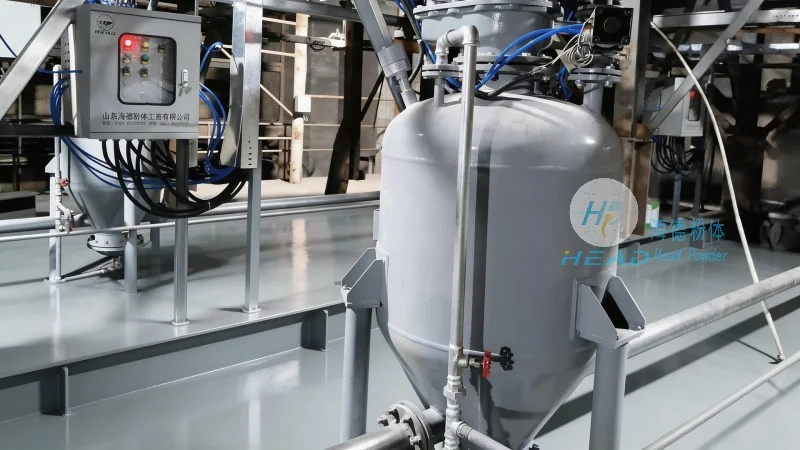
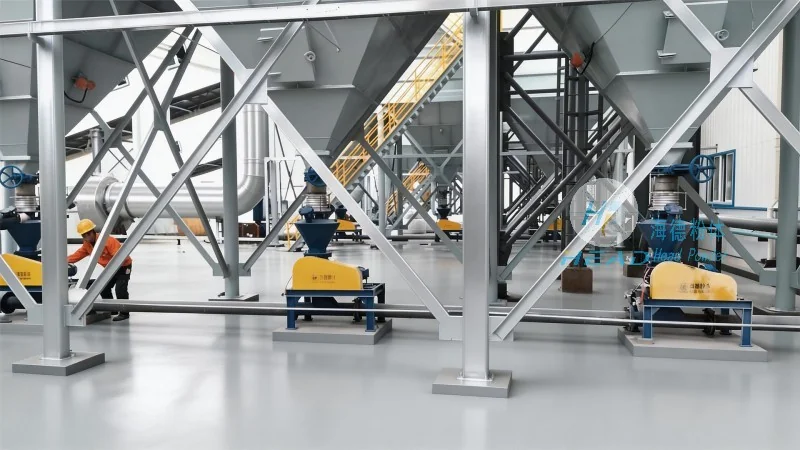
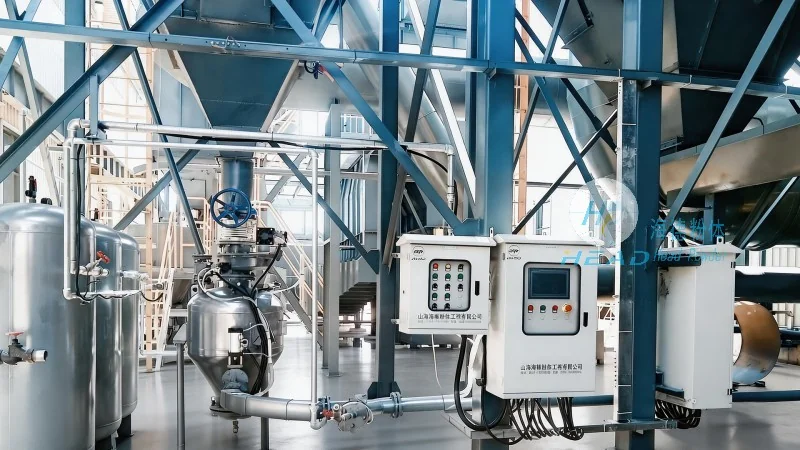
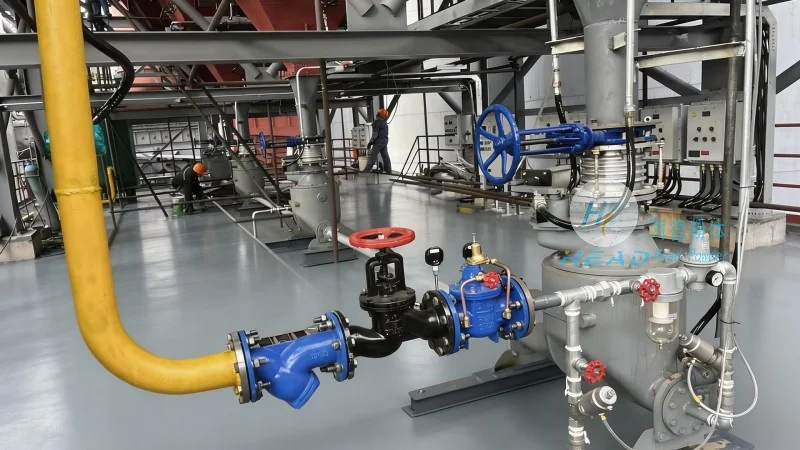
Pneumatic conveying operates on the principle of entraining solid particles in a moving air stream. For coffee beans, the system must balance conveying velocity to keep beans suspended without causing excessive impact or attrition. Two primary configurations exist: dilute phase and dense phase. Dilute phase systems use high air velocity (typically 20–30 m/s) to suspend beans in a low-concentration stream, suitable for shorter distances or when multiple discharge points are needed. Dense phase systems operate at lower velocities (4–10 m/s) with higher material-to-air ratios, pushing beans in slugs or plugs through the pipeline, which significantly reduces bean-to-pipeline collisions and preserves bean surface quality. The choice between these depends on bean type—green beans are more resilient, while roasted beans are brittle and require gentler handling. Key components include a rotary airlock feeder for metered entry, a blower or vacuum pump creating the pressure differential, a diverter valve for routing, and a cyclone separator or filter receiver for product-air separation. Pipeline diameter, bend radius, and material of construction (typically stainless steel for food-grade compliance) must be matched to bean characteristics. For example, using a 90-degree long-radius bend instead of a short-radius one can reduce bean breakage by up to 40% in dilute phase systems. Headpowder has engineered its conveying solutions with customized bend geometries and internal surface finishes that minimize friction and static buildup, ensuring consistent throughput even with varying bean moisture content.
Designing a pneumatic conveying system for coffee beans requires careful evaluation of several interrelated factors. First, bean density and shape influence the minimum conveying velocity. The average bulk density of green Arabica beans ranges from 650 to 720 kg/m³, while roasted beans are lighter at 350–450 kg/m³ due to moisture loss and internal pore structure. These differences demand velocity adjustments: roasting beans in a dilute phase system may require velocities below 18 m/s to avoid fragmentation. Second, conveying distance and elevation changes affect pressure drop. A system moving beans over 50 meters horizontally with 10 meters of vertical lift might require a pressure differential of 0.5–0.8 bar, depending on pipe diameter and number of bends. Third, temperature and humidity conditions can cause condensation or clumping, particularly with roasted beans that are hygroscopic. Insulating pipelines and incorporating air drying units become necessary in humid climates. Fourth, cleaning and sanitation requirements must meet food safety standards such as FSMA or EU hygiene directives. Pneumatic systems with smooth interior welds, minimal dead zones, and quick-disconnect fittings allow for efficient cleaning between product runs. Industry data from 2025 indicates that properly designed pneumatic systems achieve conveying efficiencies exceeding 95%, with bean breakage rates below 0.5% by weight for roasted beans and below 0.1% for green beans. Headpowder’s engineering team applies computational fluid dynamics (CFD) simulations during the design phase to optimize air distribution and predict wear patterns, resulting in systems that maintain performance over five to seven years with routine maintenance.
The decision between dilute phase and dense phase conveying has significant implications for product quality, energy consumption, and capital investment. Dilute phase systems, while simpler and lower in initial cost, subject beans to higher impact forces. In tests conducted by independent processing laboratories, dilute phase conveying of roasted beans at 25 m/s resulted in approximately 1.2% fines generation (particles below 1 mm), compared to 0.3% fines with dense phase at 6 m/s. For specialty coffee roasters where bean appearance and whole-bean count are premium indicators, even minor breakage can degrade product value. Dense phase systems, though requiring higher-pressure blowers and more robust pipelines, offer gentler handling and lower air consumption—often 30–50% less energy per ton conveyed. They also allow for longer conveying distances without intermediate boosting. However, dense phase systems are more sensitive to bean moisture variations; wet beans can cause plugging. A hybrid approach, using dense phase for roasted beans and dilute phase for green beans within the same facility, is becoming common among midsize roasters. Headpowder provides modular system designs that integrate both modes with automated switching, enabling a single conveying infrastructure to handle multiple bean types. In one deployment for a European specialty coffee producer, switching from a pure dilute phase to a headpowder hybrid system reduced bean breakage by 67% while cutting annual energy costs by €12,000, with a payback period of 14 months.
Each component in a pneumatic conveying system must be selected to match the specific demands of coffee bean transport. Blowers are typically of the positive displacement type (Roots or rotary vane) for consistent airflow, or centrifugal for high-volume, lower-pressure applications. For dense phase conveying, screw compressors may be used to generate pressures up to 3 bar. Rotary airlock feeders must have rotor pockets sized to prevent bean jamming; a six-blade rotor with hardened steel tips and adjustable clearance reduces leakage and wear. Pipelines should be Schedule 40 or 10 stainless steel with internal welds ground smooth to eliminate crevices where beans could lodge. Bend radii should be at least 8 times the pipe diameter, and tees or wyes should be avoided in favor of diverter valves with smooth internal transitions. Filters and cyclones must achieve separation efficiencies of 99.5% or higher to prevent bean fines from entering the blower and causing premature bearing failure. Instrumentation including pressure transmitters, flow sensors, and load cells on receiving hoppers enables real-time monitoring and automatic flow adjustments. Headpowder integrates IoT connectivity into its control panels, allowing operators to visualize conveying rates, detect blockages before they escalate, and schedule predictive maintenance based on wear data. A case study from a North American coffee factory showed that after upgrading to headpowder’s optimized component set, unplanned downtime decreased by 80% and conveying capacity increased by 22% without expanding the pipeline network.

Proper installation is critical to achieving the design performance of a pneumatic conveying system. Pipelines should be laid with a slight downward slope (1–2 degrees) toward the destination to assist flow and prevent buildup at low points. Support brackets must be spaced every 3–4 meters to avoid sagging, and expansion joints should be included where temperature differentials exceed 20°C. During commissioning, the system should be run at gradually increasing feed rates while monitoring pressure, velocity, and bean quality at each discharge point. Adjustments to air volume or rotary feeder speed are often needed to match actual bean characteristics. Safety considerations include grounding all metal components to dissipate static electricity—coffee bean dust can be combustible at certain concentrations. Explosion venting panels, spark detection, and suppression systems are recommended for indoor installations handling large volumes. Additionally, emergency stops and interlocks should prevent operation when access doors are open. Headpowder provides on-site commissioning support and training for operator teams, ensuring that maintenance staff understand how to calibrate sensors and replace wear parts. The company also offers performance guarantees tied to measurable KPIs such as throughput rate, breakage percentage, and energy consumption per ton, giving clients confidence in their investment.

The coffee processing industry is undergoing rapid changes driven by sustainability goals, automation, and demand for traceability. By 2026, it is estimated that over 40% of new coffee processing facilities will incorporate fully integrated pneumatic conveying systems with digital twin capabilities. Energy efficiency remains a top priority: advances in variable frequency drives (VFDs) for blowers now allow real-time speed modulation based on material flow, reducing energy use by up to 35% compared to fixed-speed systems. Additionally, the use of recycled air recirculation loops is gaining traction, where filtered exhaust air is reintroduced into the intake, cutting HVAC loads and carbon footprint. Another emerging trend is the integration of inline moisture sensors and optical sorters within the conveying line, enabling real-time quality control without requiring separate sampling stations. For roasters dealing with multiple bean origins, automated recipe-based conveying that adjusts parameters for each batch minimizes changeover time and ensures consistent treatment. Headpowder is actively developing systems that incorporate wireless sensor networks and AI-driven flow prediction, allowing facilities to anticipate maintenance needs and optimize energy consumption across multiple lines. As the industry moves toward higher throughput and zero-defect quality standards, pneumatic conveying will continue to evolve as the backbone of modern coffee bean handling.

Selecting and implementing a pneumatic conveying system for coffee beans is a technical decision that directly impacts product quality, operational costs, and long-term scalability. From understanding the fundamental differences between dilute and dense phase conveying to carefully choosing components, every step requires domain expertise and attention to bean-specific properties. A well-designed system not only reduces breakage and dust but also enables flexible routing, easier cleaning, and integration with upstream and downstream equipment. With the coffee market’s continued expansion and increasing consumer focus on bean integrity, investing in a high-performance conveying solution becomes a competitive advantage. Headpowder has delivered over 150 pneumatic conveying installations worldwide for coffee applications, ranging from small artisanal roasters to large industrial facilities. Their engineering approach combines simulation, component optimization, and hands-on commissioning to ensure that each system meets its targeted performance criteria. For plant managers and engineers evaluating new conveyors or upgrading existing ones, the key is to engage a partner with proven experience in coffee bean handling. To discuss your specific conveying requirements or request a system feasibility study, please contact the headpowder team at 156-6277-7102. Choosing the right technology today will secure consistent, efficient, and gentle bean transport for years to come.
Shandong headpowder Engineering Co., Ltd.
156-6277-7102(Manager Zhang)
0531-83386006
Jinan City, Shandong Province, China 
服务热线
微信咨询
回到顶部