
Carbon black is a finely divided, high-purity form of carbon produced through the controlled combustion or thermal decomposition of hydrocarbons. With an average particle size typically ranging from 10 to 500 nanometers, it presents unique handling challenges due to its low bulk density, high surface area, and cohesive nature. These physical characteristics make carbon black notoriously difficult to convey using traditional mechanical methods. Dust generation, material degradation, and system clogging are common issues that can lead to significant operational inefficiencies, safety hazards, and product quality loss. In modern industrial environments, where throughput demands are increasing and environmental regulations are tightening, selecting the right conveying technology is no longer a secondary consideration—it is a strategic decision that directly affects production reliability, energy consumption, and workplace safety. Pneumatic conveying systems have emerged as the preferred solution for carbon black transport across industries such as rubber manufacturing, plastics, pigments, and battery materials. Unlike screw conveyors or belt systems, pneumatic systems use air or inert gas to move material through enclosed pipelines, offering superior dust containment, flexibility in routing, and the ability to handle fragile or abrasive powders without mechanical wear. The global pneumatic conveying system market was valued at approximately USD 5.8 billion in 2025 and is projected to grow at a compound annual growth rate of 6.2% through 2032, driven by increasing automation in powder processing and stricter emission standards. For carbon black specifically, the demand for efficient, low-maintenance conveying solutions is accelerating as producers seek to optimize yields while minimizing fugitive emissions. In this context, a deep understanding of system design, component selection, and operational parameters is essential for engineers and plant managers. This article provides a comprehensive overview of pneumatic conveying systems for carbon black, covering fundamental principles, system types, key design considerations, emerging trends, and practical implementation insights—all while highlighting how headpowder’s engineering expertise can help achieve reliable, cost-effective performance.
Pneumatic conveying relies on the aerodynamic force of a gas stream to suspend and transport particulate solids through a pipeline. The two primary modes are dilute phase and dense phase conveying, each suited to different material properties and application requirements. In dilute phase conveying, particles are fully suspended in the gas stream at relatively high velocities—typically between 15 and 40 m/s. This mode is effective for materials that are free-flowing and non-abrasive, but for carbon black, the high velocity can cause significant particle attrition, leading to a change in particle size distribution and increased dust generation. Furthermore, the erosive wear on pipe bends and fittings can be substantial, especially at conveying distances beyond 100 meters. Dense phase conveying, by contrast, moves material at much lower velocities—often below 5 m/s—by using a higher solid-to-gas ratio. The material forms a continuous bed or slugs that are pushed through the pipeline under pressure. This mode dramatically reduces particle degradation and pipeline wear, making it highly suitable for fragile or cohesive powders like carbon black. However, dense phase systems require more precise control of air pressure and feed rates to prevent plugging. For carbon black, a hybrid approach known as "medium phase" or "semi-dense" conveying is sometimes adopted, where a controlled amount of bypass air helps maintain flow stability. The choice between dilute and dense phase is not simply a function of material; it also depends on conveying distance, capacity requirements, and the specific grade of carbon black. For example, low-structure grades with higher oil absorption tend to be more cohesive and may demand a fully dense phase design, while high-structure grades with better flowability can tolerate slightly higher velocities. headpowder’s engineering team conducts thorough material characterization—including bulk density, permeability, and shear testing—before recommending a system type, ensuring that the conveying behavior is predicted accurately from the outset.
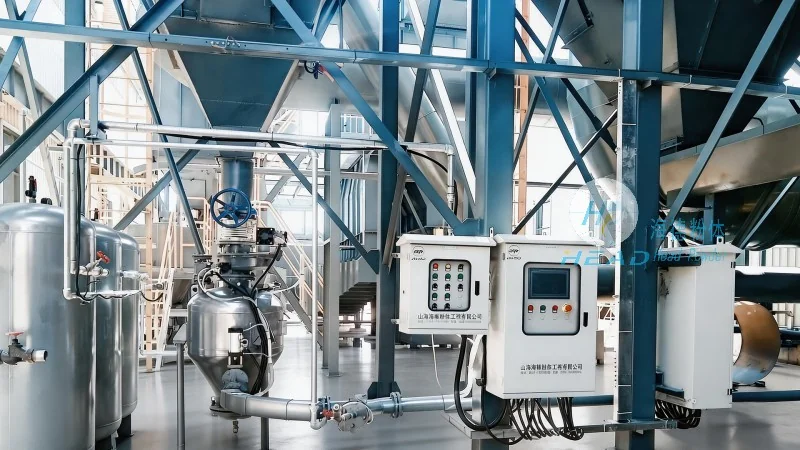
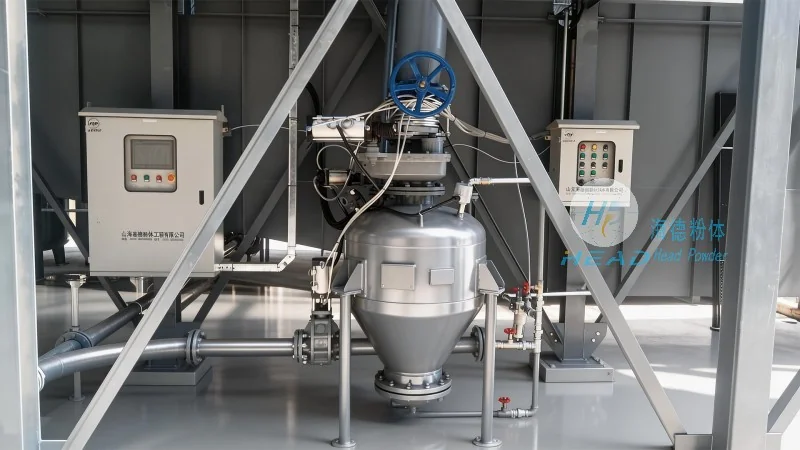
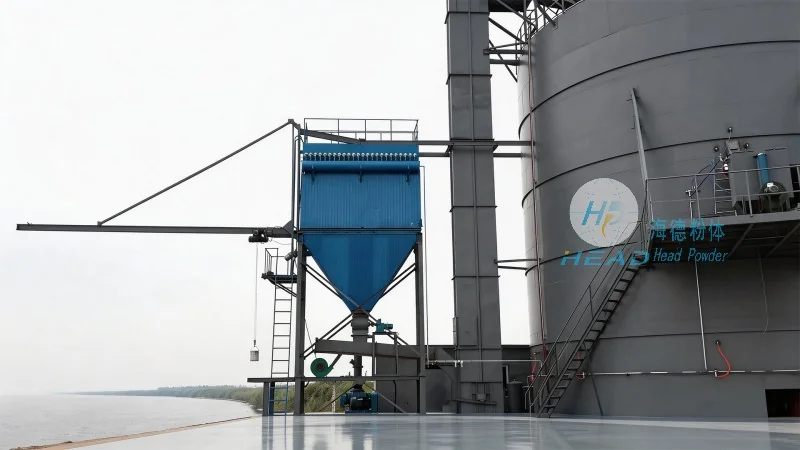
A robust pneumatic conveying system for carbon black comprises several critical components, each of which must be carefully selected to match the material’s characteristics and the plant’s operational goals. The feeder is arguably the most important element, as it controls the rate at which carbon black enters the conveying line. Rotary airlock valves are common for dilute phase systems, but for cohesive carbon black, special designs with larger pockets and adjustable rotor tips are required to prevent bridging and blowback. Screw feeders with variable speed drives offer finer control and are often used in dense phase systems. The pipeline itself must be designed with smooth interior surfaces, generous bend radii—typically a minimum of 10 times the pipe diameter—and wear-resistant materials such as ceramic-lined or hardened steel sections at high-impact zones. Pipe diameter selection is a balance between maintaining adequate velocity without causing excessive pressure drop; for carbon black, common diameters range from 80 mm to 200 mm depending on throughput. The gas source, usually a positive displacement blower or a screw compressor, must deliver clean, dry air to avoid moisture absorption by the hydroscopic carbon black. After conveying, the separation of carbon black from the conveying gas is achieved through cyclone separators, baghouse filters, or a combination. Cyclones are effective for coarse particle recovery, but fine carbon black (sub-10 micron) requires high-efficiency filter media with continuous pulse-jet cleaning to maintain pressure differentials. Safety considerations are paramount: carbon black is classified as a combustible dust, and all electrical components must be explosion-proof. Grounding of the entire system is mandatory to dissipate static electricity, and inert gas blanketing (e.g., nitrogen) is often recommended for processes handling high-volatility grades. Modern systems also incorporate advanced instrumentation—mass flow meters, pressure transmitters, and temperature sensors—feeding data to a central control system for real-time optimization. headpowder integrates these components into a modular design that simplifies maintenance and allows future scalability. For instance, in a recent project for a rubber compound manufacturer, headpowder replaced a failing mechanical conveyor with a dense phase pneumatic system that reduced dust emissions by 98% and cut energy consumption by 30% compared to the previous dilute phase setup.
As the global carbon black market is projected to surpass USD 25 billion by 2026, driven by growth in tire production, automotive coatings, and conductive polymers, the conveying systems serving this industry are evolving rapidly. One of the most significant trends is the shift toward digital twin and predictive maintenance technologies. By creating a virtual replica of the conveying system that simulates airflow, pressure profiles, and wear patterns, plant engineers can identify potential blockages or component fatigue before they cause unplanned downtime. Advanced sensors combined with machine learning algorithms are now capable of detecting subtle changes in pipe wall thickness or fan vibration, enabling condition-based maintenance that extends equipment life. Another emerging trend is the adoption of centralized vacuum conveying networks for multiple silos and processing lines. Instead of having individual blowers for each pickup point, a single high-capacity vacuum system can serve multiple inlets through automated diverters, reducing capital costs and floor space. Energy efficiency remains a top priority: variable frequency drives on blowers and compressors can lower power consumption by 20–40% during partial load operation. In parallel, environmental regulations are becoming stricter; the European Union’s Industrial Emissions Directive and similar standards in North America are pushing carbon black producers to reduce fugitive emissions to below 5 mg/m³. This has accelerated the adoption of closed-loop conveying systems with continuous emission monitoring. Furthermore, the rise of sustainable carbon black—produced from end-of-life tires or biomass pyrolysis—poses new conveying challenges due to variations in particle shape and agglomeration tendency. headpowder has been at the forefront of adapting pneumatic technology for these novel materials, developing specialized feeders and anti-bridging devices that ensure consistent flow without compromising the product’s unique properties. By staying abreast of these macro trends, headpowder offers clients future-proof solutions that align with both economic and environmental goals.

While off-the-shelf pneumatic conveying systems can handle generic powders, carbon black demands a level of customization that few suppliers can provide consistently. headpowder’s engineering philosophy centers on a deep understanding of the material’s rheological behavior under varying temperature and humidity conditions. Each system begins with a detailed site survey that includes pipe routing constraints, available utility capacities, and existing dust collection infrastructure. Using proprietary simulation software, the team models the conveying dynamics for the specific carbon black grade—whether it is furnace black, thermal black, or acetylene black—predicting pressure drops, saltation velocities, and potential settling zones. This simulation-driven design eliminates guesswork and ensures that the system performs within tight tolerances from day one. Material selection for wetted parts is another area where headpowder differentiates itself. For highly abrasive grades, the company uses a combination of stainless steel 304L with ceramic tile lining in elbows; for grades that tend to cake, anti-stick surface treatments are applied. The control system is built around a PLC with a user-friendly HMI that provides real-time visibility of mass flow, air-to-solid ratio, and filter differential pressure. headpowder also offers remote monitoring capabilities, allowing the support team to diagnose issues and fine-tune parameters without requiring an on-site visit. One example of this approach in action is a major carbon black producer in the Asia-Pacific region that required a 12-ton-per-hour conveying system for a new production line. The plant had limited headroom and needed to convey over 280 meters with multiple elevation changes. headpowder’s design incorporated a combination of dense phase for the main run and dilute phase for short-distance transfers to a packaging station. The system achieved a conveying efficiency of 92%, well above the industry average of 70–80%, and has been operating continuously for over three years with only routine maintenance. Such outcomes are not coincidental; they result from a commitment to rigorous testing, including full-scale pilot runs at headpowder’s research facility before final installation.

Implementing a pneumatic conveying system for carbon black requires a structured project lifecycle that balances technical precision with operational pragmatism. The initial feasibility study involves evaluating the existing plant layout, material flow rates, and downstream equipment compatibility. For retrofits, this phase is particularly critical because the new pneumatic system must interface with legacy storage silos, mills, and packaging lines without disrupting production. headpowder’s project managers use a phased approach: Phase 1 includes material sampling and laboratory tests to determine aeration characteristics and compressibility; Phase 2 covers detailed engineering and piping stress analysis; Phase 3 involves fabrication and quality inspection of all components; and Phase 4 is on-site installation, commissioning, and operator training. Throughout the process, safety documentation such as Hazard and Operability (HAZOP) studies and dust explosion risk assessments are compiled to meet OSHA and ATEX requirements. A notable challenge during commissioning is fine-tuning the conveying parameters to account for real-world variations in bulk density, which can fluctuate by up to 15% between batches. headpowder’s controls engineers program adaptive algorithms that automatically adjust conveying air velocity and feed rate based on real-time pressure readings, ensuring stable operation even with inconsistent material. After commissioning, a comprehensive performance verification test is conducted, measuring key metrics such as specific energy consumption (kWh/ton), conveying capacity (tons/hour), and residual dust in the return air. The results are documented in a final report that serves as a baseline for future maintenance planning. Customers consistently report that headpowder’s structured methodology reduces the risk of startup delays and ensures that the system meets or exceeds design specifications. headpowder (咨询热线:156-6277-7102) provides a full suite of after-sales services, including spare parts inventory management, annual system audits, and remote troubleshooting, so clients can focus on their core production with confidence.

The next decade will see pneumatic conveying systems for carbon black become smarter, greener, and more integrated with overall plant digitalization. Artificial intelligence will increasingly be used to optimize conveying schedules based on real-time production demands and energy pricing. For example, a system could automatically switch between dense phase and dilute phase modes during off-peak hours to lower electricity costs while maintaining throughput. Another frontier is the use of additive manufacturing for custom pipe fittings and feeder components that reduce turbulence and wear. In parallel, the push toward carbon neutrality in the chemical industry is driving the adoption of closed-loop nitrogen recovery systems that recirculate conveying gas, cutting both operating expenses and scope 1 emissions. headpowder is already investing in these technologies, collaborating with research institutes to develop sensor fusion algorithms that predict conveying line blockages with 95% accuracy up to 30 minutes in advance. For customers who prioritize sustainability, headpowder offers life-cycle carbon footprint assessments for their conveying installations, helping them quantify environmental benefits. As the industry continues to evolve, the partnership between carbon black producers and experienced pneumatic conveying specialists will be a decisive factor in maintaining competitive advantage. By combining deep process knowledge with a commitment to continuous improvement, headpowder remains a trusted ally for enterprises seeking reliable, efficient, and future-ready material handling solutions. Whether the goal is to expand capacity, improve product quality, or achieve net-zero targets, pneumatic conveying systems designed with precision and executed with care will continue to be the backbone of carbon black processing for years to come.
Shandong headpowder Engineering Co., Ltd.
156-6277-7102(Manager Zhang)
0531-83386006
Jinan City, Shandong Province, China 
服务热线
微信咨询
回到顶部