

Coal Gangue Pneumatic Conveying Technology: In-Depth Analysis and Application of Negative Pressure a
Coal gangue, as a byproduct of coal mining and processing, poses significant challenges in handling and transportation due to its high volume and abrasive nature. Traditional methods such as truck transport or belt conveyors often suffer from high operational costs, environmental pollution, and inefficiencies in material handling. To address these issues, pneumatic conveying technology has emerged as a viable solution, offering efficient, flexible, and environmentally friendly alternatives. This article delves into the technical aspects of coal gangue pneumatic conveying, focusing on the two primary systems: negative pressure and positive pressure conveying, and explores their applications in real-world scenarios.
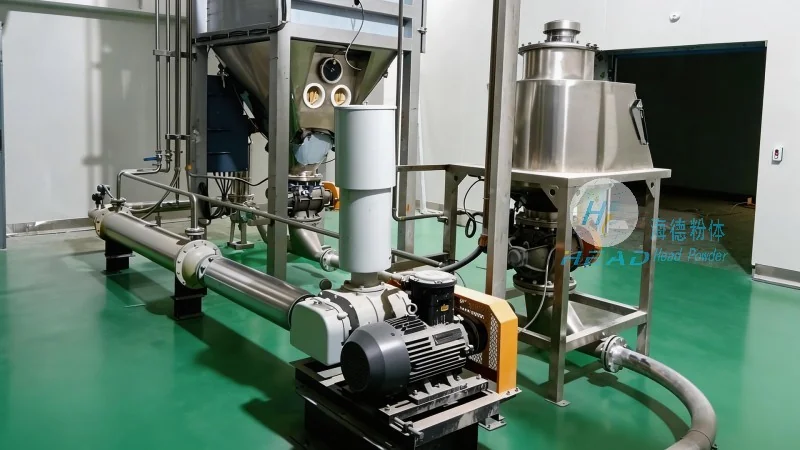
Company Introduction: Shandong HeadPowder Engineering Co., Ltd.
HeadPowder, a leading engineering firm specializing in material handling solutions, has been at the forefront of developing advanced pneumatic conveying systems for industrial applications. With a strong commitment to innovation and customer satisfaction, the company provides comprehensive services ranging from system design and installation to maintenance and technical support. HeadPowder's expertise in coal gangue handling has enabled it to deliver customized solutions tailored to the unique requirements of mining and power generation industries. The company's headquarters is located in Shandong, China, where it leverages local resources and industry knowledge to serve clients globally.
Understanding Pneumatic Conveying Systems for Coal Gangue
Pneumatic conveying involves the transport of solid materials using air or gas as the conveying medium. This technology is particularly suitable for coal gangue due to its ability to handle abrasive and dusty materials while minimizing environmental impact. The two main categories of pneumatic conveying systems are negative pressure (or suction) and positive pressure (or pressure) systems, each with distinct characteristics and applications.
Negative Pressure Pneumatic Conveying: Principles and Applications
Negative pressure conveying operates by creating a vacuum in the conveying line, which draws the material from the source to the destination. This system is ideal for applications where the material needs to be transported from a high point to a lower point or over long distances without the need for external power at the receiving end. The key components of a negative pressure system include a suction fan, a hopper or feeder, a conveying line, and a filter or separator. The suction fan generates the vacuum, while the feeder controls the flow rate of the material into the line. The filter is crucial for capturing dust and preventing it from being released into the environment.
One of the primary advantages of negative pressure conveying is its ability to handle large volumes of material with minimal energy consumption. This makes it particularly suitable for long-distance transport of coal gangue from mining sites to processing facilities or disposal areas. Additionally, the system is relatively simple in design, requiring fewer components compared to positive pressure systems, which can reduce installation and maintenance costs. However, negative pressure systems may have limitations in terms of the maximum distance and material size they can handle, as the vacuum pressure is limited by the fan's capacity.
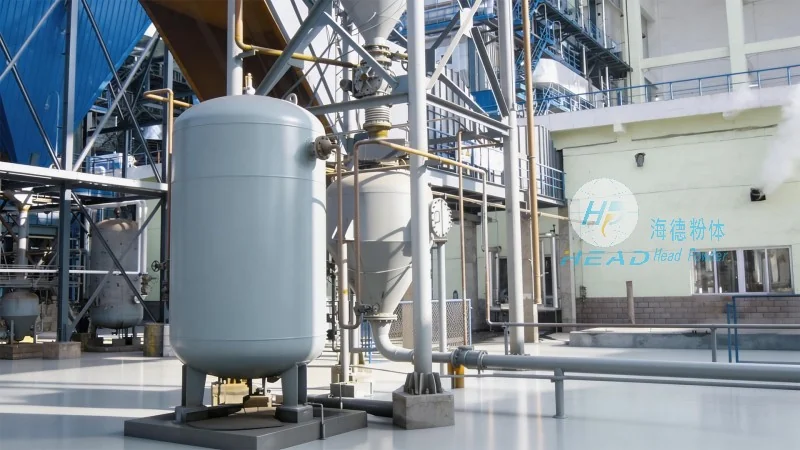
Positive Pressure Pneumatic Conveying: Technical Features and Use Cases
Positive pressure conveying, on the other hand, uses a blower or compressor to generate pressure in the conveying line, pushing the material from the source to the destination. This system is commonly used for short to medium-distance transport, where the material needs to be moved from a lower point to a higher point or over relatively short distances. The main components of a positive pressure system include a blower, a hopper or feeder, a conveying line, and a dust collector. The blower provides the necessary pressure to move the material, while the feeder controls the flow rate. The dust collector is essential for capturing any airborne particles and ensuring compliance with environmental regulations.
Positive pressure systems offer several advantages, including higher conveying speeds and the ability to handle a wider range of material sizes and densities. They are particularly effective for transporting coal gangue from processing plants to storage or disposal sites, where the material needs to be moved over shorter distances with higher efficiency. However, positive pressure systems typically require more energy compared to negative pressure systems, as they operate under higher pressure. Additionally, the system may be more complex to install and maintain, especially for longer conveying distances.
Comparative Analysis: Negative vs. Positive Pressure Conveying for Coal Gangue
When selecting between negative and positive pressure pneumatic conveying systems for coal gangue, several factors need to be considered, including the distance of transport, the elevation change, the material characteristics, and the energy availability. Negative pressure systems are generally more energy-efficient for long-distance, downhill transport, while positive pressure systems are better suited for short-distance, uphill transport with higher material throughput. The choice also depends on the environmental regulations and the available space for system installation. For example, in mining operations where coal gangue needs to be transported from a mine to a processing plant over a distance of several kilometers, a negative pressure system may be more cost-effective. Conversely, in power plants where coal gangue is transported from a storage area to a disposal site over a short distance, a positive pressure system may be preferred.
Application Examples: Real-World Implementations
HeadPowder has successfully implemented both negative and positive pressure pneumatic conveying systems for coal gangue handling in various industrial settings. One notable project involved the design and installation of a negative pressure system for a coal mine in Shandong, China. The system was used to transport coal gangue from the mine to a nearby processing facility over a distance of 5 kilometers. The system was capable of handling up to 100 tons per hour of material, with a conveying efficiency of over 95%. The negative pressure system was chosen due to the long distance and downhill transport requirements, which minimized energy consumption and operational costs.
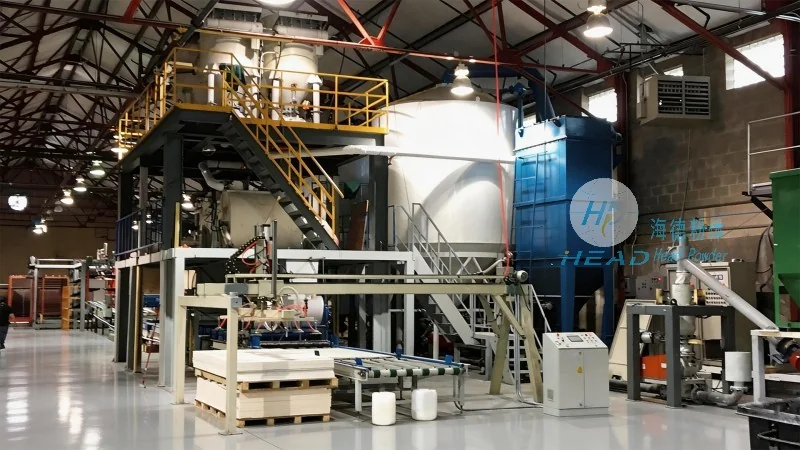
Another project involved a positive pressure system for a power plant in the same region. The system was used to transport coal gangue from the plant's storage area to a disposal site over a distance of 2 kilometers. The system was capable of handling up to 50 tons per hour of material, with a conveying speed of 20 meters per second. The positive pressure system was selected due to the short distance and the need for higher material throughput, which was essential for maintaining the plant's operational efficiency.
Technical Advantages and Considerations
Both negative and positive pressure pneumatic conveying systems offer significant advantages over traditional transport methods for coal gangue. These include reduced labor costs, lower environmental impact, and increased operational flexibility. However, the selection of the appropriate system requires careful consideration of several technical factors. For negative pressure systems, the key considerations include the fan's capacity, the length and diameter of the conveying line, and the material's flow properties. For positive pressure systems, the main considerations are the blower's pressure and flow rate, the system's pressure drop, and the dust collection efficiency. HeadPowder's engineers provide comprehensive technical support to help clients evaluate these factors and select the most suitable system for their specific needs.
Future Trends and Innovations in Coal Gangue Pneumatic Conveying
As the demand for efficient and sustainable material handling solutions continues to grow, the coal gangue pneumatic conveying industry is evolving with new technologies and innovations. Some of the emerging trends include the use of advanced materials for conveying lines, such as high-strength polymers and metal alloys, which can withstand the abrasive nature of coal gangue and extend the system's lifespan. Additionally, the integration of automation and control systems is improving the efficiency and reliability of pneumatic conveying systems, allowing for real-time monitoring and adjustment of the conveying process. HeadPowder is actively researching and developing these innovations to provide cutting-edge solutions for its clients.
In conclusion, pneumatic conveying technology, particularly negative and positive pressure systems, plays a crucial role in the efficient handling and transportation of coal gangue. The choice between the two systems depends on the specific requirements of the application, including distance, elevation, material characteristics, and energy availability. HeadPowder, with its expertise and commitment to innovation, continues to provide high-quality solutions that meet the evolving needs of the mining and power generation industries. By leveraging advanced technology and comprehensive service, the company ensures that coal gangue is handled safely, efficiently, and in an environmentally responsible manner.