News
Rich project cases across industries, showing real implementation and proven technical strength.Selecting an efficient pneumatic conveying system for steel and iron and lime materials is a critical engineering decision that directly impacts production uptime, material quality, and overall operational cost. In the steelmaking industry, lime and iron-rich materials are transported in large volumes, often under harsh conditions involving high temperature, abrasive particles, and varying moisture levels. A poorly designed conveying solution can lead to pipe erosion, material degradation, dust emissions, and frequent maintenance shutdowns. This guide provides a comprehensive framework for evaluating and selecting the right pneumatic conveying system for steel and iron and lime applications, covering system types, material properties, key design parameters, and practical considerations that align with 2026 industry standards and best practices.
The pneumatic conveying market for bulk solids in the metals sector is projected to grow steadily through 2026, driven by increased demand for clean steel production and stricter environmental regulations. According to recent industry reports, the global pneumatic conveying system market is expected to reach approximately USD 45 billion by 2026, with the steel and iron segment accounting for a significant share due to the expansion of electric arc furnace (EAF) capacity and the need for efficient lime injection in desulfurization processes. In this context, selecting a system that balances energy efficiency, material integrity, and reliability becomes not just a technical preference but a strategic investment. headpowder, with over a decade of specialized experience in designing and manufacturing pneumatic conveying equipment for abrasive and reactive powders, offers proven solutions that address the unique challenges of steel and iron and lime handling.
Before any system selection begins, a thorough analysis of the conveyed material is essential. Steel and iron materials—such as iron ore fines, mill scale, pulverized coal injection (PCI) coal, and various ferrous additives—typically exhibit high bulk density, irregular particle shapes, and moderate to high abrasiveness. Lime, whether quicklime (calcium oxide) or hydrated lime (calcium hydroxide), is hygroscopic, reactive with moisture, and can generate significant dust during handling. Quicklime, in particular, reacts exothermically with water, so moisture control is vital to prevent clogging and safety hazards. Particle size distribution (PSD), angle of repose, moisture content, bulk density, and friability are all critical parameters that influence the choice between dilute phase, dense phase, or hybrid conveying methods.
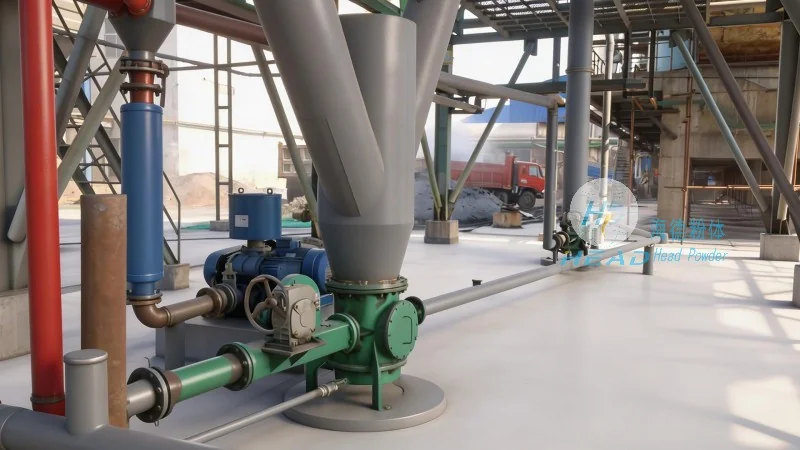
For lime applications, the tendency to cake and the need to preserve particle reactivity require careful selection of conveying velocity and air-to-material ratio. In steel and iron handling, the abrasive nature of materials like iron ore fines can accelerate pipe wear, making the choice of pipe material, bend geometry, and liner thickness a key consideration. headpowder recommends conducting a full material characterization test—including shear cell analysis and abrasion index measurement—before finalizing any system design. This data-driven approach ensures the conveying system is tailored to the exact properties of the specific batch, reducing the risk of premature equipment failure and maintaining consistent process performance.
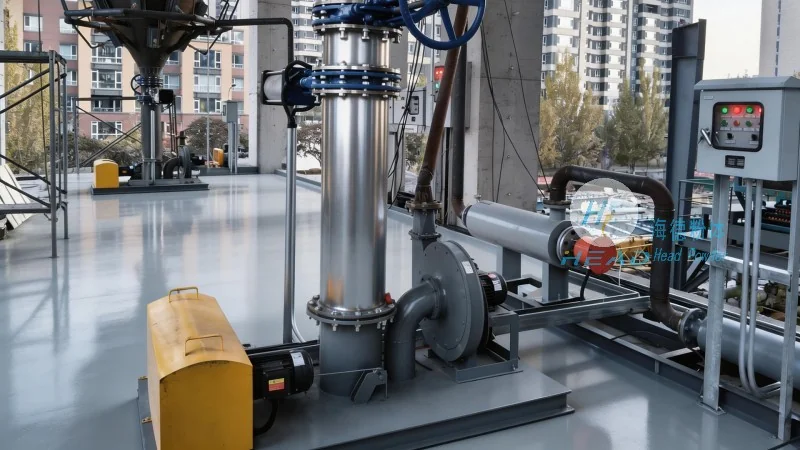
The two primary pneumatic conveying regimes—dilute phase and dense phase—offer distinct advantages depending on the material and application. Dilute phase conveying uses high air velocity (typically 15–30 m/s) to suspend particles in the airstream, making it suitable for non-friable, free-flowing materials with low to moderate abrasiveness. For steel and iron and lime, dilute phase is often used for short distance transfers of less than 100 meters where dust generation is manageable and energy consumption is secondary to throughput. However, with abrasive materials, the high velocity accelerates pipe erosion, leading to higher maintenance costs and potential contamination from metal wear particles.
Dense phase conveying, on the other hand, operates at lower air velocities (1–8 m/s) but higher pressure, moving material in plugs or slugs through the pipeline. This method significantly reduces particle degradation and pipe wear, making it ideal for fragile or abrasive materials like quicklime and iron ore fines. For long-distance conveying (over 200 meters) or vertical lifts, dense phase systems often prove more energy-efficient despite higher initial capital investment. Industry data from 2025–2026 shows that dense phase systems can reduce overall operating costs by 15–25% in steel plant applications compared to dilute phase, mainly due to lower air consumption and reduced replacement parts. headpowder offers both vacuum and pressure dense phase systems with customized air injection points to ensure smooth plug flow for sticky lime materials, minimizing the risk of blockages that can halt production for hours.
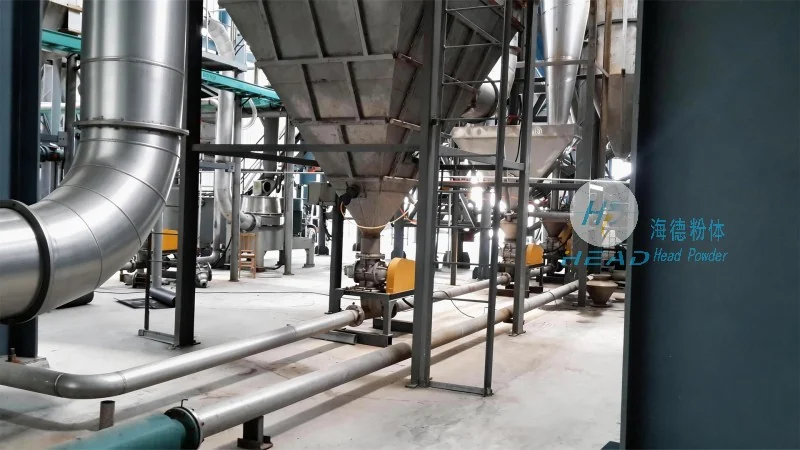
Proper sizing of the air compressor or blower is fundamental. For steel and iron and lime, the required air volume (in Nm³/h) and pressure (in bar g) are determined by the conveying distance, elevation change, number of bends, and material flow rate. A common mistake is oversizing the air supply, which leads to excessive energy consumption and higher-than-necessary velocities. Conversely, undersizing causes material settling and line plugging. The optimal pressure drop across the system should be calculated using standard pneumatic conveying design equations, such as the Darcy-Weisbach formula adapted for two-phase flow, and verified with computational fluid dynamics (CFD) modeling for complex layouts.
Pipeline routing is equally critical. Minimizing the number of long-radius bends and avoiding sharp angles reduces pressure drop and wear. For lime, using smooth interior pipes with abrasion-resistant liners (e.g., ceramic or basalt) can extend service life by 3–5 times compared to standard carbon steel. headpowder recommends a minimum bend radius of 6–10 times the pipe diameter for abrasive materials, and the use of replaceable wear-back sections at high-impact points. Additionally, proper grounding and bonding of the entire conveying line is mandatory to avoid static electricity buildup, which poses a fire and explosion risk in dust-laden environments—a concern that is especially relevant for fine iron particles and powdered lime.
Beyond the conveying line, peripheral components significantly affect overall system reliability. Rotary airlocks, diverter valves, and dust collectors must be selected to match the material's flow characteristics. For lime, rotary valves with hardened tips and close clearances prevent material leakage while minimizing wear. In steel and iron applications, heavy-duty blow tanks with fluidizing cones are often preferred over rotary valves to handle larger particle sizes and higher bulk densities. Dust control is a major regulatory focus: baghouse filters with pulse-jet cleaning and HEPA-grade final filters are increasingly mandated by environmental agencies worldwide. By 2026, many steel plants are adopting closed-loop pneumatic systems that recycle conveying air, cutting dust emissions by over 90% and reducing the carbon footprint.
Integration with existing plant control systems (DCS or PLC) should be seamless. Modern pneumatic systems can incorporate real-time monitoring of pressure, flow, and material level using IoT sensors, enabling predictive maintenance and optimizing energy usage. headpowder's smart control platform provides remote diagnostics and automatic adjustment of conveying parameters based on material moisture changes—a feature that has proven particularly valuable for lime systems where humidity varies seasonally. In a recent case at a steel mill in Shandong province, headpowder's dense phase lime injection system achieved 99.8% uptime over 18 months while reducing compressed air consumption by 22% compared to the previous dilute phase setup.
When evaluating different conveying solutions, it is crucial to look beyond the initial purchase price and consider the total cost of ownership over a 10-year period. Key cost components include energy (compressed air or blower electricity), spare parts (wear components like pipes, bends, and valve seals), maintenance labor, and production losses due to unscheduled downtime. For steel and iron and lime applications, headpowder's analysis indicates that a well-designed dense phase system can achieve a TCO reduction of 18–30% compared to a conventional dilute phase system, despite a 15–20% higher upfront investment. The payback period is typically 1.5 to 3 years, driven mainly by lower air consumption and extended equipment life.
Energy efficiency is being further improved by the adoption of variable frequency drives (VFDs) on blower motors and intelligent pressure control algorithms. In 2026, the trend toward carbon neutrality is pushing steel producers to seek conveying systems with the lowest specific energy consumption (kWh per ton conveyed). headpowder's latest generation systems achieve values as low as 2.5 kWh/ton for dense phase lime conveying over 150 meters, placing them among the most energy-efficient solutions available in the market. For customers considering system expansion or retrofit, a site audit conducted by headpowder's engineering team can identify quick wins such as optimizing pipe diameter or adjusting air injection locations, often yielding 10–15% energy savings with minimal capital outlay.
Handling lime and fine iron particles presents several safety challenges that must be addressed in the system design. Lime dust can cause severe respiratory and skin irritation, so enclosed conveying with negative pressure at the feed point is recommended to contain fugitive dust. Iron fines, especially when dry, can create explosive atmospheres; the minimum explosible concentration (MEC) for iron dust is around 40 g/m³. Therefore, all electrical equipment must be rated for the appropriate hazardous area classification (e.g., Zone 20/21 for dust). Additionally, explosion venting or suppression systems should be incorporated in the filter receiver and blow tank. headpowder's systems comply with international standards such as ATEX, IECEx, and NFPA 654, and are designed with built-in safety interlocks to prevent over-pressurization.
Regular inspection and maintenance protocols are equally important. A preventive maintenance schedule that includes ultrasonic wall thickness measurement at bends and wear-back points can preempt catastrophic pipe failures. For lime systems, weekly cleaning of moisture traps and air dryers is essential to prevent caking. headpowder provides comprehensive training for plant operators and maintenance teams, covering safe lockout/tagout procedures, troubleshooting common issues, and optimal spare parts inventory management. This holistic approach to safety and compliance not only protects personnel but also ensures consistent compliance with local environmental regulations, avoiding costly fines and reputational damage.
To illustrate the practical benefits of proper system selection, consider a real-world example from headpowder's project portfolio. A steel manufacturing plant in Hebei province previously used a dilute phase system to inject quicklime into the desulfurization ladle. The system experienced frequent line blockages due to moisture ingress, with an average of two line plugs per month causing 4 hours of downtime each. Maintenance costs for replacing worn pipe elbows exceeded USD 15,000 annually, and the plant faced increasing scrutiny from local environmental authorities over lime dust emissions at the feed hopper.
After a detailed material analysis and on-site audit, headpowder redesigned the system using a dense phase pressure conveying approach with a nitrogen-purged blow tank and ceramic-lined pipes. A desiccant air dryer was installed to maintain a dew point below -40°C, eliminating moisture-related caking. The new system, commissioned in early 2025, has operated for 14 months with zero blockages and a 60% reduction in energy consumption. Dust emissions at the feed point were reduced to undetectable levels, and the plant achieved a 25% increase in lime utilization efficiency due to better particle size preservation. The total investment was recovered in 22 months, and the plant now uses the same design for future expansions. (咨询热线:156-6277-7102)
Looking ahead, the steel and iron and lime pneumatic conveying landscape will be shaped by three major forces: digitalization, sustainability, and material complexity. Digital twin technology allows operators to simulate system performance under varying conditions before physical implementation, reducing trial-and-error risk. Artificial intelligence-based predictive maintenance can forecast wear patterns and schedule interventions precisely when needed, maximizing uptime. On the sustainability front, the push for green steel production (e.g., hydrogen-based direct reduction) will require conveying systems that handle new types of pre-reduced iron materials and carbon-neutral fluxes. These materials may have different flow behaviors, demanding adaptive control systems capable of real-time recalibration.
For plant managers and engineering teams evaluating their next pneumatic conveying investment, the following practical steps are recommended: First, invest in a comprehensive material characterization upfront—skipping this step is the most common source of future problems. Second, conduct a comparative TCO analysis considering at least two system configurations (dilute phase and dense phase). Third, engage with a supplier that offers not just equipment but also process engineering support, installation supervision, and after-sales service. headpowder's team brings extensive field experience in steel and iron and lime applications, and we encourage prospective clients to visit our test facility where materials can be conveyed under controlled conditions to validate design assumptions. For a preliminary assessment of your specific conveying requirements, contact our technical sales team today. (咨询热线:156-6277-7102)

 Shandong headpowder Engineering Co., Ltd.
 156-6277-7102(Manager Zhang)
  0531-83386006
  Jinan City, Shandong Province, China
服务热线
微信咨询
回到顶部