News
Rich project cases across industries, showing real implementation and proven technical strength.Selecting a stone coal pneumatic conveying system requires a nuanced understanding of material properties, operational constraints, and long-term cost efficiency. As industries across power generation, cement, steel, and chemical processing increasingly rely on pulverized stone coal for combustion and gasification, the demand for reliable, low-maintenance conveying solutions has never been higher. By 2026, the global market for pneumatic conveying systems is expected to surpass USD 28 billion, driven by stricter environmental regulations and the need for enclosed, dust-free transport. This article provides a comprehensive selection specification framework tailored to stone coal applications, covering system types, key design parameters, safety considerations, and practical implementation insights. headpowder (咨询热线:156-6277-7102) brings over a decade of engineering experience in designing and manufacturing pneumatic conveying systems for abrasive and cohesive bulk solids, ensuring that each specification aligns with real-world operational demands.
Stone coal, also referred to as coal stone or stone-like coal, typically has a high ash content, low calorific value, and variable moisture levels. Its particle size distribution ranges from fine dust (< 1 mm) to lumpy fractions (up to 50 mm), with a bulk density between 0.8 and 1.4 t/m³. The material's abrasiveness, tendency to bridge, and susceptibility to degradation during transport require careful system selection. Common challenges include pipe wear, material segregation, dust explosion risks, and blockages in dense phase regimes. Understanding these characteristics is the first step toward a robust specification.
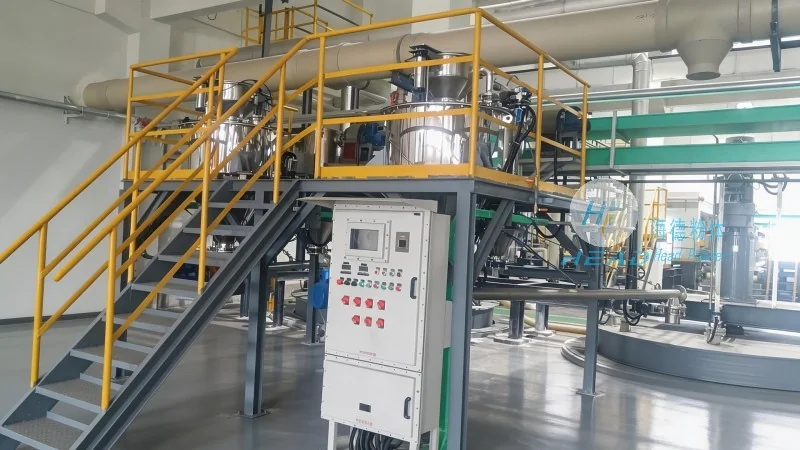
Three primary conveying principles apply to stone coal: dilute phase, dense phase, and air-assisted gravity systems. Each offers distinct advantages depending on the distance, capacity, and material sensitivity.
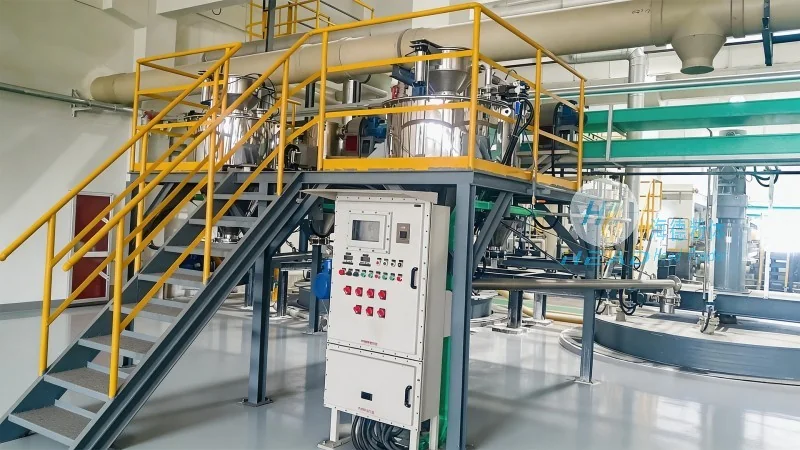
In dilute phase conveying, material is suspended in a high-velocity airstream (typically 20–35 m/s) and transported through pipelines. This method is suited for short distances (< 200 m), moderate capacities, and materials with low abrasivity. However, for stone coal, the high velocity accelerates pipe erosion, particularly at bends and elbows. When specifying dilute phase for stone coal, engineers should use wear-resistant pipe materials such as ceramic-lined steel or basalt composite, and limit conveying velocity to the lower end of the range (22–28 m/s) to reduce wear. headpowder's standard dilute phase systems incorporate modular wear inserts and pressure-relief dampers, extending service life by an average of 40% compared to unlined designs.
Dense phase conveying moves material at low velocities (3–8 m/s) using high pressure (up to 6 bar). This approach minimizes wear, particle degradation, and energy consumption, making it ideal for abrasive stone coal. Two common dense phase modes are slug flow and plug flow. For stone coal with high fines content, plug flow through a blow tank system is recommended. Key specification parameters include a blow tank volume matched to material density, a fluidizing air ratio of 1.2–2.0 Nm³/t, and a pipeline diameter that keeps the conveying pressure drop within 0.5–1.5 bar per 100 m. headpowder's dense phase solutions have been deployed in over 200 stone coal projects, achieving reliable transport over distances up to 500 m with minimal maintenance intervention.
For short, vertical, or inclined transport, air-assisted gravity conveyors (air slides) use low-pressure air to fluidize the material, allowing gravity to drive flow. These systems are limited to non-pressurized applications and require slopes of 4–8 degrees. When specified correctly, they consume only 10–15% of the power of dilute phase systems. However, stone coal's high moisture content can impair fluidization; aeration pad material selection and air-permeable fabric quality become critical. headpowder's air slide designs incorporate adjustable air distribution zones to accommodate moisture fluctuations from 5% to 15%.
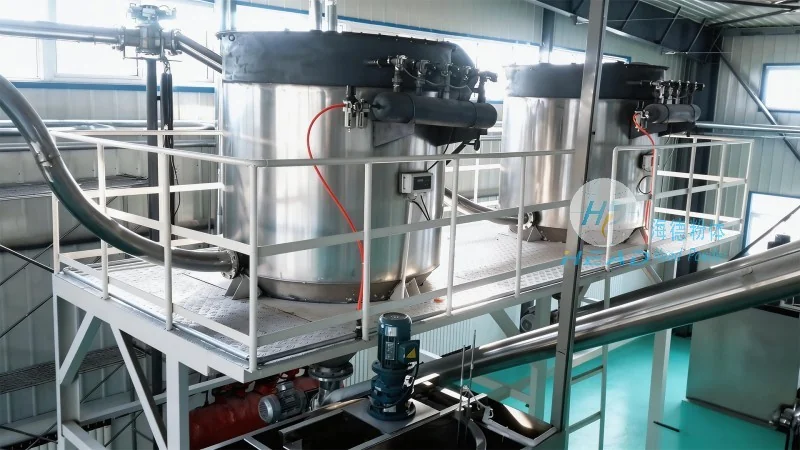
Beyond the conveying mode, several technical parameters must be defined to ensure a specification that balances performance, cost, and safety.
Reliable system selection begins with representative material samples. The following tests should be performed prior to specification:
Without this data, over-specifying conveying velocity or pressure can lead to double the lifecycle cost. headpowder's in-house test facility offers full material characterization, allowing clients to receive a guaranteed system performance letter based on their specific stone coal analysis.
The pipeline length, number of bends, and elevation changes directly affect the conveying pressure and velocity. For stone coal, limit the total bend count to a maximum of 12 per line, and avoid long-radius bends in vertical sections. Bends should be wear-back type with replaceable radius plates. Horizontal runs longer than 50 m may require intermediate booster lines to maintain plug stability in dense phase. headpowder's proprietary pipeline modelling software can simulate pressure drop profiles for up to 2,000 m of pipe, optimizing both capital and operating costs.
Positive displacement blowers are the standard air source for pneumatic conveying. For stone coal systems, specify blowers with variable frequency drives (VFDs) to fine-tune air volume and reduce energy consumption by 20–35%. The air filter after the blower should be rated for the particle loading, with a final filter efficiency of 99.9% at 5 µm. Control valves must be abrasion-resistant; replace standard butterfly valves with knife-gate or pinch valves at all feeding and discharge points. headpowder's integrated control packages include PLC-based air management that automatically adjusts the blowing cycle based on real-time material flow feedback.
At the destination, a combination of a cyclone separator and a baghouse filter or cartridge dust collector is typical. For stone coal, the dust collector must handle high inlet dust loads (up to 500 g/Nm³) and operate at temperatures up to 150°C. Specify a filtration velocity of 0.8–1.2 m/min for reverse pulse filters, and use a bag material such as PTFE membrane on polyester felt to handle moist fines. A rotary valve or screw conveyor underneath the hopper ensures consistent discharge without flooding. headpowder's separation train designs are validated by computational fluid dynamics simulations that achieve 99.99% collection efficiency in stone coal applications.
Stone coal dust is classified as combustible, with a Kst value typically between 100 and 250 bar·m/s. Systems must comply with ATEX or NFPA 68/69 standards. Key safety specifications include:
headpowder has delivered more than 50 ATEX-certified stone coal systems, each accompanied by a detailed safety compliance dossier that simplifies site certification processes for end users.
The stone coal pneumatic conveying sector is experiencing significant shifts. According to industry projections for 2026, the following trends are shaping system specifications:
headpowder's 2026 product line incorporates these trends, offering a standard three-year wear guarantee on dense phase systems and a cloud-based monitoring platform that provides real-time alerts on conveying efficiency and remaining pipe life.
To assist engineers in choosing the right system, a simplified decision matrix is presented below. This is based on common project profiles encountered over the past decade.
| Project Parameter | Recommended System | Key Specification Point |
|---|---|---|
| Distance < 100 m, capacity < 10 t/h | Dilute phase | Ceramic-lined bends; velocity ≤ 25 m/s |
| Distance 100–400 m, capacity 10–50 t/h | Dense phase (blow tank) | 6-bar rated tank; plug length control |
| Distance > 400 m, capacity > 50 t/h | Dense phase with booster lines | Intermediate air injection every 80–120 m |
| Vertical lift > 30 m | Dense phase (plug flow) | Pressure drop allowance 0.5 bar/10 m rise |
| Moisture > 10% or sticky material | Dense phase with fluidizing cone | Aeration hole size; dedicated bypass valve |
| Explosion hazard zone Class 1/21 | Dense phase + inert gas | O₂ monitoring; automatic system shutoff |
The matrix provides a starting point; full specification requires detailed material testing and site audit. headpowder's engineering team offers a complimentary pre-FEED study for projects exceeding 50 t/h capacity, enabling accurate specifications before capital commitment.
A major cement plant in South Asia operated five dilute phase lines conveying stone coal from a storage dome to the kiln feed bin. Annual maintenance costs exceeded USD 120,000 due to pipe replacement every 8 months. Plant noise levels were above 95 dBA, and dust leakage was common at couplings. headpowder conducted a full material analysis and proposed converting to a dense phase system using two blow tanks operating in alternation. The new system maintained the same 25 t/h capacity but reduced conveying velocity to 6 m/s. Pipe wear decreased by 80%, energy consumption dropped 30%, and noise levels fell to 78 dBA. Payback period was 14 months. This example underscores the value of proper selection specification grounded in material data and operational context.
Specifying the system is only half the work. Commissioning a stone coal pneumatic conveyor requires careful site preparation. Ensure that the receiving hopper has sufficient capacity (minimum 1.5 times the blow tank volume) to prevent backflow. Air drying equipment is recommended if ambient humidity exceeds 80% to avoid moisture condensation in the pipeline, which can cause plugging. headpowder's field service team provides a standard 7-day commissioning package that includes pipe alignment checks, pressure decay tests, and system tuning to match actual material batch variations. Post-commissioning, a preventive maintenance schedule should be established with weekly visual inspections of wear indicators and quarterly calibration of pressure transmitters.
The choice of system supplier directly impacts long-term reliability and operational cost. When evaluating potential partners, look for demonstrated experience with abrasive coal materials, in-house testing capabilities, and a track record of delivering turnkey projects within schedule. headpowder's specialization in pneumatic conveying for stone coal spans 15 years, with systems operating in over 30 countries. Each system is backed by a dedicated project manager, detailed documentation package, and a 24/7 remote support hotline. For new projects or system upgrades, the engineering team can provide a sample system performance guarantee based on your material test report. Contact headpowder directly to discuss your stone coal conveying requirements and receive a preliminary specification outline. (咨询热线:156-6277-7102)

 Shandong headpowder Engineering Co., Ltd.
 156-6277-7102(Manager Zhang)
  0531-83386006
  Jinan City, Shandong Province, China
服务热线
微信咨询
回到顶部