News
Rich project cases across industries, showing real implementation and proven technical strength.Selecting a reliable pneumatic conveying system for fly ash pellets requires a thorough understanding of material properties, system architecture, and operational constraints. Fly ash pellets, typically produced through agglomeration processes such as pelletization or briquetting, exhibit distinct characteristics compared to raw fly ash—higher density, reduced dust generation, and improved flowability. These differences directly influence equipment selection, pipeline sizing, and power requirements. In the evolving energy and construction materials market of 2026, efficient handling of fly ash pellets has become a critical factor for cement plants, power stations, and industrial mineral processors seeking to reduce carbon footprint and improve resource utilization. Headpowder, as a specialized supplier in pneumatic conveying solutions, has accumulated extensive experience in optimizing these systems for diverse client needs.
The core challenge in designing a pneumatic conveying system for fly ash pellets lies in balancing transport capacity with energy consumption and material degradation. Unlike fine powders that behave cohesively, pellets are more abrasive and prone to breakage under high velocity or impact. Therefore, a system that is too aggressive can lead to excessive fines generation, while an undersized system may cause blockages or inconsistent feed rates. This article provides a structured approach to equipment selection, covering key technical parameters, industry benchmarks, and real-world adaptation strategies. It is written for engineers, plant managers, and procurement professionals who require actionable insights without exaggerated claims. By the end, readers will understand how to evaluate their specific process conditions and align them with the appropriate conveying technology, ultimately achieving reliable, cost-effective operations. (Headpowder consultation hotline: 156-6277-7102)
Fly ash pellets are typically formed by adding binders such as cement, lime, or chemical additives, followed by curing or drying. The resulting particle size ranges from 2 mm to 12 mm, with bulk density between 800 kg/m³ and 1,200 kg/m³, depending on the source ash and binder ratio. Moisture content is usually controlled below 10% to prevent caking during storage and transport. Compared to raw fly ash, pellets have significantly lower dust explosion risk and are easier to handle in open environments, but their angular shape and surface roughness increase wear on conveying pipes and bends. For pneumatic systems, the most critical parameters include particle size distribution, hardness, angle of repose, and attrition resistance. Standard test methods such as ASTM D4609 or ISO 8398 can provide baseline data for designing a system that minimizes particle degradation—typically keeping velocity below 12 m/s for dense phase and below 20 m/s for dilute phase.
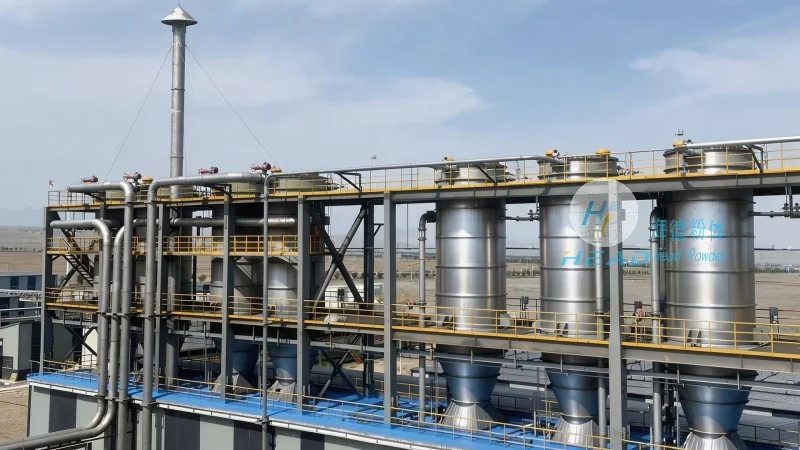
Another important factor is the temperature of the pellets at the conveying inlet. Fly ash pellets produced from fresh ash may still contain residual heat (80–150°C), requiring heat-resistant sealing materials and expansion joints. In many plants, the pellets are cooled before conveying to ambient temperature, but if direct hot conveying is necessary, the system must incorporate high-temperature rated rotary valves, flexible hoses, and metal bellows. Headpowder's engineering team routinely evaluates these thermal conditions and provides customized solutions that maintain structural integrity while ensuring uninterrupted flow. For instance, in a 2025 project for a South Asian cement facility, we supplied a dense-phase conveying system capable of handling 60 t/h of hot fly ash pellets at 120°C, using a proprietary ceramic-lined pipeline that reduced wear by 70% compared to standard carbon steel.
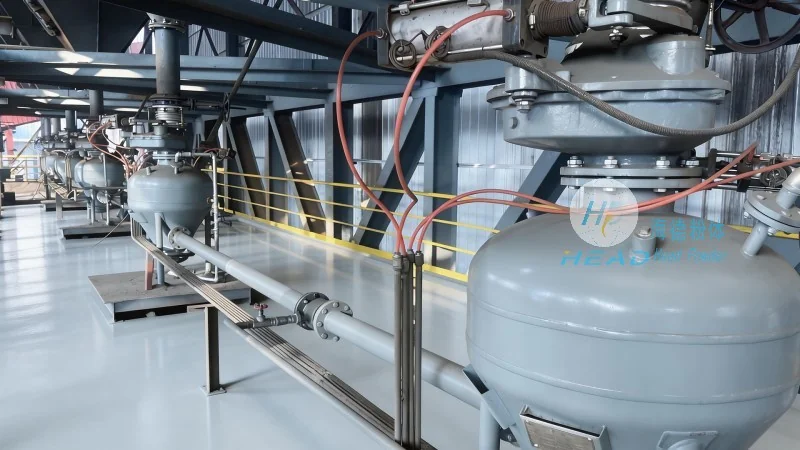
The choice between dilute phase and dense phase conveying is the most consequential decision in system selection. Dilute phase systems operate at high gas velocities (15–30 m/s) with low solids-to-air ratios, meaning the pellets are suspended in the airstream. They are simpler in construction, requiring less capital investment, but they consume more energy per ton of material moved and cause higher particle attrition. For fly ash pellets, dilute phase is typically suitable for short distances (up to 100 m) and lower capacities (below 30 t/h), where pellet quality degradation is acceptable. However, for long-distance transport (over 200 m) or fragile high-value pellets, dense phase is the preferred solution. In dense phase conveying, the material moves as a compact plug at low velocity (2–8 m/s) with high solids loading. This drastically reduces wear, energy consumption (often 30–50% lower than dilute), and particle breakage.
Within dense phase, there are further subdivisions—pressure conveying (positive pressure) and vacuum conveying (negative pressure). Pressure systems are ideal for distributing pellets from a single source to multiple destinations, while vacuum systems are better for gathering from multiple points to a single receiver. For fly ash pellets, pressure dense phase is more common due to the higher throughput and longer distances typical in industrial settings. A key component in dense phase system is the booster station—or air injection points along the pipeline—that break up long plugs and prevent blockage. Modern systems use smart sensors that detect pressure spikes and inject supplemental air only when necessary, reducing compressed air usage by 20–30%. Headpowder has developed a patented adaptive boost control algorithm that continuously optimizes flow conditions based on real-time material feedback. This technology has been implemented in over 40 installations globally, achieving an average energy saving of 18% compared to conventional fixed-booster designs.
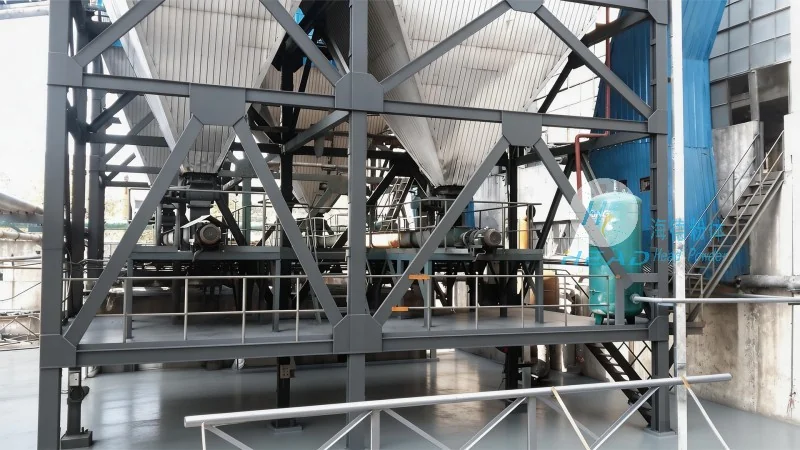
Pipeline routing is often constrained by existing plant infrastructure. For fly ash pellets, horizontal runs are preferable because vertical lifts require higher pressure differentials and can cause plugging if not designed correctly. The minimum bend radius should be at least 5 times the pipe diameter to reduce impact forces on pellets. Standard pipe diameters for pellet conveying range from DN80 to DN250, depending on capacity and pressure drop calculations. Using the well-established Darcy-Weisbach equation combined with empirical data for pneumatic flow, engineers can predict the pressure drop for a given layout. For example, a 300 m horizontal line with 4 bends and a capacity of 40 t/h typically requires a pressure of 2.5–3.5 bar for dense phase operation.
Material selection for the pipeline is equally critical. Fly ash pellets contain silica and alumina compounds that are highly abrasive, especially at pipe bends and elbows. Standard carbon steel with a thickness of 6–10 mm may last only 6–12 months before perforation occurs. Upgrading to wear-resistant materials such as AR500 steel, ceramic-lined pipe, or UHMWPE (ultra-high molecular weight polyethylene) can extend service life to 3–5 years. In 2026, the industry trend is moving toward composite pipes with a ceramic inner layer (alumina 92%) and a steel outer shell, offering both wear resistance and structural strength. Headpowder collaborates with leading ceramic manufacturers to provide these solutions at competitive costs. We also recommend installing inspection sections at high-wear points—such as after the feeding point and before each bend—so that maintenance teams can monitor wear patterns without shutting down the entire line.
The feeding device—typically a rotary airlock valve or a screw feeder—must match the conveying mode. For dense phase, a blow tank (pressure vessel) is the standard choice because it can handle high-pressure differentials and provide controlled batch or continuous feeding. Blow tanks are sized based on the required cycle time and volume; a 1,000 L tank can handle about 20–25 t/h of fly ash pellets at a conveying pressure of 3 bar. The discharge outlet should be equipped with a wear-resistant lining and a air-assisted discharge cone to prevent bridging. At the receiver end, a cyclone separator followed by a baghouse filter is the conventional setup. However, for fly ash pellets, the dust loading is relatively low (typically under 1 g/Nm³) because of the low fines content. Standard cartridge filters with pulse-jet cleaning suffice, but they must be resistant to moisture and temperature fluctuations. Many modern systems incorporate a bypass line that diverts clean air during high-temperature conditions to protect filter media.
In addition, compressed air supply is the largest operational cost for any pneumatic system. For fly ash pellets, the required air volume depends on the system design, but a typical dense phase installation consumes 15–25 Nm³ of compressed air per ton of material conveyed at 3 bar. Using variable speed drives for the compressor and optimizing the air-to-material ratio can reduce these figures by up to 25%. Headpowder offers an integrated air management package that includes a dedicated screw compressor, an air dryer, and a receiver tank, all sized to the specific process requirements. In a recent project for a Chinese power plant, we reduced the total compressed air consumption by 22% while increasing throughput by 15% through selective air injection and smart control. These results directly translate to lower operating costs and higher return on investment.
As of 2026, the global market for fly ash utilization continues to expand, driven by circular economy policies and the need for sustainable construction materials. The International Energy Agency estimates that fly ash production will reach 1.2 billion tons annually by 2027, with pelletization accounting for an increasing share due to improved transportability. In regions like India, China, and Southeast Asia, where coal remains a major energy source, the demand for efficient fly ash pellet handling equipment is growing at 8–10% per year. This growth is accompanied by stricter environmental regulations on fugitive dust emissions, making enclosed pneumatic systems the preferred choice over open belt conveyors.
Technologically, the biggest advancement in 2026 is the integration of IoT sensors and predictive maintenance into pneumatic conveying systems. Real-time monitoring of pressure, temperature, vibration, and flow rate allows operators to detect early signs of wear or blockages and schedule maintenance before breakdowns occur. Headpowder's latest system, the SmartFlow series, includes an onboard industrial computer that communicates with plant DCS via OPC UA, providing dashboards for key performance indicators like energy per ton, attrition rate, and filter differential pressure. This level of digitalization not only improves reliability but also supports data-driven optimization. In field trials at a German cement plant, the SmartFlow system reduced unplanned downtime by 40% and extended filter life by 60% through adaptive cleaning cycles.
Choosing the right supplier for fly ash pellet pneumatic conveying equipment involves more than comparing prices. The supplier should demonstrate proven experience with similar materials, a track record of on-time delivery, and a robust after-sales service network. Look for suppliers who offer pilot-scale testing; headpowder maintains a full-scale test loop capable of handling up to 80 t/h of pellets, allowing clients to verify performance before committing to full installation. Additionally, the supplier should provide detailed engineering documents, including P&ID, general arrangement drawings, and a comprehensive operation manual. Warranty terms typically cover 12–24 months, but extended warranties with performance guarantees are increasingly available.
We also recommend evaluating the supplier's capability to customize. No two fly ash pellet plants are identical; differences in ash chemistry, binder formulation, curing method, and site layout require tailored solutions. Headpowder has developed a modular system design that can be adapted to a wide range of capacities—from 5 t/h to 150 t/h—using standardized components. This reduces lead times and spare parts inventory. For example, a client in the Philippines needed a system that could handle both pellets and occasional raw ash without major reconfiguration. We designed a dual-mode conveying line with a diverter valve and a separate air injection scheme, enabling seamless switching. Since installation in early 2025, the client has reported zero blockages and a 95% availability rate.
Selecting the appropriate pneumatic conveying equipment for fly ash pellets requires careful evaluation of material characteristics, conveying distance, capacity, and energy efficiency. Dense phase systems are generally recommended for long distances and fragile pellets, while dilute phase may suit short, high-capacity runs with less concern for particle integrity. Pipeline material and layout must be designed to withstand the abrasive nature of pellets, and modern digital monitoring can significantly improve reliability and reduce operational costs. As the industry moves toward smarter, more sustainable solutions in 2026, partnering with an experienced provider like headpowder ensures that your system is optimized not only for today’s needs but also for future scalability.
Headpowder has been delivering pneumatic conveying solutions for over fifteen years, with a special focus on fly ash and cementitious materials. Our engineering team has completed more than 200 projects worldwide, ranging from small pilot plants to large-scale industrial installations. We provide end-to-end support—from concept design and CFD simulation to installation, commissioning, and remote monitoring. If you are considering a new system or upgrading an existing one, we invite you to contact our technical specialists. They can review your site conditions, material samples, and production targets to propose a system that meets your exact requirements. (Consultation hotline: 156-6277-7102) Let us help you build a reliable, efficient, and future-ready material handling solution for fly ash pellets.

 Shandong headpowder Engineering Co., Ltd.
 156-6277-7102(Manager Zhang)
  0531-83386006
  Jinan City, Shandong Province, China
服务热线
微信咨询
回到顶部