News
Rich project cases across industries, showing real implementation and proven technical strength.When industrial processes operate at elevated temperatures, the handling of fine ash presents unique challenges that conventional conveying systems are not designed to address. The High-temperature fine ash pneumatic conveying system equipment solution has emerged as a critical component in power generation, cement production, metallurgy, and waste-to-energy plants, where ash temperatures can reach 400°C to 800°C or even higher. Unlike standard pneumatic conveyors that rely on elastomeric seals and conventional materials, these specialized systems must withstand extreme thermal loads, abrasive particulates, and corrosive gas environments without compromising reliability or efficiency. As global energy transition accelerates toward higher-efficiency combustion and gasification technologies, the demand for robust, high-temperature ash handling equipment has grown significantly. According to industry projections for 2026, the global market for high-temperature pneumatic conveying systems is expected to expand at a compound annual growth rate of approximately 6.8%, driven by stricter emission regulations, the need for continuous operation in ultra-supercritical power plants, and the rise of biomass co-firing. Against this backdrop, selecting the right system architecture—whether dilute phase, dense phase, or air-assisted gravity—becomes a strategic decision that impacts plant uptime, maintenance costs, and environmental compliance. This article provides a comprehensive technical overview of high-temperature fine ash pneumatic conveying, covering material characteristics, system design principles, component selection, operational best practices, and real-world implementation insights. The aim is to equip plant engineers, project managers, and procurement specialists with actionable knowledge to evaluate and deploy reliable conveying solutions that meet the rigorous demands of modern high-temperature processes.
At the heart of any high-temperature pneumatic conveying system lies the need to manage material degradation, thermal expansion, and air leakage. Fine ash particles, typically with a mean diameter of 10 to 100 microns, exhibit poor flowability due to their high surface-area-to-volume ratio and tendency to agglomerate under heat. When ash exits a boiler or gasifier at temperatures above 600°C, its bulk density, angle of repose, and particle hardness change significantly, making it more abrasive and prone to sintering if cooled prematurely. A well-engineered solution must therefore incorporate pre-cooling stages, such as water-cooled screw coolers or air-to-air heat exchangers, to reduce ash temperature to a level compatible with downstream conveying components—typically below 300°C for standard mild steel systems and below 500°C for specialized alloys. The conveying medium itself, usually compressed air or nitrogen, must be filtered and dehumidified to prevent moisture-induced clinkering. Additionally, the pipeline layout must account for thermal expansion loops, expansion joints, and appropriate hanger spacing to avoid stress concentrations. These details, while seemingly minor, directly affect the longevity and energy efficiency of the entire system. headpowder has accumulated over a decade of field data from more than 150 installations across Asia and Europe, demonstrating that integrating a staged cooling approach with proprietary wear-resistant liners can extend component life by 40% compared to traditional designs.
Pneumatic conveying operates on the principle of using pressurized gas to transport bulk solids through a pipeline. For high-temperature fine ash, two primary modes are commonly employed: dilute phase conveying and dense phase conveying. Dilute phase systems suspend particles in a high-velocity gas stream, typically 20 to 40 m/s, which is suitable for shorter distances and lower throughputs but generates higher wear and particle attrition. Dense phase conveying, by contrast, moves ash in a slug or plug flow at lower velocities (4 to 10 m/s), significantly reducing pipe erosion and energy consumption. However, dense phase requires higher pressure ratios and more sophisticated control valves to handle the material's cohesive nature at elevated temperatures. The choice between these modes hinges on factors such as ash temperature, particle size distribution, moisture content, and plant layout constraints. For example, in a circulating fluidized bed boiler producing ash at 850°C, dense phase conveying with nitrogen as the transport gas is often preferred to minimize oxidation and avoid explosion risks. Industry standards such as ASME B31.3 for process piping and ISO 7393 for pneumatic conveying systems provide design guidelines, but they do not fully address the specific thermal and abrasive conditions of fine ash. Therefore, empirical testing using a pilot loop with actual ash samples is recommended to validate pressure drops, saltation velocities, and conveying stability before scaling up.
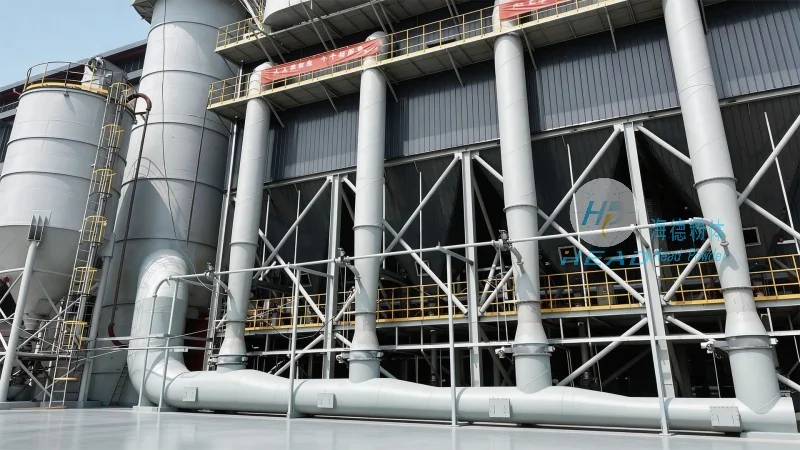
A successful high-temperature fine ash pneumatic conveying system comprises several specialized components, each engineered to endure extreme conditions:
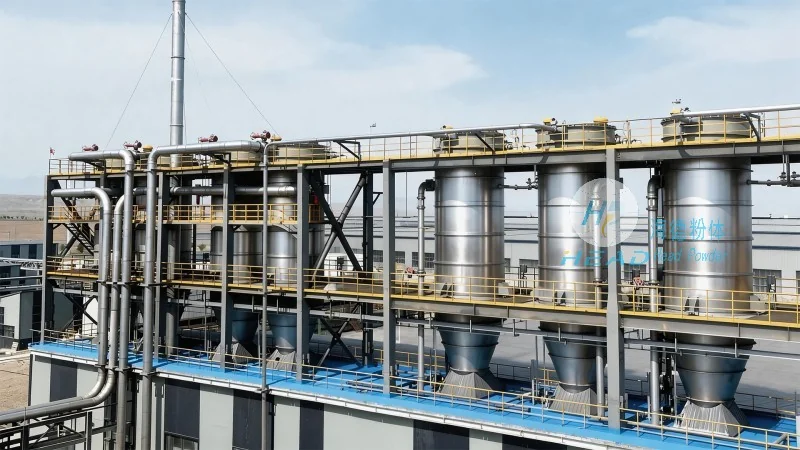
One of the most overlooked aspects in high-temperature ash conveying is the management of thermal expansion. A 100-meter pipeline operating at 400°C can expand by over 300 mm, which if unaccommodated, will cause catastrophic failure at fixed supports or flanges. Expansion loops, bellows-type expansion joints, and guided supports with sliding base plates are standard solutions. The coefficient of thermal expansion (CTE) of the pipe material must be matched with adjacent components. For instance, if stainless steel 304 (CTE 17.3 μm/m·°C) is mated with carbon steel (CTE 11.7 μm/m·°C) at a flanged joint, thermal cycling can loosen bolts and create leak paths. In practice, using the same alloy family throughout the hot section simplifies design. headpowder's engineering team employs finite element analysis (FEA) to simulate thermal gradients and stress concentrations before fabrication, ensuring that every expansion joint location and hanger type is optimized for the specific temperature profile. Additionally, material selection must consider not only temperature capability but also resistance to sulfidation, chloridation, and alkali attack—common in ash from biomass or high-sulfur coal. Nickel-based superalloys (e.g., Inconel 600) offer excellent performance but at high cost; cladding or weld overlays on less expensive base metals provide a cost-effective alternative.
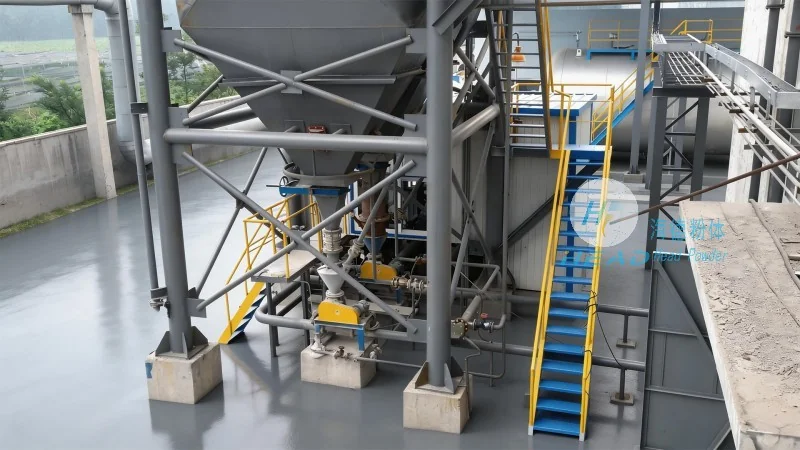
Even the most robust equipment requires disciplined operation and preventive maintenance to sustain performance over decades. Key operational guidelines for high-temperature ash systems include:
A practical case study from a 600 MW ultra-supercritical coal power plant in China illustrates the impact of systematic maintenance. After replacing standard elbows with headpowder's ceramic-lined bends and implementing a monthly borescope inspection schedule, the plant reduced unscheduled downtime from 14 days per year to less than 3 days, achieving a 92% system availability rate. The payback period for the upgrade was under 18 months, driven by lower replacement parts costs and improved heat rate from reduced ash accumulation in the boiler.
The next frontier for high-temperature ash conveying lies in intelligent monitoring and predictive maintenance. By embedding IoT sensors (vibration, temperature, acoustic emission) along the pipeline and connecting them to a cloud-based analytics platform, operators can detect early signs of wear, such as micro-leaks in valve seals or gradual build-up in bends. Machine learning algorithms trained on historical failure data can predict remaining useful life of critical components, allowing maintenance to be scheduled during planned outages rather than emergencies. headpowder's latest generation of control systems, for instance, features a digital twin that simulates the real-time behavior of the conveying system under varying ash loads and temperature ramps. This allows engineers to test "what-if" scenarios—such as a sudden 50°C temperature spike due to boiler upset—without disrupting actual operations. While fully autonomous ash handling is not yet widespread, the technology road map for 2026–2030 points toward self-optimizing systems that adjust conveying gas velocity and valve timing dynamically based on real-time ash properties. For plant owners aiming to reduce labor costs and improve safety in high-temperature zones, investing in such smart solutions offers a clear competitive advantage.
Emissions standards worldwide are tightening. In the European Union, the Industrial Emissions Directive (IED) and Best Available Techniques (BAT) reference documents for large combustion plants require that ash handling systems minimize fugitive dust and ensure safe disposal or reuse. In China, the ultra-low emission standards for thermal power plants mandate that all ash transport must be enclosed and that the conveying gas must be filtered to less than 10 mg/Nm³ particulate discharge. High-temperature pneumatic systems inherently reduce moisture pickup, which is beneficial for fly ash used in cement and concrete applications—a market that consumed over 400 million tons of fly ash globally in 2024. However, handling hot ash carries a fire and explosion risk if combustible gases (e.g., CO or H₂) are present. Inert gas purging with nitrogen is standard practice for systems operating above 500°C, and oxygen concentration in the conveying line should be maintained below 8% volume. Regular auditing of the system against ISO 45001 and local safety codes is not only a regulatory requirement but also a factor in insurance premiums. headpowder provides comprehensive documentation packages, including HAZOP studies and material safety data sheets, to assist clients in achieving certifications quickly.
Deploying a high-temperature fine ash pneumatic conveying system requires a significant upfront investment, typically ranging from 800,000 to 2,500,000 RMB for a medium-sized 300 MW plant, depending on pipeline length, temperature requirements, and automation level. However, the total cost of ownership (TCO) over a 20-year lifecycle is heavily influenced by energy consumption and maintenance. Dilute phase systems may have lower initial capital cost but can consume up to 30% more compressed air per ton of ash conveyed compared to dense phase alternatives. A 2025 study comparing two similar biomass plants found that the dense phase solution saved approximately 650,000 kWh per year in electricity costs alone. Additionally, reduced wear translates to fewer change-outs of bends and valves. When factoring in avoided production losses from unscheduled shutdowns, the net present value (NPV) of a well-designed system is strongly positive. For plants considering retrofits, a phased approach—starting with the most wear-prone sections like the boiler outlet and primary diverter—can spread capital expenditure while delivering immediate reliability gains.
In 2023, headpowder completed a turnkey project for a 1000 MW coal-fired power plant in Shandong Province, China, that had been experiencing severe ash plugging and pipe erosion in its existing dilute phase system. The ash temperature at the economizer hopper reached 650°C, and the original carbon steel elbows needed replacement every 2,000 hours. The new solution incorporated a two-stage air-cooled ash cooler to bring temperature down to 250°C before entering the conveying line, followed by a dense phase system with alumina ceramic-lined pipelines and a single rotary airlock valve rated for 500°C continuous service. After 12 months of operation, the plant reported zero unscheduled outages related to ash handling, and the wear life of bends exceeded 15,000 hours. Furthermore, the reduced air consumption allowed the plant to downsize its air compressor capacity by 25%, saving 1.2 million kWh per year. The plant's maintenance supervisor noted that the training provided by headpowder's field service team enabled the in-house crew to perform most routine inspections without external support.
Looking ahead, several developments will shape the evolution of high-temperature ash conveying. First, the rising share of renewable energy sources with intermittent operation will increase the frequency of start-stop cycles for fossil fuel backup plants, demanding systems that can withstand more thermal fatigue. Second, the growing use of ammonia co-firing as a low-carbon fuel introduces new chemical reactivity in ash—ammonia can react with sulfates to form sticky deposits, which may require changes in conveying gas chemistry or temperature windows. Third, additive manufacturing (3D printing) is beginning to enable custom, complex geometries for wear-resistant parts such as Venturi feeders and nozzle rings, reducing lead times and inventory costs. headpowder is actively researching the application of ceramic matrix composites (CMCs) for ultra-high-temperature zones exceeding 1000°C, which could eliminate the need for cooling stages in some gasification processes. Collaborations with university research groups in Germany and Japan are focused on validating the performance of these advanced materials under real operating conditions.
In conclusion, the selection and implementation of a high-temperature fine ash pneumatic conveying system are far from a commodity purchase. It requires a deep understanding of material science, thermodynamics, fluid dynamics, and mechanical design. A one-size-fits-all approach often leads to premature failures and hidden costs. By partnering with an experienced provider like headpowder—whose engineers have designed systems for ash temperatures ranging from 350°C to 950°C and for capacities up to 120 tons per hour—plant operators can achieve reliable, efficient, and safe ash handling that supports overall plant profitability. Whether you are planning a new build or upgrading an existing system, a thorough front-end engineering study that includes ash sample analysis, CFD simulation, and lifecycle cost modeling is the first step toward a solution that truly meets your operational reality. For more detailed technical discussions tailored to your specific process conditions, the engineering team at headpowder welcomes your inquiry (咨询热线:156-6277-7102).

 Shandong headpowder Engineering Co., Ltd.
 156-6277-7102(Manager Zhang)
  0531-83386006
  Jinan City, Shandong Province, China
服务热线
微信咨询
回到顶部