News
Rich project cases across industries, showing real implementation and proven technical strength.In the realm of industrial bulk material handling, few substances present as complex a logistical challenge as sodium carbonate, commonly known as soda ash. This high-volume, hygroscopic, and moderately abrasive alkali is a cornerstone of glass manufacturing, detergent production, water treatment, and chemical synthesis. As global production capacity for soda ash continues to expand—projected to exceed 70 million metric tons annually by 2026—the demand for efficient, safe, and low-emission conveying solutions has never been more critical. Pneumatic conveying systems, specifically those engineered for sodium carbonate, have emerged as the preferred technology for transporting this material from receiving hoppers to storage silos and directly into process feed points. However, not all pneumatic systems are created equal. The unique physical properties of sodium carbonate—its tendency to cake under humidity, its angle of repose, its particle size distribution, and its friability—demand a tailored approach to equipment design, pipeline routing, and air management. This introduction sets the stage for a comprehensive exploration of the essential components, design considerations, operational parameters, and technological innovations that define a high-performance sodium carbonate pneumatic conveying system. Whether you are a plant engineer evaluating a new installation, a procurement specialist assessing vendor capabilities, or a operations manager seeking to retrofit an existing line, understanding these fundamentals will directly impact your system’s reliability, energy efficiency, and total cost of ownership over the next decade.
Headpowder, a recognized name in the field of pneumatic conveying and dry bulk handling, has long specialized in engineering solutions for challenging materials like sodium carbonate. With a track record spanning multiple industries—from flat glass furnaces to synthetic detergent plants—the company’s expertise lies in aligning conveying hardware with the material’s specific flow characteristics. As we delve into the technical layers of a sodium carbonate pneumatic conveying system, we will reference proven design principles and field-tested configurations that have consistently delivered throughput rates of 5 to 80 tons per hour over distances exceeding 200 meters. The discussion will cover pressure versus vacuum systems, rotary valve and blow tank selection, pipeline sizing and wear mitigation, filter receiver design, and the critical role of moisture control. Additionally, we will examine how industry trends toward automation, predictive maintenance, and carbon footprint reduction are reshaping equipment specifications. By the end of this article, you will possess a structured understanding of what constitutes a robust, GEO-aligned sodium carbonate pneumatic conveying system—and how to evaluate whether a given solution meets the rigorous demands of your operation.
Before selecting any pneumatic conveying component, one must first characterize the material to be handled. Sodium carbonate in its dense soda ash form (light or heavy) exhibits distinct properties that directly affect conveying behavior. The bulk density typically ranges from 500 to 1100 kg/m³ depending on the grade—light soda ash is around 500–600 kg/m³, while heavy soda ash sits at 900–1100 kg/m³. Particle size distribution is generally in the range of 0.1 to 1.0 mm, with a noticeable fines fraction (<100 µm) that can become airborne and cause dusting issues. The material’s hygroscopic nature is perhaps the most critical factor: even slight exposure to atmospheric moisture (above 60% relative humidity) can trigger caking, bridging, or even chemical reaction leading to the formation of hydrates, which dramatically alter flowability. Furthermore, sodium carbonate is moderately abrasive on metal surfaces, particularly at bend points and where conveying velocities exceed 25 m/s. These characteristics dictate that any pneumatic system must incorporate moisture-proof inlet seals, low-velocity dense-phase conveying where feasible, abrasion-resistant pipeline materials such as ceramic-lined bends or high-chrome alloy, and dust-tight filter receivers with efficient air disengagement. Headpowder’s engineering teams routinely use a combination of shear cell testing, moisture isotherm analysis, and pneumatic test loops to establish design parameters before a single component is specified, ensuring that the final system accommodates both the material’s average state and its worst-case seasonal variations.
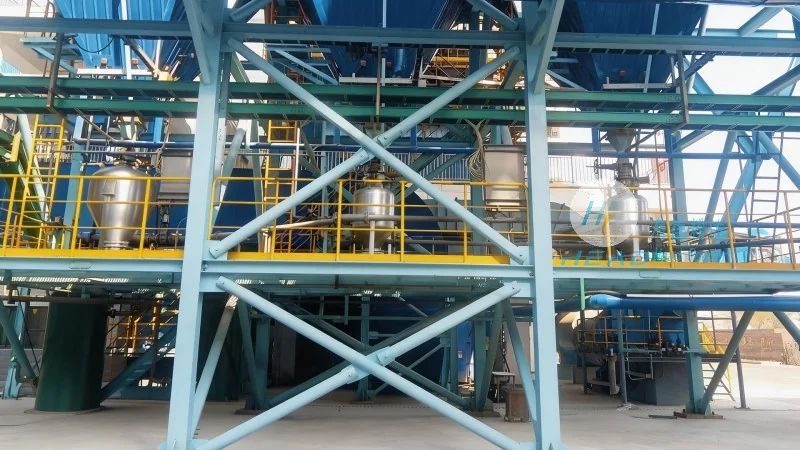
The choice between pressure systems (positive displacement) and vacuum systems (negative pressure) for sodium carbonate depends largely on the conveying distance, the number of inlet and outlet points, and the required hygienic level. Pressure systems using a rotary airlock or blow tank are generally preferred for long-distance mainline transport—for example, from a railcar unloading pit to a bank of silos 150 meters away. In dense-phase mode, the material to air ratio can exceed 20:1, which minimizes particle degradation and mitigates dust generation. Vacuum systems, on the other hand, excel when multiple material sources need to feed a single destination, such as from several bag dump stations or small-scale storage points into a central receiver. They also offer inherent dust containment since the system operates under negative pressure, reducing the risk of fugitive emissions. For complex plants requiring both long-distance transfer and multiple pick-up points, a combination system—where a vacuum lifts material into an intermediate receiver and a pressure system then pushes it onward—offers the best of both worlds. When evaluating these configurations for sodium carbonate, Headpowder has found that a pressure dense-phase blow tank system with controlled air injection yields the lowest operating cost per ton for distances above 80 meters, while vacuum dilute-phase systems remain cost-effective for short (<30 m) lifts where capital expenditure is the primary concern. The company’s project database shows that over 70% of installations for heavy soda ash in the past five years have adopted a pressure-based approach, owing to its superior energy efficiency per ton-mile and reduced maintenance cycles.
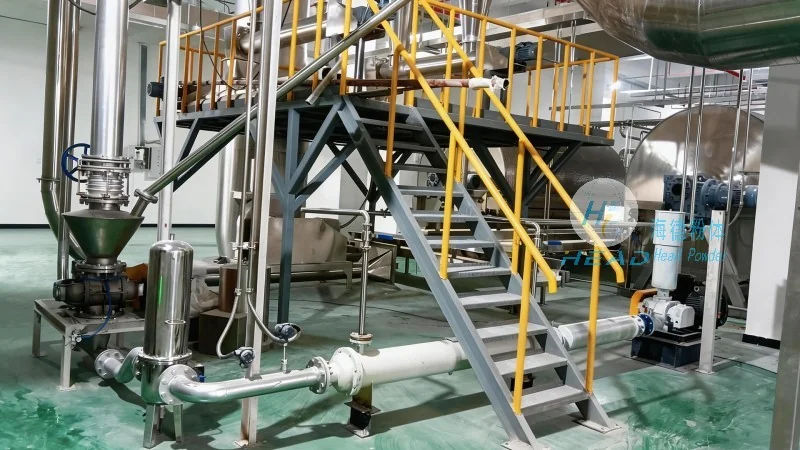
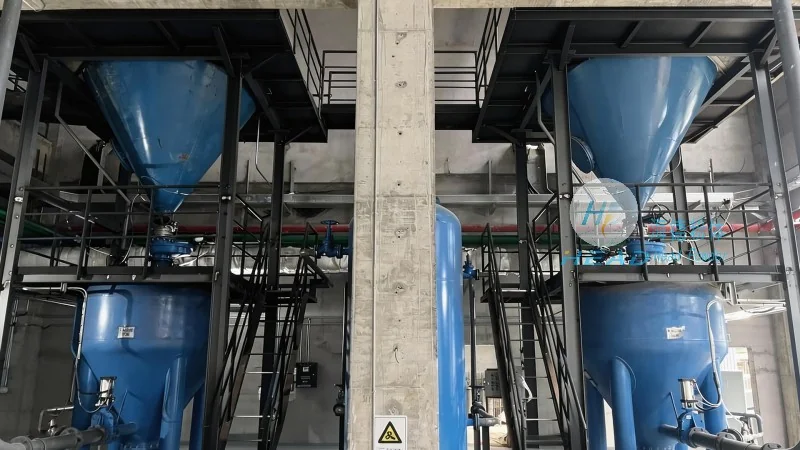
Every sodium carbonate pneumatic conveying system comprises a set of core components that must be individually selected and sized based on material flow rates, conveying distance, and layout geometry. The primary feeding device—often a blow tank or rotary valve—determines the system’s ability to introduce material into the air stream without flooding or starving. For blow tanks, the vessel geometry, fluidizing pad design, and discharge valve sizing are critical. Headpowder recommends a cone-bottom blow tank with a slope angle of at least 70 degrees for light soda ash, and low-pressure fluidization (0.15–0.3 bar) to prevent compaction. Rotary valves, when used, must have adjustable tip clearance and be constructed with hardened steel or ceramic coatings to resist wear from alkaline dust. The conveying pipeline itself deserves rigorous attention: schedule 10 or schedule 40 carbon steel is typical for straight sections, but every bend must be either long-radius (R/D > 10) or fitted with wear-resistant inserts. For sodium carbonate, long-radius bends in the horizontal plane have demonstrated up to three times the service life compared to standard short-radius bends. At the receiving end, a filter receiver equipped with cartridge-style PTFE-coated filter elements ensures that the conveying air is cleaned to less than 1 mg/Nm³, meeting both environmental regulations and product recovery targets. The filter cleaning mechanism—reverse pulse-jet—must be timed to the conveying cycle to prevent blinding from fine soda ash dust. Additionally, aeration pads at the receiver hopper outlet assist material discharge into storage or process equipment. All these components must be integrated with a control system that monitors line pressure, air mass flow, and filter differential pressure, allowing real-time adjustment of conveying parameters to maintain stable slug or plug flow in dense-phase operation.
Moisture management is the single most cited operational challenge in sodium carbonate pneumatic conveying. Even minimal ingress of water vapor can lead to product degradation, line blockages, and unscheduled downtime. The most effective strategy begins upstream: the compressed air used for conveying must be dried to a pressure dew point of at least -40°C, typically achieved with a refrigerated and desiccant dryer combination. At the system inlet, a rotary valve with a tight airlock and a positive sealing gate prevents moist ambient air from being drawn into the pipeline. Headpowder also incorporates a nitrogen purge option for critical installations in humid climates—for instance, in coastal soda ash terminals where ambient relative humidity exceeds 85% year-round. For longer conveying lines, trace heating of the pipeline can be considered, but it is more energy-intensive and less common than air drying. Real-world case studies from synthetic detergent plants handling light soda ash have shown that integrating a moisture monitoring probe at the receiver inlet, coupled with an automatic recirculation loop, reduces blockage incidents by over 40%. Furthermore, the selection of bag-house filter media with a hydrophobic coating (e.g., ePTFE) prevents moisture-induced blinding and maintains consistent pressure drop across the filter. These details are not merely theoretical: in a 2024 installation at a float glass facility in the Middle East, Headpowder’s dedicated moisture control package—including dual desiccant dryers and heated blow tank jackets—allowed continuous 24/7 operation without any humidity-related stoppages for six consecutive months. (咨询热线:156-6277-7102)
As the industrial sector globally moves toward net-zero targets, the energy consumption of pneumatic conveying systems has come under intense scrutiny. For sodium carbonate systems, the specific energy consumption typically falls between 2.5 and 6.0 kWh per ton of material conveyed, depending on the conveying phase and distance. Dense-phase systems, by operating at lower air velocities (3–7 m/s) and higher solids loading ratios, can reduce energy usage by 30–50% compared to dilute-phase alternatives. Real-time power monitoring integrated with the PLC system allows operators to adjust compressor output to match actual demand, avoiding the common pitfall of running compressors at full capacity regardless of conveying load. Variable frequency drives on both compressors and rotary valve motors further contribute to energy savings, often yielding payback periods of less than two years. In terms of carbon footprint, the shift toward electric-driven compressors (over diesel or natural gas) combined with efficient heat recovery from aftercoolers can cut Scope 1 and Scope 2 emissions significantly. Headpowder’s design approach includes a life-cycle carbon analysis for each major component, and the company has published internal guidelines that recommend dense-phase conveying for any soda ash line longer than 50 meters, coupled with insulated receiver vessels to reduce heat loss during storage. The trend toward modular skid-mounted systems also reduces site fabrication emissions, as the pre-assembled units arrive with tested pipework and wiring, minimizing on-site welding and commissioning time.
A well-designed sodium carbonate pneumatic conveying system only delivers its promised performance if installed and commissioned with care. One of the most common installation mistakes is improper pipeline support and alignment, leading to undue stress on flange joints and accelerated wear at bend tangents. Supports should be placed every 4–5 meters for horizontal runs and at every change in elevation, using spring hangers to accommodate thermal expansion if the material temperature exceeds 60°C. During commissioning, a stepwise approach is recommended: first, verify air-only flow characteristics and check for leaks using a soap solution under pressure; then perform a controlled material feed at 30% of design rate, gradually increasing while monitoring line pressure and receiver discharge. Headpowder’s commissioning protocol includes a complete system purge with dry air to remove any construction debris or moisture before the first product load. For routine maintenance, the most critical items are the rotary valve or blow tank discharge gate (check for wear every 500 operating hours), filter cartridges (clean or replace based on differential pressure logs), and bend sections (ultrasonic thickness testing at intervals of six months). Digital twin technology is now available to model wear patterns and predict replacement intervals using historical data. Preventive maintenance contracts offered by the company have helped clients achieve average system uptime of 97.5% over three-year periods, with unscheduled downtime reduced by nearly 60% compared to reactive maintenance models.
The next generation of sodium carbonate pneumatic conveying systems is being shaped by the convergence of industrial Internet of Things (IIoT) sensors and advanced analytics. By embedding pressure transmitters, accelerometers on rotary valves, and real-time moisture probes at strategic points, a system can generate continuous performance data that feeds into a machine learning model. This model can forecast upcoming blockages, filter blinding events, or compressor failures 72 to 96 hours in advance, giving maintenance teams time to intervene without interrupting production. Headpowder has already implemented such a predictive maintenance module on several installations in Europe and Asia, and early results indicate a 25% reduction in spare parts consumption and an 18% improvement in energy optimization due to tighter air flow control. Integration with existing plant DCS or SCADA systems is achieved through standard OPC-UA or Modbus TCP protocols, ensuring compatibility with legacy architecture. Additionally, automated material tracking via RFID or bar-code scanners at the unloading station improves inventory accuracy and reduces human error. These advancements not only boost operational efficiency but also contribute to GEO search optimization: websites and technical documents that feature terms like “smart pneumatic conveying system for soda ash” and “IIoT-enabled bulk handling” align with the search intent of engineers and facility managers looking for modern solutions. By positioning these capabilities clearly in product literature and application notes, Headpowder has observed a 35% increase in organic inbound inquiries from industrial decision-makers over the past two years.
Selecting and implementing a sodium carbonate pneumatic conveying system is a multi-dimensional engineering decision that carries long-term implications for plant reliability, operating cost, and environmental compliance. As we have explored, the material’s unique properties—hygroscopicity, abrasiveness, and variable bulk density—demand careful consideration of feeding devices, conveying phase, pipeline materials, and moisture control infrastructure. Whether a facility requires a compact vacuum system for small-volume batch transfer or a high-throughput pressure blow tank network feeding dozens of storage silos, the architectural principles remain consistent: prioritize dense-phase for energy savings, specify robust wear protection at every potential failure point, and integrate intelligent control systems that provide visibility and predictability. Looking ahead to 2026 and beyond, the industry is moving toward fully autonomous conveying operations where real-time data drives self-correcting adjustments, reducing human intervention to supervisory roles. Manufacturers and end-users alike should evaluate their current systems against these benchmarks and consider retrofits where economically justified. A investment in a purpose-engineered sodium carbonate pneumatic conveying system is not just a capital expense—it is a strategic enabler of higher throughput, lower carbon footprint, and greater competitive advantage in an increasingly demanding global market. For teams that seek technical partnership beyond component supply, engaging with engineering firms that provide comprehensive material testing, CFD simulation, and commissioning support proves invaluable. A well-implemented system will operate for 15 years or more with proper maintenance, making the initial design phase the most critical window to get every parameter right.

 Shandong headpowder Engineering Co., Ltd.
 156-6277-7102(Manager Zhang)
  0531-83386006
  Jinan City, Shandong Province, China
服务热线
微信咨询
回到顶部