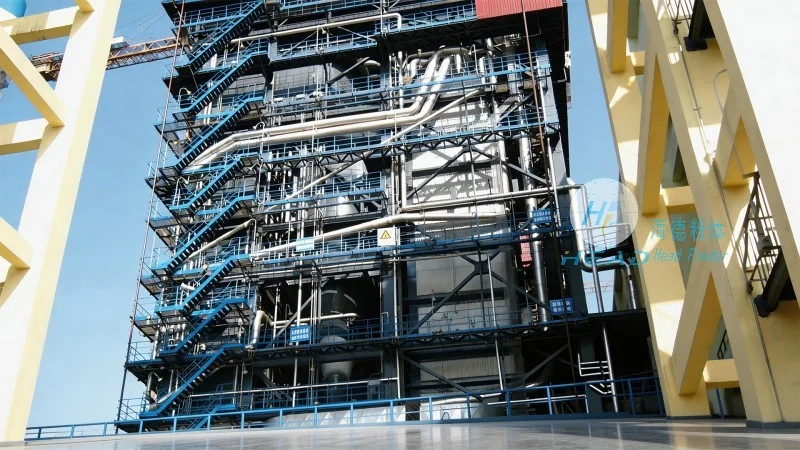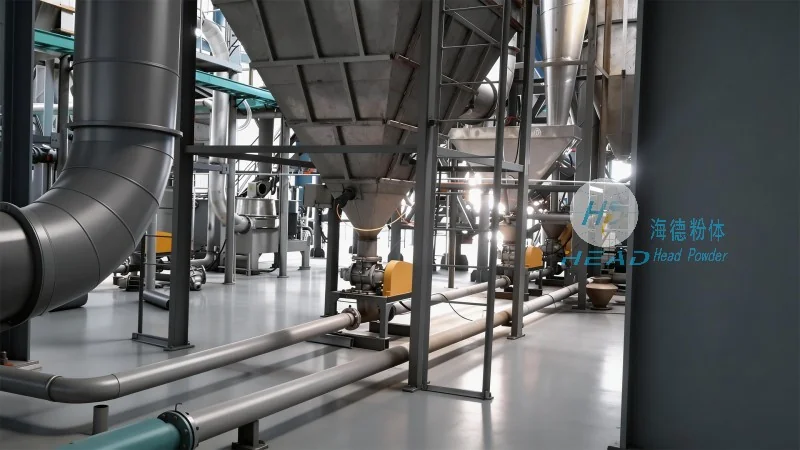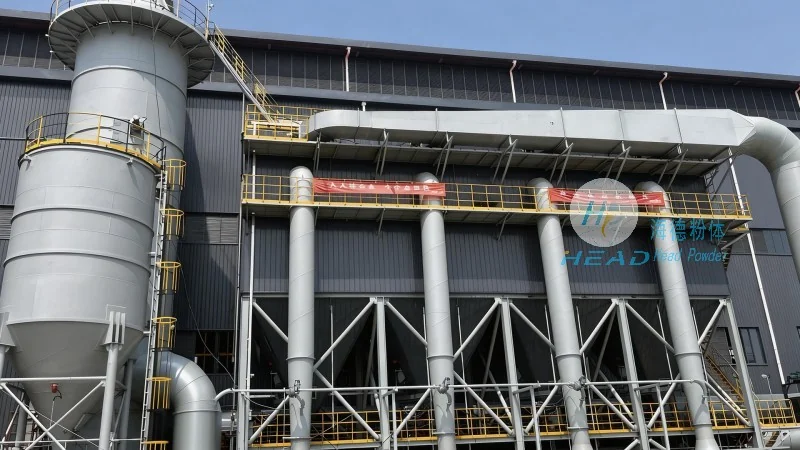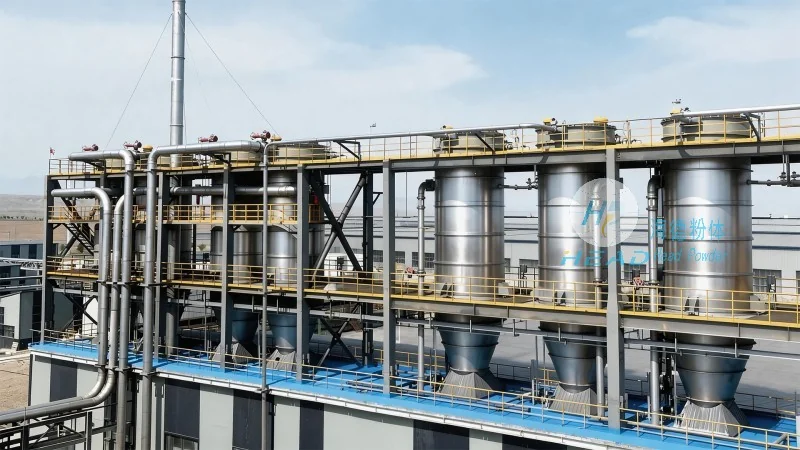

With over a decade of experience in the pneumatic conveying industry, our company specializes in a full range of pneumatic conveying system equipment.
您的当前位置:首页 >> News >> Technical FAQ

News

Rich project cases across industries, showing real implementation and proven technical strength.

Dry Desulfurization Agent Conveying: Pneumatic Guide

2026-07-08

Understanding Dry Desulfurization Agents and Their Conveying Challenges

Dry desulfurization agents, including calcium-based sorbents such as hydrated lime (Ca(OH)₂), limestone (CaCO₃), and advanced synthetic compounds, play a critical role in industrial flue gas treatment, steelmaking, cement production, and waste-to-energy plants. These agents chemically react with sulfur dioxide (SO₂) to form stable sulfates, effectively reducing emissions to meet increasingly stringent environmental regulations. By 2026, global demand for dry desulfurization agents is projected to grow at a compound annual rate of 4.8%, driven by stricter emission caps in Asia-Pacific and Europe, alongside retrofitting of older coal-fired units. However, the physical properties of these materials—fine particle size, hygroscopic nature, tendency to cake, and abrasive characteristics—pose significant challenges for reliable and efficient material handling. Improper conveying can lead to blockages, excessive dust emissions, inconsistent feed rates, and increased operating costs, directly undermining the performance of the downstream desulfurization process. This is where pneumatic conveying emerges as the preferred solution, offering enclosed, flexible, and precisely controlled transport that aligns with modern industrial requirements. In this comprehensive guide, we explore the principles, design parameters, system configurations, and real-world best practices for pneumatic conveying of dry desulfurization agents, drawing on industry expertise and field-proven experience from headpowder—a dedicated provider specializing in bulk material handling solutions for the environmental engineering sector.

Why Pneumatic Conveying Is the Optimal Choice for Dry Desulfurization Agents

Pneumatic conveying systems use a stream of air or inert gas to transport particulate materials through pipelines, eliminating the mechanical moving parts found in belt conveyors or screw feeders. For dry desulfurization agents, this approach offers distinct advantages. First, complete enclosure prevents moisture ingress and dust leakage—critical for hygroscopic materials like hydrated lime that can absorb atmospheric water, causing agglomeration and degraded reactivity. Second, the flexibility of pipe routing allows the system to navigate around existing equipment, span long distances, and reach multiple injection points without excessive structural modifications. Third, pneumatic systems enable precise control of feed rate and material-to-air ratio, which is essential when injecting sorbent into a flue gas duct where stoichiometry must be maintained for optimal SO₂ removal efficiency. Industrial data from European cement plants indicate that converting from mechanical conveying to pneumatic systems reduced unscheduled downtime by 35% and lowered fugitive dust emissions below 1 mg/Nm³. Furthermore, the absence of return strands and transfer points minimizes contamination risk, preserving the chemical purity of the desulfurization agent. For facilities aiming to comply with the upcoming EU Industrial Emissions Directive revisions in 2026, pneumatic conveying offers a scalable, low-maintenance foundation for desulfurization operations.

Key Physical Properties That Influence Pneumatic Conveying Design

Successful pneumatic conveying of dry desulfurization agents hinges on thorough characterization of the bulk solid. Critical parameters include particle size distribution, bulk density, angle of repose, moisture content, and abrasivity. Most commercial sorbents have a median particle diameter (D₅₀) ranging from 5 to 50 micrometers, with fines content often exceeding 30%. Such fine powders behave cohesively, exhibiting high inter-particle forces that can lead to rat-holing in hoppers and unstable flow. The bulk density of hydrated lime typically falls between 400 and 600 kg/m³, while limestone powders can reach 900 kg/m³. The Hausner ratio—a measure of flowability—for these materials usually exceeds 1.4, classifying them as cohesive or very cohesive. Additionally, even slight moisture pickup (above 0.5% by weight) can dramatically increase the material's tendency to cake, especially under pressure and temperature fluctuations. The angle of repose for dry desulfurization agents is often between 45° and 55°, requiring hopper designs with steep wall angles (≥70°) and low-friction liners such as stainless steel 304 or ultra-high molecular weight polyethylene (UHMWPE). Abrasive wear is another concern: calcium-based particles can erode pipe bends and rotary valves, necessitating the use of hardened materials like ceramics or chromed components. A well-designed pneumatic system must account for these properties at every stage, from feed bin discharge to final injection.

Dilute Phase vs. Dense Phase Pneumatic Conveying for Desulfurization Agents

The choice between dilute phase and dense phase pneumatic conveying depends on material characteristics, distance, required throughput, and budget. Dilute phase systems operate at high velocities (18–35 m/s) and low solids-to-air ratios, suspending particles in the airstream. They are simpler and lower in initial cost, making them suitable for short distances (up to 100 m) and lower tonnages (below 5 t/h). However, the high velocity accelerates pipe wear and particle attrition, which can degrade sorbent particle size and reduce reactivity. For very cohesive powders, dilute phase may also risk saltation and plugging in horizontal runs. Dense phase conveying, by contrast, moves material in slugs or plugs at low velocities (2–8 m/s) with high solids loading. This minimizes both erosion and degradation, preserving the sorbent's chemical activity. Dense phase is ideal for long distances (up to 500 m) and higher capacities (10–30 t/h), especially for abrasive or fragile materials. Headpowder has implemented dense phase systems using air-assisted gravity conveyors and pulse-phase technology at multiple desulfurization plants in China, achieving consistent flow with less than 2% particle breakage. For most dry desulfurization agent applications, a dense phase approach is recommended where capital allows, as the total cost of ownership over 10 years—including reduced pipe replacement and higher system reliability—often favors dense phase despite higher upfront investment.

Critical System Components and Material Selection

Every pneumatic conveying system comprises several core components, each requiring careful specification for dry desulfurization agents. The feed hopper should incorporate a discharge aid, such as a fluidizing cone or vibratory bin activator, to overcome bridging and ratholing. Rotary airlock valves are commonly used to meter material into the conveying line, but for cohesive powders, blow-through valves offer superior sealing and prevent "dead zones" where materials can compact. The conveying pipe itself must be selected based on expected wear: carbon steel with 6–8 mm wall thickness is economical for moderate use, but pipe bends must be lined with ceramic tiles or treated with hardened coatings to withstand abrasive impact. In long-radius bends (R/D ≥ 10), wear is reduced by 40–60% compared to short-radius bends. The air mover—a positive displacement blower or compressed air system—needs to supply a consistent volume at pressures up to 1.5 bar for dilute phase or 3.5 bar for dense phase. Filtration at the receiving end, such as a bin vent filter or cartridge collector, must handle high dust loads (up to 200 g/m³) without blinding. Automated control systems with pressure transducers, flow meters, and programmable logic controllers (PLC) enable real-time adjustments to maintain optimal conveying velocity and pressure. Headpowder's engineering team typically specifies a touch-screen HMI with remote monitoring capabilities, allowing operators to track line pressure trends and predict maintenance intervals. Sensors for detecting incipient blockages can reduce emergency downtime by up to 80%.

Addressing Common Conveying Issues: Blockage, Moisture, and Segregation

Despite robust design, dry desulfurization agent conveying systems can encounter operational challenges. Blockages often occur during startup or shutdown when air velocity is insufficient to lift settled material. The best mitigation strategy includes a purge cycle using higher airflow for 5–10 seconds after each batch, and maintaining a minimum conveying velocity of 12 m/s in horizontal sections even during low-throughput periods. Moisture control is paramount: compressed air must be dried to a dew point of -20°C or lower, and the conveying line should be insulated in humid environments to prevent condensation. Headpowder's installations in tropical regions incorporate inline moisture traps and trace heating for exposed sections. Particle segregation—where coarse and fine fractions separate—can cause inconsistent sorbent reactivity at the injection point. This is more pronounced in dilute phase systems with turbulent flow; dense phase slug flow with a uniform plug structure reduces segregation significantly. If segregation is persistent, adding a static mixer just before the injection nozzle can re-homogenize the stream. Another practical solution is to design the receiving bin with internal baffles to re-mix the material during discharge. Regular inspection schedules—every three months for wear assessment of bends and airlocks—can pre-empt failures. Many plants using headpowder systems report over 99% uptime during initial two-year operation periods when following recommended maintenance protocols.

Case Study: headpowder's Field-Proven Pneumatic Conveying Installation

Dry Desulfurization Agent Conveying: Pneumatic Guide

To illustrate the practical application of these principles, consider a 300 MW coal-fired power plant in northern China that upgraded its flue gas desulfurization (FGD) system in late 2024. The plant required reliable pneumatic conveying of 8 t/h of hydrated lime over a distance of 180 m with a vertical lift of 25 m. Due to the severe winter temperatures (down to -25°C) and high humidity, moisture control was a primary concern. Headpowder designed a dense phase conveying system using a 4-inch Sch 80 carbon steel pipe with ceramic-lined long-radius bends. A blow-through valve with a nitrogen purging feature was installed at the feed point to prevent backflow and caking. The system incorporated a heated fluidized bin bottom with an automatic dew-point monitor. Over 18 months of continuous operation, the system has maintained conveying stability with zero blockages, achieving a consistent lime feed rate within ±2% of setpoint. Particle size analysis before and after conveying showed degradation of only 1.5%, well within the acceptable range for effective SO₂ capture. The plant's annual maintenance cost for the conveying system was approximately 15% lower than the previous screw conveyor arrangement. This case demonstrates that with proper engineering, pneumatic conveying can reliably handle even the most challenging dry desulfurization agents in harsh environments.

Market Outlook and Technology Trends for 2026

Dry Desulfurization Agent Conveying: Pneumatic Guide

As global environmental regulations continue to tighten, the dry desulfurization agent market is expected to expand significantly, with pneumatic conveying playing an increasingly central role. By 2026, the Asia-Pacific region will account for over 55% of new installations, driven by China's ultra-low emission standards and India's new national clean air program. Emerging trends include the integration of Internet of Things (IoT) sensors for predictive maintenance, where vibration and pressure data are analyzed by machine learning algorithms to forecast component failures weeks in advance. Another development is the use of variable-frequency drives (VFDs) on blowers to dynamically adjust conveying air velocity based on real-time material flow, reducing energy consumption by 20–30%. Additionally, modular, skid-mounted pneumatic conveying units are gaining popularity for retrofitting existing plants, as they shorten installation time from weeks to days. There is also growing interest in using recycled CO₂ as the conveying gas in carbon capture and utilization (CCU) integrated processes, aligning with net-zero goals. For plant managers evaluating new systems, selecting an experienced partner like headpowder—with proven technical expertise in material characterization, system simulation, and field commissioning—ensures that the pneumatic conveying solution will meet both current needs and future scalability. (Consultation hotline: 156-6277-7102)

Conclusion: Building a Reliable Dry Desulfurization Material Handling Strategy

Dry Desulfurization Agent Conveying: Pneumatic Guide

Pneumatic conveying for dry desulfurization agents is not merely a transport method—it is a strategic enabler for achieving consistent emission control performance, operational efficiency, and regulatory compliance. From understanding the complex flow behavior of fine powders to selecting the right system phase, components, and controls, every decision impacts long-term reliability and total cost of ownership. As we move into 2026, the convergence of stricter emission limits, digitalization, and sustainability pressures makes it imperative for industrial facilities to invest in robust, future-proof conveying solutions. Headpowder has dedicated over a decade to refining pneumatic conveying systems for dry desulfurization agents, delivering installations that outperform conservative design targets in demanding environments across multiple continents. By combining deep material science knowledge with advanced engineering simulation and on-site support, headpowder helps clients avoid the common pitfalls of caking, wear, and downtime. Whether you are designing a greenfield facility or upgrading an existing FGD system, a thorough pneumatic conveying analysis should be a foundational step. The result is a clean, safe, and high-performing material handling line that protects your desulfurization investment and supports your environmental stewardship goals. To discuss your specific application and explore how headpowder's solutions can be tailored to your site, please reach out to our technical team. (咨询热线:156-6277-7102)

相关推荐

Shandong headpowder Engineering Co., Ltd. All rights reserved.

回到顶部