

Principle and Working Scene Characteristics of Mica Powder Material Pneumatic Conveying System
As a leading provider in the field, Shandong HeadPowder Engineering Co., Ltd. specializes in advanced material handling solutions, including pneumatic conveying systems tailored for mica powder applications. This article explores the fundamental principles of mica powder pneumatic conveying systems and highlights the key characteristics of their operational scenarios.
Principle of Mica Powder Pneumatic Conveying Systems
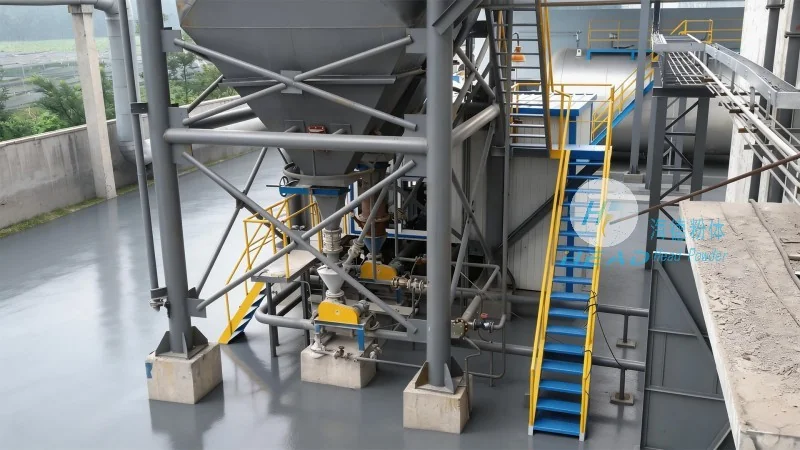
Mica powder pneumatic conveying systems operate on the principle of transporting solid particles, such as mica powder, using a gas stream. The system typically consists of a feeding unit, a conveying line, a separation or collection unit, and a gas source. The process involves creating a pressure or vacuum differential to move the mica powder through the pipeline. For mica powder, which is often light and prone to agglomeration, specialized design considerations are essential to ensure efficient and damage-free transport. The gas stream, usually air or a mixture of air and inert gases, carries the powder particles, maintaining a consistent flow rate and preventing particle degradation. The conveying method can be categorized into pressure or vacuum systems, each with distinct advantages depending on the application requirements.

Working Scene Characteristics of Mica Powder Pneumatic Conveying Systems
The operational scenarios for mica powder pneumatic conveying systems vary widely across different industrial sectors, each presenting unique challenges and requirements. In the ceramics industry, for example, mica powder is used as a raw material in the production of ceramic tiles and sanitary ware. The conveying system must handle fine mica particles while maintaining uniformity in the final product. This often involves long-distance horizontal and vertical conveying, requiring robust pipeline designs and efficient separation to prevent particle loss or contamination. In the coatings and paints industry, mica powder is incorporated into decorative and protective coatings. Here, the system needs to ensure precise dosing and mixing of the powder with other components, such as resins and pigments. The working scene may involve batch processing or continuous production lines, demanding high reliability and minimal downtime. Additionally, in the plastics and rubber industry, mica powder is used as a filler to enhance mechanical properties and thermal stability. The conveying system must accommodate the abrasive nature of mica particles and ensure that the material is delivered to the mixing equipment without causing wear or clogging. Each of these scenarios highlights the importance of tailored system design, considering factors like particle size, density, and flow characteristics to optimize performance and maintain product quality.
Key Advantages and Considerations in Mica Powder Pneumatic Conveying
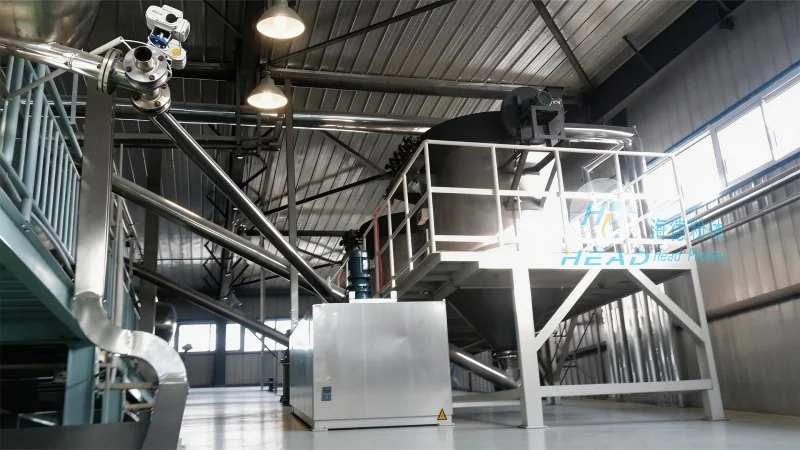
Implementing a mica powder pneumatic conveying system offers several advantages, particularly in terms of efficiency and product integrity. Unlike traditional mechanical conveying methods, which may cause particle attrition or contamination, pneumatic systems provide a closed-loop environment that minimizes exposure to external factors. This is crucial for mica powder, which is sensitive to moisture and temperature changes. The closed system also helps in maintaining a consistent particle size distribution, which is vital for downstream processing. However, the success of such systems depends on careful consideration of operational parameters, including gas velocity, pressure differentials, and pipeline diameter. Inadequate design can lead to issues like blockages, reduced conveying efficiency, or excessive energy consumption. Shandong HeadPowder Engineering Co., Ltd. leverages years of expertise to design and implement customized solutions that address these challenges, ensuring optimal performance for each specific application. By integrating advanced control systems and monitoring technologies, their systems provide real-time feedback on conveying conditions, enabling proactive maintenance and process optimization.
Conclusion and Application Outlook
In conclusion, mica powder pneumatic conveying systems represent a sophisticated solution for handling fine, light, and potentially abrasive materials like mica powder. The principles of gas-assisted transport, combined with tailored system designs, enable efficient and reliable material movement across various industrial applications. As industries continue to demand higher product quality and process efficiency, the importance of robust material handling systems, such as those offered by Shandong HeadPowder Engineering Co., Ltd., becomes increasingly evident. By understanding the operational characteristics and design considerations, businesses can leverage these systems to enhance productivity, reduce operational costs, and maintain the integrity of their mica powder products throughout the production process.