

Design of a Negative Pressure Pneumatic Conveying System for Caustic Soda
HeadPowder, a leading engineering firm based in Shandong, China, specializes in the design and implementation of advanced material handling solutions. Our expertise lies in creating efficient and reliable systems for transporting caustic soda, a critical chemical widely used in various industrial applications. This article focuses on the design of a negative pressure pneumatic conveying system specifically tailored for caustic soda, highlighting key components, operational principles, and the benefits of such a system.

Caustic soda, also known as sodium hydroxide, is a highly caustic and corrosive chemical that requires specialized handling to ensure safety and efficiency. Traditional methods of transporting caustic soda, such as manual handling or open-air conveyors, pose significant risks including exposure to fumes, spills, and contamination. The negative pressure pneumatic conveying system addresses these challenges by providing a sealed, enclosed environment that minimizes exposure and ensures safe material transfer.
At the core of our design is a robust system that operates under negative pressure, which draws the caustic soda from the source container into the conveying line. This approach eliminates the need for positive pressure systems, reducing the risk of leaks and ensuring compliance with safety regulations. The system incorporates high-quality materials resistant to corrosion, such as stainless steel and specialized polymers, to withstand the harsh chemical environment of caustic soda.
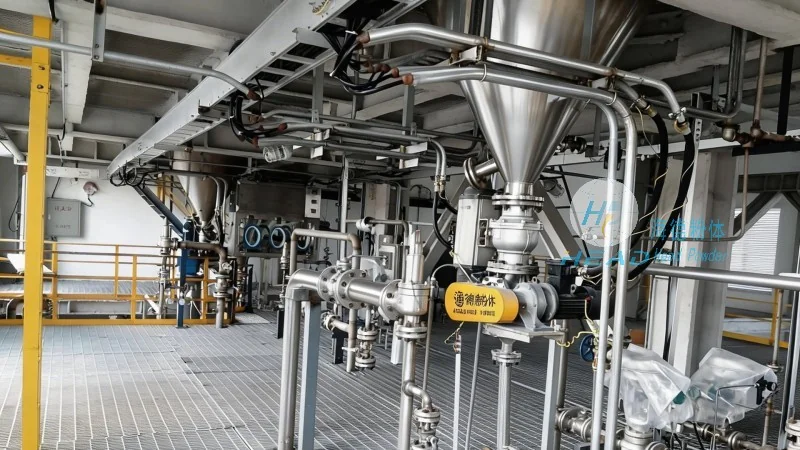
Key components of the negative pressure pneumatic conveying system include a feed hopper, a rotary airlock valve, a venturi or eductor, and a dust collector. The feed hopper is designed to store and meter the caustic soda, ensuring a consistent flow into the system. The rotary airlock valve acts as a seal between the hopper and the conveying line, preventing backflow and maintaining the negative pressure. The venturi or eductor uses the suction created by the system to draw the material through the pipeline, while the dust collector captures any fine particles, ensuring clean operation and compliance with environmental standards.
The system is engineered to handle various forms of caustic soda, including solid pellets, flakes, or liquid solutions, depending on the specific application. The design allows for flexibility in material handling, making it suitable for different production scales and operational requirements. Our engineers work closely with clients to understand their unique needs, ensuring that the system is optimized for efficiency, safety, and cost-effectiveness.
Operational benefits of the negative pressure pneumatic conveying system for caustic soda include improved safety by reducing human exposure to the chemical, enhanced product quality through minimized contamination, and increased efficiency by automating the material transfer process. The sealed system also helps in maintaining the integrity of the caustic soda, preventing degradation or loss of potency during transport.
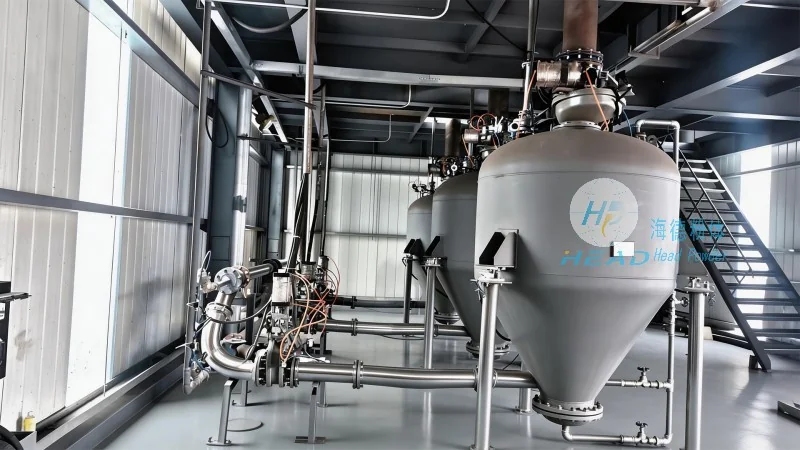
HeadPowder's commitment to quality and innovation is reflected in the detailed engineering and testing of our negative pressure pneumatic conveying systems. Each system undergoes rigorous performance testing to ensure it meets or exceeds industry standards for safety, reliability, and efficiency. Our team of experienced engineers and technicians provides comprehensive support, from initial design and installation to ongoing maintenance and troubleshooting.
For industrial facilities dealing with caustic soda, the negative pressure pneumatic conveying system represents a significant advancement in material handling technology. By integrating advanced engineering principles and high-quality components, this system offers a reliable and safe solution for transporting caustic soda while minimizing operational risks and costs. HeadPowder's expertise in this field ensures that clients receive a tailored solution that meets their specific requirements and contributes to their overall operational success.