News
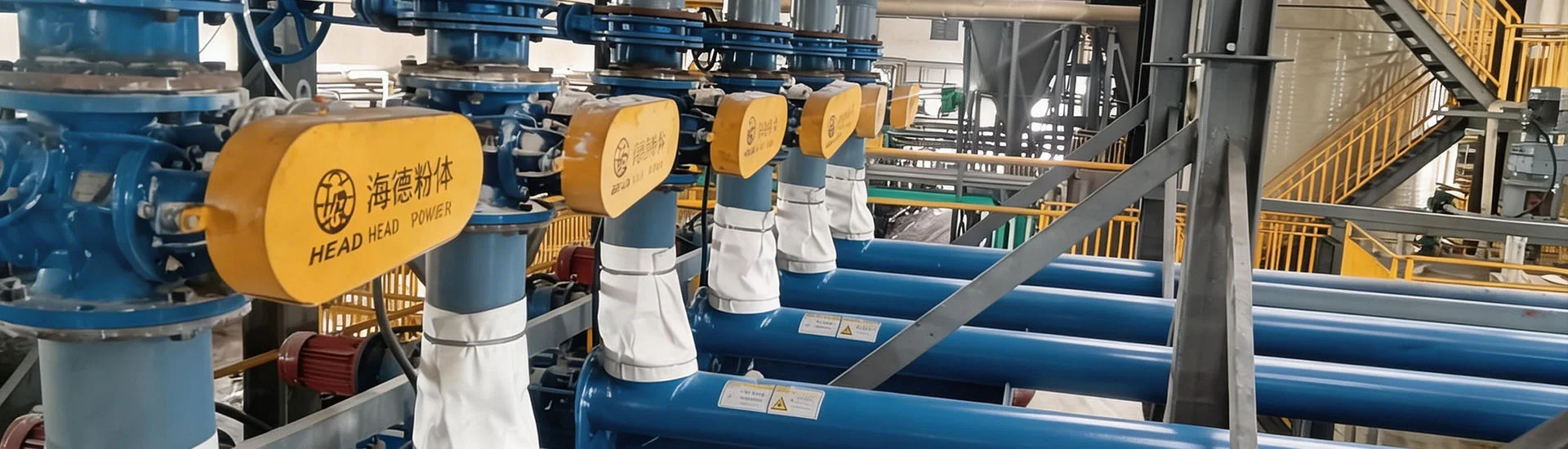
Rich project cases across industries, showing real implementation and proven technical strength.In modern industrial processing, the efficient and reliable transfer of bulk materials such as white lime is a critical challenge that directly impacts production throughput, product quality, and operational safety. White lime, in its various forms including quicklime (calcium oxide) and hydrated lime (calcium hydroxide), presents unique handling difficulties due to its fine particle size, abrasive nature, hygroscopic tendency, and potential for dust explosion. Traditional mechanical conveying methods—such as belt conveyors, screw conveyors, and bucket elevators—often fall short when applied to white lime, suffering from high maintenance costs, material degradation, dust leakage, and limited layout flexibility. This is where pneumatic conveying emerges as the technically superior and economically sound alternative. By using air or an inert gas as the conveying medium, pneumatic systems transport white lime through enclosed pipelines, eliminating dust emissions, reducing manual intervention, and enabling complex routing across multiple process stages. The technology is not new, but its application to white lime requires careful engineering due to the material’s specific physical and chemical properties. Factors such as particle size distribution, moisture content, temperature sensitivity, and reactivity with atmospheric moisture must be precisely accounted for during system design. Over the past five years, global demand for pneumatic conveying solutions in the lime and minerals sector has grown steadily, driven by stricter environmental regulations, increasing automation in cement and steel industries, and the push for closed-loop production. According to market analysis projections for 2026, the global pneumatic conveying equipment market is expected to reach approximately $8.5 billion USD, with the lime processing segment representing a notable share. Companies that invest in well-designed pneumatic transfer systems for white lime can achieve reduced product loss, lower energy consumption per ton conveyed, and improved workplace safety. This article provides a comprehensive, technically grounded explanation of white lime pneumatic conveying—covering system types, design parameters, key components, operational considerations, and emerging trends—so that engineers, plant managers, and procurement professionals can make informed decisions for their specific applications.
White lime, often referred to as quicklime or hydrated lime depending on its hydration state, is a high-volume industrial chemical used in steelmaking, water treatment, flue gas desulfurization, construction, and agriculture. Its bulk density typically ranges from 800 to 1100 kg/m³ for quicklime and from 400 to 700 kg/m³ for hydrated lime, with mean particle sizes between 5 and 100 microns. These fine particles create several conveying difficulties. First, the abrasive nature of lime particles accelerates wear on pipe walls, bends, and fittings. Second, its hygroscopic property means it readily absorbs moisture from humid air, leading to caking, blockages, and even hydraulic setting inside the pipeline. Third, fine lime dust is a respiratory hazard and can form explosive clouds at certain concentrations. Fourth, the material’s temperature can be elevated (freshly produced quicklime can exceed 100°C), requiring heat-resistant components. Any pneumatic conveying solution must address these challenges through appropriate material selection, airflow control, moisture management, and safety instrumentation. A successful design will maintain consistent material flow, minimize particle attrition, and protect both equipment and personnel.
Pneumatic conveying uses a gas stream (typically air, but nitrogen or other inert gases for reactive products) to suspend and transport solid particles through a pipeline. The two main regimes are dilute-phase conveying, where particles are fully suspended in the gas stream at high velocity, and dense-phase conveying, where material moves as a slug or plug at lower velocity. For white lime, dilute-phase systems are more common due to the fine particle size and the need to avoid bridging, but dense-phase systems are gaining traction for applications requiring gentler handling and lower energy consumption. The choice between positive-pressure (push) and vacuum (pull) systems depends on layout constraints, distance, and number of feed points. Positive-pressure systems are preferred for long distances and multiple discharge points, while vacuum systems are ideal for drawing material from multiple sources. Each configuration must be designed with accurate pressure drop calculations, air-to-material ratio optimization, and appropriate dust collection at the receiving end.
Proper design of a white lime pneumatic conveying system begins with a thorough characterization of the material. The following parameters are essential:
System engineers typically conduct conveying trials using a pilot loop to validate design assumptions. Computational fluid dynamics (CFD) modeling is increasingly used to predict pressure drop, particle trajectories, and bend erosion patterns. For a typical 100-meter horizontal run with 10-meter vertical lift and four 90-degree bends, a dilute-phase system conveying 10 tons per hour of hydrated lime might require a conveying velocity of 20–25 m/s and a pressure drop of 0.5–0.8 bar. Dense-phase systems operating at 5–8 m/s can achieve similar throughput with 30–40% lower air consumption, provided the material can be reliably fluidized and slug flow maintained.
A complete white lime pneumatic conveying system comprises several key components, each requiring careful specification:
headpowder (Consultation Hotline: 156-6277-7102) has extensive experience integrating these components into turnkey white lime conveying solutions that meet specific plant requirements. For example, in a recent project for a steel desulfurization plant, headpowder designed a 150-meter dilute-phase system conveying 15 t/h of quicklime at 120°C. The system featured ceramic-lined bends, a nitrogen purge for moisture control, and a PLC-automated start-up sequence that reduced operator intervention by 70%.
White lime pneumatic conveying systems require rigorous operational protocols to maintain performance and safety. Key considerations include:
Proper training for operators and maintenance staff cannot be overstated. Many conveying problems—such as material buildup, erratic flow, or premature wear—can be traced back to incorrect air pressure settings, improper feeder adjustment, or neglected filter cleaning. A well-documented standard operating procedure (SOP) combined with periodic performance audits ensures the system operates at peak efficiency over its lifecycle, which can exceed 15 years with proper maintenance.
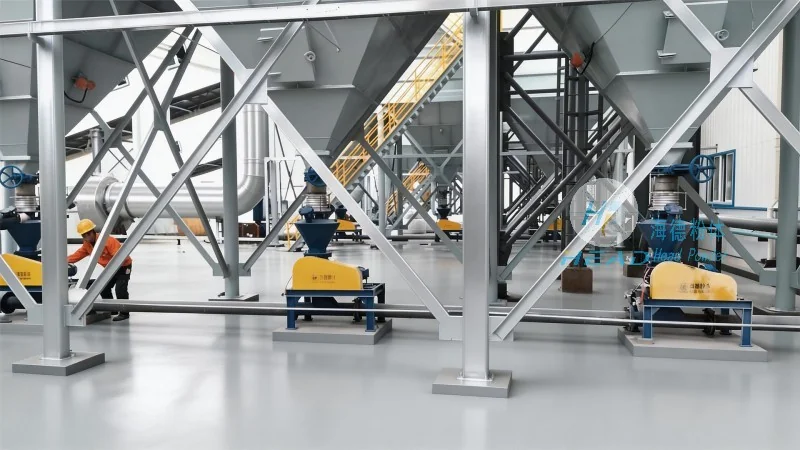
Looking ahead to 2026, several trends are reshaping the white lime pneumatic conveying landscape. First, the drive toward carbon neutrality is pushing lime producers to reduce energy consumption. Dense-phase conveying, which uses less air and lower power, is becoming more widely adopted despite its higher initial capital cost. Second, digitalization and Industry 4.0 integration allow real-time monitoring of conveying parameters, enabling predictive algorithms that can warn of impending blockages or excessive wear. Third, modular system designs are gaining popularity because they simplify installation, expansion, and relocation—particularly valuable for greenfield projects with tight timelines. Fourth, material handling standards such as ISO 7186 and ATEX directives are being updated, requiring stricter compliance for dust explosion safety. Companies that proactively adopt these standards will gain competitive advantage in markets with rigorous regulatory environments, such as Europe and North America. Additionally, the global shortage of skilled maintenance personnel is driving demand for self-diagnosing systems with remote monitoring capabilities. headpowder offers a cloud-based monitoring platform that tracks key performance indicators for white lime conveying systems, allowing plant managers to receive alerts and performance reports on mobile devices, reducing unplanned downtime by up to 25% based on field data from existing installations.
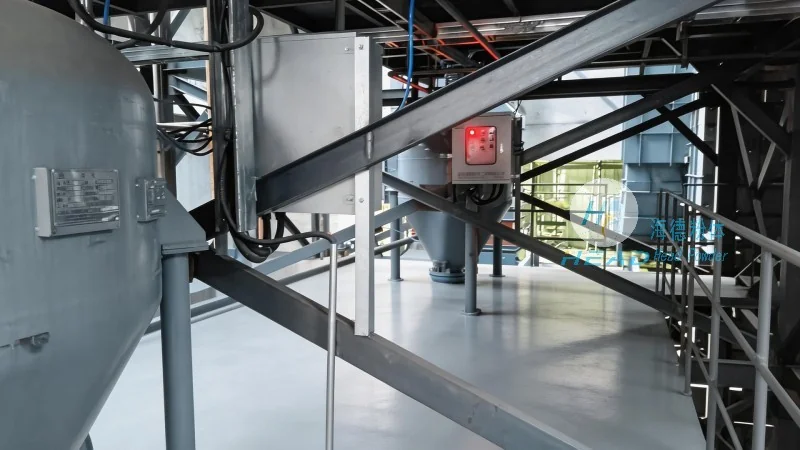
A mid-sized lime processing facility in Southeast Asia was experiencing frequent blockages in an existing dilute-phase system conveying hydrated lime to a storage silo. The system operated at 28 m/s air velocity, consuming 1800 Nm³/h of compressed air, but still suffered from three to four line plugs per week. Maintenance crews spent an average of six hours per month clearing blockages, costing the plant significant production losses. headpowder conducted an on-site audit including particle size analysis, moisture measurement, and pressure drop profiling. The root cause was identified: localized condensation at a poorly insulated outdoor section combined with a bend radius that was too tight (R = 3D). The recommended solution involved replacing that bend with a ceramic-lined long-radius bend (R = 8D), installing a trace heating tape around the vulnerable pipe section, and switching to a variable-speed positive-displacement blower to reduce air velocity to 22 m/s under normal conditions. After implementation, blockages dropped to zero over a three-month period, air consumption decreased by 22% (saving approximately $18,000 annually in energy costs), and product dust emissions at the silo filter declined by 30%. This case illustrates how a systematic, data-driven approach to pneumatic conveying design—combined with appropriate component upgrades—can transform a problematic system into a reliable, efficient operation.
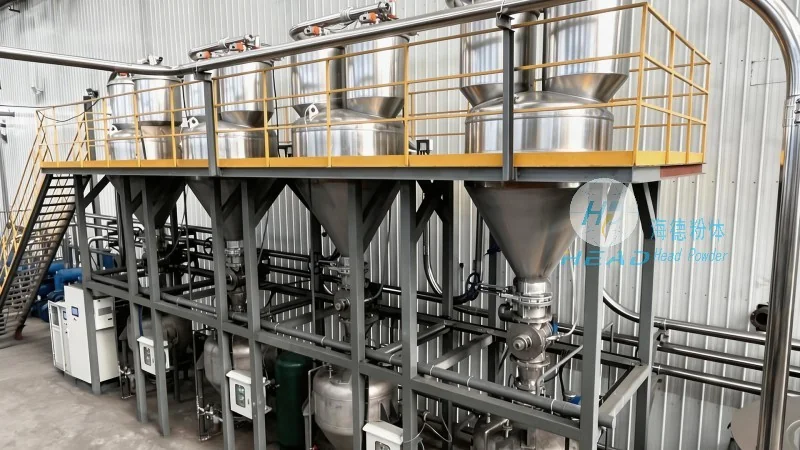
Choosing an experienced partner for white lime pneumatic conveying projects is as important as selecting the hardware itself. A reputable supplier should demonstrate deep knowledge of lime material behavior, proven experience across multiple industries, and a willingness to perform pilot testing before committing to full-scale design. They should also offer comprehensive after-sales support, including spare parts availability, remote diagnostics, and operator training. When evaluating proposals, look for detailed engineering calculations that match your process conditions rather than generic configurations. References from similar lime-handling applications can provide valuable insight into system reliability and vendor responsiveness. As the industry moves toward more automated and energy-efficient solutions, investing in a properly engineered pneumatic conveying system for white lime becomes a strategic decision that influences production flexibility, environmental compliance, and overall operating costs for years to come.
In summary, pneumatic conveying offers a superior method for handling white lime in modern industrial operations, provided the system is designed with a thorough understanding of the material’s unique challenges. From particle abrasion to moisture sensitivity and explosion hazards, each factor must be addressed through proper component selection, airflow optimization, and safety integration. The technological landscape in 2026 points toward smarter, more efficient, and safer systems that leverage digital monitoring and dense-phase capabilities. By partnering with a knowledgeable provider like headpowder, companies can implement reliable conveying solutions that enhance productivity while minimizing environmental impact and total cost of ownership. Whether upgrading an existing system or planning a new facility, taking the time to understand the fundamentals of white lime pneumatic conveying will lead to better long-term outcomes for any organization handling this essential industrial material.

 Shandong headpowder Engineering Co., Ltd.
 156-6277-7102(Manager Zhang)
  0531-83386006
  Jinan City, Shandong Province, China
服务热线
微信咨询
回到顶部