News
Rich project cases across industries, showing real implementation and proven technical strength.Polypropylene (PP) has become one of the most widely used thermoplastic polymers across industries such as automotive, packaging, textiles, and consumer goods. Its lightweight nature, chemical resistance, and recyclability make it a preferred material for both pellets and powder forms. However, the efficient and safe transfer of PP granules or powders within a production facility remains a critical challenge for manufacturers. Among the various conveying methods available, pneumatic conveying stands out as a highly versatile and hygienic solution. This article provides an in-depth explanation of pneumatic conveying methods for PP materials, covering fundamental principles, system types, design parameters, and real-world applications. With the global polypropylene market projected to exceed $160 billion by 2026, optimizing material handling processes has never been more important for maintaining competitiveness and operational efficiency.
Pneumatic conveying uses air or another gas as the transport medium to move bulk solid materials through enclosed pipelines. For PP, which can be abrasive in powder form or fragile as pellets, selecting the right conveying method directly impacts product quality, energy consumption, and system reliability. Unlike mechanical conveyors, pneumatic systems offer complete containment, reduced dust emissions, and flexible routing — advantages that align with modern factory automation and sustainability goals. In the following sections, we examine the two primary pneumatic conveying modes — dilute phase and dense phase — and discuss how they apply to PP materials. We also explore key selection criteria, common pitfalls, and how leading equipment manufacturers like headpowder have refined their designs to meet the stringent demands of the PP industry.
At its core, pneumatic conveying relies on the interaction between airflow and solid particles. The air stream provides both the drag force to suspend the material and the pressure gradient to push it along the pipeline. For PP powders, particle size typically ranges from 50 to 500 microns, while PP pellets are around 2–5 mm in diameter. The conveying velocity must be carefully controlled: too low, and particles drop out of suspension, causing blockages; too high, and excessive wear, energy waste, and degradation (fines generation) occur. The system operates under either positive pressure (pushing) or vacuum (pulling). In PP processing facilities, positive pressure systems are more common for long-distance transfers, while vacuum systems suit short-distance unloading from hoppers or bulk trucks. A well-designed pneumatic conveying system for PP typically achieves a solid-to-air ratio between 5 and 20 kg/kg in dilute phase, and up to 50 kg/kg or higher in dense phase, depending on material characteristics and pipeline layout.
The physics behind PP conveying also involves the concept of saltation velocity — the minimum air velocity required to keep particles suspended in horizontal pipe sections. For PP pellets, this velocity is around 12–18 m/s in dilute phase, while for fine PP powders it can be 8–12 m/s. Below saltation, material accumulates at the bottom of the pipe, leading to unstable flow or plugging. Above it, energy consumption rises exponentially. Modern system designers use computational fluid dynamics (CFD) and empirical correlations (e.g., Rizk correlation for pressure drop) to optimize velocity profiles. Additionally, the angle of repose and cohesiveness of PP powders — which can vary based on additives and moisture content — must be factored into the conveyor design. For example, high-moisture PP powders may exhibit bridging in the feed hopper, requiring vibratory aids or air injection pads. These engineering nuances are exactly where specialized providers like headpowder bring deep expertise, having commissioned over 500 pneumatic systems for polymer handling globally.
Dilute phase pneumatic conveying operates at relatively high air velocities (typically 15–30 m/s) with a low solid-to-air ratio. The material is fully suspended in the air stream, behaving like a fluid. This method is simple, cost-effective for short distances, and suitable for free-flowing PP pellets that can tolerate some impact. However, for friable PP powders or heat-sensitive grades, the high velocity can cause particle attrition, generating unwanted fines and increasing dust explosion risk. Dilute phase systems are widely used for unloading railcars or transferring pellets to silos. They are also easier to design and maintain, making them a popular choice for smaller operations.
Dense phase pneumatic conveying, by contrast, operates at much lower velocities (2–8 m/s) and uses high pressure to push slugs or plugs of material through the pipeline. The material moves as a compacted mass, often with a solid-to-air ratio exceeding 30 kg/kg. This method minimizes particle damage and pipeline wear, making it ideal for fragile PP powders or abrasive compounds. Dense phase can be further subdivided into two types: plug flow (where discrete plugs are separated by air gaps) and slug flow (continuous dense moving bed). For PP applications, plug flow is preferred because it provides reliable transport with minimal segregation. The trade-off is higher capital cost — dense phase systems require larger compressors, more robust valves, and precisely controlled air injection along the line. Nevertheless, for high-value PP grades or those requiring strict particle size distribution, the investment pays off through reduced product loss and higher yield. Many headpowder clients in the automotive additive sector have reported a 15–20% reduction in fines generation after switching from dilute to dense phase conveying.
Regardless of the selected mode, a complete pneumatic conveying system for PP consists of several critical components:
The design of each component must be tailored to the specific PP grade. For instance, recycled PP often contains contaminants that require abrasion-resistant pipe linings (e.g., ceramic tiles) in critical bends. Fire and explosion prevention is another essential consideration — PP dust clouds have a minimum explosion concentration around 30 g/m³, so inert gas blanketing or explosion venting panels are mandated in many jurisdictions. headpowder’s standard pneumatic packages for PP include ATEX-certified components and optional nitrogen recirculation loops to mitigate explosion risks while reducing operating costs by up to 30% compared to once-through nitrogen systems.
Successful pneumatic conveying of PP hinges on accurate calculation of several interdependent parameters:
Common field issues include line plugging (often caused by insufficient air velocity or moisture agglomeration), excessive wear at bends (mitigated by using long-radius elbows or blind tees), and pulsating flow (due to improper air injection in dense phase). headpowder’s service engineers have resolved such issues for dozens of PP compounding plants by implementing variable-speed blowers and adaptive control algorithms that respond to real-time pressure fluctuations. One example: a major polypropylene film producer in Southeast Asia experienced frequent blockages during summer months due to ambient humidity. After headpowder installed a desiccant dryer upstream of the blower and added an air injection ring at the feed point, system uptime improved from 82% to 97%, saving over $120,000 annually in lost production and cleanup labor.
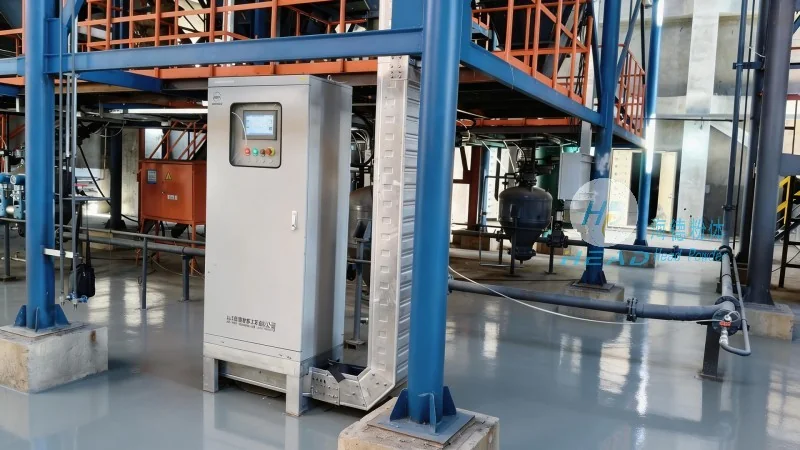
The global pneumatic conveying equipment market is forecast to grow at a compound annual growth rate (CAGR) of 5.8% from 2024 to 2026, driven by expansions in the plastics and chemical sectors. Specifically for PP, the shift toward circular economy models is accelerating demand for conveying systems that can handle recycled resins with variable properties. Recycled PP often contains higher fines content and inconsistent bulk density, posing challenges for traditional dilute phase systems. Dense phase technologies are gaining traction as they offer more forgiving handling characteristics. Additionally, Industry 4.0 integration is becoming standard: smart sensors that monitor particle velocity, pipeline vibration, and filter pressure drop enable predictive maintenance and reduce unplanned downtime. According to a 2025 industry survey, 67% of polymer processors plan to upgrade their conveying systems to include digital monitoring within two years. headpowder aligns with this trend by offering IoT-ready control panels and remote diagnostic services, allowing operators to optimize energy consumption and track conveying efficiency via cloud dashboards. With increasing energy costs — up 18% year-over-year in some regions — energy-efficient dense phase systems that consume 40% less power per ton of PP conveyed are becoming the preferred choice for new installations.
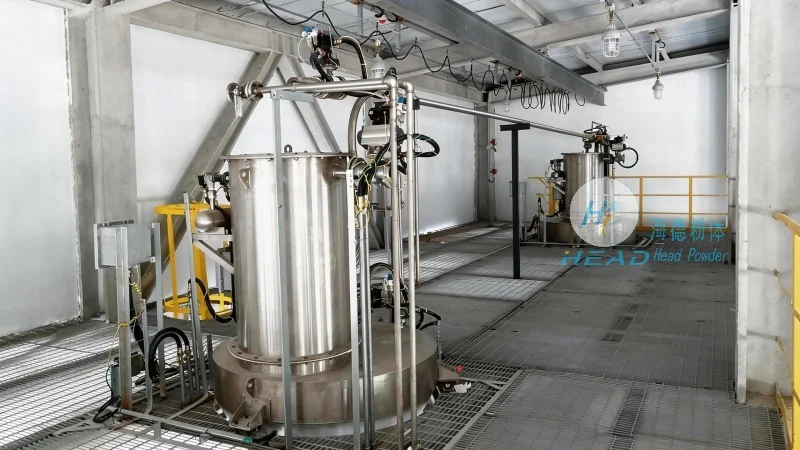
headpowder has been a trusted partner in powder and bulk solids handling for over two decades, with a specialized focus on polymeric materials. Our engineering team combines deep knowledge of PP flow behavior with practical experience across 400+ conveying skids deployed worldwide. Every system is designed to meet the unique requirements of the client’s PP grade — whether it’s high-flow injection molding pellets, low-melt-flow-index powders, or post-consumer recycled flakes. We use pilot-scale testing at our in-house laboratory to confirm conveying parameters before fabrication, reducing field commissioning time by an average of 30%. headpowder’s dense phase systems for PP incorporate proprietary air injection nozzles that reduce plug formation and maintain consistent slug velocity, even with irregular particle shapes. Our after-sales support includes a comprehensive spare parts program and 24/7 technical hotline. For a detailed project consultation or to discuss your specific PP conveying challenges, contact us at (咨询热线:156-6277-7102).
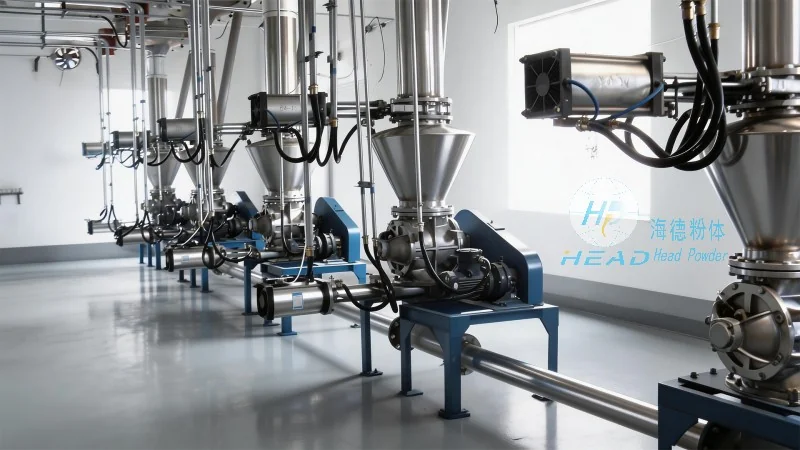
Selecting the appropriate pneumatic conveying method for polypropylene is not a one-size-fits-all decision. It requires careful evaluation of material properties, throughput demands, pipeline routing, and operational constraints. Dilute phase offers simplicity and lower upfront cost, while dense phase delivers superior product integrity and energy savings over the long term. By understanding the fundamental principles outlined in this article — from saltation velocity to solid loading ratio — plant managers and process engineers can make informed choices that improve product quality, reduce waste, and enhance safety. As the PP industry continues to evolve with sustainability imperatives and digitalization, partnering with an experienced system integrator like headpowder ensures that your conveying infrastructure remains robust, flexible, and future-proof. From initial feasibility studies to commissioning and lifetime support, headpowder’s commitment to excellence makes it a reliable ally in the competitive polymer processing landscape.

 Shandong headpowder Engineering Co., Ltd.
 156-6277-7102(Manager Zhang)
  0531-83386006
  Jinan City, Shandong Province, China
服务热线
微信咨询
回到顶部