News
Rich project cases across industries, showing real implementation and proven technical strength.Polysilicon is the backbone of the photovoltaic and semiconductor industries. Its production involves a series of high-purity, high-temperature processes, and one of the most critical stages is the safe, clean, and efficient transport of polysilicon materials between different processing points. Pneumatic conveying has emerged as the preferred technology for this task, offering closed-loop handling, minimal contamination risk, and high throughput. This guide provides a deep, technical look into pneumatic conveying systems designed specifically for polysilicon, covering system architecture, material properties, component selection, operational parameters, and industry best practices. Whether you are upgrading an existing plant or designing a greenfield facility, understanding the nuances of pneumatic conveying for polysilicon can directly impact product quality, yield, and overall operational cost.
The global polysilicon market is projected to exceed 1.5 million metric tons by 2026, driven by aggressive solar capacity installations and chip demand. With such scale, material handling equipment must deliver consistent, breakage-free, and contamination-free transport. Pneumatic conveying systems, when engineered correctly, can achieve particle degradation rates below 0.1% while maintaining purity levels that meet the stringent requirements of electronic-grade silicon. This article will walk you through the fundamental principles, key equipment, control strategies, and real-world considerations that define a high-performance polysilicon pneumatic conveying system. We will also explore how companies like headpowder have integrated these technologies into successful industrial deployments, providing a reliable reference for engineers and procurement professionals.
Pneumatic conveying uses a gas stream—typically dry, filtered nitrogen or clean compressed air—to move bulk solid materials through pipelines. For polysilicon, the choice of gas is critical. Nitrogen is preferred because it is inert and prevents oxidation or moisture absorption. The conveying principle relies on a pressure differential created by a blower, compressor, or vacuum pump. In dilute-phase systems, particles are suspended in the gas stream at high velocity, while dense-phase systems move material at lower velocities as a slug or plug. Polysilicon, being a friable, angular material with a bulk density ranging from 1.3 to 2.2 g/cm³ depending on morphology (granules, rods, chips), demands careful velocity control to avoid particle attrition. Excessive impact can generate fines, which not only reduce yield but also contaminate the product and create dust hazards. Therefore, dense-phase conveying is increasingly adopted in modern polysilicon plants because it operates at lower gas velocities (typically 2–6 m/s) compared to dilute-phase (15–25 m/s), significantly reducing breakage.
Understanding the physical and chemical properties of polysilicon is non-negotiable for system design. Polysilicon particles can be irregular, sharp-edged, and highly abrasive. The Mohs hardness of silicon is around 7, which means it can wear out standard carbon steel pipes quickly. Hardness mandates the use of abrasion-resistant materials such as ceramic-lined pipes, stainless steel, or specialty alloys. Particle size distribution varies widely: from fine dust (<50 µm) to large chunks (>20 mm). A well-designed system must handle this range without segregation or clogging. Electrostatic charge accumulation is another concern. Dry polysilicon flowing through non-conductive pipes can generate static charges that cause material clinging or even spark discharge. Implementing conductive hoses, grounding systems, and anti-static additives in the conveying gas helps mitigate this risk. Moisture content must be kept below 10 ppm to prevent surface oxidation, which degrades purity. Consequently, gas dryers and dew-point monitors are standard in polysilicon conveying trains. These factors together dictate the selection of feeders, diverter valves, and filtration equipment.
A complete polysilicon pneumatic conveying system consists of several interconnected modules. Below is a breakdown of the critical components and the engineering considerations specific to polysilicon applications:
The choice between dilute-phase and dense-phase conveying depends on the specific polysilicon form, plant layout, and throughput requirements. Dilute-phase is suitable for low-capacity, short-distance transport (under 100 meters) where breakage is less critical. It uses high gas velocities, leading to higher energy consumption and more wear. Dense-phase, operating at low velocity and high solids-to-gas ratio, is now the preferred method for polysilicon. It reduces particle breakage by up to 80% compared to dilute-phase, lowers nitrogen consumption by 30–40%, and extends pipeline life. For example, a dense-phase system conveying polysilicon granules at 8 tons per hour over 150 meters typically consumes 0.5–0.8 Nm³ of nitrogen per kg of product, versus 1.2–1.8 Nm³ for dilute-phase. The lower attrition also means fewer fines generation, which directly improves the economic yield of the process. However, dense-phase requires more precise control of feed rate and gas injection to maintain stable plug flow, especially with irregular particle shapes. Many modern installations use a hybrid approach: dense-phase for long-distance bulk transport and dilute-phase for short-distance, high-speed metering.
To build a system that delivers consistent performance with minimal downtime, engineers should adhere to the following guidelines derived from industry standards and field experience:
Polysilicon handling equipment must meet several international standards to ensure safety, quality, and environmental compliance. The most relevant include ISO 18134 for determination of moisture content, ASTM D5142 for proximate analysis, and IEC 61249 for electrostatic properties. For pneumatic conveying systems specifically, the European Federation of Pharmaceutical Industry and Associations (EFPIA) guidelines on containment, though not mandatory, provide useful references for dust-free operation. Additionally, ATEX directives (2014/34/EU) or NEC/NFPA 70 apply when flammable dust is present. In the context of semiconductor-grade polysilicon, SEMI standards (e.g., SEMI F66 for particle contamination) define acceptable levels of metal impurities and particle counts. A well-designed conveying system should demonstrate verified particle count levels below Class 1.5 (3.5 particles per cubic meter at 0.3 µm). For photovoltaic-grade material, purity requirements are slightly relaxed but still demand total metal contamination below 1 ppbw. headpowder’s systems are designed with these standards in mind, offering pre-compliance validation and documentation for audit purposes.
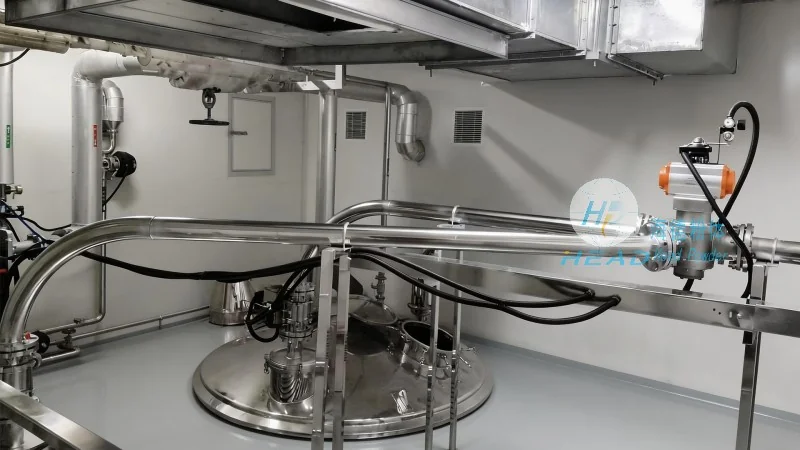
To illustrate the practical implementation, consider a real-world scenario. A large-scale polysilicon manufacturer required a conveying system to move granular polysilicon from a fluidized-bed reactor discharge to storage silos 180 meters away, with a throughput of 12 tons per hour. The material had a mean particle size of 500 µm with a bulk density of 1.8 g/cm³. The client specified that fines generation must not exceed 1% by mass. The engineering team selected a dense-phase pressure vessel system with a 2.0 m³ blow tank, using nitrogen at 3.5 bar. Pipe diameter was DN150 with ceramic-lined bends. Through careful control of gas injection sequencing and back-pressure regulation, the system achieved a measured fines generation of 0.6% over a six-month operating period. Nitrogen consumption averaged 0.65 Nm³ per kg of polysilicon. System availability exceeded 98%, with scheduled maintenance intervals of 4,000 operating hours. The installation included a comprehensive PLC-based monitoring system that tracked pressure profiles and alerted operators to any deviation. This case demonstrates that with proper engineering, pneumatic conveying can meet the most demanding polysilicon requirements. headpowder has replicated similar results across multiple projects, leveraging proprietary flow simulation tools and a deep technical library of material-specific data.
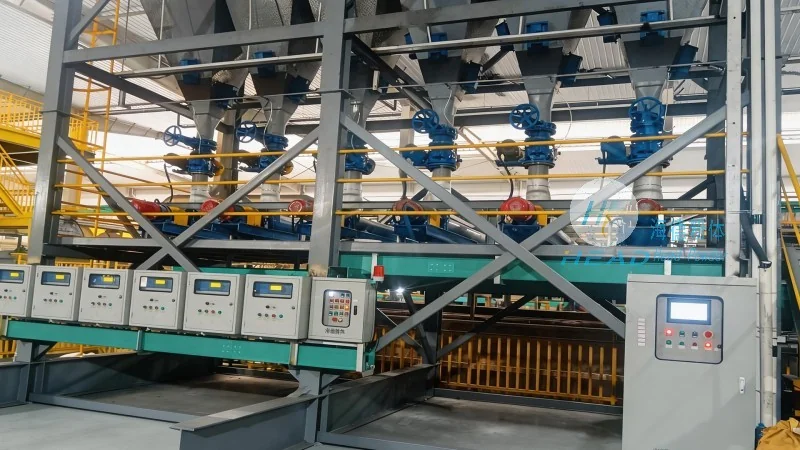
Investing in a well-designed pneumatic conveying system for polysilicon yields measurable returns. Reduced particle breakage translates directly into higher product yield—every 1% reduction in fines can save a 10,000-tons-per-year plant tens of thousands of dollars annually. Lower nitrogen consumption cuts utility costs, often by 20–40% compared to outdated systems. Extended equipment life from abrasion-resistant materials reduces capital replacement frequency. Additionally, closed-loop conveying eliminates manual handling, lowering labor costs and worker exposure to hazardous dust. From a maintenance perspective, predictive monitoring reduces unplanned downtime by up to 50%, ensuring production schedules remain on track. For companies looking to scale up production or improve product quality, upgrading or retrofitting the pneumatic conveying system is one of the highest-return modifications available. The initial investment is typically recovered within 12 to 18 months through operational savings and yield improvements.
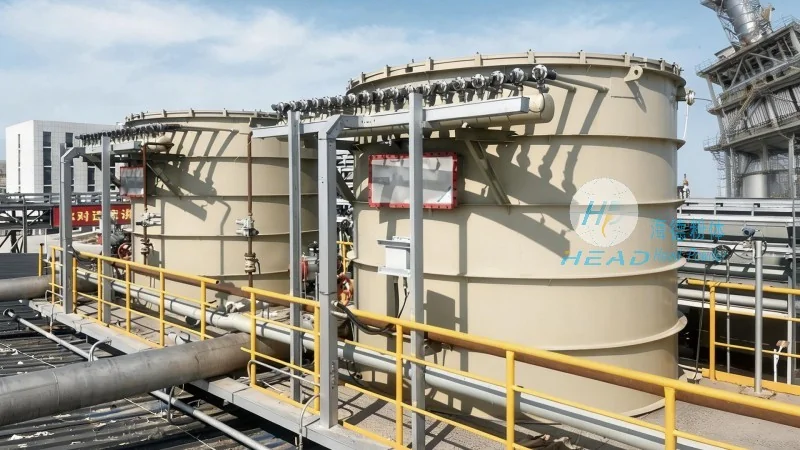
As the global demand for polysilicon continues its upward trajectory, the importance of reliable, high-purity material transport cannot be overstated. Pneumatic conveying has proven itself as the technology of choice for this challenging application, but only when engineered with a deep understanding of polysilicon’s unique properties. From component selection to system control, every design decision must balance throughput, purity, safety, and operating cost. The industry is moving toward smarter systems that leverage digital twins, real-time analytics, and adaptive control to further reduce fines and energy consumption. Companies like headpowder have established a strong track record in delivering such systems, with a focus on continuous innovation and customer support. Their engineering team works closely with clients from conceptual design through commissioning, ensuring that each system is tailored to specific material characteristics and facility constraints. The result is a conveying solution that not only meets today’s requirements but is also scalable for future production increases.
For decision-makers evaluating new projects or system upgrades, the key takeaway is this: do not underestimate the impact of material handling on overall profitability. Engaging with a specialist who understands the nuances of polysilicon pneumatic conveying—like headpowder—can make the difference between a system that merely functions and one that delivers competitive advantages. With proven expertise in dense-phase technology, abrasion-resistant design, and high-purity integration, headpowder

 Shandong headpowder Engineering Co., Ltd.
 156-6277-7102(Manager Zhang)
  0531-83386006
  Jinan City, Shandong Province, China
服务热线
微信咨询
回到顶部