News
Rich project cases across industries, showing real implementation and proven technical strength.Industrial salt, often referred to as rock salt, evaporated salt, or vacuum salt, is a fundamental raw material across multiple sectors including chemical processing, water treatment, oil and gas drilling, food preservation, and de-icing operations. The physical characteristics of salt—hygroscopic nature, abrasive crystalline structure, wide particle size distribution, and tendency to cake under humidity—present unique challenges in bulk material handling. Traditional mechanical conveyors such as belt conveyors, screw conveyors, or bucket elevators often encounter issues like corrosion, dust generation, material degradation, and frequent maintenance downtime. Over the past decade, pneumatic conveying systems have emerged as a preferred solution for transporting industrial salt, offering enclosed material flow, reduced contamination risk, flexible routing, and lower operational labor requirements. This article provides a comprehensive examination of pneumatic system design for industrial salt conveying, covering system architecture, component selection, key engineering parameters, operational best practices, and emerging trends as of 2026. Whether you are a plant engineer evaluating a new installation or a maintenance manager seeking to optimize an existing system, the insights herein are grounded in field experience and technical standards, aiming to deliver actionable knowledge rather than generic marketing claims.
The global industrial salt market has maintained steady growth, with production volumes exceeding 300 million metric tons in 2025, and projections indicating continued expansion driven by chemical and de-icing demand. Pneumatic conveying technology accounts for an increasing share of new salt handling projects, particularly in facilities where hygiene, safety, and automation are priorities. At headpowder, we have engineered and commissioned numerous pneumatic systems handling salt with throughputs ranging from 2 tons per hour to over 80 tons per hour, across dilute phase, dense phase, and semi-dense phase configurations. The following sections delve into the technical nuances that determine system reliability and efficiency, enabling readers to make informed decisions for their specific salt conveying applications.
To design a robust pneumatic system for salt, one must first understand the material's physical and chemical behavior during transport. Industrial salt typically exhibits a bulk density between 1.1 and 1.3 g/cm³ for dry fine grades, while coarser rock salt can reach 1.4 to 1.6 g/cm³. The particle size distribution varies significantly: de-icing salt may contain particles from 50 µm fines up to 10 mm lumps, while vacuum salt for food use is more uniform, typically 0.2 to 1.0 mm. The angle of repose is around 35 to 40 degrees, indicating moderate flowability under dry conditions. However, the most critical factor is hygroscopicity—salt absorbs moisture from ambient air, leading to caking, bridging, and increased cohesive strength. In pneumatic systems, this can cause blockages in pipelines, feeder jamming, and filter clogging. Salt also has a Mohs hardness of approximately 2.5, meaning it is moderately abrasive, wearing down bends, diverter valves, and rotary valves over time. Additionally, salt dust is mildly corrosive when combined with moisture, particularly in carbon steel components. Therefore, material selection for conveying components, air drying, and humidity control are essential design considerations.
Three primary pneumatic conveying modes are applicable to industrial salt: dilute phase, dense phase, and semi-dense phase. Each offers distinct advantages depending on throughput, distance, and salt characteristics.
Selection criteria include required capacity, conveying distance, number of discharge points, and salt grade. For example, a chemical plant processing vacuum salt for chlor-alkali production typically benefits from dense phase to avoid dust explosion hazards and product quality loss.
A pneumatic salt conveying system comprises several key components, each requiring careful specification to handle salt's unique properties.
Accurate system design relies on validated engineering data. Key parameters for salt pneumatic conveying include salt-to-air ratio (S/A ratio), conveying velocity, pressure differential, and power consumption. For dilute phase, typical S/A ratios are 5:1 to 15:1 by weight; for dense phase, 20:1 to 60:1. Minimum conveying velocity must be maintained 1.5 to 2 times the particle saltation velocity to avoid settling. For industrial salt, saltation velocity ranges from 10 to 18 m/s depending on particle size; thus, design velocity of 20–28 m/s for dilute phase is common. Pressure drop calculations involve straight pipe friction losses, bend losses, acceleration losses, and lift losses. Empirical data from headpowder's laboratory tests and field installations indicate that for typical rock salt with bulk density 1.3 g/cm³, conveying 40 tons per hour over 100 meters horizontally with four 90-degree bends requires approximately 180–220 kW of blower power in dilute phase, while dense phase would require 130–170 kW at 4 bar compressor pressure.
Industry standards such as ASTM D3753 (for pneumatic conveying of bulk materials) and ISO 23553 (safety requirements) should be referenced. For salt used in food processing, adherence to FDA 21 CFR 110 (GMP) and EHEDG guidelines for hygienic design is mandatory. In 2026, the European Union's updated ATEX directive also impacts salt conveying in explosive dust atmospheres, requiring proper grounding, explosion venting, and anti-static components.
Despite proper design, field operations reveal recurring issues. The most common include pipeline blockage due to moisture, rotary valve jamming from salt caking, and excessive wear at bends. Mitigation strategies are well-established:
headpowder's service team has documented a case where a de-icing salt plant in the Midwest United States reduced unplanned downtime from 12 hours per month to 2 hours after retrofitting with a dense phase system and ceramic-lined bends. The payback period was under 18 months due to reduced replacement parts and labor.
Energy consumption is a significant cost factor in pneumatic salt conveying. Blower/driver power can account for 60–70% of total operating expense. Emerging trends in 2026 include variable frequency drives (VFDs) on blowers to match conveying demand, waste heat recovery from compressor cooling systems for salt preheating, and use of regenerative blowers for low-pressure dilute phase systems. Additionally, smart sensors and IoT-based monitoring platforms enable real-time optimization of air-to-material ratios, reducing energy waste by up to 22% according to a 2025 industry survey by the Bulk Material Handling Society. headpowder incorporates these technologies into its systems, offering customers a detailed energy audit as part of the commissioning package.
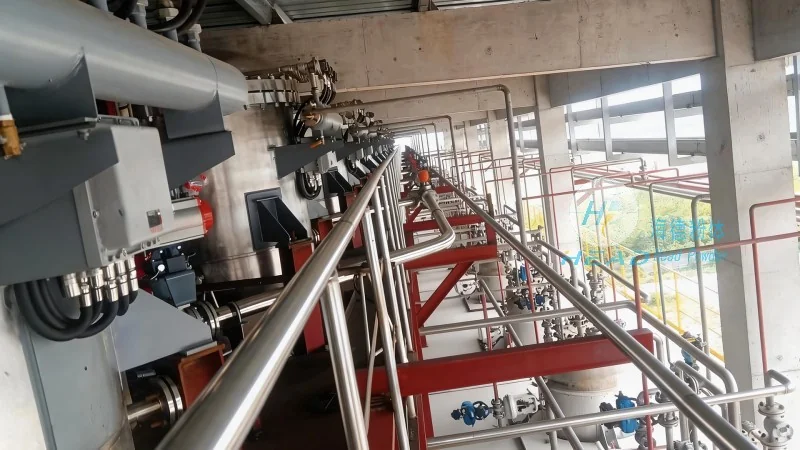
A well-maintained pneumatic salt conveying system can operate reliably for 10–15 years with proper care. Recommended maintenance tasks include:
Documenting all maintenance activities in a CMMS (computerized maintenance management system) helps track component life and predict replacement intervals. headpowder provides a comprehensive maintenance manual and remote monitoring service for clients who opt for the premium support package.
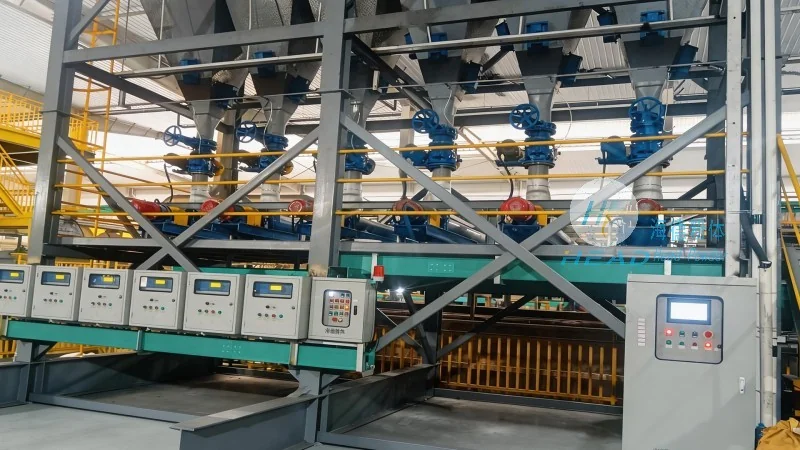
When evaluating vendors, consider experience with similar salt grades, ability to provide test lab validation, availability of 3D modeling and CFD simulation, and after-sales support response time. headpowder has over 18 years of focused experience in pneumatic conveying of challenging materials, including multiple grades of industrial salt. Our in-house test facility can handle up to 15 tons of material for proof-of-concept trials, and our engineering team routinely collaborates with clients to optimize layouts for existing plants. We invite you to discuss your specific salt conveying requirements with our technical consultants. For further information or to schedule a consultation, please contact us: (咨询热线:156-6277-7102).
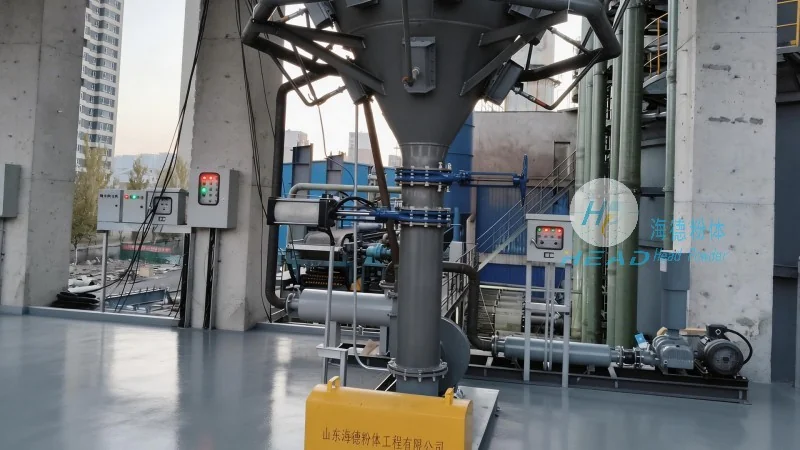
As industrial processes demand higher automation, stricter hygiene standards, and lower environmental impact, pneumatic conveying systems offer an increasingly attractive solution for bulk salt handling. With proper design—accounting for salt's moisture sensitivity, abrasiveness, and flow variability—these systems deliver consistent throughput, reduced contamination, and safer working environments. Advances in digital monitoring, energy-efficient components, and wear-resistant materials continue to improve total cost of ownership. Whether you are expanding an existing facility or building a new greenfield plant, investing in a well-engineered pneumatic system from a knowledgeable partner like headpowder ensures long-term operational success. The information provided in this article serves as a technical foundation to guide your decision-making. For project-specific engineering support, feel free to reach out to our team, who can assist with system sizing, material testing, and installation supervision. (咨询热线:156-6277-7102).

 Shandong headpowder Engineering Co., Ltd.
 156-6277-7102(Manager Zhang)
  0531-83386006
  Jinan City, Shandong Province, China
服务热线
微信咨询
回到顶部